
Choosing the right health insurance plan in the United States can directly impact your finances, access to doctors, and long-term stability. PPO insurance is often marketed as the most flexible option—but flexibility does not always mean lower costs. Understanding how PPO plans actually work can help you avoid unexpected bills and choose coverage that truly fits your needs. If you are new to health insurance, understanding how health insurance works overall can make PPO plans easier to understand.
Key Takeaways
- PPO insurance (Preferred Provider Organization) is a type of U.S. health insurance plan that offers flexibility in choosing doctors and hospitals.
- You usually do not need a referral to see specialists.
- PPO plans allow out-of-network care, but at higher cost.
- Monthly premiums are typically higher than HMO or EPO plans.
- PPOs work best for people who value choice, travel flexibility, or ongoing specialist care.
Why PPO Insurance Matters in Everyday American Life
Health insurance decisions in the U.S. directly affect how much you pay, which doctors you can see, and how much control you have over your care. PPO insurance often sounds appealing because of its flexibility—but many people choose it without fully understanding the trade-offs.
Common issues people run into include:
- Paying higher premiums without actually using out-of-network benefits
- Being surprised by large bills from out-of-network providers
- Confusion about deductibles, coinsurance, and provider networks
Understanding how PPO insurance really works helps avoid costly mistakes and makes it easier to choose the right plan for your situation.
What Is PPO Insurance?
A Preferred Provider Organization (PPO) is a type of private health insurance plan used widely in the United States.
At its core, a PPO plan:
- Contracts with a network of doctors, hospitals, and specialists
- Gives you the option to use providers outside that network
- Does not require referrals to see specialists
You get the best pricing when you stay in-network, but you still have coverage when you go out-of-network—something many other plans do not offer.
How PPO Insurance Works in the United States

Provider Networks Explained
PPO plans divide providers into two categories:
In-Network Providers
- Doctors and facilities that have agreed to negotiated rates with the insurer
- Lower costs for you
- Claims are usually handled automatically
Out-of-Network Providers
- Providers with no pricing agreement with your insurer
- Significantly higher costs
- You may need to file claims yourself
Using out-of-network care is allowed under PPO plans, but cost protection is weaker.
No Referral Requirement
One defining feature of PPO insurance is freedom of access.
With a PPO:
- You can see a specialist without seeing a primary care doctor first
- You choose providers directly
- You manage your own care decisions
This is especially useful for people who:
- Already see specialists regularly
- Want faster access to care
- Travel or move frequently
How Costs Are Structured in a PPO Plan
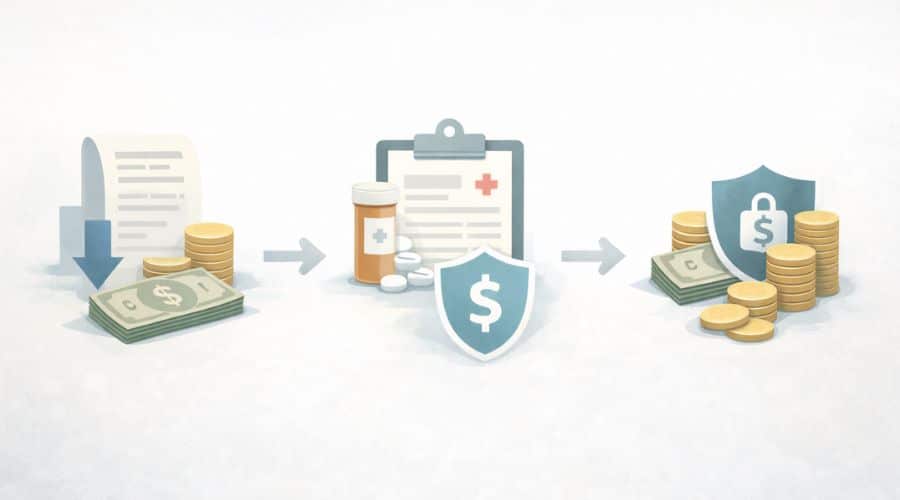
PPO plans follow the standard U.S. cost-sharing model.
Common Cost Components
| Cost Type | What It Means |
|---|---|
| Premium | Monthly amount you pay for coverage |
| Deductible | Amount you pay before insurance starts sharing costs |
| Copayment | Flat fee for certain services |
| Coinsurance | Percentage of costs you pay after deductible |
| Out-of-Pocket Maximum | Annual cap on covered in-network expenses |
Important: Out-of-network costs often do not count toward the in-network out-of-pocket maximum.
Example: In-Network vs Out-of-Network Care

- In-network specialist visit:
- Negotiated rate: $200
- Your coinsurance: 20% → $40
- Out-of-network specialist visit:
- Provider charges: $350
- Insurer allows: $220
- You pay coinsurance plus the difference → much higher total cost
This is one of the most misunderstood aspects of PPO plans.
Who PPO Insurance Is Best For
PPO insurance is not automatically “better.” It fits certain situations well.
PPOs Often Make Sense If You:
- Want maximum choice of doctors
- See multiple specialists
- Travel frequently within the U.S.
- Live in areas with limited provider networks
- Prefer managing care without referrals
Who Should Think Carefully Before Choosing a PPO
PPO insurance may not be ideal if you:
- Rarely use healthcare services
- Are comfortable with a single primary care doctor
- Want the lowest possible monthly premium
- Don’t plan to use out-of-network providers
In these cases, other plan types may be more cost-effective.
Pros and Cons of PPO Insurance
PPO plans are popular for a reason, but the flexibility comes with real trade-offs. Seeing both sides clearly helps avoid regret later.
PPO Insurance: Pros & Cons Table
| Pros | Cons |
|---|---|
| No referral required to see specialists | Higher monthly premiums |
| Ability to see out-of-network providers | Out-of-network care is expensive |
| Broad provider access nationwide | Separate deductibles may apply |
| Useful for frequent travelers | More complex cost structure |
| Greater personal control over care | Easy to overpay if flexibility isn’t used |
Key point: A PPO only delivers value if you actually use its flexibility.
PPO vs HMO vs EPO: How They Compare
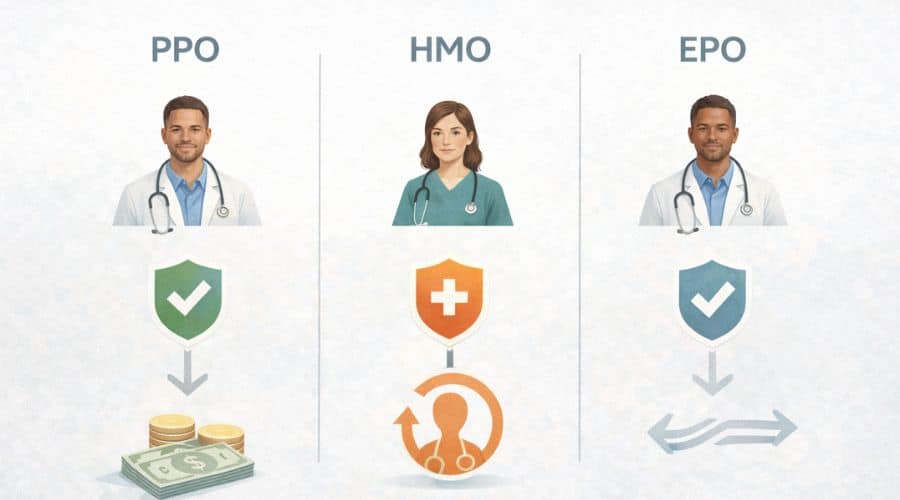
Many Americans choose a plan without fully understanding how PPOs differ from other common options. For a full side-by-side comparison of these plans, see this detailed breakdown of HMO, PPO, and EPO plans.
Core Differences Between Major U.S. Health Plans
| Feature | PPO | HMO | EPO |
|---|---|---|---|
| Referral required | No | Yes | No |
| Out-of-network coverage | Yes (limited) | No (except emergencies) | No (except emergencies) |
| Monthly premiums | Highest | Lowest | Moderate |
| Provider flexibility | High | Low | Medium |
| Primary care physician required | Usually no | Yes | Sometimes |
PPO vs HMO: Practical Differences
PPO Advantages Over HMO
- No gatekeeper doctor
- Easier specialist access
- Wider geographic coverage
HMO Advantages Over PPO
- Lower premiums
- Lower out-of-pocket costs
- Simpler plan rules
HMOs tend to work well for people who are healthy, budget-focused, and comfortable staying in-network.
PPO vs EPO: Where Confusion Happens
EPO plans are often mistaken for PPOs.
Key distinction:
- EPO plans do NOT cover out-of-network care, except emergencies.
- PPO plans do, but at a higher cost.
If you want flexibility without paying PPO-level premiums, an EPO may be a middle ground—but only if your provider network is strong.
How PPO Insurance Handles Emergencies and Travel

Emergency Care Rules
Under federal law, emergency care must be covered as in-network, even if the hospital is out-of-network.
This applies to:
- Emergency room visits
- Emergency stabilization
However:
- Non-emergency follow-up care may be billed as out-of-network
- Balance billing risks still exist in some situations
PPOs and U.S. Travel
PPO plans are often chosen by people who:
- Travel frequently across states
- Have dependents in different locations
- Live in rural or multi-state metro areas
National PPO networks usually provide better access than HMO or regional EPO plans.
Costs People Commonly Underestimate in PPO Plans
Separate Deductibles
Many PPOs have:
- One deductible for in-network care
- A higher, separate deductible for out-of-network care
Meeting one does not automatically satisfy the other.
Balance Billing Risk
Out-of-network providers can:
- Charge more than the insurer’s allowed amount
- Bill you for the difference
This is a major source of unexpected medical debt.
Premium vs Usage Mismatch
A common mistake:
- Paying higher PPO premiums
- Then using only in-network primary care
In this case, you’re paying for flexibility you’re not using.
Common PPO Insurance Myths vs Facts
| Myth | Reality |
|---|---|
| PPOs always save money | Only if flexibility is used |
| Out-of-network means fully covered | Coverage is limited |
| PPOs have no rules | Cost-sharing rules still apply |
| PPOs are best for everyone | Plan choice is situational |
How PPO Insurance Can Affect Long-Term Finances
Monthly Budget Impact
- Higher premiums reduce monthly cash flow
- Especially impactful for families
Medical Debt Risk
- Out-of-network bills can escalate quickly
- Balance billing can bypass cost expectations
Credit Impact
- Medical collections can appear on credit reports
- Even insured patients can face credit damage if bills go unpaid
Understanding PPO limits helps reduce these risks.
How PPO Insurance Works in Real Life (Step by Step)
Understanding PPO insurance is easiest when you follow the money and decisions in the order they actually happen.
Step 1: You Enroll in a PPO Plan
You can get a PPO plan through:
- An employer
- The Health Insurance Marketplace
- A private insurer
Once enrolled, you receive:
- An insurance ID card
- Access to the insurer’s provider network
- A Summary of Benefits and Coverage (SBC)
Always review the SBC. This document legally defines what the plan does and does not cover.
Step 2: You Choose a Provider
You decide whether to use:
- An in-network provider (lower cost), or
- An out-of-network provider (higher cost)
No referrals are required.
This freedom is the defining feature of a PPO—but it also places responsibility on you to understand costs ahead of time.
Step 3: Care Is Provided and Billed
The provider bills:
- Your insurer (if in-network)
- Or you and the insurer separately (if out-of-network)
What happens next depends on network status.
Step 4: Insurance Applies Cost Sharing
In-Network Care
- Insurer applies negotiated rates
- You pay copays, coinsurance, or deductible
- Costs count toward your in-network out-of-pocket maximum
Out-of-Network Care
- Insurer applies its “allowed amount”
- You pay:
- Coinsurance plus
- Any amount above the allowed charge
- Costs may not count toward your in-network out-of-pocket maximum
This difference is where many financial surprises happen.
Real-Life PPO Example (U.S.-Based)
Scenario:
You see a dermatologist for a non-emergency issue.
In-Network
- Billed amount: $250
- Allowed amount: $180
- Coinsurance (20%): $36
Your cost: $36
Out-of-Network
- Billed amount: $300
- Allowed amount: $170
- Coinsurance (40%): $68
- Balance bill: $130
Your cost: $198
Same type of visit. Very different outcome.
PPO Insurance and U.S. Laws You Should Know
PPO plans are regulated under federal and state law. These rules affect what insurers must cover and how billing works.
Affordable Care Act (ACA) Protections
Most PPO plans sold today must comply with ACA rules, including:
- Coverage for essential health benefits
- No denial for pre-existing conditions
- Annual caps on in-network out-of-pocket costs
However, ACA protections apply primarily to in-network care.
The No Surprises Act
Federal law limits surprise billing in certain situations.
Protections include:
- Emergency services at out-of-network facilities
- Certain non-emergency services at in-network hospitals
Limits:
- Does not apply to all out-of-network care
- Does not cover services you voluntarily choose out-of-network
Understanding this distinction matters with PPO plans.
State-Level Variations
Insurance rules can vary by:
- State
- Insurer
- Employer-sponsored vs individual plans
Always check:
- State insurance department guidance
- Your plan’s official documents
Tax Treatment of PPO Insurance in the U.S.
Premiums
- Employer-sponsored premiums are often paid with pre-tax dollars
- Individually purchased PPO premiums may be deductible in limited cases, subject to IRS rules
Health Savings Accounts (HSAs)
Most PPO plans do not qualify as HSA-compatible because:
- Deductibles are usually too low
- Cost-sharing begins before deductible is met
Only PPOs labeled as High-Deductible Health Plans (HDHPs) can qualify.
How PPO Insurance Affects Credit and Financial Stability

Medical bills are a leading cause of financial stress—even for insured Americans.
Key Risk Areas
- Out-of-network balance bills
- Misunderstanding deductibles
- Assuming “covered” means “fully paid”
Unpaid medical bills can:
- Be sent to collections
- Affect credit reports
- Reduce financial flexibility
A PPO reduces access risk—but not billing risk.
Common PPO Mistakes to Avoid
- Choosing PPO “just in case” but never using flexibility
- Not checking provider network status before appointments
- Assuming out-of-network costs are capped
- Ignoring plan documents until a bill arrives
PPO insurance rewards informed users—not passive ones.
Who Should Choose a PPO — and Who Should Avoid It
PPO insurance is about control and flexibility, not automatic savings. The right choice depends on how you actually use healthcare.
PPO Insurance Is Often a Good Fit If You:
You Regularly See Specialists
- Ongoing care for conditions like asthma, migraines, autoimmune disorders, or orthopedic issues
- You don’t want referral delays
- You value choosing specialists directly
You Travel Frequently Within the U.S.
- Work travel across states
- College students away from home
- Families split across locations
PPO networks tend to offer broader national access than HMOs or regional EPOs.
You Live in an Area With Limited Networks
- Rural or semi-rural locations
- Fewer in-network providers nearby
A PPO can reduce access problems—even if you stay mostly in-network.
You Want Control Over Medical Decisions
- You prefer not to rely on a primary care “gatekeeper”
- You’re comfortable managing appointments and costs yourself
PPOs shift responsibility to the consumer, which some people prefer.
PPO Insurance May Not Be the Right Choice If You:
You Rarely Use Healthcare
If you:
- Only see a doctor once or twice a year
- Don’t have ongoing conditions
You may overpay in premiums without using PPO benefits.
You Want Predictable, Lower Costs
HMOs often provide:
- Lower monthly premiums
- Lower out-of-pocket costs
- Simpler billing
If budget stability matters more than flexibility, PPOs may feel expensive.
You Don’t Plan to Use Out-of-Network Care
If you:
- Already have trusted in-network providers
- Don’t travel much
An EPO or HMO could deliver similar care for less money.
Special Situations to Think Through Carefully
Families With Children
- Pediatric specialists may or may not be in-network
- PPOs can reduce access stress but raise monthly costs
Self-Employed or Marketplace Buyers
- PPO premiums are often significantly higher
- Subsidies may not fully offset the cost
Chronic Conditions
- PPOs can reduce administrative friction
- But ongoing care means ongoing coinsurance costs
Flexibility helps—but it doesn’t eliminate cost exposure.
PPO Decision Checklist (Practical and Honest)
Before choosing a PPO, ask yourself:
- Do I already know which doctors I want to see?
- Are those doctors in-network?
- How often do I realistically use specialists?
- Am I willing to pay higher premiums every month?
- Do I understand out-of-network billing risks?
- Would I actually use the flexibility I’m paying for?
If most answers are “no,” a PPO may not add value.
Common Beginner Misunderstandings About PPOs
“Out-of-network means mostly covered”
Not true. Coverage exists—but often with significant financial exposure.
“PPOs have no rules”
They have fewer access rules, not fewer cost rules.
“Higher premium means better coverage”
Higher premium means broader access, not necessarily lower total costs.
When a PPO Can Quietly Become a Bad Financial Deal
- You pay high premiums for years
- You stay in-network the entire time
- You never need specialty access or travel coverage
In that case, the PPO didn’t protect you—it just cost more.
Frequently Asked Questions About PPO Insurance
-
What does PPO stand for in health insurance?
PPO stands for Preferred Provider Organization. It refers to a health insurance plan that contracts with a network of providers but still allows you to see doctors and hospitals outside that network at a higher cost.
-
Do PPO plans require referrals to see specialists?
No. One of the main features of PPO insurance is that referrals are not required. You can schedule appointments with specialists directly without first seeing a primary care physician.
-
Is out-of-network care fully covered by PPO insurance?
No. PPO plans provide partial coverage for out-of-network care, but:
– Coinsurance is higher
– Deductibles may be separate
– Providers can bill you above the insurer’s allowed amountOut-of-network care can still result in large bills.
-
Are PPO plans more expensive than HMO plans?
In most cases, yes. PPO plans generally have:
– Higher monthly premiums
– Higher overall cost exposure if out-of-network care is usedHowever, they offer more flexibility, which some people value enough to justify the cost.
-
Do PPO plans have deductibles?
Yes. Most PPO plans have:
– An in-network deductible
– A higher out-of-network deductibleMeeting one deductible does not always count toward the other.
-
Does the out-of-pocket maximum protect me from all costs?
Only for covered in-network services.
Out-of-network costs may:
– Have a separate limit
– Not be capped at allThis is a critical detail many people overlook.
-
Are PPO plans eligible for Health Savings Accounts (HSAs)?
Most PPO plans are not HSA-eligible.
Only PPOs structured as High-Deductible Health Plans (HDHPs) can qualify, and they must meet IRS rules for minimum deductibles and cost-sharing. -
Is PPO insurance better for families?
It depends. PPOs can:
– Make specialist access easier
– Reduce referral friction for childrenBut higher premiums can significantly increase monthly household expenses. Families should weigh access needs against long-term affordability.
-
Can PPO insurance help when traveling within the U.S.?
Yes. PPO plans typically offer:
– Broader national provider networks
– Better access to care across state linesThis is one reason frequent travelers often choose PPO coverage.
-
Does PPO insurance protect me from surprise medical bills?
Only in specific situations. Federal law protects against surprise billing for:
– Emergency care
– Certain services at in-network hospitalsHowever, voluntary out-of-network care is not fully protected.
-
Is PPO insurance worth it if I’m healthy?
Often, no. If you:
– Rarely see doctors
– Don’t need specialists
– Stay in-networkYou may pay more for flexibility you never use.
-
Can medical bills from PPO plans affect my credit?
Yes. If medical bills go unpaid:
– They can be sent to collections
– They may appear on credit reports
– They can impact financial stabilityInsurance does not automatically prevent credit damage.
Choosing the right PPO plan depends less on labels and more on how you actually use healthcare.

Final Disclaimer
This content is provided for educational and informational purposes only.
It is not legal, tax, or financial advice.
Health insurance rules, costs, and protections can vary based on:
- Individual circumstances
- Plan terms
- State laws
- Employer or insurer policies
Readers should consult a licensed insurance agent, financial advisor, tax professional, or legal professional before making decisions about health insurance or personal finances.
