
Preventive care is often advertised as “free” under U.S. health insurance — but many people still end up with unexpected medical bills. This confusion usually comes from unclear insurance rules, billing codes, and misunderstandings between preventive and diagnostic care.
In this guide, you’ll learn what preventive care really means under U.S. health insurance, which services are truly free, when charges can apply, and how to avoid common billing mistakes before they happen. If you are new to health insurance, it also helps to understand how health insurance works overall before diving into preventive care rules.
Key Takeaways
- Most preventive services are free under many U.S. health plans when you use in-network providers and the service is on the approved list.
- “Free” usually means no copay, no deductible, and no coinsurance—but only if all conditions are met.
- Coverage rules come from federal law, but final costs depend on plan type, provider network, and how the service is billed.
- Preventive care is different from diagnostic care, and confusing the two is a common reason people get unexpected bills.
Why Preventive Care Matters in Real Life

Many Americans avoid doctor visits because they worry about surprise costs. Preventive care exists to remove that barrier—so problems can be caught early, when treatment is simpler and cheaper. Annual checkups, vaccines, and routine screenings help people stay healthy and help the health system avoid higher costs later.
Confusion usually starts at the front desk or after the visit, when a “free” appointment turns into a bill. That almost always comes down to how the visit was coded, which provider you used, or whether the service was truly preventive under your plan’s rules.
Understanding the boundaries of preventive care can save real money and prevent frustration.
What “Preventive Care” Means Under U.S. Health Insurance
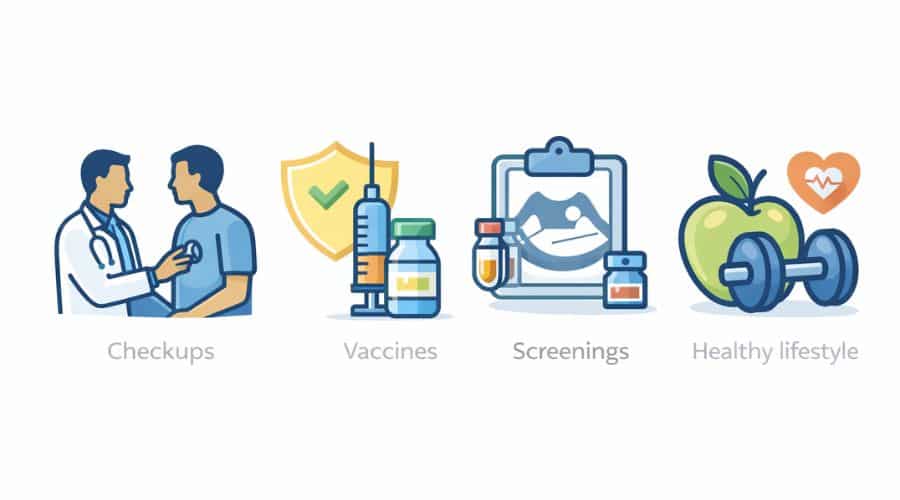
Plain-English Definition
Preventive care includes medical services meant to prevent illness, detect conditions early, or monitor basic health before symptoms appear.
These services are generally scheduled in advance and follow evidence-based guidelines.
How U.S. Law Defines Preventive Care
Under the Affordable Care Act (ACA), many private health insurance plans must cover certain preventive services at no cost to the patient when delivered by in-network providers.
This federal requirement is based on recommendations from:
These preventive service recommendations come from independent medical experts such as the U.S. Preventive Services Task Force.
- The U.S. Preventive Services Task Force (USPSTF)
- The Advisory Committee on Immunization Practices (ACIP)
- The Health Resources and Services Administration (HRSA)
These standards are enforced through federal agencies such as Centers for Medicare & Medicaid Services and supported by consumer protections from the Consumer Financial Protection Bureau.
What “Free” Actually Means in Insurance Terms
No Cost-Sharing — With Conditions
When a preventive service qualifies, “free” means:
- $0 copay
- $0 deductible
- $0 coinsurance
But this applies only if:
- The service is on the approved preventive list
- The provider is in network
- The visit is coded as preventive, not diagnostic
Why Bills Still Happen
A service can lose its “free” status if:
- Symptoms are discussed that lead to additional testing
- A follow-up test is ordered during the same visit
- The provider bills the visit as diagnostic
- You use an out-of-network provider
When preventive care turns diagnostic, costs may apply in the form of copays or coinsurance depending on your plan.
Because of this, confirming how a visit will be billed before your appointment is one of the best ways to avoid surprise charges.
These distinctions matter, and they are legal and common across U.S. health plans.
The Legal Foundation Behind Preventive Care Coverage
Affordable Care Act (ACA) Requirements
Most non-grandfathered private health plans must comply with ACA preventive care rules. Details about which preventive services must be covered under the ACA are published on Healthcare.gov. This includes:
- Employer-sponsored plans
- Individual marketplace plans
- Many off-marketplace plans
Plans that existed before March 23, 2010, and haven’t changed significantly may be grandfathered and follow different rules.
Government Oversight and Updates
Preventive service lists are updated as medical evidence changes. When updates occur:
- Insurers generally must comply
- Implementation timing can vary by plan year
- Not all services become free immediately
Official guidance comes from federal agencies and is reflected in insurer plan documents rather than advertised broadly.
Preventive Services That Are Usually Free Under U.S. Health Insurance
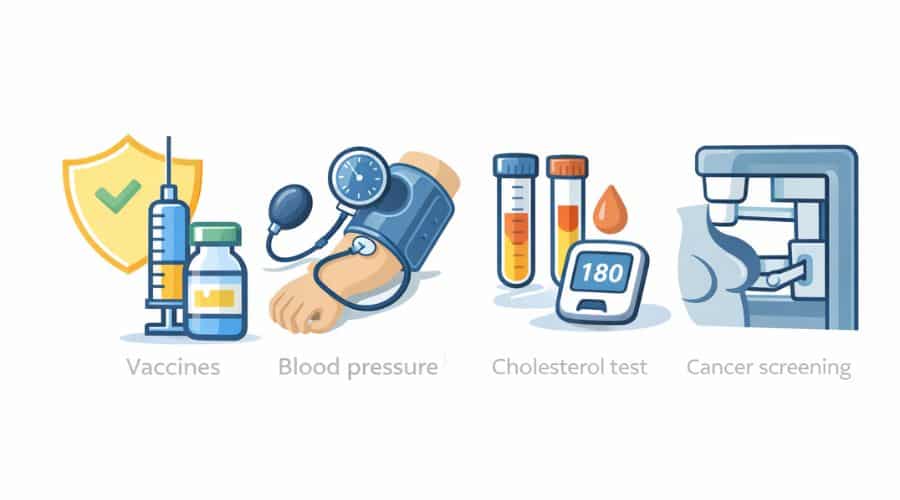
This section breaks down the most common preventive services that are typically covered at no cost under U.S. health insurance, as long as all plan conditions are met. Always remember that eligibility can depend on age, gender, risk factors, and how the service is billed.
The services below are commonly covered at no cost when all plan conditions are met. Coverage is based on federal preventive care guidelines, but age, sex, risk factors, and plan type matter.
Preventive Doctor Visits
Annual Wellness and Physical Exams
Most ACA-compliant plans cover:
- One annual preventive visit with a primary care provider
- Basic health review and risk assessment
- Height, weight, BMI, and blood pressure checks
This visit is meant for prevention, not problem-solving. Once symptoms or ongoing conditions are discussed, billing rules can change.
Preventive Screenings Commonly Covered at No Cost
Cardiovascular and Metabolic Screenings
Often free when guidelines apply:
- Blood pressure screening
- Cholesterol screening (age- and risk-based)
- Type 2 diabetes screening for adults with certain risk factors
These screenings are preventive only when done before symptoms appear.
Cancer Screenings
Many cancer screenings are fully covered when guideline criteria are met:
| Screening | Who Typically Qualifies | Notes |
|---|---|---|
| Breast cancer (mammogram) | Women, based on age and risk | Frequency depends on guidelines |
| Cervical cancer (Pap test / HPV) | Women, age-based | Timing rules are strict |
| Colorectal cancer screening | Adults 45–75 | Method matters (colonoscopy vs stool test) |
| Lung cancer screening | High-risk adults | Smoking history required |
Coverage timing and frequency must follow federal screening guidelines to qualify as preventive.
If a screening test leads to a follow-up test, the follow-up may be diagnostic, not preventive.
Vaccines That Are Typically Free
Adult Immunizations
Most plans cover recommended vaccines at no cost, including:
- Flu vaccine
- COVID-19 vaccines
- Tetanus, diphtheria, and pertussis (Tdap)
- Shingles vaccine
- Pneumococcal vaccines for eligible adults
Vaccines must follow the schedule recommended by federal immunization authorities. Vaccines must follow the schedule recommended by federal immunization authorities such as the Advisory Committee on Immunization Practices.
Preventive Care for Women
Women’s Health Services
Many plans cover additional services without cost-sharing:
- Well-woman visits
- Breastfeeding support and supplies
- Contraceptive methods (specific rules apply)
Not every brand or method is always free. Plans may cover certain options fully while applying cost-sharing to others.
Preventive Care for Children
Pediatric Preventive Services
Most plans cover:
- Well-child visits
- Developmental screenings
- Vision and hearing screenings
- Childhood immunizations
Timing and frequency follow federal pediatric guidelines.
When Preventive Care Is NOT Free
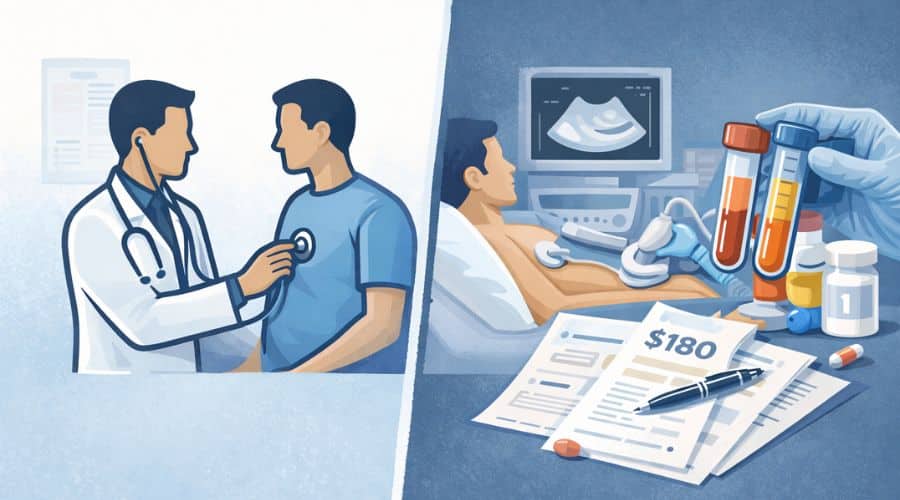
This is where most billing confusion happens.
Diagnostic vs Preventive Care
Preventive care becomes diagnostic when:
- You report symptoms
- A condition is already known
- A test is ordered to investigate a problem
Example:
A cholesterol test during a routine exam may be free.
The same test ordered to monitor high cholesterol is usually not free.
Common Situations That Trigger Charges
- Blood work beyond standard preventive labs
- Imaging ordered due to pain or abnormal results
- Additional tests during the same visit
- Seeing a specialist instead of a primary care provider
- Using an out-of-network provider
Even a single billing code can change how insurance applies cost-sharing. Even small changes during a visit can shift a service from preventive to diagnostic.
Pros and Cons of Preventive Care Coverage
| Pros | Cons |
|---|---|
| Encourages early detection | Easy to misunderstand coverage |
| Reduces long-term health costs | Billing depends on coding accuracy |
| No upfront cost when rules are met | Follow-up care may cost money |
| Improves population health | Network restrictions apply |
How Preventive Care Affects Your Finances Long Term

Cost Savings Over Time
Preventive care can:
- Reduce emergency visits
- Lower long-term treatment costs
- Prevent avoidable hospitalizations
These savings matter even if you rarely visit the doctor. Even when preventive care leads to paid treatment later, your total costs are limited by your out-of-pocket maximum.
Impact on Credit and Medical Debt
Preventive care itself does not directly affect credit.
However, surprise medical bills can:
- Lead to collections
- Appear on credit reports
- Affect loan and housing applications
Understanding preventive rules helps reduce this risk.
Common Myths vs Facts
Myth: All annual checkups are free
Fact: Only preventive-only visits with no added diagnostic services qualify.
Myth: Follow-up tests after a screening are free
Fact: Follow-ups are usually diagnostic and may involve cost-sharing.
Myth: Insurance companies decide what’s preventive
Fact: Preventive definitions come from federal medical guidelines, not insurers.
Beginner Mistakes to Avoid
- Assuming “annual visit” means unlimited free services
- Not confirming provider network status
- Ignoring explanation of benefits (EOB) statements
- Discussing multiple health issues during a preventive visit without asking about billing impact
A short conversation with the provider’s office beforehand can prevent most issues.
Frequently Asked Questions (FAQ)
-
Is preventive care free on all U.S. health insurance plans?
No. Most ACA-compliant plans must cover it, but grandfathered plans and some short-term plans may not.
-
Does Medicare cover preventive care for free?
Medicare covers many preventive services, but rules differ from private insurance, and not all services are $0.
-
Can one visit be partly free and partly billed?
Yes. A visit can include both preventive and diagnostic services, leading to partial charges.
-
What if my insurance denies a preventive claim?
You can appeal. Errors often involve incorrect coding or misunderstanding of eligibility.
-
How can I confirm a service is preventive before my appointment?
Ask the provider:
– How the service will be billed
– Whether it’s coded as preventive
– Whether all providers involved are in network
Disclaimer
This content is provided for educational and informational purposes only. It does not constitute legal, tax, or financial advice. Health insurance rules vary by plan, insurer, state, and individual circumstances. Always review your specific policy documents and consult a qualified professional or your insurance provider before making personal healthcare or financial decisions.
