
Buying your first home in the United States can feel overwhelming. Prices are high in many markets, saving for a down payment takes time, and loan rules can seem confusing. Many people assume first-time buyer help no longer exists—or that it’s only for very low-income households.
That assumption is wrong.
Across the U.S., there are federal, state, and local first-time home buyer programs designed to lower barriers for people who can afford a monthly payment but struggle with upfront costs or strict lending standards. Understanding how these programs work—and their limits—can make the difference between renting longer than necessary and buying responsibly.
This section lays the foundation: what “first-time buyer” really means, how these programs function, and why they exist.
Key Takeaways
- First-time home buyer programs are designed to reduce upfront costs and make homeownership more accessible.
- Many programs offer low down payments, down payment assistance, or more flexible credit rules.
- Eligibility depends on income, credit profile, location, and loan type.
- Federal, state, local, and employer-based programs often stack together, but rules vary.
- These programs help with access—not affordability mistakes—so buyers must still plan carefully.
What Is a First-Time Home Buyer?
In the United States, a first-time home buyer is not always someone who has never owned a home.
Most programs follow a three-year rule:
You are typically considered a first-time buyer if you have not owned a primary residence in the past three years.
You may still qualify if:
- You previously owned a home but sold it more than three years ago
- You owned a home with a former spouse
- You inherited property but never lived in it
- You owned a mobile home not permanently attached to land
Some programs use stricter definitions, while others are more flexible. Always check the specific program rules.
Why First-Time Home Buyer Programs Exist
Homeownership has long been a key part of financial stability in the U.S., but several factors make entry difficult:
- Rising home prices in many metro areas
- Student loan debt reducing savings capacity
- High down payment expectations, even when monthly payments are affordable
- Credit barriers for borrowers with limited credit history
First-time buyer programs aim to:
- Reduce upfront cash requirements
- Expand access to mortgage credit responsibly
- Encourage stable, long-term homeownership
- Support local housing markets and communities
These programs are regulated or supported by government agencies and housing authorities—not private sales incentives.
How First-Time Home Buyer Programs Work
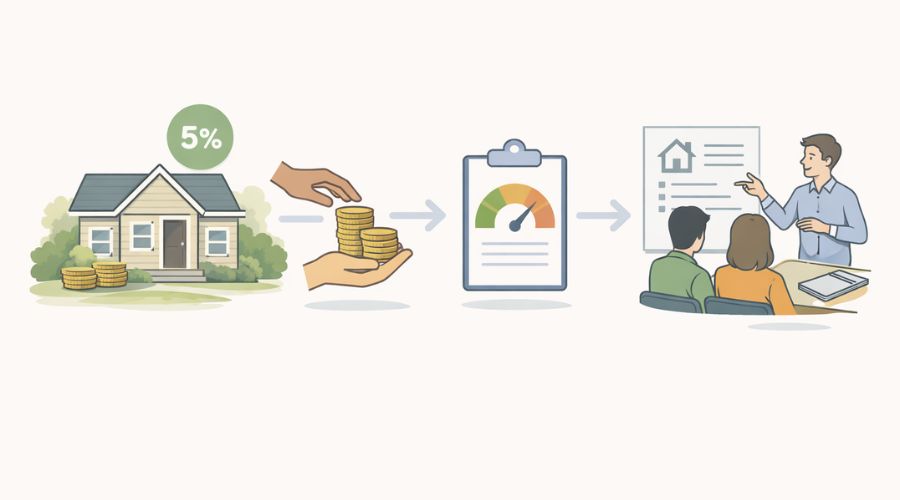
First-time buyer assistance usually falls into one or more of these categories:
1. Low Down Payment Mortgage Programs
These loans allow buyers to put down as little as 0%–3.5%, instead of the traditional 20%.
2. Down Payment Assistance (DPA)
Grants or loans that help cover:
- Down payment
- Closing costs
- Both
Some DPA funds never need to be repaid; others are deferred or forgiven over time.
3. Flexible Credit Guidelines
Certain programs allow:
- Lower minimum credit scores
- Higher debt-to-income ratios
- Alternative credit history
4. Education-Based Benefits
Many programs require a homebuyer education course, which can unlock:
- Better loan terms
- Eligibility for assistance funds
- Stronger financial readiness
Major Federal First-Time Home Buyer Loan Programs

These are nationwide programs backed by the U.S. government or government-sponsored enterprises.
FHA Loans
Backed by the Federal Housing Administration, FHA loans are among the most commonly used options for first-time buyers.
Key features:
- Minimum down payment: 3.5%
- Credit scores as low as 580 may qualify
- Mortgage insurance is required
- Loan limits vary by county
FHA loans are often used by buyers with limited savings or shorter credit histories.
VA Loans (for Eligible Buyers)
VA loans, backed by the U.S. Department of Veterans Affairs, are available to:
- Veterans
- Active-duty service members
- Certain surviving spouses
Key features:
- 0% down payment
- No private mortgage insurance (PMI)
- Competitive interest rates
- Funding fee may apply (with some exemptions)
Eligibility is based on military service, not income.
USDA Loans (Rural & Some Suburban Areas)
Backed by the U.S. Department of Agriculture, USDA loans support homeownership in eligible areas.
Key features:
- 0% down payment
- Income limits apply
- Property must be in a qualifying location
- Mortgage insurance costs are typically lower than FHA
Many eligible areas are outside major cities—but not necessarily remote.
Conventional Loans with First-Time Buyer Benefits
Programs supported by Fannie Mae and Freddie Mac offer first-time buyer-friendly options through conventional mortgages.
Examples include:
- 3% down payment options
- Reduced mortgage insurance for some borrowers
- Income-based assistance programs
- Homebuyer education incentives
These loans often suit buyers with stronger credit but limited savings.
At this point, you now understand who qualifies as a first-time buyer, why these programs exist, and the main federal loan options available nationwide.
State and Local First-Time Home Buyer Programs
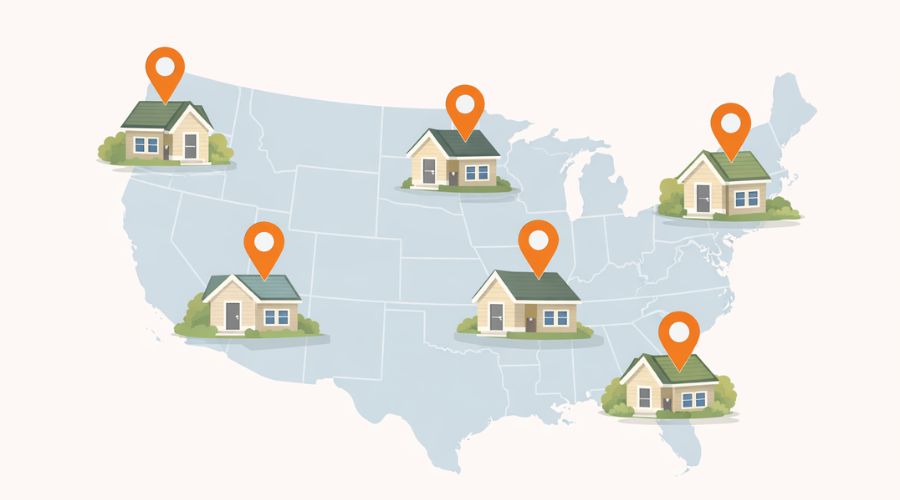
While federal loan programs set the foundation, state and local programs often provide the most meaningful financial help for first-time buyers—especially with down payments and closing costs.
These programs are run by:
- State housing finance agencies (HFAs)
- County or city housing departments
- Local housing authorities
- Community development organizations
Because housing markets vary widely across the U.S., these programs are highly localized.
What State & Local Programs Typically Offer
Most state and local first-time buyer programs focus on upfront affordability, not monthly payments.
Common benefits include:
Down Payment Assistance (DPA)
- Grants or loans to help cover down payment and/or closing costs
- Often paired with FHA, USDA, VA, or conventional loans
Reduced Interest Rates
- Slightly below-market mortgage rates
- Usually require using an approved lender
Deferred or Forgivable Loans
- Assistance that is not repaid immediately
- Often forgiven after 5–15 years if you remain in the home
Targeted Support
Some programs prioritize:
- First-generation home buyers
- Moderate- and middle-income households
- Buyers in revitalization or high-need areas
- Teachers, firefighters, healthcare workers, or public employees
Types of Down Payment Assistance (How Repayment Works)
Not all assistance works the same way. Understanding the structure matters.
| Type of Assistance | How It Works | Repayment |
|---|---|---|
| Grant | Free funds for down payment or closing costs | Never repaid |
| Deferred Loan | Second loan with no monthly payment | Repaid when you sell, refinance, or move |
| Forgivable Loan | Loan forgiven over time if conditions are met | Forgiven after set period |
| Low-Interest Second Loan | Separate loan with small monthly payment | Paid monthly |
Important: If you sell or refinance early, deferred or forgivable assistance may become due.
Income Limits and Purchase Price Caps
Most state and local programs set limits to ensure help goes to buyers who need it.
Common restrictions include:
- Household income limits, often based on Area Median Income (AMI)
- Maximum home purchase price
- Property must usually be a primary residence
Income limits can be higher than many people expect, especially in high-cost areas.
Homebuyer Education Requirements
Many programs require completing a HUD-approved homebuyer education course.
These courses cover:
- Budgeting for homeownership
- Mortgage basics
- Maintenance and long-term costs
- Avoiding foreclosure risks
Completion may:
- Unlock assistance eligibility
- Reduce mortgage insurance costs
- Strengthen loan approval chances
Courses can be online or in person and typically take a few hours.
Employer-Based First-Time Home Buyer Assistance
Some employers offer housing benefits as part of employee retention programs.
These may include:
- Down payment grants
- Forgivable loans
- Closing cost assistance
Common among:
- Hospitals
- Universities
- Local governments
- Large employers in high-cost cities
Availability depends entirely on the employer.
Combining (Stacking) Multiple Programs
In many cases, buyers can combine multiple forms of assistance, such as:
- FHA loan + state DPA
- Conventional loan + city grant
- VA loan + local closing cost assistance
However:
- Programs must allow stacking
- Lenders must approve all layers
- Total assistance may be capped
This is where working with an experienced, program-approved lender becomes critical.
Pros and Cons of First-Time Home Buyer Programs
| Pros | Cons |
|---|---|
| Lower upfront cash needed | More paperwork and documentation |
| Makes homeownership accessible sooner | Income and price limits apply |
| Can reduce financial stress at closing | Fewer lender options |
| Some assistance never needs repayment | Restrictions on selling or refinancing |
| Encourages responsible buying | Slower closing timelines |
These programs help with access, not affordability mistakes. Buyers still need realistic budgets.
Who These Programs Are Best For
First-time home buyer programs tend to work best for people who:
- Can afford monthly payments but lack upfront cash
- Have stable income but limited savings
- Have fair-to-good credit, not perfect credit
- Plan to stay in the home for several years
Who Should Be Careful or Avoid Them
These programs may not be ideal if you:
- Plan to sell or refinance quickly
- Expect a large income increase soon
- Want maximum flexibility in lenders and loan terms
- Can comfortably afford a larger down payment without assistance
Common Risks, Limitations, and Mistakes First-Time Buyers Make

First-time home buyer programs can be extremely helpful—but they are not risk-free. Many buyers run into problems not because the programs are bad, but because the rules are misunderstood or long-term costs are overlooked.
This section covers the most common pitfalls and how to avoid them.
Mistake #1: Focusing Only on the Down Payment
Lowering the down payment helps you buy sooner, but it does not make a home cheaper overall.
Many first-time buyers overlook:
- Property taxes
- Homeowners insurance
- Maintenance and repairs
- Utilities and HOA fees
- Mortgage insurance costs
A home that is affordable at closing can become stressful months later.
Key warning: A low down payment does not protect you from ongoing ownership costs.
Mistake #2: Ignoring Mortgage Insurance Costs
Most low-down-payment loans require mortgage insurance.
Common examples:
- FHA loans require Mortgage Insurance Premiums (MIP) for the life of the loan in many cases
- Conventional loans require Private Mortgage Insurance (PMI) until sufficient equity is reached
- USDA loans have upfront and annual guarantee fees
These costs can add hundreds of dollars per month and should be factored into affordability.
Mistake #3: Not Understanding Repayment Triggers
Down payment assistance often comes with strings attached.
Assistance may become repayable if you:
- Sell the home
- Refinance the mortgage
- Move out
- Stop using the home as a primary residence
This can create surprises during refinancing or relocation.
Always ask: When does this assistance have to be repaid—and under what conditions?
Mistake #4: Buying at the Top of Your Approval Range
Loan approval does not equal affordability. Understanding how much house you can realistically afford based on your income is critical before relying on lender approval numbers.
Lenders may approve borrowers up to the maximum allowed debt-to-income ratio, but that leaves little room for:
- Job changes
- Childcare costs
- Medical expenses
- Rate increases on adjustable loans
Programs help you qualify—but they do not protect you from financial strain.
Mistake #5: Assuming All Lenders Offer the Same Programs
Not all lenders participate in:
- State housing finance agency programs
- City or county DPA programs
- Employer-based assistance
Some lenders avoid these programs due to extra paperwork.
Working with a lender unfamiliar with assistance programs can cause delays or denials.
Legal and Regulatory Considerations (U.S. Only)
First-time buyer programs operate under federal, state, and local rules.
Key points to understand:
Fair Lending Laws
All programs must comply with:
- Equal Credit Opportunity Act (ECOA)
- Fair Housing Act
Programs cannot discriminate based on protected characteristics.
Occupancy Requirements
Most assistance requires:
- Owner occupancy
- Primary residence use within a set timeframe
Renting out the home early may violate program rules.
Resale Restrictions
Some local programs include:
- Shared appreciation clauses
- Resale price caps
- Right-of-first-refusal provisions
These are more common in affordable housing initiatives.
Tax Considerations (What Most Buyers Miss)
Most first-time buyer assistance:
- Is not taxable income if structured as a loan or grant used for housing
- Does not affect mortgage interest deductions
However:
- Forgiven debt can sometimes have tax implications
- State tax treatment may differ
- Past federal first-time buyer credits (from earlier years) no longer apply
Important: Tax treatment depends on how assistance is structured.
Myths vs. Facts About First-Time Buyer Programs
| Myth | Reality |
|---|---|
| “Only low-income people qualify” | Many programs serve moderate-income households |
| “You must have perfect credit” | Several programs allow lower credit scores |
| “Assistance is always free money” | Many programs require repayment |
| “These programs slow everything down” | Closings may take longer, but delays are manageable |
| “Renting is always cheaper” | Depends on location, timeframe, and stability |
Long-Term Financial Impact
Used responsibly, first-time buyer programs can:
- Accelerate wealth building through equity
- Provide housing stability
- Reduce reliance on rising rents
Used carelessly, they can:
- Lock buyers into unaffordable homes
- Create repayment surprises
- Limit future financial flexibility
The program is only as helpful as the decision-making behind it.
How to Apply for First-Time Home Buyer Programs (Step by Step)
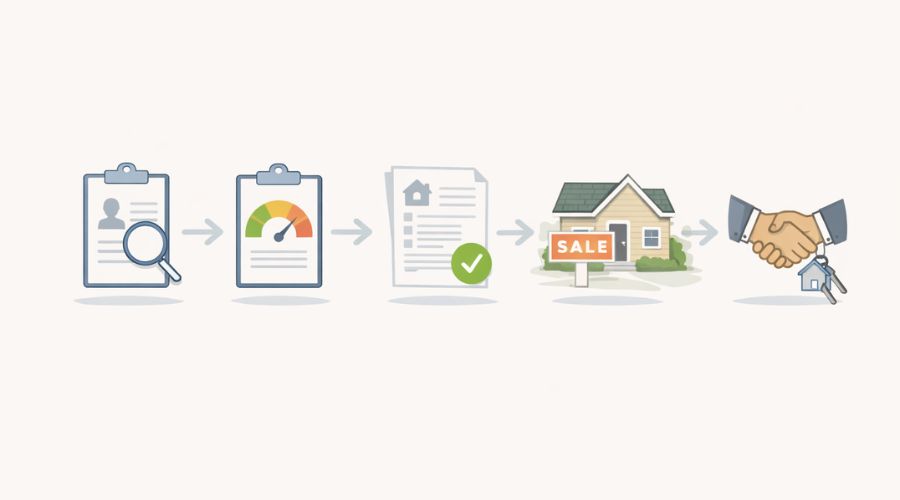
Understanding the programs is only half the work. The application process matters just as much—and this is where many first-time buyers get confused or discouraged.
Below is a realistic, U.S.-based step-by-step process that reflects how these programs actually work in practice.
Step 1: Check Your Basic Eligibility Early
Before looking at homes, confirm whether you meet common baseline requirements:
- First-time buyer status (often no ownership in last 3 years)
- Household income within program limits
- Intended home will be a primary residence
- Willingness to complete homebuyer education (if required)
You do not need perfect credit or large savings, but you do need stable income and realistic expectations.
Step 2: Review Your Credit and Finances Honestly
Most programs look at:
- Credit score
- Payment history
- Debt-to-income (DTI) ratio
- Cash reserves (even small amounts)
Before applying:
- Check your credit reports for errors
- Avoid opening new debt
- Avoid large unexplained deposits
- Keep employment stable if possible
Key point: Assistance programs reduce barriers—but they do not replace basic underwriting standards.
Step 3: Complete a Homebuyer Education Course (If Required)
Many programs require a HUD-approved homebuyer education course before loan approval.
These courses:
- Explain the full cost of homeownership
- Clarify loan terms and responsibilities
- Reduce default risk for both buyers and lenders
Even when not required, taking one often improves approval odds and decision quality.
Step 4: Find a Program-Approved Lender
This step is critical.
Most state and local programs:
- Work only with approved participating lenders
- Require lenders to submit program-specific paperwork
- Will not accept applications from unapproved lenders
Ask lenders directly:
- Which first-time buyer programs do you actively use?
- How often do you close these loans?
- Can assistance be stacked?
Experience matters more than advertised interest rates.
Step 5: Get Preapproved (Not Just Prequalified)
A preapproval is a documented credit and income review. It shows:
- How much you can realistically borrow
- Which programs you qualify for
- Whether assistance funds are available
This protects you from shopping outside your true budget.
Step 6: Confirm Program Funds Are Available
Many assistance programs:
- Have limited annual funding
- Operate on a first-come, first-served basis
- Pause when funds run out
Your lender should confirm:
- Current availability
- Any waitlists
- Required reservation timing
Do not assume assistance will be there later.
Step 7: Make an Offer Within Program Rules
Program rules may limit:
- Maximum purchase price
- Property type (single-family, condo, manufactured)
- Seller concessions
- Required inspections
Before making an offer, confirm the home qualifies.
Step 8: Close With Extra Time Built In
Closings using assistance programs often take:
- More documentation
- Additional approvals
- Slightly longer timelines
This is normal.
Planning for a longer closing window reduces stress and prevents last-minute issues.
Comparing First-Time Buyer Programs vs. Conventional Buying
| Feature | With Buyer Programs | Without Programs |
|---|---|---|
| Down payment | Low or assisted | Higher upfront cash |
| Closing costs | Often reduced | Buyer-funded |
| Credit flexibility | More forgiving | Stricter |
| Paperwork | Heavier | Simpler |
| Lender choice | Limited | Broad |
| Long-term flexibility | May be restricted | More freedom |
Neither path is “better” universally. The right choice depends on timing, finances, and future plans.
When Programs Make the Most Sense
Programs are especially useful when:
- Rent is rising faster than income
- Savings are strong monthly but limited upfront
- Long-term stability matters more than flexibility
- You plan to stay put for several years
When Paying More Upfront May Be Better
Programs may be less helpful when:
- You plan to move within a few years
- You expect rapid income growth
- You want the lowest lifetime loan cost
- You prefer fewer restrictions
Frequently Asked Questions About First-Time Home Buyer Programs
Below are real questions Americans commonly search, with clear, practical answers based on how these programs actually work.
-
Do I really qualify as a first-time home buyer if I owned a home before?
Often, yes.
Many programs use the three-year rule, meaning you may qualify if you have not owned a primary residence in the last three years. However, some local programs use stricter definitions, so eligibility must always be checked program by program.
-
How much money do I actually need to buy my first home?
It depends on:
– Loan type
– Available assistance
– Closing cost structure
– Local home pricesSome buyers close with very little out-of-pocket cash, while others still need several thousand dollars. Programs reduce barriers, but they do not eliminate all costs.
-
Can I use first-time buyer programs with a conventional loan?
Yes.
Many state and local programs pair with:– FHA loans
– USDA loans
– VA loans
– Conventional loans backed by Fannie Mae or Freddie MacHowever, assistance compatibility must be confirmed in advance.
-
Do first-time home buyer programs have higher interest rates?
Sometimes, but not always.
Some programs offer slightly below-market rates, while others may be slightly higher in exchange for assistance. The total cost over time, not just the rate, is what matters.
-
Is down payment assistance considered a loan?
It depends on the program.
Down payment assistance can be:
– A grant
– A deferred loan
– A forgivable loan
– A low-interest second mortgageEach structure has different repayment rules and risks.
-
What happens if I refinance later?
Refinancing can:
– Trigger repayment of assistance
– Cancel forgiveness timelines
– Require lender approvalBefore refinancing, always review the original assistance terms.
-
Can I rent out my home after buying it?
Usually not—at least not immediately.
Most programs require the home to remain your primary residence for a certain period. Renting it out too soon may violate program rules.
-
Are these programs only for low-income buyers?
No.
Many programs serve moderate-income households, especially in high-cost areas. Income limits are often higher than people expect.
-
Do first-time buyer programs protect me if home prices fall?
No.
These programs help with access, not market risk. Buyers are still exposed to price changes and must plan accordingly.
-
Is homebuyer education actually useful?
Yes.
Education courses help buyers:
– Understand real ownership costs
– Avoid common mistakes
– Prepare for long-term responsibilityThey are often required for good reason.
-
Are these programs still available in 2026?
Yes, but availability depends on:
– Government funding
– State and local budgets
– Annual program allocationsFunds can pause or change, so timing matters.

Final Thoughts
First-time home buyer programs can be a powerful tool—but they are not shortcuts. They work best when paired with realistic budgets, stable income, and long-term plans.
Used thoughtfully, they can help households move from renting to ownership without taking on unnecessary risk.
Used carelessly, they can create financial stress later.
The program itself is only part of the decision.
Disclaimer
This content is provided for educational and informational purposes only.
It does not constitute financial, legal, or tax advice.
Home buying decisions depend on individual circumstances, state laws, and program rules that may change over time.
Readers should consult a qualified mortgage professional, housing counselor, tax advisor, or financial professional before making personal financial decisions.
