
Money problems rarely announce themselves politely. A medical bill, car repair, job gap, or family emergency can force borrowing at the worst possible time—right when your credit score is already hurting. Many Americans assume that “bad credit” means no options at all. That’s not accurate, but it is risky territory. This guide explains how bad-credit loans actually work in the U.S., which options are safer, which ones are risky, and how to decide without making your financial situation worse.
In the U.S., lenders rely heavily on credit history to decide who qualifies, how much they’ll lend, and what it will cost. When your credit is damaged, the goal isn’t just getting approved—it’s avoiding loans that quietly make your situation worse. Understanding how the system works helps you choose the least harmful path and avoid traps that target people under pressure.
Key Takeaways
If you’re short on time, these are the most important points to understand before borrowing with bad credit.
- Bad credit does not automatically disqualify you from getting a loan, but it does limit options and increase costs.
- Lenders price risk, so interest rates, fees, and terms matter more than the approval itself.
- Understanding U.S. credit rules—including credit scores, reports, and consumer protections—helps you avoid costly mistakes.
- Some loan paths are safer than others when your credit is weak; others can worsen your finances fast.
- Preparation and documentation can meaningfully improve approval odds even with poor credit.
What “Bad Credit” Means in the United States
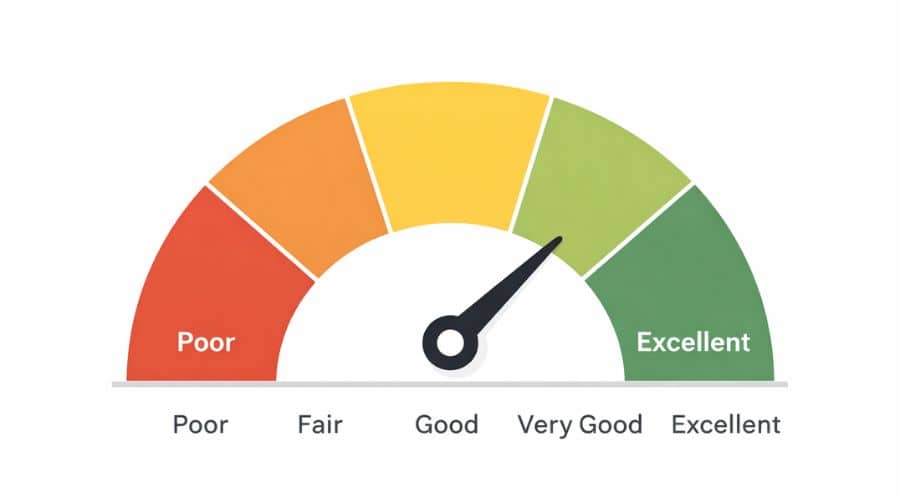
Bad credit generally refers to a low credit score or a negative credit history that signals higher risk to lenders.
Common U.S. credit score ranges (FICO®)
| Score Range | How Lenders Usually View It |
|---|---|
| 300–579 | Poor / Bad credit |
| 580–669 | Fair credit |
| 670–739 | Good credit |
| 740–799 | Very good |
| 800–850 | Exceptional |
Most lenders consider scores below 580 as high risk, but approval decisions can still vary based on income, stability, and loan type.
Most U.S. lenders rely on FICO® Scores, which are calculated using data from the three major credit bureaus—payment history, amounts owed, credit age, credit mix, and recent inquiries.
Important: There is no legal definition of “bad credit.” Each lender sets its own approval standards, and some focus more on income, employment, or collateral than on score alone.
How Loans Work When You Have Bad Credit
When your credit is weak, lenders manage risk in a few predictable ways:
- Higher interest rates to compensate for default risk
- Shorter repayment terms, increasing monthly payments
- Lower loan amounts
- Added fees (origination, processing, and late-payment penalties)
- Collateral or co-signers to reduce lender exposure
Some lenders operate under strict federal and state consumer laws, while others exploit gray areas. Understanding the difference matters.
U.S. consumer lending is regulated primarily by agencies like the Consumer Financial Protection Bureau, which enforces rules around disclosures, unfair practices, and borrower rights. However, not all loans offer the same level of protection, especially when they come from non-bank sources.
When Getting a Loan With Bad Credit Can Make Sense
Taking out a loan with poor credit can be reasonable if:
- The expense is necessary, not discretionary
- The loan prevents a worse outcome (job loss, eviction, utility shutoff)
- Payments fit comfortably within your budget
- The loan does not reset a cycle of debt
Real-life U.S. example
A delivery driver with a 560 credit score needs $2,000 to repair a vehicle required for work. Without the car, income stops. A short-term, clearly priced installment loan with fixed payments may be less damaging than losing weeks of income or relying on high-fee alternatives.
Who Should Be Extremely Careful—or Avoid Borrowing
Bad-credit loans often cause harm when:
- The loan covers non-essential spending
- Repayment depends on future income that isn’t guaranteed
- Fees and interest compound faster than the balance declines
- The lender avoids transparency or rushes decisions
Common Myths About Getting Loans With Bad Credit
| Myth | Reality |
|---|---|
| “No bank will ever approve me” | Some banks and credit unions consider income and stability |
| “All bad-credit loans are scams” | Some are regulated; others are predatory |
| “A co-signer fixes everything” | It shifts risk, but doesn’t erase affordability issues |
| “Approval means I should take it” | Cost and terms matter more than approval |
What Lenders Actually Look At (Beyond Your Score)
Even with bad credit, lenders may evaluate:
- Verified income and employment stability
- Debt-to-income ratio (DTI)
- Bank account history
- Collateral value (if applicable)
- Recent credit behavior, not just old mistakes
Improving documentation can sometimes matter more than a small score change.
Types of Loans Available to Americans With Bad Credit
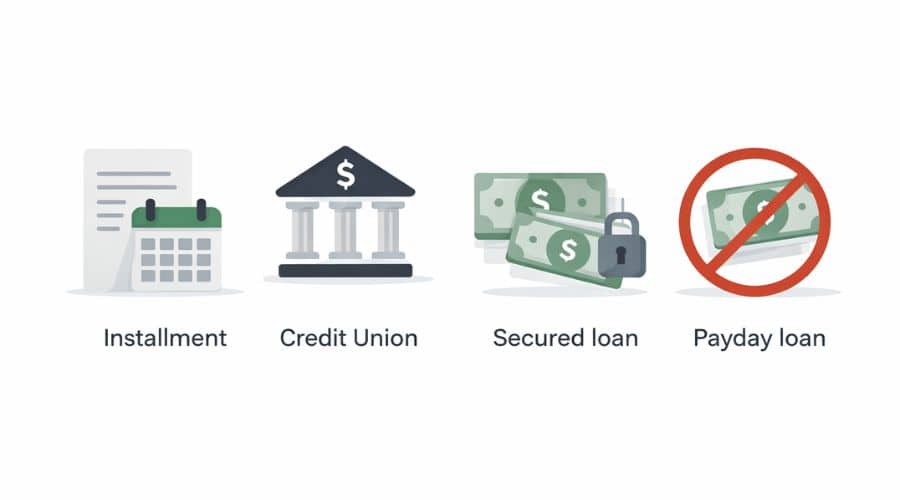
Not all bad-credit loans work the same way. Some are structured to manage risk responsibly, while others rely on high costs and short repayment timelines that increase the risk of repeated borrowing. Understanding how each loan type works in the U.S. is critical before comparing rates or applying.
Personal Installment Loans (Bad-Credit Friendly)
Personal installment loans provide a lump sum upfront and fixed monthly payments over a set period (often 12–60 months).
How they work
These are among the most common loan types offered to borrowers with weak credit.
- Offered by banks, credit unions, and online lenders
- Payments are predictable and amortized
- Interest rates are higher with bad credit, but terms are clearer than short-term loans
Why they’re commonly used
- Emergency expenses
- Debt consolidation
- Car repairs or medical bills
What to watch closely
- APR, not just the interest rate
- Origination fees deducted from the loan
- Prepayment penalties (less common, but still exist)
Best suited for: Borrowers with steady income who need structured repayment and time to pay.
Credit Union Loans for Bad Credit
Many U.S. credit unions use relationship-based underwriting, not just credit scores. Because credit unions are member-owned, they often prioritize long-term member stability over short-term profit.
Key features
- Often lower rates than online bad-credit lenders
- May offer credit-builder loans or small-dollar loans
- Membership required (sometimes easy to qualify)
Why credit unions matter
Federal credit unions are subject to rate caps and consumer protections that reduce extreme pricing.
Best suited for: Borrowers who can qualify for membership and want lower-cost options.
Secured Loans (Using Collateral)
A secured loan requires collateral—something the lender can seize if you don’t repay.
Common collateral types
- Savings accounts or CDs
- Vehicles
- Other personal assets
Pros
- Easier approval with bad credit
- Lower interest rates than unsecured loans
Serious risks
- Loss of the collateral if payments are missed
- Repossession can damage both finances and credit further
Best suited for: Borrowers who fully understand the risk and have stable cash flow.
Co-Signed Loans
A co-signer agrees to repay the loan if you don’t.
How lenders view them
- The co-signer’s credit and income reduce lender risk
- Approval odds and rates often improve
Critical reality
- Missed payments harm both credit profiles
- Legal responsibility is equal—not secondary
From a legal standpoint, the lender treats both borrowers as equally responsible from day one.
Best suited for: Situations with clear trust, written expectations, and a solid repayment plan.
Peer-to-Peer (P2P) Loans
P2P platforms connect borrowers with individual investors rather than banks.
How they differ
- Decisions may weigh income and story alongside credit
- Rates vary widely depending on perceived risk
Limitations
- Fees can be high
- Not always available in every state
- Less flexible once the loan is issued
Best suited for: Borrowers who don’t qualify elsewhere but can handle fixed terms.
Cash Advance Apps and Employer-Based Advances
Some apps offer earned wage access or small advances.
Key distinctions
- Not traditional loans
- Often no credit check
- Fees are indirect (subscriptions, tips, expedited transfers)
Risks
- Frequent use can mask budgeting problems
- Can reduce future paychecks and create timing issues
These tools are designed for occasional gaps, not ongoing income shortfalls.
Best suited for: Very short-term gaps when used sparingly and intentionally.
Loans That Require Extreme Caution
Some loan products are heavily criticized by regulators and consumer advocates because their cost and structure are associated with higher borrower harm.
Examples
- Payday loans
- Auto title loans
- High-fee refund anticipation loans
Why they’re dangerous
- Extremely high effective APRs
- Short repayment windows
- High rollover and default rates
Key warning: Approval is fast because the structure benefits the lender, not the borrower.
Comparison: Common Bad-Credit Loan Options
| Loan Type | Approval Ease | Typical Cost | Risk Level |
|---|---|---|---|
| Personal installment loan | Medium | High but predictable | Moderate |
| Credit union loan | Medium | Lower than average | Lower |
| Secured loan | Medium | Lower APR | High if default |
| Co-signed loan | Easier | Depends on co-signer | Shared risk |
| Payday / title loan | Very easy | Extremely high | Very high |
Costs and risk levels vary by lender, state law, and borrower profile, but the structure of the loan often matters more than the approval speed.
How to Improve Your Approval Odds Before Applying (Even With Bad Credit)
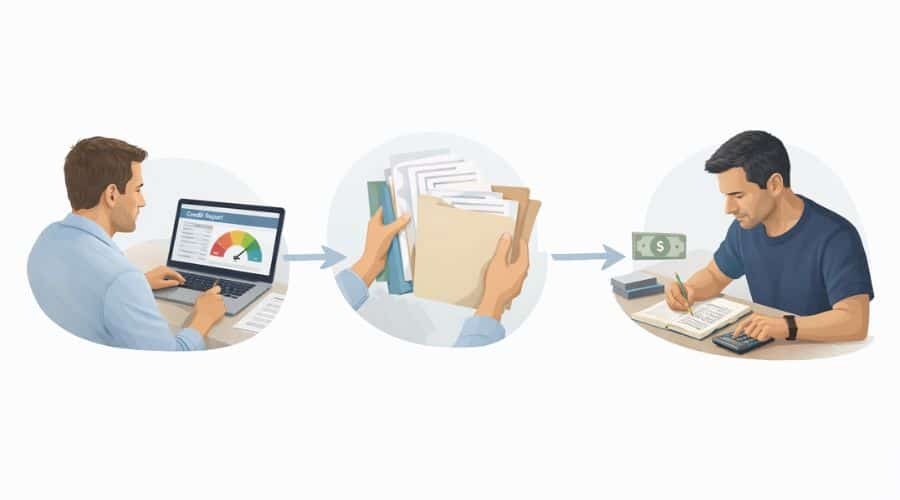
When credit is weak, preparation often matters more than the lender itself. The steps you take before applying can affect not just approval, but also interest rates, fees, and whether the loan helps or harms your finances.
Step 1: Check Your Credit Reports (Not Just Your Score)
In the U.S., you are legally entitled to free credit reports from all three major bureaus—Experian, Equifax, and TransUnion. Checking all three reports is important because lenders may use any one of them.
Why this matters
- Errors are common, especially after collections or identity issues
- Incorrect late payments or balances can depress scores unfairly
- Lenders review the report, not just the number
Look for:
- Accounts that don’t belong to you
- Incorrect balances or dates
- Duplicate collections
Disputing inaccuracies can take weeks, but even one correction may help.
Step 2: Understand Why Your Credit Is Low
Not all “bad credit” looks the same to lenders.
| Primary Issue | How Lenders Often React |
|---|---|
| Missed payments | Viewed as high risk |
| High balances | Seen as manageable if income is strong |
| Collections | Depends on age and type |
| Thin credit file | Risky, but sometimes fixable |
Recent behavior matters more than old mistakes. A score damaged by years-old events may be treated differently than one with fresh delinquencies.
Step 3: Calculate What You Can Actually Afford
Before applying, determine a safe monthly payment, not just the maximum you can technically qualify for.
A practical rule
- Loan payments should not push your total monthly debt obligations beyond what you can comfortably pay even in a lower-income month.
- Leave room for irregular expenses—repairs, medical costs, seasonal bills. If a payment only works when everything goes right, it’s likely too risky.
Warning: Many bad-credit lenders approve loans that strain budgets from day one.
Step 4: Gather Proof of Stability
Strong documentation can offset weak credit.
Prepare:
- Recent pay stubs or income statements
- Bank statements showing consistent deposits
- Proof of residence and employment history
Self-employed or gig workers should organize:
- Recent tax returns
- 1099 forms
- Bank deposit records
Consistency often matters more than income size.
Step 5: Reduce Red Flags Before Applying
Small changes can help:
- Pay down high credit card balances if possible
- Avoid applying for multiple loans at once
- Bring accounts current if they’re only slightly past due
These changes won’t fix credit overnight, but they can reduce how risky you appear to lenders.
Multiple recent applications can lower scores further and signal distress. These changes won’t fix credit overnight, but they can reduce how risky you appear to lenders.
Step 6: Consider a Credit Union or Community Lender First
Community-based lenders may:
- Review applications manually
- Factor in local employment or relationship history
- Offer alternatives if a standard loan isn’t approved
This approach aligns more closely with consumer protection principles promoted by U.S. regulators.
Step 7: Know What a Fair Offer Looks Like
Before accepting a loan, confirm:
- APR is fully disclosed
- Fees are listed clearly and in writing
- Payment schedule is fixed and understandable
- There is no pressure to decide immediately
If terms feel rushed or confusing, that’s a warning sign.
Common Mistakes That Lower Approval Odds
- Applying without reviewing credit reports
- Accepting the first approval without comparison
- Ignoring total repayment cost
- Borrowing more than needed “just in case”
Pros and Cons of Getting a Loan With Bad Credit
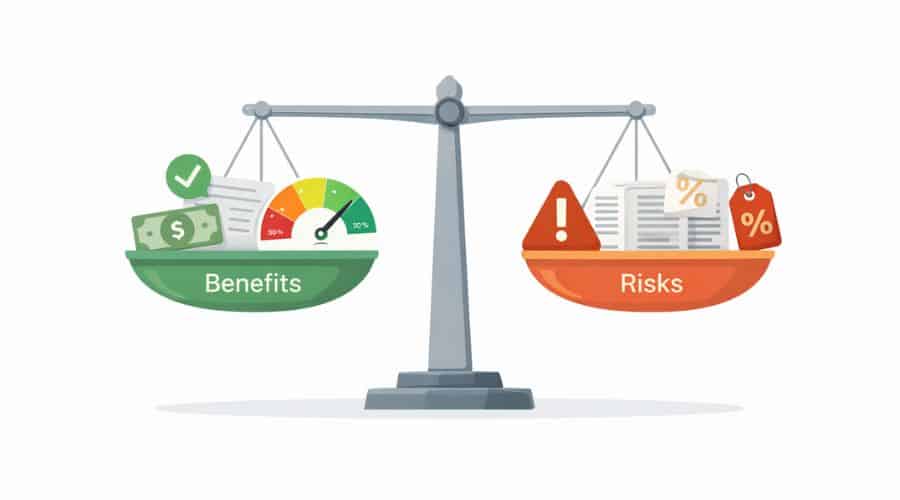
Borrowing with bad credit is a trade-off. It may solve an immediate problem, but it often comes with higher costs and added risk. Understanding both the benefits and downsides clearly is essential before committing.
The Potential Benefits
Access to funds when timing matters
When savings aren’t available, a loan can cover urgent needs like medical care, transportation for work, or preventing service shutoffs.
Predictable structure (with the right loan)
Installment loans with fixed payments and timelines provide clarity—especially compared with open-ended debt or revolving balances.
Opportunity to rebuild credit
If the lender reports to credit bureaus, on-time payments can gradually improve your credit profile, particularly after a period of negative history.
Avoiding worse alternatives
A carefully chosen loan may be less harmful than repeated overdrafts, unpaid bills, or loss of income due to unresolved emergencies.
The Real Downsides
Higher total cost
Bad-credit loans usually carry higher APRs and fees, meaning you repay significantly more than you borrow.
Budget pressure
Shorter terms and higher payments can strain cash flow, increasing the risk of missed payments.
Limited flexibility
Many bad-credit loans offer fewer hardship options if income drops or expenses rise unexpectedly.
Risk of deeper debt
If the loan doesn’t solve the underlying issue, it can extend or worsen financial stress rather than relieve it.
Pros & Cons Summary Table
| Aspect | Pros | Cons |
|---|---|---|
| Access to money | Available despite poor credit | Often expensive |
| Repayment | Fixed payments (installment loans) | Less flexibility |
| Credit impact | Can help rebuild credit | Missed payments hurt more |
| Speed | Faster than traditional approval | Speed can mask poor terms |
| Financial outcome | Can stabilize short-term issues | May increase long-term cost |
This comparison highlights why approval alone should never be the deciding factor when choosing a loan.
How a Bad-Credit Loan Affects Your Credit Over Time
Short-term impact
- A hard inquiry may slightly lower your score
- New debt can increase utilization
Medium- to long-term impact
- On-time payments improve payment history, the most important scoring factor
- Missed payments, defaults, or collections cause lasting damage
Important: A loan only helps credit if it’s managed consistently from the first payment to the last.
When the Risks Outweigh the Benefits
You should reconsider borrowing if:
- Payments would require skipping essentials
- Repayment depends on uncertain future income
- The loan cost exceeds the problem it solves
- You’re borrowing to repay other high-cost debt
In these cases, delaying or choosing a non-loan option may be safer.
Practical Decision Check
These questions help slow down decisions made under financial pressure.
Before accepting a loan, ask yourself:
- Does this fix a real problem—or postpone it?
- Can I make every payment even in a bad month?
- Do I understand the total amount I’ll repay?
If the answer to any of these is “no,” pause.
Risks, Warning Signs, and Common Mistakes to Avoid
When credit is already damaged, the margin for error is small. Many financial setbacks happen not because people borrow, but because they borrow under pressure without full information. This section explains the most common risks, warning signs, and mistakes associated with bad-credit loans—and how to recognize problems before they escalate.
Major Risks to Understand Upfront
These risks often appear small at first but can compound quickly over time.
High APRs that quietly compound
Bad-credit loans often advertise manageable monthly payments while downplaying total cost. A high APR over even a short term can significantly increase what you repay.
Key warning: Always review the total repayment amount, not just the monthly payment.
Short repayment terms
Some lenders shorten loan terms to reduce their risk. This raises monthly payments and increases the chance of missed payments—especially if income fluctuates.
Fees that reduce the cash you receive
Origination, processing, or “administrative” fees may be deducted upfront, meaning you receive less than the loan amount but repay the full balance.
Automatic payment traps
Auto-debit can be convenient, but it can also trigger overdrafts and bank fees if timing is off.
Collateral loss
With secured loans, default can lead to vehicle repossession or loss of savings, not just credit damage.
Red Flags That Signal a Risky Lender
Be cautious if a lender:
- Guarantees approval regardless of credit or income
- Refuses to disclose APR or total repayment
- Pressures you to “act now”
- Asks for payment before funding the loan
- Avoids written contracts or clear disclosures
Legitimate lenders encourage questions and provide clear answers in writing. U.S. law requires clear disclosure of loan terms. When transparency is missing, risk is high.
Common Mistakes Borrowers Make
Focusing only on approval
Approval does not equal affordability. Many borrowers accept the first offer without comparison.
Borrowing more than needed
Taking extra “just in case” funds increases interest and extends repayment without solving the underlying issue.
Using loans to cover recurring expenses
Borrowing for ongoing shortfalls (rent, utilities, groceries) often leads to repeated borrowing and escalating debt.
Ignoring payment timing
Even affordable loans can fail if payment dates don’t align with income cycles.
Assuming credit improvement is automatic
A loan only helps credit if every payment is on time. One missed payment can erase months of progress.
Myths vs. Facts
| Myth | Fact |
|---|---|
| “High interest is unavoidable with bad credit” | Costs vary widely by lender and structure |
| “Short-term loans are cheaper” | Short terms often mean higher monthly strain |
| “Fees don’t matter much” | Fees directly increase effective APR |
| “I can refinance later easily” | Refinancing requires improved credit or income |
What Regulators Consistently Warn About
These warnings are based on long-term consumer harm patterns observed across the U.S.
Consumer protection agencies regularly caution against:
- Extremely high-cost short-term loans
- Repeated rollovers or renewals
- Lending models that depend on borrower failure
These warnings exist because data shows these patterns increase financial harm, not recovery.
Alternatives to Bad-Credit Loans (Often Safer Options)
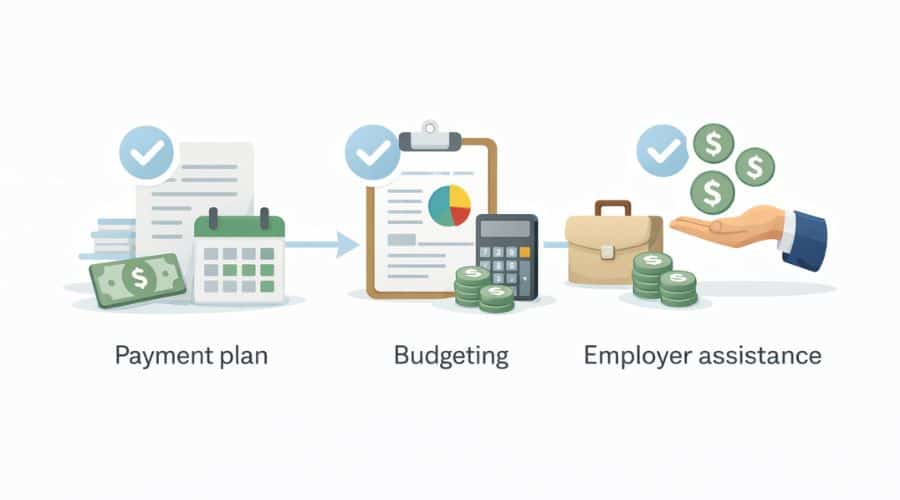
A loan is not the only way to handle a financial problem—even when credit is poor. In many U.S. households, non-loan solutions can reduce risk and long-term cost, especially when the issue is temporary, negotiable, or time-limited.
Payment Plans With Providers
Many expenses that trigger borrowing are flexible by default, even if that’s not advertised. Many service providers would rather receive partial payment over time than none at all.
Common examples
- Medical bills and hospital balances
- Utility bills and internet services
- Insurance premiums
- Tuition or education-related costs
Why this works
- No interest or very low fees
- No credit check
- Missed payments often have less severe consequences than loan defaults
Tip: Ask for a written payment plan before borrowing elsewhere.
Credit Counseling (Nonprofit)
Reputable nonprofit credit counseling agencies help consumers organize debt and cash flow, not sell loans. These organizations are typically funded by grants or modest fees, not loan commissions.
What they can help with
- Budget reviews
- Debt prioritization
- Negotiating hardship arrangements
- Education on credit recovery
What they do not do
- Guarantee debt forgiveness
- Force you into loans
- Require upfront fees to “fix” credit
Used correctly, counseling can delay or eliminate the need for borrowing.
Employer-Based Assistance
Some employers offer:
- Earned wage access
- Emergency assistance funds
- Short-term payroll advances
These programs vary widely, but when available, they often cost less than external borrowing and don’t rely on credit scores.
Selling or Pausing, Not Borrowing
Short-term cash gaps can sometimes be solved by:
- Selling unused items
- Pausing discretionary spending
- Temporarily adjusting payment priorities
These steps are uncomfortable—but they don’t compound risk the way high-cost loans do. They create short-term relief without adding interest, fees, or long-term obligations.
Family or Personal Loans (Handled Carefully)
Borrowing from family or friends avoids interest, but it introduces relationship risk. Clear structure protects both the relationship and the repayment plan.
Best practices
- Write clear terms
- Set realistic payment expectations
- Treat it like a formal obligation
Ambiguity causes more harm than the loan itself.
When a Loan Is Still the Best Option
A loan may make sense when:
- The expense is unavoidable
- No payment plans exist
- Income is stable enough for repayment
- The loan replaces a worse alternative
The goal is not to avoid borrowing at all costs—but to choose the least damaging option.
Quick Comparison: Loan vs. Non-Loan Options
| Option | Cost | Credit Impact | Risk Level |
|---|---|---|---|
| Installment loan | High | Positive or negative | Moderate |
| Payment plan | Low or none | Usually none | Low |
| Credit counseling | Low or free | Indirect | Low |
| Employer advance | Low | Usually none | Low |
| Payday/title loan | Extremely high | Negative | Very high |
Non-loan options often reduce financial strain without increasing long-term risk, especially when the problem is temporary.
Legal, Regulatory, and Tax Considerations (U.S. Only)
Understanding the legal framework around borrowing is especially important when credit is weak. U.S. consumer lending laws are designed to protect borrowers—but those protections only help if you know what to look for and when they apply.
Required Loan Disclosures Under U.S. Law
Most consumer loans in the U.S. are governed by the Truth in Lending Act (TILA). These rules exist to ensure borrowers can clearly compare loan costs before agreeing.
What lenders must clearly disclose
- Annual Percentage Rate (APR)
- Total amount financed
- Total repayment amount
- Payment schedule and due dates
- Fees and penalties
These disclosures must be provided before you agree to the loan, not after.
Key warning: If a lender avoids or delays written disclosures, that’s a serious red flag.
Interest Rate Limits and State Laws
State law plays a major role in how expensive a bad-credit loan can legally be.
Interest rate rules are not uniform across the U.S.
Important realities
- Some states cap interest rates strictly
- Others allow higher rates through specific lending models
- Online lenders may operate across state lines using bank partnerships
This is why loan offers can look drastically different depending on where you live.
Your Rights if Something Goes Wrong
Borrowers are not powerless when lenders or collectors break the rules.
Borrowers are protected against:
- Deceptive or misleading loan terms
- Unfair collection practices
- Unauthorized withdrawals
- Harassment or false threats
If a lender or collector violates these rules, you have the right to dispute, file complaints, and seek remedies.
Credit Reporting Rules You Should Know
How a loan is reported can matter as much as the loan terms themselves.
Lenders that report to credit bureaus must:
- Report information accurately
- Update accounts when paid or settled
- Correct verified errors
However:
- Not all lenders report positive payments
- Some only report missed payments or defaults
Important: A loan that doesn’t report on-time payments may not help rebuild credit at all.
Tax Considerations Most Borrowers Overlook
Loans themselves are not taxable income, because they must be repaid. Tax issues usually arise only when part of a debt is canceled or forgiven.
However, taxes can come into play if:
Debt is forgiven or canceled
If a lender forgives part of a debt, the canceled amount may be treated as taxable income, unless an exception applies.
This is reported using IRS Form 1099-C and handled under rules enforced by the Internal Revenue Service. This typically applies only when a lender formally cancels part of the debt.
Interest deductions
- Personal loan interest is generally not deductible
- Exceptions exist for specific loan types (not most bad-credit loans)
Automatic Payments and Authorization Rules
Automatic payments are optional—you cannot be forced into them as a condition of approval.
Lenders must obtain clear authorization for automatic withdrawals.
You have the right to:
- Revoke authorization
- Change payment methods
- Receive advance notice of changes
Unauthorized or repeated failed withdrawals may violate federal law.
What “Legally Allowed” Doesn’t Always Mean
Some loans are legal but still harmful.
Legality only means:
- The lender followed disclosure rules
- The structure meets minimum requirements
It does not mean:
- The loan is affordable
- The loan is appropriate for your situation
This distinction is critical when evaluating high-cost options.
Frequently Asked Questions (FAQs)
These are common questions Americans search for when exploring loan options with bad credit.
-
Can I get a loan in the U.S. with a credit score under 600?
Yes. Some lenders approve loans below 600, especially if you have verifiable income, a low debt-to-income ratio, or collateral. Approval is possible, but interest rates and fees are typically higher. The key is ensuring the payment fits your budget and the total cost is transparent.
-
Do bad-credit loans always have extremely high interest rates?
No. Rates vary widely by loan type, lender, state law, and your overall profile. Credit union loans, secured loans, and some installment loans can be far less expensive than short-term or payday-style loans.
-
Will applying for multiple loans hurt my credit?
Multiple applications in a short period can result in multiple hard inquiries, which may lower your score and signal financial distress to lenders. It’s better to compare offers carefully and apply selectively.
-
Are online lenders safe for people with bad credit?
Some are, some aren’t. Safety depends on clear disclosures, reasonable pricing, and compliance with U.S. consumer laws. Avoid lenders that guarantee approval, hide APRs, or pressure you to act quickly.
-
Can a bad-credit loan help rebuild my credit?
It can—only if the lender reports on-time payments and you pay every installment as agreed. Missed payments can worsen your credit faster than on-time payments improve it. Always confirm whether the lender reports positive payment history before accepting the loan.
-
Is a co-signer always a good solution?
Not always. A co-signer shares full legal responsibility. If payments are missed, both credit profiles suffer. Co-signing should only be used with clear communication and a reliable repayment plan.
-
Are payday loans ever a good idea?
For most borrowers, no. They often carry extremely high effective APRs, short repayment windows, and a high risk of repeat borrowing. Even when legal, they frequently worsen financial strain.
-
Do bad-credit loans affect my taxes?
The loan itself is not taxable. However, forgiven or canceled debt may be treated as taxable income, depending on circumstances. Personal loan interest is generally not tax-deductible.
-
What should I do if I’m denied everywhere?
Pause before escalating to higher-risk options. Review your credit reports for errors, reassess affordability, explore payment plans or nonprofit counseling, and consider community lenders or credit unions before borrowing again.
-
How fast can I get approved with bad credit?
Some approvals happen within a day, especially online. Speed should never replace careful review of terms. Fast approval with unclear costs is a warning sign.
-
What’s the single most important thing to check before accepting a loan?
The total amount you will repay, including interest and fees—not just the monthly payment.
Final Disclaimer
This content is provided for educational and informational purposes only. It does not constitute legal, tax, or financial advice. Financial decisions involve personal circumstances and risk. Readers should consult a qualified financial, tax, or legal professional before making decisions related to borrowing or credit.
