
Health insurance in the U.S. doesn’t just depend on what care you receive — it also depends on where and from whom you receive it. One of the most expensive and confusing differences in American healthcare is whether a provider is in-network or out-of-network.
This distinction can mean the difference between a manageable bill and a financial shock that lasts for years. Understanding how in-network and out-of-network care works is essential for protecting both your health and your finances.
Key Takeaways
- In-network care almost always costs less because insurers have negotiated lower rates with those providers.
- Out-of-network care can cost hundreds or thousands more, even for the same service, due to higher allowed charges and balance billing.
- Your plan type matters (HMO, PPO, EPO, POS). Some plans cover out-of-network care at reduced rates; others don’t cover it at all except for emergencies.
- Federal protections reduce some surprise bills, but many out-of-network costs can still apply. Consumers have specific rights and dispute options related to medical billing under federal consumer protection laws.
- Knowing your network before care is one of the simplest ways to avoid unexpected medical debt.
Why This Difference Matters in Real Life

Many Americans assume health insurance means their medical bills will be “mostly covered.” That assumption often breaks down when a provider turns out to be out-of-network. People are frequently surprised by bills that are far higher than expected—even when they went to a hospital that was “in-network.”
The in-network vs out-of-network distinction affects:
- How much you pay up front
- How fast you reach your deductible and out-of-pocket maximum
- Whether you can be balance billed
- Your long-term financial stress after a medical event
Understanding this difference isn’t about mastering insurance jargon. It’s about avoiding preventable financial damage.
What “In-Network” and “Out-of-Network” Actually Mean

In-Network Providers
An in-network provider is a doctor, hospital, lab, or facility that has a contract with your health insurance company.
That contract sets:
- Negotiated rates for services
- Maximum charges the provider can bill
- Lower patient cost-sharing (copays, coinsurance)
Because of these agreements, your insurer pays more of the bill, and you pay less.
Out-of-Network Providers
An out-of-network provider has no contract with your insurer.
That means:
- The provider can charge their full list price
- Your insurer may pay less—or nothing
- You may be billed for the difference between what insurance pays and what the provider charges (called balance billing)
Out-of-network does not mean “bad care.” It means higher financial risk. This higher financial risk often catches patients off guard, especially when they assume insurance coverage works the same everywhere.
How Provider Networks Work in the U.S.
Why Insurers Create Networks
Insurance companies build networks to:
- Control costs through negotiated pricing
- Predict expenses more accurately
- Encourage members to use lower-cost providers
From the insurer’s perspective, networks keep premiums lower. From the consumer’s perspective, they limit provider choice.
Who Regulates Network Rules
Network practices are shaped by:
- Federal law (including patient billing protections enforced with guidance from agencies like the Consumer Financial Protection Bureau)
- State insurance departments
- Individual insurer policies
Rules can vary widely by state and plan type, which is why reading plan documents matters.
How Much More Do You Really Pay?
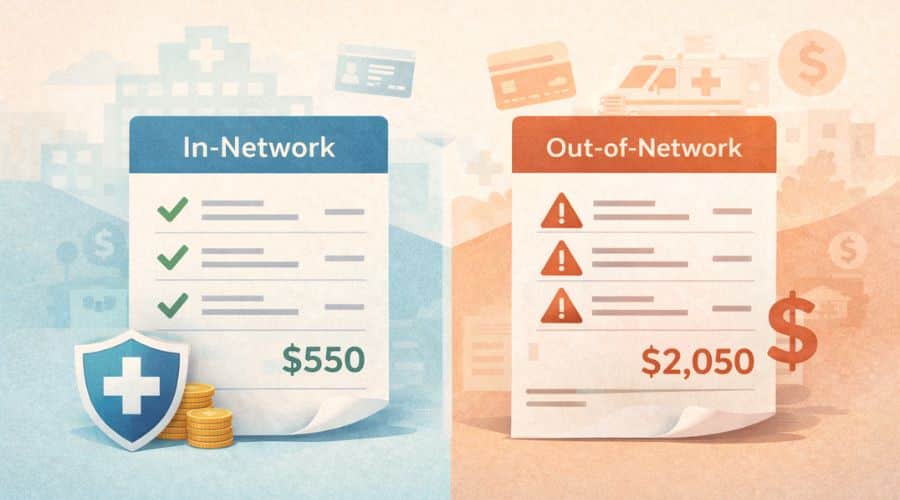
There’s no single dollar amount, but patterns are consistent across the U.S.
Typical Cost Differences
| Expense Type | In-Network | Out-of-Network |
|---|---|---|
| Deductible | Lower | Higher or separate |
| Coinsurance | Often 10–30% | Often 40–60% |
| Allowed charge | Negotiated, capped | Provider sets price |
| Balance billing | Not allowed | Often allowed |
| Counts toward out-of-pocket max | Yes | Sometimes no |
Key point: Out-of-network costs often do not fully count toward your annual out-of-pocket maximum.
Real-Life Example
Same MRI, same city, same day
- In-network negotiated rate: $1,200
- Insurance pays $900
- You pay $300
- Out-of-network billed charge: $3,000
- Insurance pays $1,000 (allowed amount)
- You pay $2,000 (including balance bill)
The service didn’t change. The network status did.
Why Balance Billing Is the Biggest Risk

What Balance Billing Means
Balance billing happens when:
- An out-of-network provider bills a high amount
- Your insurer pays only part of it
- The provider bills you for the rest
Federal Protections (But Not Full Protection)
Under federal law, patients are protected from surprise balance bills in certain situations—especially emergencies. These protections reduce risk but do not apply to all care settings or plan types.
State rules may add more protections, but they vary.
Common Misunderstandings
- “The hospital was in-network, so everything is covered.”
Not always. Individual providers (like anesthesiologists) may be out-of-network. - “Insurance will cap what I pay.”
Out-of-network costs may exceed your out-of-pocket maximum. - “Out-of-network only matters for major procedures.”
Labs, imaging, and specialists often trigger the issue.
This covers the foundation: what in-network and out-of-network really mean, how networks work, and why the cost difference is so large.
How Your Health Plan Type Changes the Cost Difference
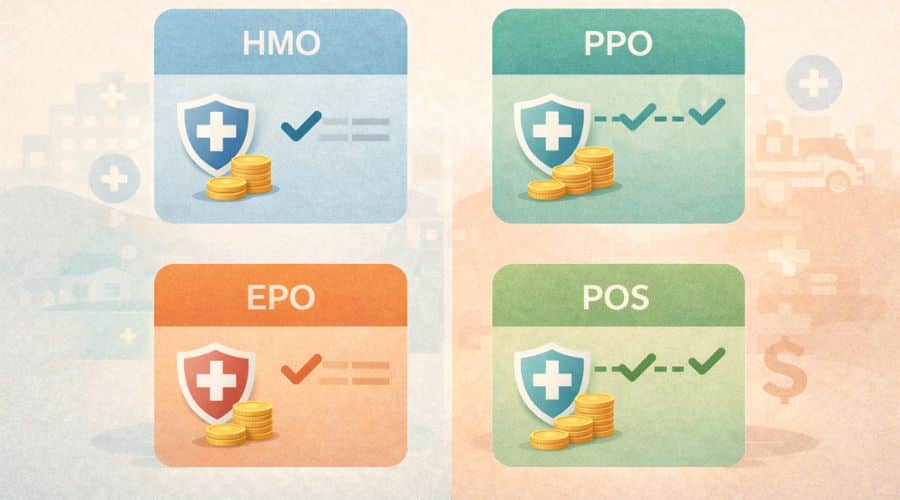
Network rules are not the same across all insurance plans. The type of plan you have often determines whether out-of-network care is covered at all.
HMO (Health Maintenance Organization)
How HMOs Handle Networks
- Care is generally limited to in-network providers
- Out-of-network care is not covered, except for true emergencies
- Referrals from a primary care doctor are usually required
What This Means for Your Wallet
If you use an out-of-network provider:
- You may be responsible for 100% of the bill
- The expense usually does not count toward your deductible or out-of-pocket maximum
HMOs tend to have lower premiums, but they offer far less flexibility when it comes to provider choice.
PPO (Preferred Provider Organization)
How PPOs Handle Networks
- In-network care costs less
- Out-of-network care is usually covered, but at a much lower rate
What This Means for Your Wallet
- Higher deductible for out-of-network services
- Higher coinsurance (often double in-network rates)
- Balance billing is typically allowed
PPOs offer flexibility, but that flexibility comes with real financial exposure. Because of balance billing and higher cost-sharing, PPO out-of-network care can still result in very large bills.
EPO (Exclusive Provider Organization)
How EPOs Handle Networks
- No coverage for out-of-network care (except emergencies)
- No referral requirement
EPOs combine some PPO convenience with HMO-style restrictions. Using an out-of-network provider under an EPO usually means paying the full cost yourself.
POS (Point of Service)
How POS Plans Handle Networks
- Primary care referrals required
- Some out-of-network coverage with referral
Costs fall between HMOs and PPOs, but rules are often complex.
Plan Type Comparison Table
| Plan Type | Out-of-Network Coverage | Balance Billing Risk | Typical Premium |
|---|---|---|---|
| HMO | No (except emergencies) | Very high | Lower |
| PPO | Yes (reduced) | High | Higher |
| EPO | No (except emergencies) | Very high | Medium |
| POS | Limited | Medium–High | Medium |
Emergency Care and Federal Billing Protections

What Counts as an Emergency
Under federal rules, an emergency is generally defined as a condition where a reasonable person would believe delay could seriously jeopardize health.
Examples include:
- Chest pain
- Severe bleeding
- Stroke symptoms
- Loss of consciousness
In these situations, you cannot be required to verify network status before receiving care.
What the Law Protects You From
Federal patient protections:
- Limit balance billing for emergency services
- Apply regardless of provider network status
- Apply to most private health plans
These protections are enforced through coordination with agencies like the Centers for Medicare & Medicaid Services.
Where Gaps Still Exist
Protections do not always apply to:
- Non-emergency follow-up care
- Certain ground ambulance services
- Plans that are exempt or grandfathered
Patients may still face higher cost-sharing even when balance billing is restricted.
How Out-of-Network Costs Affect Deductibles and Out-of-Pocket Maximums
This is one of the most misunderstood areas of health insurance. To understand this properly, it helps to know how deductible, copay, and coinsurance work together in a health insurance plan.
In-Network Costs
- Count toward:
- Deductible
- Out-of-pocket maximum
- Once you hit the maximum, the plan pays 100% of covered in-network care. However, many people misunderstand how the out-of-pocket maximum works when care is received outside the provider network.
Out-of-Network Costs
Depending on the plan:
- May have a separate deductible
- May not count at all toward your out-of-pocket maximum
- Balance-billed amounts almost never count
This means you can pay thousands more even after you think you’ve “maxed out” your plan.
Who Is Most at Risk of High Out-of-Network Bills
Out-of-network charges are more common than many people expect.
Higher-Risk Situations
- Hospital stays involving multiple specialists
- Imaging, labs, and pathology services
- Surgery with independent anesthesiology groups
- Mental health and behavioral health care
- Rural areas with limited provider networks
Even careful patients can be caught off guard.
Common Mistakes That Lead to Higher Costs
- Assuming all providers at an in-network hospital are in-network
- Not checking network status for labs or imaging
- Ignoring pre-authorization requirements
- Confusing “covered” with “paid in full”
- Not reviewing Explanation of Benefits (EOB) statements
Most of these mistakes happen because patients assume insurance coverage is simpler than it actually is. These mistakes are common and expensive—but preventable.
Pros and Cons: In-Network vs Out-of-Network Care
While in-network care is usually the better financial choice, there are situations where people knowingly choose out-of-network providers. The trade-offs should be clear before that decision is made.
Comparison Table
| Aspect | In-Network Care | Out-of-Network Care |
|---|---|---|
| Cost predictability | High | Low |
| Negotiated prices | Yes | No |
| Balance billing | Not allowed | Often allowed |
| Deductible impact | Counts fully | May be separate or excluded |
| Out-of-pocket max protection | Yes | Often limited or none |
| Provider choice | Limited | Broader |
When In-Network Makes Sense
- Routine care and ongoing treatment
- Planned procedures
- Preventive services
- Budget-conscious households
For most Americans, in-network care is the safest default. It offers clearer costs, stronger consumer protections, and far less billing risk.
When People Choose Out-of-Network Anyway
- Specialized care not available in-network
- Long-standing relationships with specific doctors
- Certain mental health providers with limited networks
These choices can be valid, but they should be intentional and informed, not accidental.
Who Should Be Especially Careful With Out-of-Network Care
Some households face higher financial risk than others. In these situations, even a single out-of-network bill can create serious financial strain.
Higher-Risk Groups
- People with high-deductible health plans
- Families with chronic conditions requiring frequent care
- Anyone with limited emergency savings
- Patients needing surgery or hospitalization
- Those enrolled in narrow-network marketplace plans
For these groups, one out-of-network bill can undo months or years of financial progress.
Step-by-Step: How to Avoid Unexpected Out-of-Network Charges

Avoiding these costs is often more about process than luck.
Step 1: Check the Provider Directory
- Use your insurer’s official directory
- Confirm directly with the provider’s office
- Re-check before major procedures
Directories are not always perfectly updated.
Step 2: Ask the Right Question
Instead of asking:
“Do you take my insurance?”
Ask:
“Are you in-network for my specific plan?”
Insurance companies often offer multiple plans under the same brand name. Consumers can review official plan details, network rules, and coverage information through the federal health insurance marketplace.
Step 3: Confirm All Providers Involved
For hospital-based care, ask about:
- Anesthesiologists
- Radiologists
- Pathologists
- Labs
These providers frequently bill separately.
Step 4: Request Cost Estimates in Writing
Most insurers and hospitals can provide:
- Good faith estimates
- Pre-authorization confirmations
Written documentation matters if billing disputes arise.
Step 5: Review Every Explanation of Benefits (EOB)
An EOB is not a bill, but it tells you:
- What was billed
- What insurance paid
- What you may owe
Errors are common and should be challenged quickly. Reviewing EOBs promptly gives you time to dispute errors before bills go to collections.
Myths vs. Facts
Myth: “Out-of-network care is always uncovered.”
Fact: Some plans cover it, but often at much higher cost and risk.
Myth: “Emergency rules mean I’ll never get a big bill.”
Fact: Protections reduce surprise bills, but higher cost-sharing may still apply.
Myth: “If insurance paid something, I’m protected.”
Fact: Partial payment does not prevent balance billing.
Myth: “Out-of-pocket maximums cap everything.”
Fact: Many out-of-network costs do not count toward that limit.
How This Affects Long-Term Finances and Credit

Medical bills are a leading cause of financial stress in the U.S.
Financial Impact
- Large out-of-network bills can drain emergency savings
- Payment plans may last years
- Medical debt can delay other goals like homeownership
Credit Impact
- Unpaid medical bills may be sent to collections
- Credit reporting rules have improved, but damage is still possible
- Preventing the bill is easier than repairing credit later
Understanding networks is a risk management tool, not just an insurance detail. Avoiding unexpected out-of-network charges is often the most effective form of financial protection.
Frequently Asked Questions (FAQ) for In-Network vs Out-of-Network Health Insurance
-
Does out-of-network care ever make sense financially?
n limited situations, yes. If an out-of-network provider offers a cash price that is lower than your in-network cost after deductible, it may be cheaper. This is more common for basic services and requires careful comparison. For major care, the financial risk is usually higher.
-
Can I be balance billed even if my insurance paid something?
Yes. When a provider is out-of-network, insurance payment does not prevent balance billing unless a specific federal or state protection applies. The remaining amount can legally be billed to you.
-
Do out-of-network charges count toward my deductible?
Sometimes, but not always. Many plans use:
– A separate out-of-network deductible, or
– No deductible credit at all for out-of-network careYou must check your plan’s Summary of Benefits and Coverage.
-
Does out-of-network care affect my credit score?
Unpaid medical bills can still affect credit, even though reporting rules have improved. If a bill goes to collections and remains unpaid, it may appear on reports from bureaus like Equifax, Experian, or TransUnion.
Avoiding unexpected out-of-network bills is far easier than repairing credit damage later.
-
Are all emergencies protected from out-of-network billing?
Most emergency services are protected from surprise balance bills under federal law. However:
– Higher coinsurance may still apply
– Follow-up care after stabilization may not be protected
– Certain services, such as ground ambulances, may fall outside protectionsAlways review post-emergency bills carefully.
-
What if I had no in-network option nearby?
Some plans allow appeals or exceptions when no reasonable in-network option exists. Documentation matters:
– Provider shortages
– Distance or access barriers
– Urgent medical necessityApproval is not guaranteed, but it is worth requesting.
Requests are more successful when documentation clearly shows limited access to in-network care.
-
Is mental health care more likely to be out-of-network?
Yes. Mental health and behavioral health services often have narrower networks, leading many patients to see out-of-network providers. Costs can be significant, and coverage rules vary widely by plan.
-
How can I check network status correctly?
Use all three steps:
1. Insurer’s online provider directory
2. Confirmation from the provider’s office
3. Verification using your exact plan nameRelying on only one source increases the chance of error.
Final Thoughts
The difference between in-network and out-of-network care is not a small technical detail. It is one of the largest drivers of unexpected medical costs in the U.S.
Most people don’t choose out-of-network care intentionally. They stumble into it because the system is complex, fragmented, and poorly explained. Learning how networks work—and checking them before care—can prevent long-term financial damage.
Health insurance works best when you clearly understand its limits before you need care.
Disclaimer
This content is provided for educational and informational purposes only. It is not intended as medical, legal, tax, or financial advice. Health insurance rules, costs, and protections vary by plan, state, insurer, and individual circumstances. Readers should consult their health insurance provider or a qualified professional before making personal financial or healthcare decisions.

1 thought on “In-Network vs Out-of-Network Health Insurance: Cost Differences Explained (U.S.)”