
Key Takeaways
- The best time to buy life insurance is usually earlier than people expect, often when you have dependents, shared debt, or future income someone relies on.
- Age and health matter more than income when it comes to cost; younger and healthier applicants generally lock in much lower premiums.
- Life insurance needs change with life events like marriage, children, home ownership, or business ownership.
- Not everyone needs life insurance at the same time—or at all. Timing depends on financial responsibility, not fear.
- In the U.S., life insurance is regulated at the state level, so policy terms, pricing, and options vary by insurer and state.
Many Americans wait too long to think about life insurance. Some assume it’s only for parents. Others believe it’s something to buy later, once they’re older or earning more. This hesitation often leads to missed opportunities to secure affordable and flexible coverage.
In real life, life insurance is less about age and more about financial responsibility. The question isn’t “Am I old enough?” It’s “Would someone else face financial harm if I weren’t here tomorrow?”
Understanding when life insurance actually makes sense can prevent overpaying, underinsuring, or buying the wrong type at the wrong time. Timing affects cost, eligibility, and how well a policy actually protects the people who depend on you.
What Life Insurance Is

Life insurance is a contract between you and an insurance company. You pay premiums. If you die while the policy is active, the insurer pays a death benefit to the beneficiaries you choose.
That money is commonly used to:
- Replace lost income
- Pay off a mortgage or other debts
- Cover funeral and final expenses
- Support children or other dependents
- Provide financial stability during a difficult transition
In the U.S., life insurance payouts are generally not subject to federal income tax for beneficiaries, based on current IRS rules. According to the IRS, life insurance death benefits are generally not considered taxable income for beneficiaries. Estate tax treatment can differ for very large estates and depends on how policies are structured.
Why Timing Matters More Than People Realize

Life insurance pricing in the United States is driven mainly by:
- Age
- Health
- Policy type
- Coverage amount
- Term length (if applicable)
Two people with identical coverage can pay dramatically different premiums simply because one applied earlier.
Age and Health Lock In the Cost
Life insurance premiums are based on risk. From an insurer’s perspective:
- Younger applicants are statistically less likely to die during the policy term
- Health issues that develop later can raise rates—or make coverage unavailable
Once a policy is issued, the rate is locked in for that policy’s duration (for term life) or based on the structure of the permanent policy. Waiting doesn’t usually make insurance better or cheaper.
Life Events That Often Signal the Right Time

Most Americans don’t buy life insurance randomly. They buy it after a financial turning point.
Marriage
Marriage often creates shared financial responsibility, even if both spouses work. Common reasons life insurance becomes relevant:
- Shared rent or mortgage
- Joint debts
- Dependence on one income to maintain a lifestyle
Life insurance can act as a financial backstop if one spouse dies unexpectedly.
Having Children
This is the most common trigger for buying life insurance in the U.S.
Children rely on long-term financial support for:
- Housing
- Education
- Daily living expenses
Life insurance helps ensure those needs can still be met if a parent dies, even if the surviving parent earns income.
Buying a Home
A mortgage is often the largest debt a household carries. Life insurance can:
- Help a surviving spouse keep the home
- Prevent forced sale during financial stress
- Cover remaining mortgage balances
Starting a Business or Becoming Self-Employed
Business owners may use life insurance to:
- Protect business partners
- Cover business debts
- Replace lost income tied directly to the owner
Some small businesses also use life insurance for succession planning, though structures vary widely.
When You Probably Don’t Need Life Insurance (Yet)
Life insurance isn’t automatically necessary for everyone.
You may not need it right now if:
- No one relies on your income
- You have no significant debts that others would inherit
- You have sufficient assets to cover final expenses
For example, a single adult with no dependents and minimal debt may reasonably delay buying coverage—though buying earlier can still be cheaper long term.
With these fundamentals in place, the next step is understanding how life insurance needs and timing differ across age groups.
Life Insurance Timing by Age Group (U.S. Perspective)
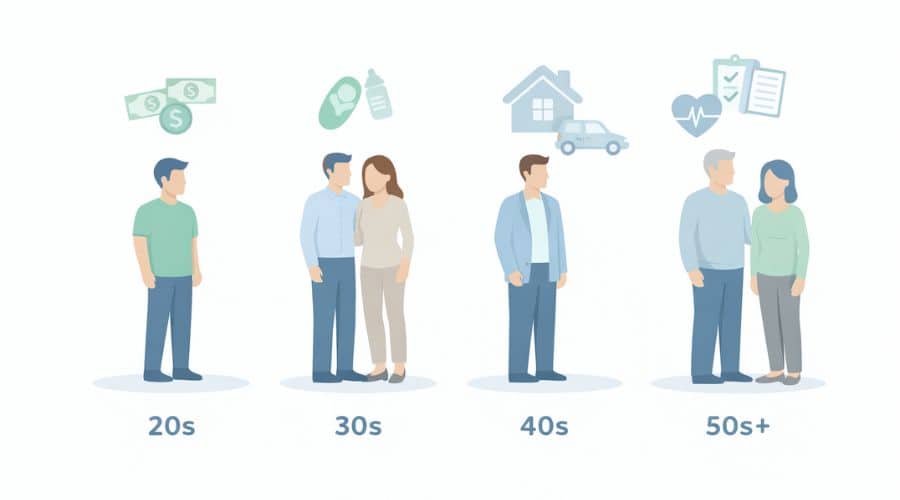
Age alone doesn’t determine whether you should buy life insurance, but it strongly affects cost, eligibility, and flexibility. Below is how life insurance typically fits into each life stage for Americans.
The following breakdown explains how life insurance timing typically changes as financial responsibilities grow and then decline over time.
Buying Life Insurance in Your 20s
For many people, their 20s are the cheapest window to buy life insurance.
When it often makes sense
- You have student loan co-signers
- You’re married or planning to marry soon
- You expect children in the future
- You want to lock in low rates while healthy
Even without dependents, some people choose modest coverage early because:
- Rates are significantly lower
- Health underwriting is easier
- Coverage can stay in place through major life changes
Common mistake in this age group
Assuming life insurance is unnecessary because income is low. In reality, future insurability is often more valuable than current income.
Buying Life Insurance in Your 30s
This is the most common decade for first-time life insurance purchases in the U.S.
Why demand rises in the 30s
- Marriage and children are more common
- Mortgages and long-term debts increase
- Households rely on consistent income
At this stage, many families use life insurance to:
- Replace income for 10–30 years
- Cover child-rearing and education costs
- Protect a spouse’s financial stability
Premiums are still relatively affordable, though higher than in the 20s.
Buying Life Insurance in Your 40s
Life insurance remains very relevant, but decisions require more precision.
Typical reasons
- Children still depend financially
- Retirement savings are incomplete
- Mortgage balances remain significant
What changes
- Premiums rise noticeably
- Health conditions become more influential
- Shorter term lengths may make more sense
People in their 40s often reassess existing coverage amounts rather than buying maximum coverage for the first time.
Buying Life Insurance in Your 50s and Beyond
Life insurance is still possible, but purpose matters more than price.
Common uses
- Income replacement for a spouse nearing retirement
- Paying off remaining debts
- Covering final expenses
- Estate planning for higher-net-worth households
Key consideration
At this stage, life insurance should solve a specific financial problem. Broad, long-term coverage is often less efficient unless tied to estate or legacy planning.
How Life Insurance Needs Change Over Time
Life insurance is not “set it and forget it.” Needs typically peak during the years when:
- Income is highest
- Dependents are most vulnerable
- Assets haven’t fully accumulated
As savings grow and debts shrink, coverage needs often decline.
Typical lifecycle pattern
- Early adulthood: low or optional need
- Family-building years: highest need
- Pre-retirement: declining need
- Retirement: limited or specialized need
Reviewing coverage every few years—or after major life events—helps prevent being overinsured or underinsured.
Term vs. Permanent Insurance and Timing
Timing also depends on policy type, not just age.
Term Life Insurance
- Designed for temporary needs
- Often chosen for income replacement
- Lower initial cost
- Common terms: 10, 20, or 30 years
Best suited when:
- Children are young
- Mortgage years remain
- Income replacement is the primary goal
Permanent Life Insurance
- Covers lifetime needs
- More complex and expensive
- Used for estate planning or long-term obligations
Often considered when:
- Long-term dependents exist
- Estate planning is a concern
- Coverage is needed beyond working years
Choosing the wrong type at the wrong time is a frequent and costly mistake.
If you’re unsure which policy type fits your situation, this detailed comparison of term vs whole life insurance explains the differences clearly.
Pros and Cons of Buying Life Insurance Earlier vs. Later
| Timing | Pros | Cons |
|---|---|---|
| Earlier (20s–30s) | Lower premiums, easier approval, more flexibility | Risk of overbuying if needs change |
| Later (40s–50s) | Coverage matches clearer needs | Higher cost, possible health exclusions |
| Very Late (60s+) | Useful for final expenses or estate planning | Limited options, significantly higher premiums |
While age provides useful context, timing mistakes often happen when people misunderstand who actually needs life insurance and when it may not be necessary.
Who Should Avoid Buying Life Insurance (At Least for Now)
Life insurance is useful, but it isn’t universal. Buying coverage without a clear financial reason often leads to wasted money or poorly structured policies.
Situations Where Life Insurance May Not Be Necessary
You may reasonably delay or avoid life insurance if all of the following are true:
- No one relies on your income
- You have no shared or co-signed debts
- You have enough savings to cover final expenses
- You are not supporting children, parents, or a partner
In these cases, building an emergency fund or paying down debt may be more impactful than paying insurance premiums.
Temporary Gaps Are Normal
Not having life insurance for a few years is not automatically a mistake. Many Americans wait until:
- Marriage
- First child
- Home purchase
- Career stability
The key is awareness—knowing when the need begins, not ignoring it entirely.
Common Timing Mistakes Americans Make
Timing errors are often more expensive than choosing the wrong insurer.
Waiting Until Health Changes
Many people delay because they feel healthy. Then:
- A diagnosis appears
- Medications begin
- Underwriting becomes stricter or more expensive
Once health changes, premiums rarely improve.
Buying Too Much Too Early
Overinsuring can strain cash flow. This is common when:
- Income is still growing
- Dependents don’t yet exist
- Long-term commitments are uncertain
Coverage should match current and near-term financial responsibility, not worst-case imagination.
Buying the Wrong Policy for the Stage of Life
Examples include:
- Buying permanent insurance when only temporary income replacement is needed
- Buying short-term coverage when long-term dependents exist
Mismatch between policy type and life stage often creates regret.
Financial Risks of Buying at the Wrong Time
Buying Too Early Without a Clear Purpose
- Premiums compete with savings goals
- Money may be locked into inflexible policies
- Coverage may not align with future needs
Buying Too Late
- Premiums increase sharply
- Medical underwriting can limit options
- Coverage amounts may be reduced
- Some people become uninsurable
Timing affects both availability and affordability.
How Life Insurance Affects Your Overall Financial Picture
Life insurance doesn’t exist in isolation.
Cash Flow
Premiums are an ongoing obligation. They should fit comfortably within:
- Monthly budget
- Emergency savings goals
- Retirement contributions
Credit Score
Life insurance itself does not affect your credit score. However:
- Missed premium payments can lead to policy lapse
- Reinstatement may require higher costs or medical review
Long-Term Planning
Life insurance works best when coordinated with:
- Savings
- Retirement accounts
- Debt management
- Estate planning (when applicable)
Myths vs. Facts About Life Insurance Timing
| Myth | Reality |
|---|---|
| “I’m too young for life insurance.” | Age affects price, not relevance |
| “I should wait until I earn more.” | Income matters less than dependency |
| “Life insurance is only for parents.” | Anyone with financial responsibility may need it |
| “I can always buy it later.” | Health changes can limit options |
A Practical Timing Checklist
Life insurance timing often makes sense if one or more apply:
- Someone depends on your income
- Someone would inherit your debt
- Your absence would cause financial disruption
- You want to lock in affordable rates while healthy
If none apply, delaying can be reasonable.
Understanding who may not need life insurance is just as important as knowing when it becomes essential. The next step is learning how to make that decision clearly and confidently.
How to Decide When to Buy Life Insurance (Step-by-Step)
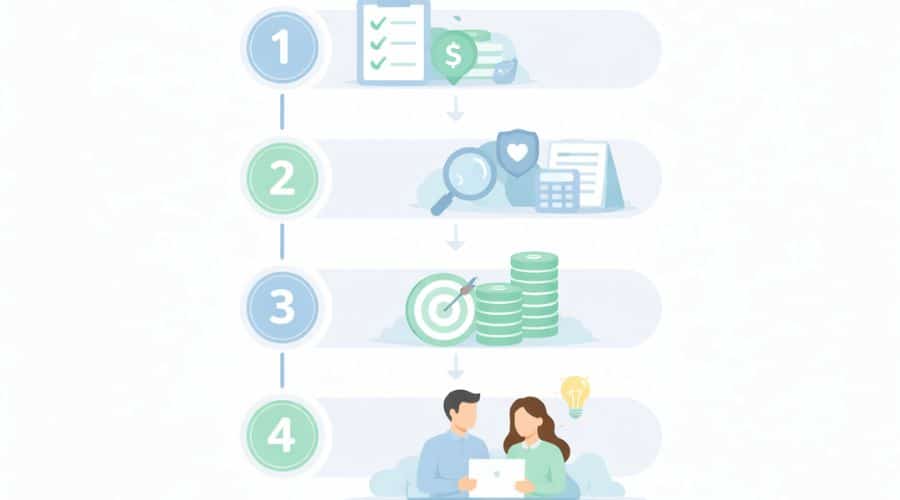
This section brings everything together into a practical decision framework. It’s designed for real U.S. households, not ideal scenarios.
Step 1: Identify Financial Dependence
Ask one clear question:
Would anyone face financial hardship if my income stopped tomorrow?
Dependence can include:
- A spouse or partner
- Children
- Aging parents
- A business partner
- Anyone relying on shared debt or guarantees
If the answer is yes, life insurance timing is already relevant.
Step 2: Identify Financial Obligations
Even without dependents, obligations matter.
Common examples:
- Mortgage or rent obligations
- Student loans with a co-signer
- Auto loans or personal loans
- Business liabilities
- Child support or legal obligations
Life insurance often exists to buy time, not to create wealth.
Step 3: Define the Duration of the Need
Not all needs are lifelong.
Examples:
- Income replacement until children are independent
- Mortgage coverage until paid off
- Temporary business obligations
This step often determines policy length, which strongly affects timing.
Step 4: Assess Health and Insurability
Health affects:
- Approval
- Premium cost
- Policy options
Buying earlier can:
- Lock in lower rates
- Preserve eligibility
- Reduce underwriting friction
This is especially relevant for people with a family history of medical conditions.
Step 5: Align Coverage With Cash Flow
Life insurance should support financial stability, not undermine it.
A reasonable premium:
- Fits comfortably in the monthly budget
- Does not replace emergency savings
- Does not reduce retirement contributions unnecessarily
Affordability today matters more than hypothetical future coverage.
How Much Coverage Is Usually Appropriate (General Guidance)
Coverage amounts vary widely, but most U.S. households think in terms of income replacement plus obligations.
Common Components
- Remaining mortgage balance
- Outstanding debts
- Childcare and education costs
- Income replacement (often measured in years, not lifetime)
There is no universal formula. Coverage should reflect:
- Current income
- Number and age of dependents
- Existing assets and savings
- Time horizon of the financial need
If you want a step-by-step breakdown of coverage calculations, our guide on how much life insurance do i need walks through real-world examples in detail.
Overestimating coverage is just as problematic as underestimating it.
Real-Life U.S. Timing Examples
Example 1: Newly Married Couple, No Children
- Shared rent and one car loan
- Both spouses working
Life insurance may be modest or optional, but affordable coverage can:
- Protect against sudden income loss
- Lock in lower rates early
Example 2: Parents With Young Children
- One or two incomes
- Mortgage and childcare costs
This is typically the highest-need period for life insurance. Timing matters because:
- Coverage is substantial
- Premiums are locked in for many years
Example 3: Mid-Career Single Parent
- One income
- Children fully dependent
Delaying coverage here increases financial risk significantly. Life insurance often plays a critical stabilizing role.
Example 4: Near Retirement, No Dependents
- Mortgage nearly paid
- Retirement savings mostly in place
Life insurance may only be needed for:
- Final expenses
- Short-term income bridging
- Estate or legacy planning (if applicable)
Special Timing Considerations in the U.S.
Several U.S.-specific factors influence timing decisions.
Employer-Provided Life Insurance
Many employers offer group life insurance, but:
- Coverage amounts are often limited
- Policies usually end when employment ends
- Benefits may not fully replace personal coverage
Employer coverage can complement, but rarely replaces, individual planning.
State-Level Regulation
Life insurance is regulated at the state level, meaning:
- Policy rules vary by state
- Consumer protections differ
- Product availability can change
Timing decisions should consider state-specific rules and insurer practices.
Frequently Asked Questions About When Should You Buy Life Insurance in the USA?
-
When is the “best” age to buy life insurance in the U.S.?
There is no universal best age. The most cost-efficient time is usually when you are young and healthy, but the right time is when someone depends on you financially.
-
Should I buy life insurance before having kids?
It can make sense if you expect dependents soon or want to lock in low rates. However, coverage amounts may increase later as responsibilities grow.
-
Is it ever too late to buy life insurance?
It’s rarely “too late,” but options become limited and expensive with age or health changes. Later purchases should solve a specific, defined need.
-
Does life insurance make sense if both spouses work?
Yes. Dual income households often rely on both incomes to maintain housing, childcare, and savings goals.
-
Can I wait until my finances are perfect?
Waiting for perfect timing often means waiting too long. Life insurance is designed to protect against uncertainty, not reward perfection.
Final Thoughts on Timing
Life insurance is not about predicting death. It’s about managing financial risk during the years when other people rely on you.
Buying at the right time:
- Reduces cost
- Preserves options
- Aligns protection with real responsibility
Once timing and coverage are clear, the final step is choosing a reliable provider. Our updated list of the best life insurance companies in the USA can help you compare options confidently.
Buying at the wrong time—too early without purpose or too late under pressure—creates unnecessary tradeoffs.
Disclaimer
This content is for educational and informational purposes only. It is not legal, tax, or financial advice. Life insurance needs vary by individual circumstances, state laws, and insurer rules. Readers should consult a qualified financial, tax, or insurance professional before making personal financial decisions.
