
Key Takeaways
- Deductible, copay, and coinsurance are three separate cost-sharing rules, and most U.S. health insurance plans use all three.
- A deductible is what you pay first before your plan starts sharing costs.
- A copay is a fixed dollar amount for certain services, like doctor visits or prescriptions.
- Coinsurance is a percentage of the cost you pay after meeting your deductible.
- These costs directly affect monthly expenses, surprise medical bills, and long-term budgeting, especially for families and people with chronic care needs.
- Rules vary by plan type, insurer, and state — which is why understanding how these costs work together matters more than memorizing definitions.
Why These Three Terms Cause So Much Confusion

Most confusion doesn’t come from lack of intelligence — it comes from how insurance information is explained. Many Americans believe health insurance means most medical costs are “covered.” In reality, how and when coverage kicks in depends on deductibles, copays, and coinsurance working together.
Common real-life problems include:
- Being shocked by a large bill even though you’re “insured”
- Assuming a copay means the visit is fully covered
- Not realizing coinsurance applies after the deductible
- Choosing a low-premium plan without understanding higher out-of-pocket risk
These misunderstandings are a major reason medical bills remain one of the top financial stressors in the U.S., even for insured households.
How Cost-Sharing Works in U.S. Health Insurance (Big Picture)
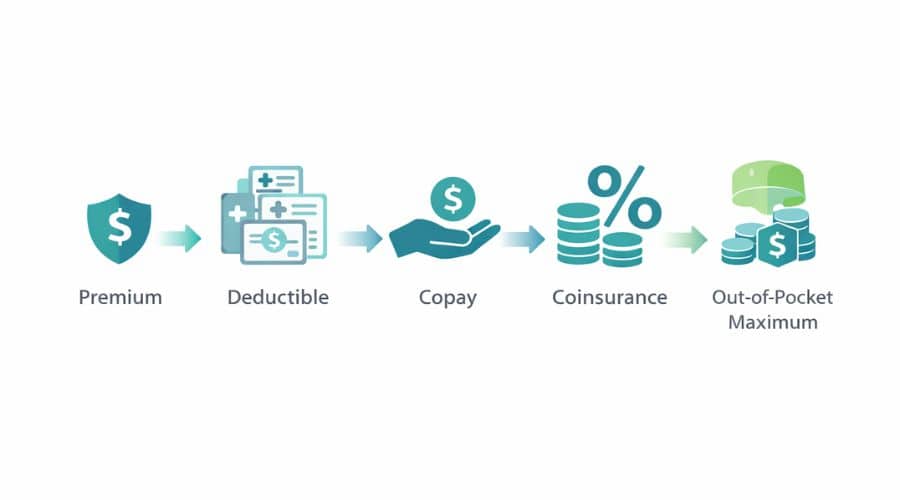
Most private U.S. health plans — including employer plans and ACA marketplace plans — follow this general flow:
- You pay monthly premiums to keep coverage active
- You pay out-of-pocket costs when you use care:
- Deductible
- Copays
- Coinsurance
- Once you reach your annual out-of-pocket maximum, the plan pays 100% of covered services for the rest of the year (with exceptions)
Federal consumer protections are overseen by agencies like Centers for Medicare & Medicaid Services and the Consumer Financial Protection Bureau, but the actual cost structure of a plan is still set by insurers and employers.
What a Deductible Is

Definition
A deductible is the amount you must pay out of your own pocket each year before your health insurance starts paying for most covered services.
How Deductibles Work in Practice
- Deductibles reset every plan year (usually January 1)
- Payments count only for covered services
- Some services are exempt (explained below)
Example
If your plan has a $1,500 deductible:
- You pay the first $1,500 of eligible medical costs
- After that, cost-sharing shifts to copays or coinsurance
Important Exceptions (Very Common)
Under federal law:
- Preventive services (annual checkups, many screenings, vaccines) are often covered before the deductible
- This rule applies to most ACA-compliant plans, but not all plans are ACA-compliant. Short-term health plans and some grandfathered employer plans may not follow these rules.
Types of Deductibles You May See
Individual vs Family Deductibles
| Deductible Type | How It Works |
|---|---|
| Individual | Applies to one person |
| Family | Combined spending across all covered members |
Some plans use embedded deductibles, meaning one person can meet their own deductible without the full family deductible being met.
High-Deductible Health Plans (HDHPs)
HDHPs are commonly paired with Health Savings Accounts (HSAs) and have:
- Higher deductibles
- Lower monthly premiums
- Specific minimum deductible thresholds set annually by the Internal Revenue Service. These limits determine whether a plan qualifies for HSA contributions.
(Exact dollar limits change by year and are published by the IRS.)
What a Copay Is

Definition
A copay (copayment) is a fixed dollar amount you pay for a specific service, regardless of the total cost.
Common Copay Examples
- $30 primary care visit
- $60 specialist visit
- $10–$20 generic prescription
Key Copay Rules People Miss
- Copays may apply before or after the deductible, depending on the plan
- Paying a copay does not always count toward the deductible (This means you could pay copays all year without reducing your deductible.)
- Copays usually do count toward the out-of-pocket maximum
Why Insurers Use Copays
Copays:
- Make costs predictable
- Discourage unnecessary use
- Simplify routine care billing
But they can also mask the true cost of care, especially for expensive services.
What Coinsurance Is

Definition
Coinsurance is the percentage of the allowed cost you pay after meeting your deductible.
Typical Coinsurance Splits
- 80% insurance / 20% you
- 70% insurance / 30% you
Example
If:
- You’ve met your deductible
- The allowed cost of a procedure is $2,000
- Coinsurance is 20%
You pay $400, and the insurer pays $1,600.
Why Coinsurance Can Be Risky
- Costs scale with the bill size
- Expensive care can mean thousands of dollars, even while insured
- Patients often don’t know the allowed amount in advance
This uncertainty is one of the biggest reasons people are surprised by large medical bills.
Deductible vs Copay vs Coinsurance (Side-by-Side Comparison)
| Feature | Deductible | Copay | Coinsurance |
|---|---|---|---|
| Cost type | Fixed annual amount | Fixed per service | Percentage |
| When it applies | Before coverage | Per visit/service | After deductible |
| Predictable? | Yes | Yes | No |
| Depends on bill size | No | No | Yes |
| Counts toward out-of-pocket max | Yes | Usually | Yes |
How Deductible, Copay, and Coinsurance Work Together in Real Life

Understanding each term alone isn’t enough — the real cost impact comes from how they interact throughout the year. Most confusion happens because people learn these terms separately, but health insurance applies them together in a specific order.
The Typical Cost Flow During a Plan Year
For most U.S. health plans, costs follow this sequence:
- You pay the deductible first
- Then coinsurance or copays apply
- Once you hit the out-of-pocket maximum, the plan pays 100% of covered care
Not every service follows this order exactly, but this is the standard structure.
Step-by-Step Example (Realistic Scenario)
Assume this plan: (This is a simplified example. Actual costs vary by plan and provider.)
- $1,500 deductible
- 20% coinsurance
- $30 primary care copay
- $6,000 out-of-pocket maximum
January: Doctor Visit
- Primary care visit with a $30 copay
- You pay $30
- Deductible is not affected (common but plan-specific)
March: Diagnostic Test ($800 allowed cost)
- Deductible not yet met
- You pay $800
- Remaining deductible: $700
June: Outpatient Procedure ($3,000 allowed cost)
- First $700 completes your deductible
- Remaining $2,300 is subject to coinsurance
- You pay 20% = $460
Total paid so far:
- Deductible: $1,500
- Coinsurance: $460
- Copays: $30
Total: $1,990
This is how people end up paying thousands of dollars despite having insurance — not because the plan failed, but because the cost-sharing rules were misunderstood.
Who Each Cost Structure Is Best For
No plan is universally good or bad — the right choice depends on health needs, cash flow, and risk tolerance.
There is no universally “good” or “bad” deductible, copay, or coinsurance. What matters is how your health needs and finances line up.
Higher Deductibles Tend to Work Better For:
- People who rarely need medical care
- Those who can handle large upfront costs
- Individuals using an HSA to offset expenses
- Younger, healthier adults without chronic conditions
Lower Deductibles and Higher Copays Tend to Help:
- Families with children
- People who see doctors regularly
- Those managing ongoing conditions
- Households prioritizing predictable monthly costs
Lower Coinsurance Is Especially Important For:
- Anyone at risk of hospitalization
- People needing imaging, surgery, or specialty care
- Those concerned about large, unpredictable bills
Pros and Cons of Each Cost Type
Each cost-sharing method has trade-offs that affect affordability, predictability, and access to care.
Deductibles
| Pros | Cons |
|---|---|
| Lower monthly premiums | High upfront costs |
| Encourages cost awareness | Delays insurance help |
| Works well with HSAs | Can cause care avoidance |
Copays
| Pros | Cons |
|---|---|
| Predictable costs | May hide true service cost |
| Easy budgeting | Often don’t reduce deductible |
| Encourages routine care | Adds up with frequent visits |
Coinsurance
| Pros | Cons |
|---|---|
| Shares risk with insurer | Unpredictable bills |
| Scales with service cost | Expensive for major care |
| Works after deductible | Hard to estimate in advance |
The Out-of-Pocket Maximum (The Safety Net Many Miss)

What It Is
The out-of-pocket maximum is the most you will pay in a plan year for covered services.
After reaching it:
- The insurer pays 100% of covered, in-network care
- Premiums still continue
- Non-covered services are excluded
Why It Matters More Than the Deductible
Two plans can have the same deductible but very different financial risk depending on:
- Coinsurance percentage
- Out-of-pocket maximum
- Network rules
Many Americans focus on the deductible and overlook this limit — a costly mistake during a bad health year.
Common Mistakes and Costly Misunderstandings
“If I pay a copay, the visit is fully covered”
Not always. Labs, imaging, and procedures during that visit may still trigger coinsurance.
“I met my deductible, so I’m done paying”
Coinsurance usually starts after the deductible.
“Out-of-network works the same”
Out-of-network care often:
- Has higher deductibles
- Uses higher coinsurance
- May not count toward your out-of-pocket max
“Emergency care is always fully covered”
Emergency services are covered, but cost-sharing still applies.
Myths vs. Facts
| Myth | Fact |
|---|---|
| Insurance pays first | You often pay first |
| Copays reduce deductibles | Usually false |
| Coinsurance is rare | Very common |
| One good plan fits everyone | Highly individual |
How These Costs Affect Your Money, Credit, and Long-Term Finances
Health insurance decisions don’t stay limited to medical bills — they often spill into monthly budgets, savings, and even long-term financial goals.
Health insurance cost-sharing doesn’t just affect medical bills. It quietly shapes cash flow, savings, credit health, and long-term financial stability — often without people realizing it.
Cash Flow and Monthly Budgeting
- High deductibles create large, unpredictable expenses early in the year
- Copays make routine care easier to budget but can accumulate
- Coinsurance introduces uncertainty, especially for major care
Households living paycheck-to-paycheck often struggle most with deductible-driven plans, even when premiums are lower.
Emergency Savings Impact
Medical deductibles are one of the most common reasons emergency funds get drained.
A single event can:
- Consume an entire emergency fund
- Force credit card use
- Trigger delayed care later in the year
Financial educators often mention keeping at least your deductible amount available in liquid savings as a general risk-awareness benchmark — not personalized financial advice.
Credit Score and Medical Bills
Medical bills affect credit differently than other debt, but they are not harmless.
Under current credit reporting rules:
- Paid medical collections no longer appear on credit reports
- Unpaid medical collections may appear after a delay
- Larger balances are more likely to be reported
Policies and reporting standards are shaped by credit bureaus such as Equifax, Experian, and TransUnion, but provider billing practices still vary.
Cost-sharing confusion is a common cause of unpaid balances — not refusal to pay, but misunderstanding what was owed.
Long-Term Financial Ripple Effects
Over time, high medical out-of-pocket costs can:
- Delay retirement savings
- Reduce HSA or investment contributions
- Increase reliance on high-interest debt
- Discourage preventive or follow-up care
This is why understanding plan mechanics matters even during “healthy” years.
How to Compare Health Plans Using Deductible, Copay, and Coinsurance
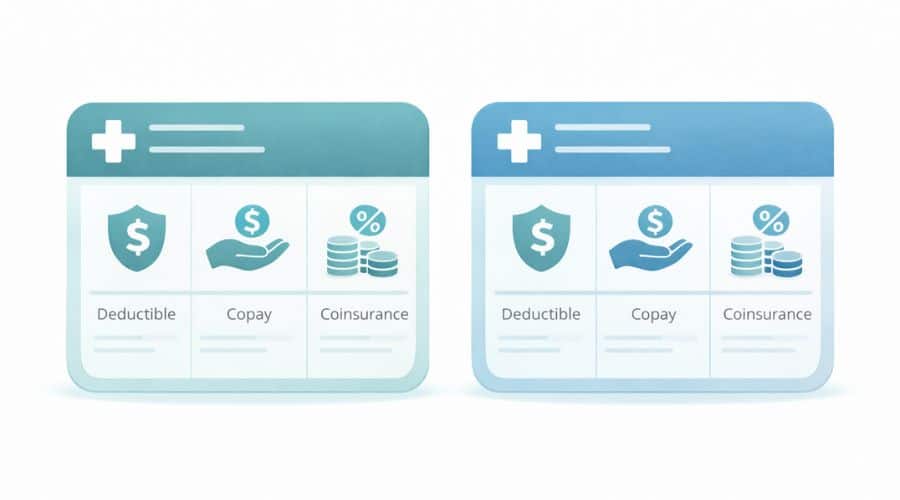
When choosing between plans, focusing on only one number almost always leads to poor decisions.
A Smarter Comparison Framework
A better approach is to think in terms of worst-case scenarios, not just monthly costs.
Instead of asking:
- “Which plan has the lowest deductible?”
Ask:
- “What is my total risk exposure in a bad year?”
Key Numbers to Compare Side by Side
| Feature | Why It Matters |
|---|---|
| Monthly premium | Predictable cost |
| Deductible | Upfront risk |
| Copays | Routine care cost |
| Coinsurance | Major care exposure |
| Out-of-pocket max | Worst-case cap |
| Network size | Access and pricing |
Example Plan Comparison
| Feature | Plan A | Plan B |
|---|---|---|
| Monthly premium | Lower | Higher |
| Deductible | $3,000 | $1,000 |
| Coinsurance | 30% | 20% |
| Out-of-pocket max | $8,500 | $5,000 |
Plan A may look cheaper monthly, but Plan B limits downside risk far more during illness or injury.
Special Rules and Regulatory Considerations (U.S.-Only)
Preventive Care Protections
Most ACA-compliant plans must cover preventive services without cost-sharing, based on federal guidelines enforced by agencies like the Department of Health and Human Services.
This includes many:
- Annual checkups
- Screenings
- Immunizations
Exceptions exist, especially for grandfathered or short-term plans.
In-Network vs Out-of-Network Rules
- In-network care uses negotiated rates
- Out-of-network care may:
- Have separate deductibles
- Use higher coinsurance
- Exceed allowed amounts
Even with federal balance-billing protections, not all services are fully shielded.
State Variations
Insurance rules can vary by:
- State regulations
- Marketplace structure
- Employer plan design
Always review the Summary of Benefits and Coverage (SBC) for plan-specific rules.
Common Beginner Misunderstandings (Quick Clarifications)
- Copays are not discounts — they’re cost-sharing
- Deductibles don’t cap total costs — out-of-pocket maximums do
- Coinsurance applies to allowed amounts, not billed charges
- Insurance doesn’t eliminate risk — it limits it

Frequently Asked Questions (FAQs)
-
What do most Americans pay first: deductible or copay?
It depends on the plan. Many plans require you to pay the deductible first for services like tests, imaging, and procedures. Some plans allow copays for office visits or prescriptions before the deductible, but this is not universal. Always check your plan’s Summary of Benefits and Coverage.
-
Does a copay count toward the deductible?
Usually no, but it often does count toward the out-of-pocket maximum. This is a common point of confusion. The only way to know for sure is to review your specific plan rules.
-
Do I still pay coinsurance after meeting my deductible?
Yes. Coinsurance typically begins after the deductible is met and continues until you reach your out-of-pocket maximum. Meeting the deductible does not mean care becomes free.
-
What happens if I can’t afford my deductible?
If you can’t pay:
– Providers may offer payment plans
– Some hospitals provide financial assistance
– Delaying care can increase long-term costs and health risksInsurance rules don’t change based on ability to pay, but billing options may vary by provider and state.
-
Are deductibles and out-of-pocket maximums the same?
No.
– The deductible is what you pay before cost-sharing begins
– The out-of-pocket maximum is the total cap on what you pay in a year for covered careYou can meet your deductible and still owe thousands more before hitting the out-of-pocket limit.
-
Why is coinsurance based on percentages instead of flat fees?
Coinsurance shifts part of the cost risk to the patient. Insurers use it to:
– Control plan costs
– Discourage unnecessary high-cost care
– Share financial responsibility after major servicesThis is why coinsurance matters most for hospital care and specialty treatment.
-
Do preventive services really cost nothing?
Under federal rules, most ACA-compliant plans cover many preventive services without deductibles, copays, or coinsurance. However:
– Not all plans are ACA-compliant
– Services must meet specific criteria
– Follow-up treatment may still trigger c -
Does meeting my out-of-pocket maximum mean everything is free?
For covered, in-network services, yes — for the rest of the plan year. However:
– Premiums still apply
– Out-of-network care may not be included
– Non-covered services are excluded -
Why did I get a bill after paying my copay at the doctor’s office?
The copay usually covers only the visit itself. Additional charges may come from:
– Labs
– Imaging
– Procedures
– Separate providersThis is normal and not necessarily a billing error.
-
Is a high-deductible plan always worse?
Not necessarily. High-deductible plans can work well for:
– People with low medical usage
– Those with strong emergency savings
– Individuals using HSAs strategicallyThey carry more risk but often lower premiums.
-
What’s the single most important number to compare when choosing a plan?
The out-of-pocket maximum. It defines your worst-case financial exposure in a bad health year and matters more than any single copay or deductible.
Final Disclaimer
This content is provided for educational and informational purposes only.
It does not constitute financial, tax, legal, or medical advice of any kind.
Health insurance rules, costs, and coverage details vary by:
- State
- Insurer
- Employer
- Individual plan terms
Readers should review official plan documents and consult qualified professionals before making personal financial or healthcare decisions.

1 thought on “Deductible vs Copay vs Coinsurance: How Health Insurance Really Works”