
Health insurance deductibles are one of the most misunderstood parts of the U.S. healthcare system. Many people have insurance but still face large medical bills simply because they don’t understand how deductibles work.
In this guide, you’ll learn what a health insurance deductible is, how it works, and how it affects your medical costs and financial planning in everyday life.
Key Takeaways
- A health insurance deductible is the amount you must pay out of your own pocket each year before your insurance starts sharing costs.
- Deductibles apply to many medical services, but not always to preventive care or certain plan-specific benefits.
- Deductibles reset every plan year, usually on January 1.
- High deductibles often mean lower monthly premiums, but higher upfront medical costs.
- Understanding your deductible helps avoid surprise bills and poor plan choices.
Why Deductibles Matter in Everyday American Life

Many Americans are surprised by medical bills not because care was expensive, but because they misunderstood how their insurance deductible works.
Someone might assume insurance “covers” a doctor visit, only to learn they owe the full amount because they haven’t met their deductible yet. Others choose a low-premium plan to save money each month, then struggle to afford care when they actually need it.
Deductibles affect:
- How much you pay before insurance helps
- Whether you delay or seek care
- How predictable your healthcare costs are during the year
Understanding deductibles directly impacts household budgets, emergency preparedness, and long-term financial stability.
What a Health Insurance Deductible Means
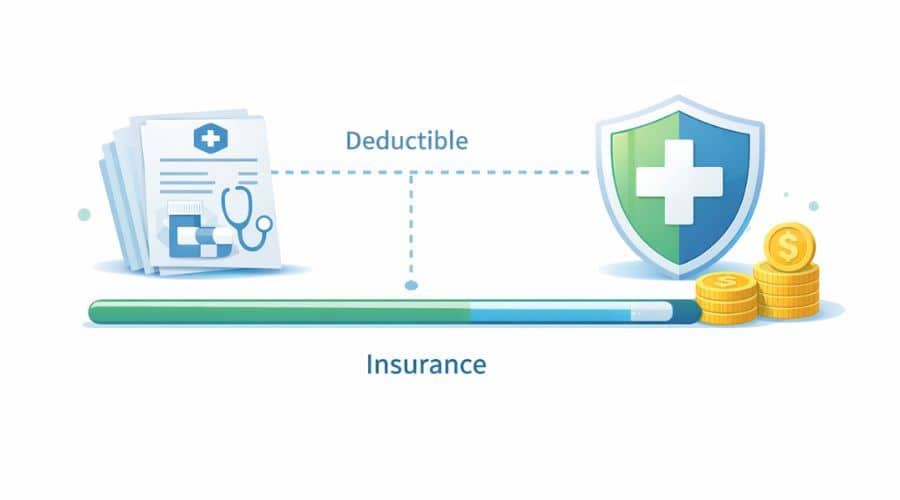
A deductible is the amount you must pay for covered healthcare services before your insurance company starts paying its share.
If your plan has a $2,000 deductible, that means:
- You pay the first $2,000 of eligible medical costs yourself
- After that, insurance begins cost-sharing through copays or coinsurance
This amount is separate from your monthly premium.
Important distinction:
Paying your deductible determines when coverage actually starts sharing costs
Paying your premium keeps your insurance active
How Deductibles Work in U.S. Health Insurance Plans
Annual Reset Rule
In the U.S., deductibles almost always:
- Apply on a per-year basis
- Reset at the start of each plan year (commonly January 1)
If you paid $1,500 toward a $2,000 deductible in December, you usually start back at $0 in January.
What Counts Toward the Deductible
Typically included:
- Doctor visits
- Specialist appointments
- Diagnostic tests (X-rays, MRIs, blood work)
- Hospital services
- Prescription drugs (depending on the plan)
Usually not included:
- Monthly premiums
- Services not covered by the plan
- Charges above the insurer’s allowed amount (out-of-network balance billing)
Plans vary, so details matter.
Preventive Care Exception
Under federal law, many preventive services must be covered without requiring the deductible, including:
- Annual wellness visits
- Vaccinations
- Certain screenings (blood pressure, cholesterol, cancer screenings)
This applies to most ACA-compliant plans, though specific coverage can vary.
Individual vs Family Deductibles
Health plans often include two deductible levels.
| Deductible Type | How It Works |
|---|---|
| Individual deductible | Applies to one person on the plan |
| Family deductible | Applies to total spending across all covered members |
Embedded vs Aggregate Deductibles
- Embedded deductible: Each person has their own deductible within the family plan.
- Aggregate deductible: The full family deductible must be met before insurance pays for anyone.
This distinction affects how quickly coverage kicks in for families.
Real-Life Example
Sarah has a health plan with:
- $1,500 deductible
- 20% coinsurance after deductible
- $4,000 out-of-pocket maximum
She has a $1,200 outpatient procedure:
- She pays the full $1,200
- $1,200 counts toward her deductible
- Insurance pays nothing yet
Later, she has another $1,000 bill:
- She pays $300 to finish the deductible
- Insurance covers 80% of the remaining $700
- Sarah pays $140
Understanding this flow prevents confusion and financial shock.
Common Beginner Misunderstandings
- “I pay a deductible every time.”
No. It’s an annual amount, not per visit. - “Once I meet the deductible, everything is free.”
Usually false. Copays or coinsurance often still apply. - “Copays count toward the deductible.”
Sometimes yes, sometimes no. It depends on the plan.
How Deductibles Interact With Other Health Insurance Costs

Understanding a deductible alone isn’t enough. In U.S. health insurance, deductibles work alongside copays, coinsurance, and the out-of-pocket maximum. Confusion usually happens when people assume these costs are interchangeable. They aren’t.
Deductible vs Copay
A copay is a fixed dollar amount you pay for a service, such as:
- $30 for a primary care visit
- $75 for an urgent care visit
Some plans charge copays before the deductible is met. Others don’t.
Key point:
A copay may or may not count toward your deductible, depending on the plan’s rules.
Deductible vs Coinsurance
Coinsurance is a percentage split of costs after the deductible is met.
Example:
- Insurance pays 80%
- You pay 20%
Coinsurance usually applies after the deductible unless the service is exempt.
How the Out-of-Pocket Maximum Fits In
The out-of-pocket maximum is the most you’re required to pay in a year for covered services. For a deeper breakdown of how this limit protects you financially, read our explanation of the out-of-pocket maximum and why it matters more than your deductible. This limit protects you from unlimited medical costs during serious illness or emergencies.This limit protects you from unlimited medical costs during serious illness or emergencies.
Once you reach it:
- The insurance company pays 100% of covered costs for the rest of the year
What usually counts toward it:
- Deductible payments
- Copays
- Coinsurance
What usually does not count:
- Premiums
- Out-of-network charges beyond allowed limits
Deductibles are often the largest contributor to reaching this limit.
High-Deductible vs Low-Deductible Health Plans
Deductibles vary widely across U.S. health plans. Choosing the wrong type can cost thousands over time.
General Differences
| Feature | High-Deductible Plan | Low-Deductible Plan |
|---|---|---|
| Monthly premium | Lower | Higher |
| Upfront medical costs | Higher | Lower |
| Best for | Healthy, low-use individuals | Frequent care users |
| HSA eligibility | Often yes | Usually no |
Who High-Deductible Plans Often Work For
- People with few medical needs
- Those with emergency savings
- Individuals using Health Savings Accounts (HSAs)
High deductibles can be financially efficient only if you can afford unexpected bills.
Who Should Be Careful With High Deductibles
- People with chronic conditions
- Families with young children
- Anyone living paycheck to paycheck
- Those who delay care due to cost concerns
A low monthly premium does not always mean lower overall healthcare costs.
Deductibles and Health Savings Accounts (HSAs)
Many high-deductible health plans are designed to work with HSAs.
Why This Matters
HSAs allow:
- Pre-tax contributions
- Tax-free growth
- Tax-free withdrawals for qualified medical expenses
For eligible plans, the deductible threshold must meet federal minimums, which are updated periodically by the IRS and may change each year.
Important:
Not all high-deductible plans qualify for HSAs. Eligibility rules are strict.
Deductibles in Different Types of U.S. Health Insurance
Employer-Sponsored Insurance
- Deductibles vary by employer and plan tier
- Large employers often subsidize lower deductibles
- Embedded family deductibles are common
Marketplace (ACA) Plans
- Deductibles vary by metal tier:
- Bronze: typically highest
- Silver: moderate
- Gold/Platinum: lower
Cost-sharing reductions may lower deductibles for eligible income levels.
Medicare
- Medicare Parts A and B have separate deductibles (Official Medicare deductible amounts and cost-sharing rules are published annually by the Centers for Medicare & Medicaid Services (CMS).)
- These deductibles are not structured like private insurance
- Medigap policies may cover some deductible costs
Medicaid
- Many Medicaid plans have no deductible
- Cost-sharing rules vary by state
Common Mistakes That Cost Americans Money
- Choosing a plan based only on the monthly premium
- Ignoring family deductible structure
- Assuming all services apply to the deductible
- Not budgeting for early-year medical expenses
- Skipping care due to misunderstanding coverage
Most financial damage comes from assumptions, not bad luck.
Pros and Cons of Health Insurance Deductibles
Deductibles are not inherently good or bad. Their impact depends on income stability, health needs, and risk tolerance.
Pros & Cons Table: Deductibles in Health Insurance
| Aspect | Advantages | Disadvantages |
|---|---|---|
| Monthly cost | Lower premiums with higher deductibles | Higher premiums with lower deductibles |
| Budget predictability | Useful if medical use is low | Unpredictable costs during illness or emergencies |
| Plan flexibility | Often paired with HSAs | Requires financial discipline and savings |
| Healthcare behavior | Encourages cost awareness | Can lead to delayed or skipped care |
The right deductible depends on whether you value lower monthly costs or more predictable medical expenses.
A deductible should support access to care, not become a barrier to it.
How Deductibles Affect Your Finances Long-Term

Cash Flow Impact
High deductibles often shift healthcare costs to the beginning of the year, when many households are least financially prepared.
This can:
- Increase credit card usage
- Lead to medical debt
- Create cash flow stress after emergencies
Medical debt remains one of the most common reasons for financial hardship in the U.S.
Credit Score Considerations
Medical bills can affect credit if:
- They go unpaid
- They are sent to collections
Although credit reporting rules for medical debt have changed in recent years, unpaid balances can still create financial problems.
Key warning:
Insurance confusion does not protect you from collection activity.
When a High Deductible Is a Bad Financial Choice
A high deductible may be risky if:
- You have predictable ongoing care
- You lack emergency savings
- You support dependents
- You avoid care due to cost anxiety
In these cases, lower deductibles often reduce overall financial strain, even if premiums are higher.
How to Evaluate a Deductible Before Choosing a Plan
Step-by-Step Evaluation
Step 1: Estimate Expected Medical Use
- Prescriptions
- Specialist visits
- Planned procedures
- Ongoing treatments
Step 2: Compare Total Annual Cost — Not Just Premiums
Add together:
- Annual premiums
- Expected deductible usage
- Likely copays and coinsurance
The cheapest premium is often not the cheapest plan.
Step 3: Check Family Deductible Structure
For families, confirm:
- Embedded vs aggregate deductibles
- Individual limits within the family plan
This affects how quickly insurance begins paying.
Step 4: Confirm Preventive Care Coverage
Ensure:
- Annual checkups are covered
- Screenings are deductible-exempt
- Vaccines are included
This avoids skipping essential care.
Deductibles vs Other Cost Controls
Many Americans confuse deductibles with other cost-limiting features.
| Feature | Purpose |
|---|---|
| Deductible | Determines when insurance starts paying |
| Copay | Flat fee per service |
| Coinsurance | Cost-sharing percentage |
| Out-of-pocket maximum | Caps annual spending |
Understanding how these features work together is more important than focusing on any single cost number.
A plan should be evaluated as a system, not by a single number.
Myths vs Facts About Deductibles
Myth: Higher deductibles always save money
Fact: They only save money if medical usage stays low.
Myth: Deductibles apply to all services
Fact: Many preventive services bypass the deductible.
Myth: Family plans protect individuals from high costs
Fact: Some family deductibles delay coverage for everyone.
What Happens If You Can’t Afford Your Deductible
Options may include:
- Negotiating medical bills
- Requesting payment plans
- Asking providers about self-pay discounts
- Using HSA or FSA funds if available
Ignoring bills creates bigger financial problems than addressing them early.
Special Deductible Situations Americans Commonly Encounter

Not all deductibles work the same way in real life. Certain situations create confusion because rules change based on plan design, provider networks, and types of care.
In-Network vs Out-of-Network Deductibles
Many U.S. health plans use separate deductibles for in-network and out-of-network care.
How This Typically Works
| Network Type | Deductible Treatment |
|---|---|
| In-network | Lower deductible, negotiated rates |
| Out-of-network | Higher deductible or separate deductible |
| Balance billing | May apply out-of-network |
Important warning:
Payments toward an out-of-network deductible often do not count toward your in-network deductible or out-of-pocket maximum. To understand how provider networks affect your costs in detail, see our guide on in-network vs out-of-network health insurance cost differences.
This is a major source of surprise medical bills.
Prescription Drug Deductibles
Some plans use a separate prescription drug deductible.
What This Means in Practice
- You may pay full price for medications until the drug deductible is met
- Preventive or generic drugs may be exempt
- Once met, copays or coinsurance apply
Always check the plan’s formulary and drug tiers. Drug costs can add up quickly, especially for brand-name or specialty medications.
Deductibles and Emergency Care
Emergency care is generally covered regardless of network status, but:
- Deductibles still apply
- You may owe the full cost until the deductible is met
- Follow-up care may be treated as non-emergency
Emergency coverage rules do not eliminate your responsibility for deductibles or cost-sharing.
Federal protections limit certain surprise billing practices, but deductibles still matter.
Deductibles for Mental Health and Substance Use Care
Under federal law, mental health benefits must generally be treated comparably to medical benefits.
This means:
- Deductibles usually apply the same way
- Separate, higher deductibles are generally not allowed
- Coverage details still depend on plan design
Access barriers still exist, especially due to provider availability. Even when coverage rules are equal, access to care can still be limited by provider availability and network restrictions.
Timing Matters: When Deductibles Hurt the Most
Early-Year Medical Needs
Because deductibles reset annually:
- January and February are the most expensive months
- Planned procedures early in the year increase out-of-pocket costs
Some people schedule care strategically, when possible.
Job Changes and New Plans
If you switch jobs:
- Your deductible usually resets
- Prior payments rarely transfer
- New waiting periods may apply
This can create unexpected double exposure in a single year.
How Deductibles Affect Healthcare Decisions
Deductibles influence behavior more than many people realize.
Common outcomes:
- Delaying care due to cost
- Skipping follow-ups
- Avoiding diagnostics
- Using urgent care instead of primary care
These behaviors often increase long-term healthcare costs rather than reducing them.
While cost awareness can be positive, care avoidance often leads to worse outcomes and higher costs later.
Practical Tips to Manage Deductible Costs
- Ask for cost estimates before non-emergency care
- Use in-network providers whenever possible
- Review explanations of benefits carefully
- Set aside funds early in the year
- Use preventive services consistently
Proactive planning and informed decisions can significantly reduce deductible-related stress.
Knowledge reduces financial stress more than any single plan feature.
Frequently Asked Questions About Health Insurance Deductibles
-
Do I pay my deductible before insurance covers anything?
Not always. Many plans cover preventive care before the deductible. Some plans also apply copays for certain services, such as primary care visits, even if the deductible has not been met. Coverage rules vary by plan.
-
Does my deductible apply to emergency room visits?
Yes, in most cases under standard plan rules. Emergency services are covered regardless of network status, but deductibles still apply. After meeting the deductible, copays or coinsurance usually apply. Follow-up care may be treated differently.
-
Do copays count toward my deductible?
Sometimes. Some plans count copays toward the deductible, while others only count them toward the out-of-pocket maximum. You must check your plan’s summary of benefits for the exact rule.
-
Is the deductible per person or per family?
It depends on the plan. Family plans may use:
– Embedded deductibles, where each person has their own limit, or
– Aggregate deductibles, where the full family amount must be met firstThis difference significantly affects when insurance starts paying.
-
What happens if I never meet my deductible?
If you don’t meet your deductible during the plan year:
– Insurance may still cover preventive care
– You pay out of pocket for most other services
– The deductible resets at the next plan yearYou do not receive a refund for unused deductible amounts.
-
Does my deductible reset if I change jobs?
Yes, in most cases under standard plan rules. When you change employers and enroll in a new plan:
– The deductible usually resets to zero
– Previous payments typically do not carry overThis can lead to higher out-of-pocket costs in the same calendar year.
-
Are deductibles tax-deductible?
Medical expenses may be tax-deductible only if:
– You itemize deductions
– Total qualified medical expenses exceed the IRS income threshold for the applicable tax yearDeductible payments alone are not automatically tax-deductible.
-
Can I use an HSA to pay my deductible?
Yes, if you are enrolled in an HSA-eligible plan. Qualified medical expenses paid from an HSA are generally tax-free. Eligibility rules are strict and must be met.
-
Why are deductibles so high on some plans?
Higher deductibles often exist to:
– Lower monthly premiums
– Shift cost responsibility to consumers
– Pair with tax-advantaged savings accountsThey are not always cheaper in the long run.
-
Is a zero-deductible plan always better?
Not necessarily. Zero-deductible plans usually have:
– Higher premiums
– Limited provider networks
– Higher copaysThe best plan depends on your health needs and financial situation.
Final Thoughts on Understanding Deductibles
Health insurance deductibles shape how and when Americans access care. Misunderstanding them leads to delayed treatment, unexpected bills, and financial stress. Understanding them allows for better planning, smarter plan choices, and fewer surprises when care is needed.
A deductible should be a known, manageable number, not a financial shock. Taking time to review plan details before enrolling can prevent costly misunderstandings later.
Disclaimer
This content is provided for educational and informational purposes only. It does not constitute legal, tax, or financial advice. Health insurance rules, costs, and coverage vary by plan, insurer, state, and individual circumstances. Readers should consult a qualified insurance professional, tax advisor, or financial advisor before making personal health insurance or financial decisions.

2 thoughts on “What Is a Deductible in Health Insurance? Meaning, Examples & Costs”