
Buying a home is one of the most important financial decisions most Americans will ever make—and the type of mortgage you choose can impact your monthly budget, long-term savings, and overall financial stability for decades.
One of the most common—and often confusing—choices is deciding between a fixed rate mortgage and an adjustable rate mortgage (ARM). While the names sound simple, the real differences go far beyond whether the interest rate changes or stays the same.
This guide breaks down fixed vs adjustable rate mortgages in a clear, practical way—covering how each loan works, the risks involved, and how to decide which option fits your timeline, income stability, and long-term financial goals.
Because the right mortgage isn’t just about getting the lowest rate today—it’s about choosing a loan that will still work for you years from now, even if your financial situation or interest rates change.
Key Takeaways
- Fixed-rate mortgages offer stable, predictable payments for the life of the loan.
- Adjustable-rate mortgages (ARMs) usually start with lower rates but can change over time.
- The better option depends on how long you plan to stay in the home, your risk tolerance, and your overall financial stability.
- Neither option is universally “better”—each fits different real-life situations in the U.S. housing market.
What Is a Fixed Rate Mortgage?

A fixed rate mortgage is a home loan where the interest rate stays the same for the entire loan term—most commonly 30 years or 15 years in the United States.
How It Works in Practice
- Your interest rate is locked at closing.
- Your principal and interest payment never changes, even if market rates rise or fall.
- Property taxes and homeowners insurance may still change, but the loan payment itself remains stable.
Common Fixed-Rate Terms in the U.S.
| Loan Term | Typical Use Case |
|---|---|
| 30-year fixed | Lowest monthly payment, long-term stability |
| 15-year fixed | Faster payoff, lower total interest |
| 20-year fixed | Balance between payment size and interest savings |
Real-Life Example
A homeowner with a 30-year fixed mortgage at 6.5% will continue paying that rate even if new mortgage rates rise to 8% or fall to 5%. The loan does not adjust with the market.
What Is an Adjustable Rate Mortgage (ARM)?
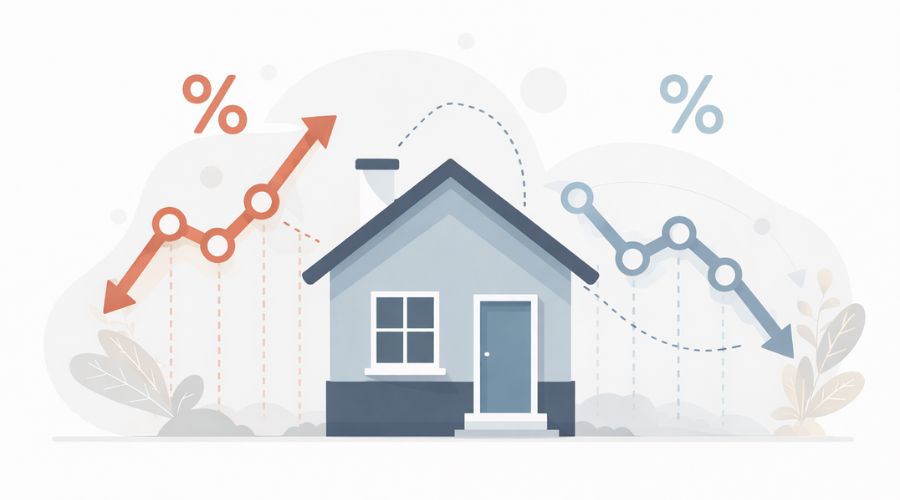
An adjustable rate mortgage has an interest rate that changes over time after an initial fixed period.
How ARMs Are Structured
Most ARMs follow a pattern such as 5/1, 7/1, or 10/1:
- The first number = years the rate is fixed
- The second number = how often the rate adjusts afterward (in years)
Example:
A 5/1 ARM has:
- A fixed rate for the first 5 years
- Rate adjustments once per year after that
What Happens After the Fixed Period
Once the initial period ends:
- The rate adjusts based on a market index (such as SOFR)
- A margin is added by the lender
- Payments can increase or decrease, within preset limits
Key Differences at a Glance
| Feature | Fixed Rate Mortgage | Adjustable Rate Mortgage |
|---|---|---|
| Interest rate | Never changes | Can change after initial period |
| Monthly payment | Predictable | Variable over time |
| Best for | Long-term homeowners | Shorter-term ownership |
| Rate risk | None | Yes, after adjustment |
| Initial rate | Usually higher | Usually lower |
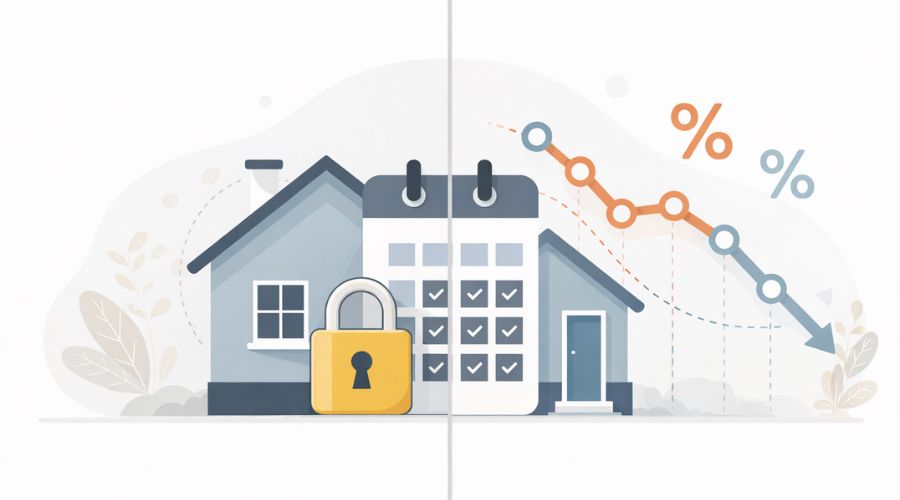
Why This Choice Matters Long Term
Mortgage structure affects more than just today’s payment:
- Budget stability
- Emergency savings capacity
- Ability to handle rate increases
- Refinancing flexibility
- Overall interest paid over decades
A loan that looks affordable in year one can become stressful later if payments rise faster than income.
Who a Fixed Rate Mortgage Is Best For
Fixed-rate loans tend to work well for borrowers who:
- Plan to stay in the home long term
- Prefer predictable monthly expenses
- Live on fixed or tightly managed incomes
- Want protection from rising interest rates
They are commonly chosen by:
- First-time homebuyers
- Families planning long-term stability
- Retirees or near-retirees
Who an Adjustable Rate Mortgage Is Best For
ARMs may make sense for borrowers who:
- Expect to move or refinance before the adjustment period
- Anticipate significant income growth
- Are comfortable managing interest rate risk
- Want lower initial payments
They are sometimes used by:
- Short-term homeowners
- Buyers in transitional life stages
- Borrowers with strong financial buffers
Important Warning About ARMs
Lower initial payments do not guarantee a lower lifetime cost. If interest rates rise, monthly payments can increase significantly over time.
Common Beginner Misunderstandings
- “I’ll definitely refinance before rates change.”
Refinancing depends on credit, income, home value, and market conditions—all of which can change. - “Rates can’t go much higher.”
Interest rate cycles are unpredictable and historically volatile. - “ARMs are risky by default.”
They are risky only when mismatched with the borrower’s timeline and finances.
At this point, the foundation is clear: both mortgage types serve real purposes, but only when used intentionally.
Pros and Cons of Fixed Rate vs Adjustable Rate Mortgages
Understanding the trade-offs matters more than memorizing definitions. The real difference shows up over time—especially when interest rates move or personal finances change.
Fixed Rate Mortgage: Pros and Cons
| Pros | Cons |
|---|---|
| Stable monthly payments for the entire loan | Higher initial interest rate than ARMs |
| Predictable budgeting and long-term planning | Less flexibility if rates fall |
| No interest rate risk | Higher total interest if paid over 30 years |
| Easier to understand and manage | Refinancing required to lower rate |
Why this matters:
Fixed-rate mortgages reduce uncertainty. For many households, avoiding payment shocks is worth paying a slightly higher rate upfront.
Adjustable Rate Mortgage (ARM): Pros and Cons
| Pros | Cons |
|---|---|
| Lower initial interest rate | Payments can increase after adjustment |
| Lower early monthly payments | Budget uncertainty |
| Can save money short term | More complex loan structure |
| Useful for short-term ownership | Long-term cost can exceed fixed-rate loans |
Key warning:
ARMs transfer interest rate risk from the lender to the borrower. If rates rise, the borrower absorbs the impact—not the bank.
How Interest Rate Adjustments Actually Work
Many borrowers underestimate how ARM adjustments function.
Key Components of an ARM
- Index: A market-based rate (commonly SOFR)
- Margin: A fixed percentage added by the lender
- Adjustment period: How often the rate changes
- Rate caps: Limits on how much rates can increase
Typical Rate Caps
| Cap Type | What It Limits |
|---|---|
| Initial cap | First adjustment increase |
| Periodic cap | Annual increase limit |
| Lifetime cap | Maximum rate over loan life |
Example:
A 5/1 ARM with a 2/2/5 cap structure means:
- Max 2% increase at first adjustment
- Max 2% per year afterward
- Max 5% total increase over the original rate
Payment Shock: The Biggest ARM Risk

Payment shock occurs when monthly payments rise sharply after the initial fixed period ends.
Why Payment Shock Happens
- Rising market interest rates
- High loan balance remaining
- Tight household budgets
- Lack of refinancing options
Real-Life Scenario
A borrower starts with a $1,800 payment. After rate adjustment, the payment increases to $2,400. That $600 difference must come from income, savings, or debt—every single month.
How Mortgage Choice Affects Long-Term Finances
Your mortgage structure influences:
- Emergency savings capacity
- Retirement contributions
- Ability to handle job loss or income changes
- Stress levels during economic downturns
Fixed-rate loans protect cash flow stability.
ARMs require financial flexibility and planning discipline.
Fixed vs Adjustable Mortgages During Rate Cycles
When Fixed Rates Tend to Win
- Rising or uncertain interest rate environments
- Long ownership timelines
- Lower tolerance for risk
When ARMs Can Make Sense
- Stable or declining rate environments
- Short-term homeownership plans
- Strong income growth expectations
Important reality:
No one can reliably predict long-term interest rate movements.
Myths vs Facts
| Myth | Reality |
|---|---|
| ARMs are always cheaper | Only cheaper if rates stay low |
| Fixed rates are “too expensive” | Stability has long-term value |
| Refinancing is guaranteed | It depends on market and personal factors |
| ARMs caused the housing crisis | Poor lending standards were the root cause |
Common Mistakes Borrowers Make
- Choosing based only on the lowest initial payment
- Ignoring worst-case payment scenarios
- Assuming future income will rise
- Not understanding rate caps
- Overestimating refinancing ease
Critical takeaway:
The best mortgage is the one that still works if life doesn’t go as planned.
How to Choose Between a Fixed Rate and an Adjustable Rate Mortgage

There is no shortcut or universal rule for this decision. The right choice comes from matching the loan structure to your timeline, income stability, and risk tolerance.
Step 1: Estimate How Long You’ll Stay in the Home
This is the most important factor.
| Expected Time in Home | Mortgage Type That Often Fits |
|---|---|
| Less than 5–7 years | ARM (with caution) |
| 7–10 years | Depends on rate gap and finances |
| 10+ years | Fixed rate mortgage |
If you are unsure, assume you will stay longer than planned. Many homeowners do.
Step 2: Stress-Test Your Budget
Ask one critical question:
Could you still afford the mortgage if the payment increased significantly?
For ARMs, review:
- Maximum possible payment at the lifetime rate cap
- Household income flexibility
- Emergency savings strength
If a higher payment would force debt, missed bills, or lifestyle disruption, a fixed rate is usually safer.
Step 3: Consider Income Stability
- Salaried employees with steady income often benefit from payment predictability
- Commission-based or variable-income households must be extra cautious with ARMs
- Expected raises are not guaranteed income
Important reminder: Lenders qualify you based on today’s income—not future hopes.
Step 4: Compare Total Cost, Not Just Initial Payment
Lower early payments can be misleading.
Look at:
- Interest paid over expected ownership period
- Worst-case ARM scenario
- Refinance costs and eligibility risks
This is where a mortgage calculator can help. Comparing fixed and adjustable loans across different timelines and rate scenarios allows borrowers to see potential outcomes more clearly—beyond just the initial payment.
Comparing Fixed vs Adjustable Mortgages Over Time
Short-Term Ownership (0–5 Years)
- ARMs can reduce early payments
- Risk is limited only if you move or refinance before adjustment
- Market changes can disrupt even short-term plans
Medium-Term Ownership (5–10 Years)
- This is the most uncertain zone
- ARMs may adjust during ownership
- Fixed rates offer protection against bad timing
Long-Term Ownership (10–30 Years)
- Fixed-rate mortgages typically provide greater financial security
- ARMs expose borrowers to decades of rate uncertainty
Legal and Regulatory Protections in the U.S.
Adjustable rate mortgages are regulated under federal law. Adjustable rate mortgages are regulated under federal law by the Consumer Financial Protection Bureau.
Borrowers must receive:
- Clear disclosure of index, margin, and rate caps
- Written explanation of how adjustments work
- Information on maximum possible payment
However, disclosure does not eliminate risk. Understanding matters more than paperwork.
Tax Considerations
- Mortgage interest may be deductible if you itemize deductions under current IRS rules.
- The deduction depends on:
- Loan amount
- Filing status
- Current IRS rules
- The loan type (fixed vs ARM) does not change deductibility
Tax benefits should never be the primary reason to choose one mortgage over another.
Situations Where One Option Is Clearly Risky
Fixed Rate May Be Risky If:
- The rate is dramatically higher than ARM alternatives
- You are certain of very short ownership
- Cash flow is tight and payment relief is critical
ARM May Be Risky If:
- You plan long-term ownership
- Income is unpredictable
- Savings are limited
- You would struggle with higher payments
Key warning:
ARMs demand ongoing financial vigilance. Fixed rates allow “set-it-and-forget-it” budgeting.
What Most Financially Stable Borrowers Prioritize
- Predictability over optimization
- Safety over speculation
- Budget resilience over minimum payments
This explains why fixed-rate mortgages remain the most common choice among U.S. homeowners.
Frequently Asked Questions (FAQs)
-
Is a fixed rate mortgage always safer than an adjustable rate mortgage?
A fixed rate mortgage is generally more predictable, not automatically safer in every situation. It protects against rising interest rates, which helps with long-term budgeting. However, if a borrower will sell the home within a few years and fully understands the risks, an ARM can sometimes reduce short-term costs. Safety depends on how well the loan matches the borrower’s timeline and financial capacity.
-
Can my ARM payment go down if interest rates fall?
Yes. If market rates fall and your ARM adjusts downward based on its index and margin, your interest rate and payment may decrease. That said, rate floors, margins, and timing can limit how much benefit you receive. Decreases are not guaranteed and may lag behind market changes.
-
What happens if I can’t afford the higher ARM payment after adjustment?
If payments rise and become unaffordable, options may include refinancing, selling the home, or loan modification—but none are guaranteed. Refinancing requires sufficient credit, income, and home equity, and depends on market conditions at that time.
-
Is refinancing always possible before an ARM adjusts?
No. Refinancing depends on:
– Credit score at the time
– Debt-to-income ratio
– Home value
– Current interest rates
– Employment stabilityMany borrowers plan to refinance but later discover they no longer qualify.
-
Do fixed rate mortgages ever change at all?
The interest rate and principal-and-interest payment do not change. However:
– Property taxes can rise or fall
– Homeowners insurance premiums can change
– Escrow payments may adjustThese changes are separate from the loan itself.
-
Are ARMs responsible for the 2008 housing crisis?
No. The crisis was driven primarily by poor underwriting, lack of income verification, and speculative lending practices. Modern ARMs are more regulated, but they still carry interest rate risk that borrowers must manage responsibly.
-
Which mortgage is better when interest rates are high?
High rates often make ARMs more appealing due to lower starting payments, but this also increases the risk of future adjustments. Fixed rates provide long-term protection if rates continue rising or remain elevated.
-
Should first-time homebuyers avoid adjustable rate mortgages?
Not necessarily, but caution is critical. First-time buyers often underestimate how long they’ll stay in a home and how disruptive payment increases can be. Fixed-rate loans usually offer a simpler, more stable starting point.
-
Does choosing a fixed or adjustable mortgage affect my credit score?
No. The mortgage type does not affect credit scoring. Payment history, balances, and overall debt management matter far more than whether the rate is fixed or adjustable.
-
How can I accurately compare both options before choosing?
The most reliable approach is to:
– Compare payments over your realistic ownership period
– Review worst-case ARM scenarios
– Include refinance costs and risksModeling different rate paths and ownership timelines helps borrowers compare options more clearly than focusing on initial payments alone.
Final Thoughts
The choice between a fixed rate and adjustable rate mortgage is not about finding the “cheapest” option—it’s about choosing the loan that remains manageable across good and bad financial seasons.
A mortgage should support your life, not strain it.

Disclaimer
This content is provided for educational and informational purposes only.
It does not constitute financial, legal, or tax advice.
Mortgage rules, interest rates, tax laws, and personal financial situations vary widely and change over time. Readers should consult a qualified financial advisor, mortgage professional, tax advisor, or attorney before making decisions related to home financing or long-term financial commitments.
