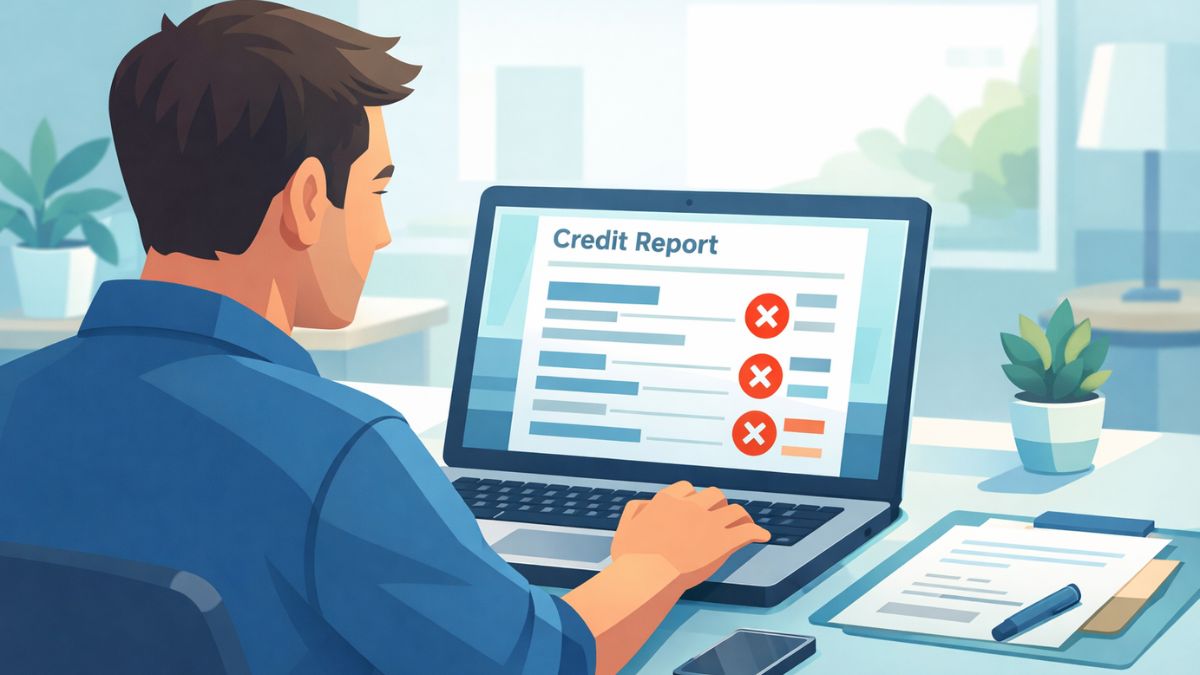
If your credit dispute was rejected, it can feel frustrating and confusing — especially if you were confident the information was wrong.
A rejection does not automatically mean the credit report is accurate. In many cases, it simply means the credit bureau accepted the lender’s response without fully reviewing your evidence.
This guide explains why disputes get rejected, what your legal rights are under U.S. law, and the exact steps you can take to correct errors and protect your credit profile.
Key Takeaways
If a credit bureau rejects your dispute, it does NOT mean the information is correct.
It usually means the bureau accepted the lender’s response without deeper review.
You still have strong legal rights under U.S. law to challenge the error again, escalate the dispute, and protect your credit profile
Here are the most important things to understand right away:
- Credit bureaus verify disputes with lenders, not by reviewing your personal records.
- You can dispute again if you provide stronger or clearer evidence.
- You can also dispute directly with the lender or collection agency.
- You have the right to add statements and file regulatory complaints if needed.
- Errors continue to affect your credit while they remain on your report.
- A rejected dispute is often the start of a more document-driven process, not the end.
Rejection is not the end of the process. It is usually the start of a more precise, document-driven phase.
Who This Guide Is For
This guide is helpful if:
- Your dispute was marked “verified” but you still believe the information is wrong
- An account does not belong to you
- Payment history, balances, or dates are inaccurate
If the information is negative but accurate, disputes usually will not remove it. In those cases, focusing on credit rebuilding may be more effective.
Why Credit Disputes Get Rejected in the First Place
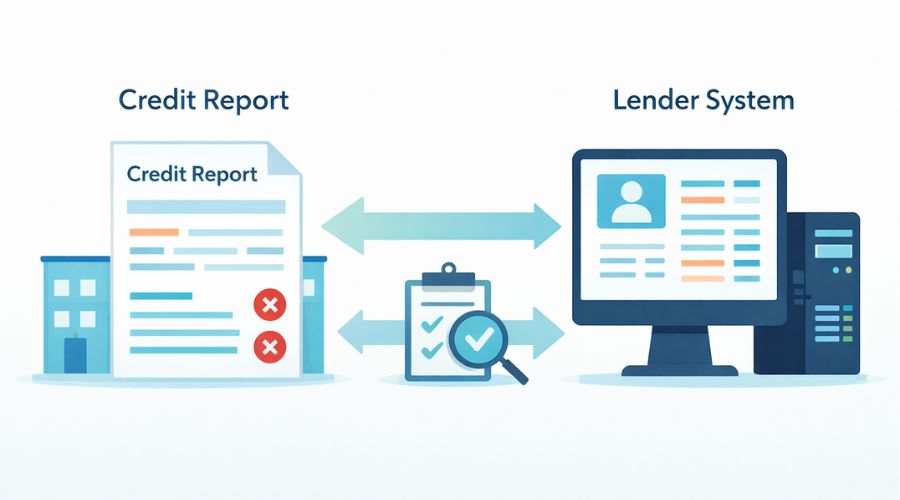
Many people assume rejection means the bureau proved the account is accurate. That is not how the system works in most cases. In most cases, the bureau does not review your documents itself. It simply forwards your dispute to the company that reported the account.
Under the Fair Credit Reporting Act (FCRA), bureaus must:
- Send your dispute to the data provider (usually the lender or collection agency)
- Ask them to verify the information
- Update or keep the information based on the response
If the lender replies, “Our records show this is accurate,” the bureau usually marks the dispute as verified and closes it — even if the lender never reviewed your documents carefully.
Common Reasons Disputes Are Rejected
| Reason | What It Usually Means |
|---|---|
| Lender confirmed the data | They matched it to their internal system |
| Dispute was too general | Example: “This is hurting my credit” |
| No supporting documents | Bureau had nothing concrete to evaluate |
| Identity confusion | Similar name, address, or SSN issues |
| Automated system closed it | Many disputes are processed electronically |
Important: The bureau does not independently audit bank records or payment systems. It relies on what the furnisher reports back.
What “Verified as Accurate” Actually Means
This phrase causes a lot of confusion.
When a bureau says an item was verified, it means:
- The lender confirmed the same information is still in their system
It does not mean:
- The information is legally correct
- The lender reviewed your bank statements
- The bureau compared your documents with the lender’s records
- The reporting follows all FCRA accuracy rules
Many errors remain on reports simply because lenders repeat the same incorrect data.
Situations Where Rejection Is Especially Common
Some types of credit report errors are harder to correct on the first dispute, even when you are right:
1. Late Payments You Believe Were On Time
If your bank statement shows payment but:
- It posted after the due date
- The lender credited it to a different month
The lender may still verify the late mark.
2. Accounts That Belong to Someone Else
Mixed files happen when:
- Names are similar
- Previous addresses match
- Social Security numbers are partially incorrect
These often require identity-level documentation to fix.
3. Old Debts That Were Sold to Collections
Each new collection agency may:
- Verify based on transferred data
- Not have full original payment history
That can make corrections slower and more difficult.
4. Medical and Insurance Billing Errors
Billing disputes between:
- Hospitals
- Insurance companies
- Collection agencies
do not always translate cleanly into credit reporting corrections.
Why You Should Not Ignore a Rejected Dispute
Leaving incorrect data on your credit report can affect:
- Loan approvals
- Interest rates
- Insurance pricing in some states
- Rental applications
- Employment background checks (where legally allowed)
Even small errors can:
- Increase your credit utilization
- Lower your payment history score
- Extend how long negative marks stay on your report
Doing nothing usually helps the error, not you.
Emotional Mistake Many People Make After Rejection
A very common reaction is:
“They already checked it. I can’t do anything else.”
That belief is not supported by consumer protection law.
The FCRA gives you the right to:
- Dispute again with more detail
- Dispute directly with the furnisher
- Add statements
- Escalate through regulators
- Seek legal review if the reporting is clearly wrong
The system is slow and bureaucratic, but it is not closed after one attempt.
What Matters Most Before You Dispute Again
Before taking the next step, two things become critical:
- Precision
Each dispute must target one specific factual error. - Documentation
Screenshots, statements, letters, and payment records matter far more than explanations.
Stronger disputes are not emotional — they are document-based and narrowly focused.
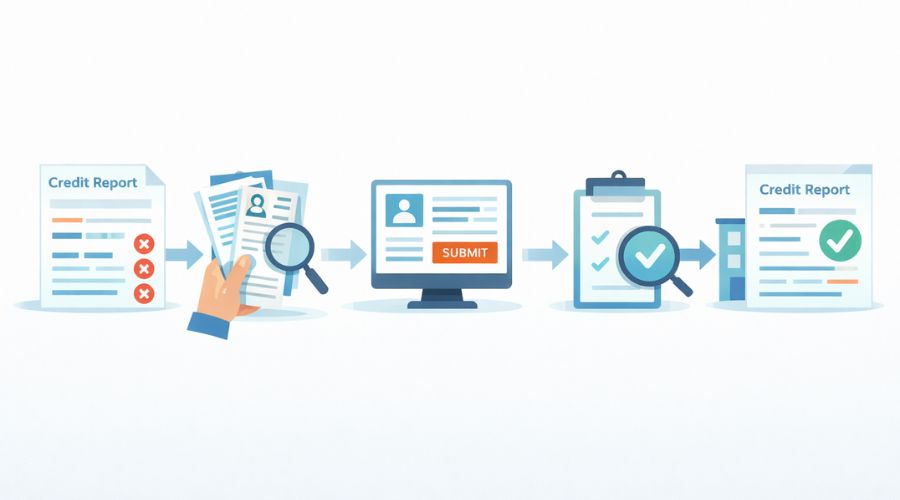
Step 1: Carefully Review the Bureau’s Rejection Notice
Before sending another dispute, you need to understand exactly what the bureau said — and what it did not say. Many dispute results are short and vague, so it is important to read every line carefully instead of assuming what was reviewed.
When a dispute is closed, the credit bureau sends a results notice that usually includes:
- The account or item that was reviewed
- A short status message (such as “verified as accurate” or “no change”)
- The name of the furnisher that confirmed the data
What to Check in the Bureau’s Response
Focus on three things:
1. Which Specific Item Was Verified
Check whether the bureau reviewed:
- The entire account, or
- Only a specific part (late payment, balance, status, dates)
Sometimes only one detail was checked, not the whole account.
2. Who Verified the Information
Look for the furnisher name:
- Original lender (bank, credit card issuer)
- Collection agency
- Debt buyer
This matters because your next dispute may need to go directly to that company, not only to the bureau.
3. Whether the Bureau Asked for More Information
Some notices say:
- “We could not verify based on the information provided”
- or “Please provide additional documentation”
That language usually means your first dispute did not include enough proof.
Step 2: Re-Check Your Own Records (Very Carefully)
Before taking any further action, you need to understand exactly why your dispute was closed. Many people skip this step and resend the same dispute, which usually leads to another rejection. Before disputing again, confirm that the error is truly an error.
This step protects you from:
- Repeating weak disputes
- Damaging your credibility with furnishers
- Wasting time on information that is technically correct
Match These Items Line by Line
Compare your documents with what appears on the credit report:
| Credit Report Field | What to Verify |
|---|---|
| Payment dates | Bank posting date vs lender due date |
| Account balance | Statement balance vs reported balance |
| Account status | Open, closed, charged off, paid |
| Account owner | Your name, address, SSN indicators |
| Collection dates | Date of first delinquency (DOFD) |
Important: Credit scoring timelines are based on the date of first delinquency, not the date a collection agency bought the debt. Errors here are legally significant.
Step 3: Gather Stronger Supporting Documents
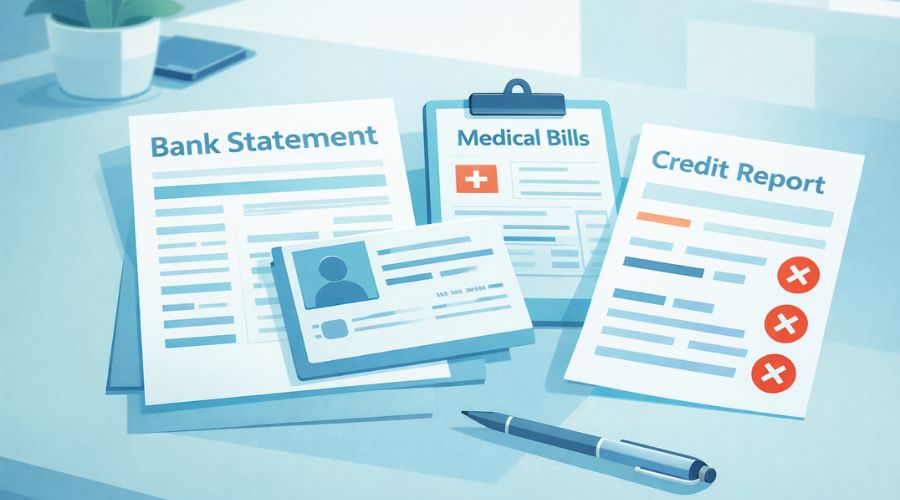
Second disputes should always include documents unless the error is purely factual (like wrong name or address). Without documentation, lenders and bureaus usually rely only on their internal data, which is why first disputes often fail.
Examples of Effective Documents
Use clear copies (not originals):
- Monthly bank statements showing cleared payments
- Credit card statements with payment confirmation
- Letters or emails from the lender admitting mistakes
- Billing statements showing different balances
- Identity theft reports (FTC IdentityTheft.gov affidavit)
- Insurance explanation of benefits (for medical disputes)
What Usually Does NOT Help
- Screenshots of apps without dates
- Personal explanations without proof
- Verbal statements from customer service
- Statements that do not clearly match the disputed account
If the document does not show account number or matching personal details, the lender may ignore it.
Step 4: File a Second Dispute — But Make It Narrow and Specific
Broad disputes are more likely to fail again.
Bad Example
“This account is wrong and hurting my credit.”
Effective Example
“Account #XXXX shows 60-day late for March 2024. Bank statement attached shows payment posted March 10, 2024, before the March 15 due date. Please correct payment history.”
Each dispute should challenge one factual error only.
If there are multiple problems on the same account, send:
- Separate disputes, or
- One letter with clearly numbered errors
How to Submit the Second Dispute
You can use:
- Online dispute portals (faster)
- Certified mail (stronger paper trail)
Mail disputes are slower but sometimes taken more seriously for complex cases. If you send mail, keep copies of everything and use certified mail when possible so you have proof of delivery.
Step 5: Dispute Directly With the Lender or Collection Agency
This step is often skipped, but it is very powerful.
Under the FCRA and CFPB rules, consumers can send disputes directly to the furnisher, not only to credit bureaus.
Why Direct Disputes Matter
When you dispute with the lender:
- They must investigate internally
- They must correct the data they send to all bureaus
- They cannot simply rely on automated verification systems
What to Include in a Direct Dispute
Send a letter that includes:
- Your full name and address
- Partial SSN (last 4 digits)
- Account number
- Exact error description
- Copies of supporting documents
- Request for correction under the FCRA
Many lenders have specific dispute mailing addresses listed on statements or websites.
Step 6: Know the Investigation Time Limits
Timeframes are set by federal law.
Credit Bureau Timelines
| Situation | Maximum Time |
|---|---|
| Standard dispute | 30 days |
| If you submit more documents | Up to 45 days |
Furnisher Timelines
Direct disputes must generally be investigated within:
- 30 days, depending on dispute type and institution
If no response is given within the legal period, that may become a compliance issue.
When Second Disputes Still Fail
If the bureau and furnisher both continue reporting incorrect data despite documentation, you still have options.
Next steps may include:
- Adding consumer statements
- Filing complaints with regulators
- Requesting method-of-verification details
- Legal review for FCRA violations
Step 7: Add a Consumer Statement (When It Makes Sense)
If a dispute is rejected but the account remains on your report, you have the right to add a consumer statement explaining your side. This does not remove the account, but it allows you to add context for lenders who manually review your credit file.
A consumer statement is:
- A short note (usually up to 100–200 words, depending on bureau)
- Attached to the account on your credit report
- Visible to lenders who manually review your file
When a Consumer Statement Helps
It may help when:
- You are actively disputing with the lender
- The issue involves billing disputes or insurance delays
- You have documentation but the system hasn’t corrected yet and you want lenders to see that the issue is still under active review.
Example situations:
- Medical billing conflicts
- Disaster-related payment delays
- Military deployment payment issues
When Consumer Statements Do NOT Help
They usually do not help when:
- You are applying for automated credit approvals
- The issue is identity theft (those should be removed, not explained)
- The statement admits fault or hardship
Important: A consumer statement does not improve your credit score. It only adds context for manual reviews.
Step 8: Request the Bureau’s “Method of Verification”
If your dispute was rejected and you believe the investigation was inadequate, you can ask:
How exactly was this item verified?
This is called a method-of-verification request under the FCRA. This request asks the bureau to explain how it confirmed the information, not to reinvestigate the account.
What You Can Ask For
You may request:
- The name of the furnisher contacted
- How the information was checked
- Whether automated systems were used
This request must be made:
- In writing
- Within 15 days after receiving dispute results
The bureau must respond with available details about the verification process.
Why This Step Matters
It can reveal whether:
- No real document review occurred
- Only electronic matching was used
- The furnisher never reviewed your evidence
While this does not guarantee correction, it strengthens later complaints if procedures were not reasonable.
Step 9: File a Complaint With the CFPB or State Regulators
If both the bureau and lender refuse to correct clear errors, escalation becomes appropriate.
Consumer Financial Protection Bureau (CFPB)
You can submit complaints against:
- Credit bureaus
- Banks
- Credit card issuers
- Collection agencies
CFPB complaints:
- Are sent directly to the company
- Require a written response
- Are tracked by regulators and become part of the company’s official compliance record.
Companies usually respond within 15–30 days.
State Attorney General or State Regulators
You may also contact:
- Your state Attorney General’s consumer protection office
- State financial regulatory agencies (for licensed lenders)
These agencies cannot change your credit report directly, but:
- They pressure companies to correct systemic reporting problems
- They document patterns of noncompliance
Step 10: When Legal Review May Be Appropriate
Most disputes do not require attorneys. But some situations justify legal advice.
Consider Legal Review If:
- Errors remain after multiple documented disputes
- Identity theft information is not removed
- Old debts are being re-aged incorrectly
- Incorrect accounts are causing repeated credit denials
Under the FCRA:
- Companies can be liable for failing to correct verified errors
- In limited situations, consumers may be eligible for damages under federal law.
Important: Do not threaten lawsuits in dispute letters. Keep disputes factual and professional.
Legal consultation should be:
- Quiet
- Document-driven
- Focused on compliance failures, not emotions
Common Mistakes That Make Rejected Disputes Worse
Many people unintentionally reduce their chances of correction.
Mistake 1: Sending the Same Dispute Repeatedly
Bureaus may label disputes as frivolous or repetitive, which allows them to stop investigating.
Each new dispute must include:
- New documents
- New factual detail
Mistake 2: Disputing Everything at Once
Mass disputes look automated and weak.
It is better to:
- Focus on high-impact errors first
- Handle one account at a time
Mistake 3: Admitting Fault in Writing
Avoid statements like:
- “I was late because I lost my job”
- “I couldn’t pay at that time”
Hardship explanations do not correct reporting accuracy and may reduce your leverage.
Mistake 4: Ignoring Time Limits
Missing deadlines can:
- Weaken regulatory complaints
- Delay corrections that affect credit applications
How Rejected Disputes Affect Your Credit Going Forward
While the incorrect item remains:
- Payment history stays damaged
- Utilization may stay higher
- Account age calculations may remain negative
However:
- New positive accounts and payments can still improve scores
- Removing high-impact errors later can still lead to meaningful score increases
Dispute outcomes affect:
- Not only current scores
- But also how lenders view your long-term risk
How This Fits Into Your Overall Credit Repair Strategy

Disputes are only one part of credit improvement.
Even while disputes are ongoing, strong actions include:
- Paying all current bills on time
- Reducing revolving balances
- Avoiding new unnecessary inquiries
This protects your score from getting worse while corrections are pending.
When You Should Keep Disputing — And When You Should Shift Focus
Not every rejected dispute should be pursued indefinitely. Knowing when to continue and when to change strategy protects both your time and your credit profile.
Keep Disputing If:
- The account does not belong to you
- Payment history is factually wrong
- Balance or status is objectively incorrect
- Old debt is being re-aged improperly
- Identity theft information remains after proper reporting
These are accuracy violations, not judgment calls.
Consider Pausing If:
- The late payments were technically correct
- The debt was valid and unpaid
- The lender’s records match your statements
- No new evidence is available
In these cases, disputes are unlikely to succeed, and repeated challenges may be labeled frivolous.
When Disputes Can Actually Hurt You
Disputes themselves do not lower credit scores. However, they can create indirect problems.
1. Delays in Credit Applications
If you apply for credit while disputes are active:
- Some lenders pause applications
- Mortgage underwriting may be delayed
- Manual review may be required
2. Frozen Updates During Investigation
During active investigations:
- Score changes may lag
- Rapid credit rebuilding strategies may not reflect immediately
3. Risk of Account Closures (Rare but Possible)
Some lenders may:
- Reduce limits
- Close accounts after disputes
This is uncommon but more likely when:
- Multiple accounts are disputed at once
- Fraud claims are involved
That is why targeted disputes are safer than broad campaigns.
Rebuilding While Disputes Are Ongoing
If a correction is uncertain, improving the rest of your profile becomes even more important. This helps offset the impact of unresolved negatives while investigations are still pending.
Actions That Still Help During Disputes
- Pay every current bill on time
- Reduce credit card balances below 30% utilization, and ideally below 10%
- Avoid opening unnecessary new accounts
- Keep older accounts open when possible
These actions:
- Protect your score from further damage
- Improve lender confidence even with one negative mark
Should You Hire a Credit Repair Company After a Dispute Is Rejected?
When a credit dispute is rejected, many consumers start wondering whether they should hire a credit repair company to handle the process for them.
Credit repair services often advertise that they can remove negative information or fix credit reports faster. However, it is important to understand what these companies can and cannot legally do.
Under U.S. law, credit repair companies do not have any special powers that consumers do not already have themselves. The Fair Credit Reporting Act (FCRA) gives every consumer the right to dispute inaccurate information directly with credit bureaus and lenders.
This means a credit repair company typically does the same things you can do on your own:
- Review your credit reports
- Send dispute letters to credit bureaus
- Contact lenders or collection agencies
- Follow up on investigation results
The main difference is that they charge fees to perform these steps.
When a Credit Repair Company May Help
Some consumers choose to hire a service when:
- They have multiple complex credit report errors
- Identity theft has affected several accounts
- They do not have time to manage disputes themselves
- They feel overwhelmed by the process
In these cases, professional assistance can help organize documentation and maintain consistent follow-up.
Important Risks to Understand
Not all credit repair companies operate ethically. Some may:
- Promise guaranteed results
- Claim they can remove accurate negative information
- Charge large upfront fees
- Encourage consumers to dispute everything on their report
Under the Credit Repair Organizations Act (CROA), companies are not allowed to make misleading promises about credit repair outcomes.
If negative information on your report is accurate, no legitimate company can legally remove it early.
The Reality Most Consumers Should Know
Many consumers successfully handle disputes themselves by:
- Providing clear documentation
- Sending focused disputes
- Following up with lenders and bureaus
Because the law gives you the same dispute rights, hiring a company is usually a matter of convenience rather than necessity.
Myths vs Facts About Rejected Credit Disputes
Myth: If a dispute is rejected, the information must be correct
Fact:
It only means the furnisher confirmed their own records, not that an independent review occurred.
Myth: You can’t dispute the same account again
Fact:
You can dispute again if you provide new information or evidence.
Myth: Calling customer service fixes reporting
Fact:
Only formal disputes processed by compliance departments typically update credit reporting systems.
Myth: Paying a collection automatically removes it
Fact:
Payment does not require removal. Reporting depends on the lender’s policies and data accuracy rules.
Can You Remove a Verified Credit Account?
One of the most confusing situations in credit reporting happens when a disputed account is marked “verified as accurate.”
Many consumers assume this means the information can never be removed. In reality, a verification result does not always mean the reporting is legally correct.
When a credit bureau marks an account as verified, it typically means the lender confirmed that the same data exists in its system. In many cases, this confirmation happens through automated electronic verification rather than a full manual review of documents.
Because of this, some verified accounts may still contain errors.
Situations Where Verified Accounts May Still Be Removed
Even after verification, an account may be corrected or removed if:
- New documentation proves the information is incorrect
- The lender discovers reporting mistakes in its records
- The account was reported under the wrong consumer file
- Identity theft evidence is provided
- The reporting violates FCRA accuracy rules
Providing stronger documentation in a second dispute often leads to corrections that did not occur during the first investigation.
When Verified Information Cannot Be Removed
If the lender’s records match your own financial records and the reporting is accurate, the information will usually remain on your credit report until it reaches the legal reporting limit.
For most negative items, federal law allows reporting for up to seven years from the date of first delinquency.
In these cases, focusing on credit rebuilding strategies may be more productive than repeated disputes.
Why Verified Does Not Always Mean Final
Credit reporting investigations are designed to resolve factual errors, but they are not always perfect. Some corrections only occur after:
- additional documentation
- direct disputes with the lender
- regulatory complaints
- deeper internal reviews
For this reason, a verified result should be viewed as the outcome of one investigation, not necessarily the final word on whether an error exists.
How Long Errors Can Stay If Not Corrected
Under federal law, most negative items can remain for:
| Item Type | Maximum Reporting Time |
|---|---|
| Late payments | 7 years |
| Collections | 7 years from first delinquency |
| Charge-offs | 7 years |
| Bankruptcy Chapter 7 | Up to 10 years |
Incorrect dates can illegally extend these periods, which is why date-of-first-delinquency errors are critical to dispute.
Real-Life Example: What a Successful Second Dispute Looks Like
A typical successful correction often follows this pattern:
- First dispute is rejected after lender confirms records
- Consumer requests bank statements from their bank
- Second dispute includes:
- Statement copy
- Exact posting date
- Specific error explanation
- Lender reviews payment logs internally
- Correction is sent to all bureaus
- Score improves within one or two reporting cycles
Success usually comes from precision and documentation, not volume of disputes.
Preparing for the Final Escalation Stage
If repeated documented disputes fail, the situation shifts from:
“Is this an error?”
to
“Is the company failing to follow reasonable investigation procedures?”
That distinction matters for:
- Regulatory complaints
- Legal compliance evaluation
What Counts as an Inadequate or Unreasonable Investigation
Under the Fair Credit Reporting Act (FCRA), both credit bureaus and furnishers must conduct a reasonable investigation when you dispute information. A reasonable investigation means more than simply checking whether the same data still exists in a computer system.
While the law does not define every step they must take, courts and regulators generally expect more than automated matching when:
- You provide documents
- You clearly explain the factual error
- The issue involves identity or payment records
Signs an Investigation May Have Been Unreasonable
You may have grounds for escalation if:
- Your documents were ignored entirely
- Only automated verification was used repeatedly
- Payment proof was not reviewed
- Identity theft reports were disregarded
- The same incorrect data is reinserted after removal
These situations may justify:
- Regulatory complaints
- Legal review for compliance failures
How to Organize Your Records Before Escalation
If disputes continue to fail, organization becomes critical.
Create a Simple Dispute File
Keep copies of:
- All credit reports showing the error
- Dispute submission confirmations
- Bureau investigation results
- Letters sent to lenders
- Proof documents (bank statements, letters, affidavits)
- Dates of each submission and response
This file helps when:
- Filing CFPB complaints
- Contacting state regulators
- Consulting consumer rights attorneys
It also prevents repeating arguments that already failed.
Step-by-Step Escalation Path (When Needed)
Escalation should follow a logical order.Skipping steps can weaken your case and reduce the chance of a correction.
Step 1: Final Documented Dispute With Furnisher
Before formal complaints, send one clear dispute directly to the lender or collector including:
- All supporting documents
- Timeline of previous disputes
- Request for correction under the FCRA
This creates a clear compliance record.
Step 2: CFPB Complaint
If no correction occurs, file a complaint with the Consumer Financial Protection Bureau.
Your complaint should include:
- What is inaccurate
- What proof you provided
- How the company responded
- What correction you are requesting
The company must respond to the CFPB and to you. These responses become part of the company’s regulatory history.
Step 3: State-Level Complaints
If the issue involves:
- Licensed lenders
- Collection agencies
- Medical providers
You may also file complaints with:
- Your state Attorney General
- State financial regulators
This is especially useful when:
- Multiple consumers are affected
- Billing systems are repeatedly inaccurate
Step 4: Legal Consultation (Selective Cases)
Legal review may be appropriate when:
- Clear evidence is ignored
- Reporting violates time limits
- Identity theft corrections fail
Attorneys will typically review:
- Your dispute history
- Documentation quality
- Whether procedures met legal standards
Most consumer rights attorneys offer initial evaluations before any formal action. Many also work on contingency in qualifying cases, meaning fees may depend on outcomes.
When It’s Better to Focus on Credit Rebuilding Instead
Sometimes the data is technically correct, even if it feels unfair.
Examples:
- Late payments caused by processing delays
- Missed bills during emergencies
- Valid collections
In these cases:
- Disputes will not remove accurate reporting
- Rebuilding becomes the fastest path forward
Productive Rebuilding Strategies
- Keep utilization low
- Add positive payment history
- Maintain older accounts
- Avoid repeated hard inquiries
Over time, positive activity reduces the impact of older negatives.
How Long Corrections Take After Approval
Once a correction is approved:
- The furnisher updates its records
- Bureaus receive updated data
- Reports usually update within one reporting cycle
Most updates appear within:
- 30 to 60 days after approval
Score changes may appear:
- Immediately after report updates
- Or after the next scoring refresh
What You Should Expect Emotionally From the Process
Credit reporting disputes can feel frustrating because:
- Responses are automated
- Explanations are minimal
- Progress is slow
But most successful corrections:
- Take more than one attempt
- Depend on documentation, not persistence alone
Staying organized and focused improves outcomes more than repeated online submissions.
FAQ — What Americans Commonly Ask After a Dispute Is Rejected
These questions reflect common concerns consumers have after their first dispute attempt fails.
-
Why did my credit score drop after my dispute was rejected?
The rejection itself does not lower your score. If the score changed, it was likely due to:
– New balance updates
– New late payments
– Other accounts reporting changes at the same timeCheck your full report to identify what changed. Comparing reports before and after the dispute can help pinpoint the cause.
-
Can I dispute the same error with all three credit bureaus?
Yes. Each bureau maintains its own file and investigation process.
If the error appears on multiple reports, you may dispute with:
– Equifax
– Experian
– TransUnionA correction by one bureau does not automatically update the others.
-
Should I wait before disputing again?
You should wait long enough to:
– Receive full investigation results
– Gather new documents or clearer proofImmediately resubmitting the same dispute without new evidence may be labeled repetitive.
-
Can lenders punish me for disputing?
Lenders are not allowed to retaliate for lawful disputes. However, account changes such as:
– Credit limit reviews
– Account closurescan occur as part of normal risk management. This is uncommon but possible when many disputes are filed at once.
-
Will paying the account help get it removed?
Payment may:
– Improve your financial standing
– Reduce collection activityBut it does not require removal of accurate negative history. Reporting rules focus on accuracy, not settlement.
-
How do I know if an error is worth disputing?
Dispute items that are:
– Factually incorrect
– Not yours
– Incorrectly dated
– Showing wrong balances or statusesDo not dispute:
– Accurate late payments
– Valid collectionsunless there is a reporting error.
-
Should I use credit repair companies after rejection?
Federal law gives you the same dispute rights that credit repair companies use.
Many consumers successfully dispute on their own with proper documentation and precision.
Disclaimer
This content is provided for educational and informational purposes only.
It does not constitute legal, tax, or financial advice.
Credit reporting outcomes depend on individual circumstances, lender policies, and regulatory interpretations.
For advice specific to your situation, consult a qualified financial professional, attorney, or consumer protection specialist.
