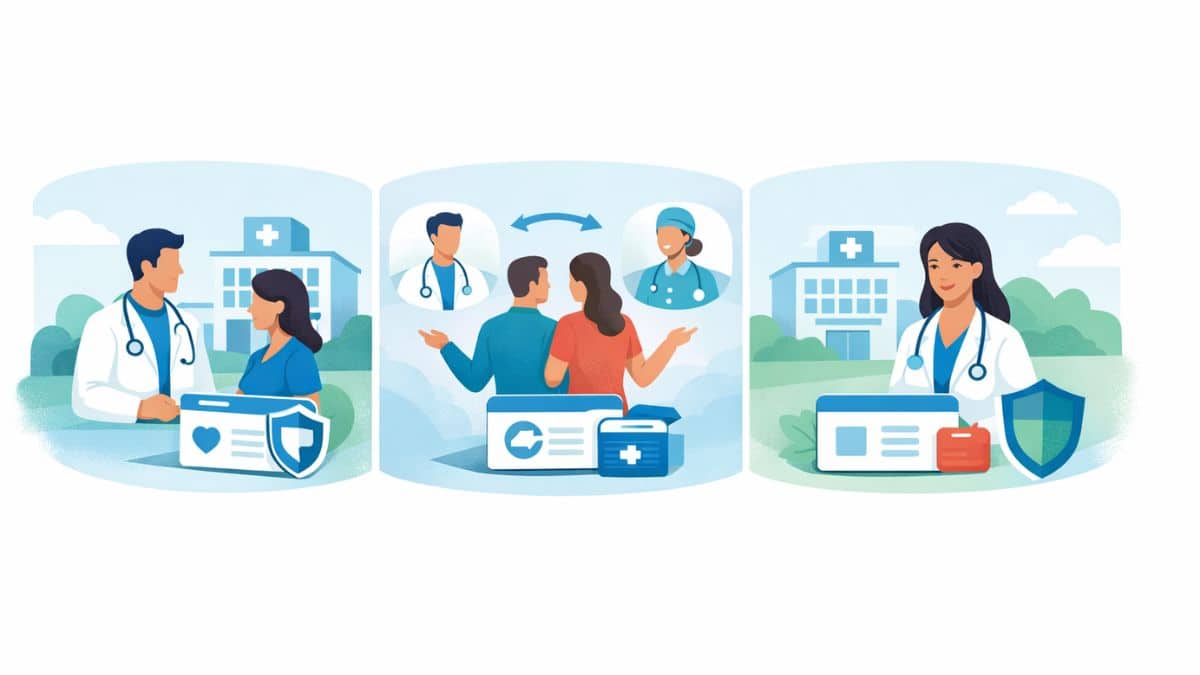
Choosing a health insurance plan in the United States can be confusing, especially when you’re asked to pick between HMO, PPO, and EPO options. These plans differ in how you access doctors, whether referrals are required, and how much flexibility you have outside a provider network. Understanding these differences before enrolling can help you avoid unexpected costs, denied claims, and access issues later.
Key Takeaways
- HMO, PPO, and EPO plans differ mainly in provider choice, referral rules, and out-of-network coverage.
- HMOs usually cost less but limit you to a network and require referrals.
- PPOs cost more but offer flexibility, including out-of-network care.
- EPOs sit in the middle: no referrals, but no out-of-network coverage (except emergencies).
- The “best” plan depends on how often you need care, whether you want provider freedom, and how much cost risk you can handle.
Why This Choice Matters in Real Life

Picking a health plan isn’t just paperwork—it affects which doctors you can see, how much you pay when you’re sick, and how easy it is to get care. Many Americans enroll during open enrollment without fully understanding the differences, then get surprised by denied claims, referral requirements, or high bills. Understanding how HMO, PPO, and EPO plans work helps you avoid those surprises.
What Do HMO, PPO, and EPO Mean?
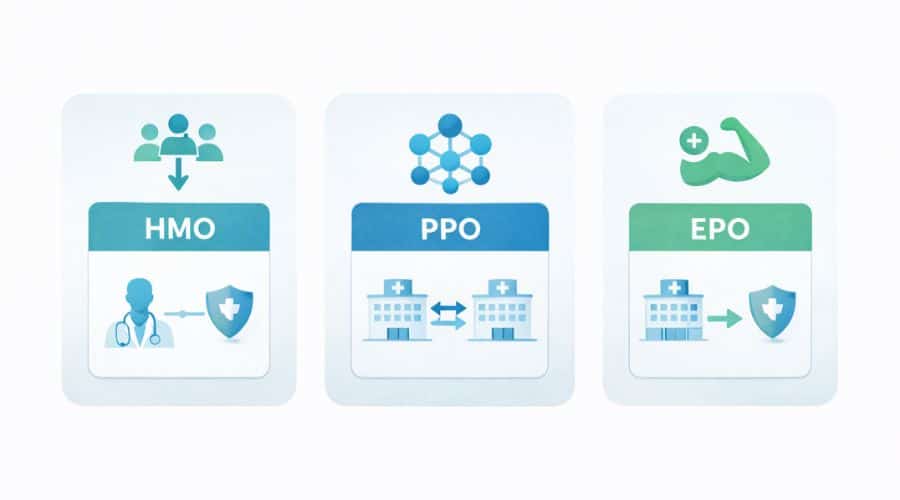
These acronyms describe how your insurance network is structured and how care is accessed. All three are common in employer plans and on the Health Insurance Marketplace.
HMO (Health Maintenance Organization)
An HMO focuses on coordinated care within a defined network.
- You choose a primary care physician (PCP).
- Most specialist visits require a PCP referral.
- Care is generally covered only in-network, except for emergencies.
- Premiums and out-of-pocket costs are often lower.
Best suited for people who want lower costs and are comfortable coordinating care through a primary doctor.
PPO (Preferred Provider Organization)
A PPO emphasizes flexibility and choice.
- You don’t need a PCP to see specialists.
- You can see out-of-network providers, but you’ll pay more.
- Premiums and deductibles are usually higher.
- Paperwork and cost-sharing can be more complex.
Best for those who value flexibility, see specialists often, or need coverage while traveling.
EPO (Exclusive Provider Organization)
An EPO blends elements of HMOs and PPOs.
- No PCP or referrals required.
- Coverage is limited to in-network providers (except emergencies).
- Premiums are typically lower than PPOs but higher than HMOs.
- Works best if you’re comfortable staying within a network.
A good option for people who want referral-free care but are willing to stay within a defined network.
How These Plans Work in the United States
All three plan types must follow federal consumer protections for emergency services, preventive care, and essential health benefits under the Affordable Care Act. Oversight and guidance come from agencies like the Centers for Medicare & Medicaid Services, with consumer protections enforced by bodies such as the Consumer Financial Protection Bureau when billing and payment disputes arise. Tax treatment of premiums and certain medical expenses is governed by the Internal Revenue Service.
Important: Rules can vary by state, insurer, and employer plan, especially for network size and referral policies.
Side-by-Side Overview
| Feature | HMO | PPO | EPO |
|---|---|---|---|
| Primary care physician required | Yes | No | No |
| Specialist referral needed | Usually yes | No | No |
| Out-of-network coverage | No (except emergencies) | Yes (higher cost) | No (except emergencies) |
| Premium cost | Lower | Higher | Mid-range |
| Best for | Budget-focused, local care | Flexibility and travel | In-network users who want simplicity |
Who Each Plan Is Typically Best For
HMO
- You’re comfortable coordinating care through one doctor.
- You want predictable, lower costs.
- Your preferred doctors are already in-network.
PPO
- You want maximum provider freedom.
- You travel often or see specialists regularly.
- You’re willing to pay more for flexibility.
EPO
- You don’t want referrals but can stay in-network.
- You want a balance between cost and convenience.
- Your local network is strong and accessible.
Pros and Cons of HMO, PPO, and EPO Plans

Understanding trade-offs matters more than memorizing definitions. The same feature that saves money for one person can be a drawback for another.
HMO: Pros and Cons
| Pros | Cons |
|---|---|
| Lower monthly premiums | No coverage outside the network (except emergencies) |
| Lower deductibles and copays | Referrals required for most specialists |
| Coordinated care through a PCP | Less flexibility if you move or travel |
| Simpler claims process | Fewer provider choices |
Why people struggle with HMOs:
Many people forget to get a referral before seeing a specialist. That visit can become 100% out-of-pocket, even if the doctor is otherwise covered by the insurer.
PPO: Pros and Cons
| Pros | Cons |
|---|---|
| No referrals required | Higher premiums |
| Access to out-of-network care | Higher deductibles and coinsurance |
| Larger provider networks | More complex bills and claims |
| Better for travel or complex care | Costs can escalate quickly |
Why people underestimate PPO costs:
Out-of-network care often comes with balance billing, where providers can bill you for charges beyond what the insurer pays, depending on state law and circumstances.
EPO: Pros and Cons
| Pros | Cons |
|---|---|
| No referrals needed | No out-of-network coverage (non-emergency) |
| Lower premiums than PPOs | Smaller networks |
| Simpler than PPOs | No fallback if your provider leaves the network |
| Predictable cost-sharing | Limited flexibility |
Common EPO pitfall:
People assume “no referrals” means flexibility. In reality, network restrictions are strict—even a short-term out-of-network visit is typically denied.
Real-Life U.S. Examples
Example 1: Routine Care and a Specialist Visit
- HMO: You see your PCP, get a referral, then see a dermatologist. Copay is low, and the claim is covered.
- PPO: You book a dermatologist directly—no referral. Higher copay or coinsurance applies.
- EPO: You book directly, but only if the dermatologist is in-network. Otherwise, insurance pays nothing.
Example 2: Traveling Out of State
- HMO: Emergency care is covered, but follow-up visits may not be.
- PPO: Both emergency and non-emergency care may be partially covered.
- EPO: Emergency care is covered; non-emergency care is usually denied.
Example 3: Ongoing Specialist Care
- HMO: Works well if your specialist is in-network and referrals are consistent.
- PPO: Often preferred for chronic or complex conditions involving multiple providers.
- EPO: Works only if all specialists remain in-network long-term.
How Costs Really Add Up
Monthly premiums are only part of the story. Americans often underestimate total annual cost, which includes:
- Premiums
- Deductibles
- Copays
- Coinsurance
- Out-of-pocket maximums
| Cost Area | HMO | PPO | EPO |
|---|---|---|---|
| Premiums | Lowest | Highest | Mid |
| Deductibles | Lower | Higher | Mid |
| Out-of-network risk | High | Moderate | High |
| Cost predictability | High | Low | Moderate |
This is why two people with the same plan type can experience very different total costs in a single year.
Important: Out-of-pocket maximums reset every plan year. Once reached, the plan must cover eligible in-network care at 100% for the rest of the year.
Common Mistakes Americans Make
- Choosing a plan based only on premiums
- Assuming “no referrals” means “out-of-network coverage”
- Not checking whether current doctors are in-network
- Ignoring prescription drug formularies
- Overlooking mental health and specialty care access
- Not reviewing plan changes during open enrollment each year
Myths vs. Facts
Myth: PPOs always cost more overall
Fact: For frequent or complex care, PPOs can reduce long-term costs.
Myth: HMOs provide worse care
Fact: Care quality depends on the provider network, not the plan type.
Myth: EPOs are flexible like PPOs
Fact: EPOs are flexible only within their network.
Impact on Credit and Long-Term Finances

Medical bills are one of the most common sources of financial stress in the U.S.
- Denied claims can lead to unexpected medical debt
- Unpaid medical bills may be reported to credit bureaus, including Equifax, Experian, and TransUnion
- Choosing the wrong plan can increase long-term costs even with insurance
Recent federal rules limit how some medical debt appears on credit reports, but prevention through proper plan selection is still critical.
Choosing the right plan is not just a healthcare decision—it is a financial protection strategy.
How to Choose Between HMO, PPO, and EPO (Step by Step)

This decision works best when you walk through it logically instead of guessing.
Step 1: Check Your Doctors and Hospitals
Before comparing prices, check whether:
- Your primary care doctor
- Any specialists you already see
- Your preferred hospital or clinic
are in-network for each plan.
If a doctor you rely on is out-of-network, an HMO or EPO may be a poor fit regardless of price. This step alone eliminates many plans that look cheap but won’t work in practice.
Step 2: Estimate How Often You Actually Use Care
Ask yourself how the next year is likely to look.
| Care Pattern | Plan Type That Often Fits Best |
|---|---|
| Occasional checkups, few prescriptions | HMO or EPO |
| Frequent specialists or chronic conditions | PPO |
| Ongoing care but stable providers | HMO or EPO |
| Unpredictable or travel-heavy lifestyle | PPO |
This is not about worst-case scenarios. It’s about realistic use. Employer plans often provide better value due to shared premium costs.
Step 3: Compare Total Annual Cost, Not Just Premiums
Many Americans focus only on the monthly premium and miss the bigger picture.
Add up:
- Annual premiums
- Expected deductibles
- Likely copays or coinsurance
- Prescription drug costs
If you’re unsure how copays and coinsurance differ and when each applies, this detailed breakdown explains the difference with real examples.
The cheapest premium does not always mean the lowest yearly cost. A slightly higher premium can be cheaper overall if it reduces large out-of-pocket expenses.
Step 4: Understand Your Risk Tolerance
Some plans shift more financial risk onto you.
- HMO: Lower risk if you stay in-network and follow rules
- PPO: Higher cost risk, but more flexibility
- EPO: Low-to-moderate cost risk, high network risk
If a surprise $2,000–$4,000 bill would cause hardship, stricter plans with predictable costs may be safer.
Eligibility and Where These Plans Are Commonly Found
Employer-Sponsored Insurance
Most large employers offer:
- Multiple plan types
- Lower premiums due to employer contributions
- Broader networks than individual plans
Health Insurance Marketplace (ACA Plans)
Marketplace plans often:
- Emphasize HMOs and EPOs
- Use narrower networks to control costs
- Vary significantly by state and insurer
Important: Network size and rules can differ even for the same plan type across states.
Special Situations That Change the Best Choice
Families With Children
- HMOs can work well due to pediatric-focused care
- PPOs may help if children need frequent specialists
Self-Employed or Gig Workers
- Marketplace EPOs often balance cost and access
- PPOs may be limited or expensive in some regions
People With Chronic Conditions
- PPOs often reduce administrative friction
- HMOs can work if specialists are well-integrated
Frequent Travelers
- PPOs provide the most flexibility
- HMOs and EPOs can create coverage gaps outside your home area
Beginner Misunderstandings That Cause Problems
- Confusing in-network with covered
- Assuming referrals are automatic
- Believing emergencies include routine urgent care
- Forgetting networks can change mid-year
- Not reviewing drug formularies annually
- Assuming plan rules stay the same year after year
Even one misunderstanding can turn insured care into an out-of-pocket expense.
Frequently Asked Questions (FAQ)
-
Is an HMO always cheaper than a PPO?
Not always. HMOs usually have lower premiums, but if you need out-of-network care or frequent specialists, total costs can exceed a PPO.
-
Can I switch plans mid-year?
Usually no, unless you qualify for a special enrollment period due to life events like job loss, marriage, or relocation.
-
Are emergency services covered the same way?
Yes. Federal rules require emergency care to be covered regardless of network, but follow-up care may not be.
-
Do EPO plans cover urgent care?
Only if the urgent care center is in-network, unless the situation qualifies as an emergency.
-
Are referrals ever required in PPOs?
Rarely, but some employer PPOs may have internal utilization rules. Always check plan documents.
-
Does plan type affect prescription drug coverage?
Indirectly. Formularies vary by insurer, and cost-sharing can differ widely even within the same plan type.
Final Thoughts
HMO, PPO, and EPO plans are not good or bad by default. They are tools. The right choice depends on how you use healthcare, how much flexibility you need, and how much financial risk you can absorb.
Taking time to match the plan to your real life—not hypothetical scenarios—reduces both stress and unexpected costs.
Disclaimer
This content is for educational and informational purposes only. It is not legal, tax, or financial advice. Health insurance rules vary by plan, insurer, and state. Always review official plan documents and consult a qualified professional before making personal financial or healthcare decisions.
