
Money decisions often come down to tradeoffs. When Americans need to borrow—covering medical bills, consolidating debt, or handling an unexpected expense—the choice often lands between a personal loan and a credit card. Both are common, widely available, and familiar. But they work very differently, and the cost difference can be substantial.
Many people assume credit cards are always more expensive. Others believe personal loans are automatically cheaper. In reality, the true cost depends on how interest is charged, how long you take to repay, and the fees involved. Small details—like a promotional APR ending or a missed payment—can change the math quickly.
This article breaks down the real costs in plain English, using U.S.-specific rules and data, so you can see which option is actually cheaper for your situation.
Key Takeaways
- The cheaper option depends on interest rate, repayment speed, and fees—not the label “loan” or “card.”
- Personal loans usually have lower interest rates than credit cards, especially for borrowers with good credit.
- Credit cards can be cheaper for short-term borrowing if you pay the balance in full or within a 0% APR promotional period.
- How you repay matters as much as the rate. Fixed monthly payments (personal loans) reduce interest faster than revolving balances (credit cards).
What Is a Personal Loan?
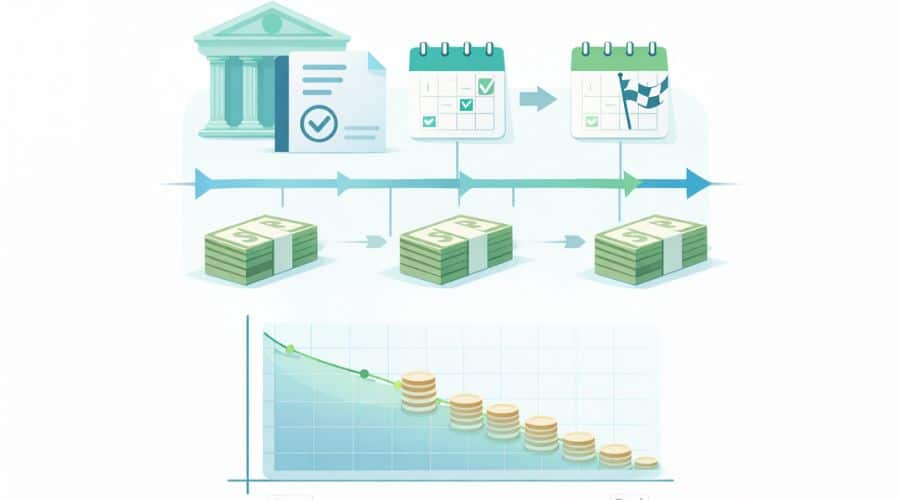
A personal loan is typically an installment loan issued by a bank, credit union, or online lender. You borrow a fixed amount and repay it in equal monthly payments over a set term—often two to five years.
How personal loans work in the U.S.
- Interest rate: Fixed in most cases
- Repayment: Predictable monthly payments
- Term length: Usually 24–60 months
- Use of funds: Generally flexible (unless specified otherwise)
Because the balance steadily declines with each payment, interest costs shrink over time. This structure makes personal loans easier to budget for and simpler to compare in terms of total cost.
What Is a Credit Card?
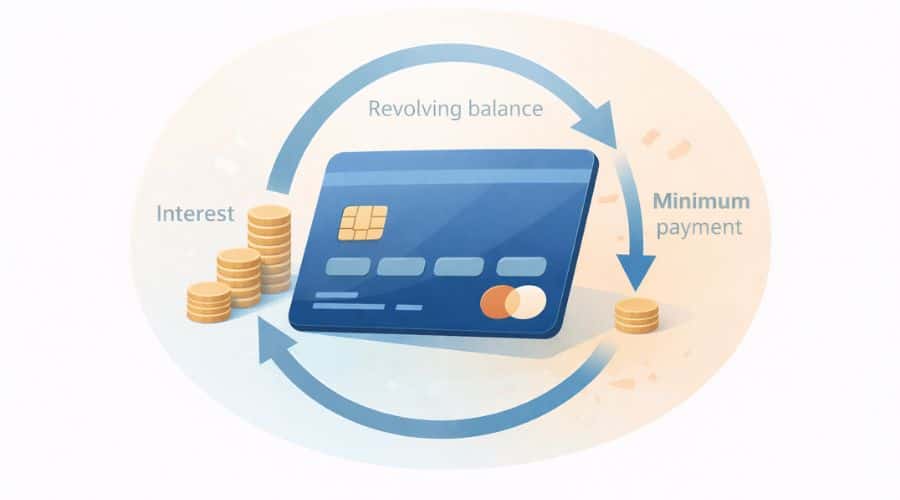
A credit card is a revolving line of credit. You can borrow, repay, and borrow again—up to your credit limit—without a fixed payoff schedule.
How credit cards work in the U.S.
- Interest rate (APR): Usually variable
- Repayment: Minimum payment required; no fixed end date
- Interest calculation: Based on average daily balance
- Promotions: 0% APR periods may apply temporarily
If you pay the statement balance in full each month, you avoid interest entirely. But carrying a balance—even a small one—can become expensive over time due to higher APRs and slower principal reduction.
How Interest Really Works (Where Costs Diverge)
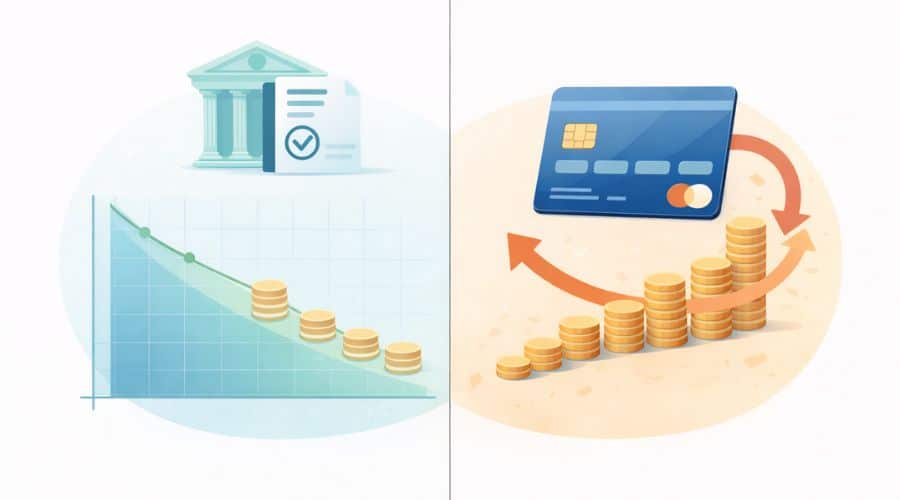
Understanding how interest accrues is the key to comparing costs.
Personal loan interest
- Interest is calculated on a declining principal
- Each payment reduces the balance
- Total interest is mostly determined upfront by rate and term
Credit card interest
- Interest compounds on a revolving balance
- Minimum payments may barely reduce principal
- Carrying a balance can stretch repayment for years
According to data summarized by the Consumer Financial Protection Bureau, many cardholders underestimate how long repayment takes when making only minimum payments—often dramatically increasing total interest paid.
Typical Interest Rates: What the Numbers Look Like
While rates vary by credit profile and market conditions, recent U.S. averages show a clear gap.
| Borrowing Type | Typical APR Range* |
|---|---|
| Personal loans | ~7% to 18% |
| Credit cards | ~18% to 30% |
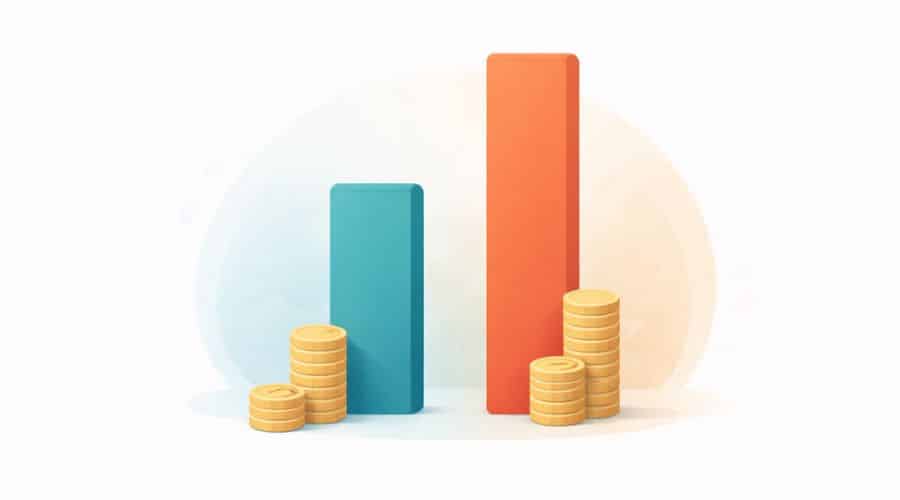
*Based on the most recent publicly available data from major U.S. banks and regulators. Individual offers may differ.
The Federal Reserve has consistently reported that average credit card APRs are significantly higher than personal loan rates for comparable borrowers.
A Simple Cost Example
Imagine borrowing $5,000.
Option A: Personal loan
- APR: 10%
- Term: 3 years
- Fixed monthly payment
- Total interest paid: relatively limited and predictable
Option B: Credit card
- APR: 22%
- Paying only the minimum
- Repayment stretches much longer
- Total interest can exceed the original balance over time
Even without exact dollar figures, the pattern is clear: higher APR + slower payoff = higher total cost.
When a Credit Card Can Be Cheaper
Despite higher rates, credit cards can still win in specific situations:
- You qualify for a 0% APR introductory period
- You can pay off the balance before the promo ends
- You need flexibility and short-term liquidity
In these cases, borrowing costs can be zero—something a personal loan cannot offer.
When a Personal Loan Is Usually Cheaper
Personal loans often cost less when:
- You need longer repayment time
- You want predictable payments
- You’re consolidating high-interest card debt
- You have good or excellent credit
The fixed structure helps avoid the slow-debt trap common with revolving balances.
Who Should Consider Each Option—and Who Should Avoid It

Choosing the cheaper option isn’t just about rates. It’s also about behavior, cash flow, and discipline.
A personal loan may be a better fit if you:
- Need multiple years to repay
- Want fixed, predictable payments
- Are consolidating existing high-interest credit card debt
- Prefer a clear payoff date
A personal loan may be a poor choice if you:
- Only need money for a very short period
- Can qualify for and fully use a 0% APR credit card
- Don’t want to pay origination fees (some loans charge them)
A credit card may be cheaper if you:
- Pay the statement balance in full every month
- Qualify for a 0% APR promotional offer
- Need short-term flexibility rather than long-term financing
A credit card may be risky if you:
- Tend to make only minimum payments
- Already carry a high revolving balance
- Are sensitive to variable interest rates
- Struggle with spending limits and impulse purchases
Pros and Cons Comparison
| Feature | Personal Loan | Credit Card |
|---|---|---|
| Interest rate | Usually lower | Usually higher |
| Rate type | Mostly fixed | Mostly variable |
| Repayment structure | Fixed monthly payments | Flexible, minimum required |
| Payoff timeline | Clear end date | No set end date |
| Best for | Medium to long-term borrowing | Short-term borrowing |
| Cost predictability | High | Low if balance is carried |
| Overspending risk | Low | Higher |
Fees and Hidden Costs to Watch For
Fees often matter more than the advertised interest rate, especially if repayment takes longer than planned
Interest rate is not the only cost. Fees can quietly change which option is cheaper.
Personal loan fees may include:
- Origination fees (commonly 1%–8% of the loan)
- Late payment fees
- Prepayment penalties (less common, but still possible)
Credit card fees may include:
- Annual fees
- Balance transfer fees
- Cash advance fees
- Late payment and penalty APRs
Key warning: A low advertised APR does not guarantee a low total cost if fees are high or repayment stretches longer than planned.
Impact on Your Credit Score
Cost isn’t the only factor—how each option affects your credit score can influence future borrowing costs.
Both options affect your credit differently.
Personal loans:
- Increase your installment debt
- Can improve payment history if paid on time
- May help credit mix over time
Credit cards:
- Affect credit utilization, a major scoring factor
- High balances can lower your score quickly
- On-time payments still help, but high utilization can offset gains
Important: Maxing out a credit card—even temporarily—can hurt your score more than taking a modest personal loan.
Common Costly Mistakes Americans Make
- Choosing a credit card for convenience and ignoring long-term interest
- Assuming minimum payments are a repayment plan
- Taking a personal loan without checking total interest paid
- Using a balance transfer but missing the promo deadline
- Borrowing more than needed because funds feel available
Myths vs. Facts
Myth: Personal loans are always cheaper than credit cards
Fact: Credit cards can be cheaper if paid off quickly or during a 0% APR period.
Myth: Minimum payments protect your credit
Fact: They protect your account status, not your wallet.
Myth: Fixed payments mean higher cost
Fact: Fixed payments usually reduce total interest by forcing steady principal reduction.
So, Which Is Cheaper—Personal Loan or Credit Card?
There is no universal winner. The cheaper option depends on how long you borrow and how disciplined your repayment habits are.
- Short-term borrowing with disciplined payoff: Credit card (possibly cheaper)
- Medium to long-term borrowing: Personal loan (usually cheaper)
- Debt consolidation: Personal loan is often more cost-effective
- Everyday spending paid monthly: Credit card, interest-free if paid in full
The cheapest option is the one that matches your repayment behavior, not just the lowest advertised rate.
Frequently Asked Questions (FAQs)
-
Is a personal loan always cheaper than a credit card?
No. A personal loan is usually cheaper for long-term borrowing because interest rates are lower and payments reduce the balance steadily. A credit card can be cheaper—or even cost nothing—if you pay the balance in full each month or during a 0% APR promotional period.
-
Why do credit cards cost so much more over time?
Credit cards use revolving balances and higher APRs. When you make only minimum payments, most of your payment goes toward interest, not principal. This slows repayment and can dramatically increase total interest over time.
-
Does a 0% APR credit card beat a personal loan?
It can—but only if you pay off the balance before the promotional period ends. Once the promo expires, the remaining balance usually moves to a high variable APR, which can quickly erase the savings.
-
Are personal loan interest rates fixed in the U.S.?
Most personal loans offer fixed interest rates, but some lenders offer variable-rate loans. Always confirm the rate type before borrowing, because variable rates can increase over time.
-
Which option is better for debt consolidation?
For many Americans, a personal loan is often cheaper and safer for consolidating high-interest credit card debt. It provides a clear payoff timeline and avoids the temptation to re-use paid-down credit lines.
-
Do personal loans hurt your credit score?
Not inherently. A personal loan can help your credit over time if you make on-time payments. However, applying for any new credit may cause a small, temporary dip due to a hard inquiry.
-
Do credit cards affect credit scores more than personal loans?
They can. Credit cards heavily influence credit utilization, which is a major scoring factor. Carrying high balances—even with on-time payments—can lower your score more than an installment loan with the same balance.
-
Is it ever smart to carry a credit card balance?
Only in limited, intentional cases—such as a short-term balance during a 0% APR period with a clear payoff plan. Carrying balances at regular APRs is usually one of the most expensive ways to borrow.
-
Are personal loan fees worth it?
Sometimes. Even with an origination fee, a personal loan can still be cheaper if it replaces high-interest revolving debt. Always compare total cost, not just the APR.
-
Which is safer for budgeting?
Personal loans are generally safer for budgeting because payments are fixed and predictable. Credit cards offer flexibility, but that flexibility often leads to higher costs if spending isn’t controlled.
-
What’s the biggest mistake people make when choosing?
Focusing only on the interest rate and ignoring repayment behavior. The cheapest option on paper can become the most expensive one if repayment drags on.
Final Thoughts
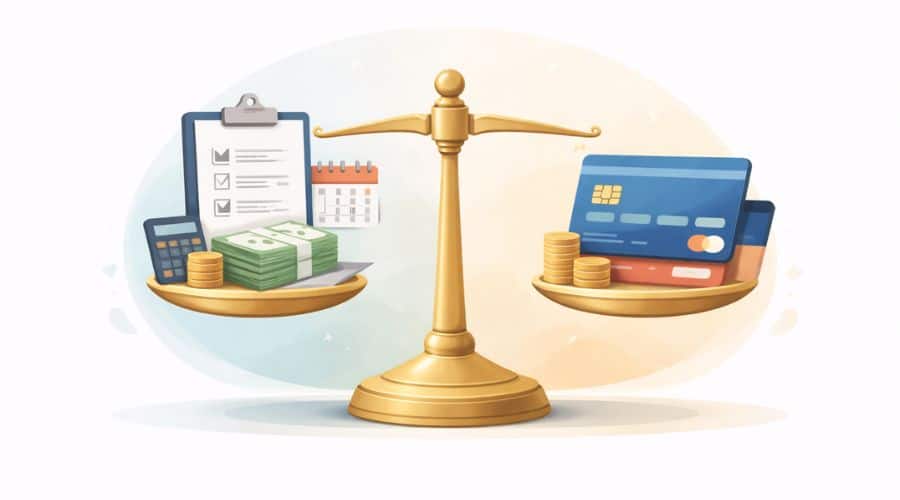
When comparing a personal loan and a credit card, the real question isn’t which product looks cheaper—it’s how you plan to use it and how quickly you’ll repay it.
A personal loan rewards consistency and long-term planning.
A credit card rewards discipline and short-term payoff.
Understanding this difference—and choosing the option that fits your repayment behavior—is what keeps borrowing costs under control.
Disclaimer
This content is provided for educational and informational purposes only. It does not constitute financial, legal, or tax advice. Individual financial situations vary, and borrowing decisions can have long-term consequences. Readers should consult a qualified financial professional before making decisions based on their personal circumstances.
