
Credit card interest in the U.S. is very high, and carrying a balance can make debt grow faster than many people expect. Balance transfer credit cards are designed to help people temporarily reduce or eliminate interest so more of their payment goes toward the actual debt.
However, balance transfers are not a solution for every situation. They can save money when used correctly, but they can also make debt worse if used without a clear payoff plan. This guide explains how balance transfer credit cards work, what they really cost, who they help most, and when they should be avoided.
Key Takeaways
- A balance transfer lets you move high-interest credit card debt to another card, often with a 0% introductory APR for a limited time.
- It can reduce interest costs and speed up payoff, but only if you pay the balance before the promo period ends.
- Most transfers come with a balance transfer fee (usually 3%–5%), which affects real savings.
- Missing payments or adding new debt can cancel the benefits and hurt your credit.
- This strategy works best for people with steady income, good credit, and a clear payoff plan.
Why Balance Transfers Matter in Real Life

Many Americans carry credit card balances longer than they expect. Interest compounds quickly, and even small balances can take years to pay off when most of the payment goes toward interest instead of principal.
A balance transfer can create breathing room by replacing high interest with a temporary low- or no-interest period. That breathing room can be useful — but only if it is used carefully. When used without a plan, it often leads to more debt, not less.
This is why balance transfers often get mixed reputations. They are not good or bad by themselves. They are simply a financial tool, and like any tool, results depend on how it is used.
What Is a Balance Transfer Credit Card?
A balance transfer credit card is a credit card that allows you to move existing debt from one or more other credit cards (or sometimes personal loans) onto the new card.
Most balance transfer cards offer a promotional interest rate, commonly:
- 0% APR for a set period (often 12–21 months, depending on the issuer and your credit profile)
During this period:
- No interest is charged on the transferred balance
- Payments go directly toward reducing the principal
After the promotional period ends, the remaining balance begins accruing interest at the card’s regular APR, which is usually similar to standard credit card rates.
How Balance Transfers Work in the U.S.
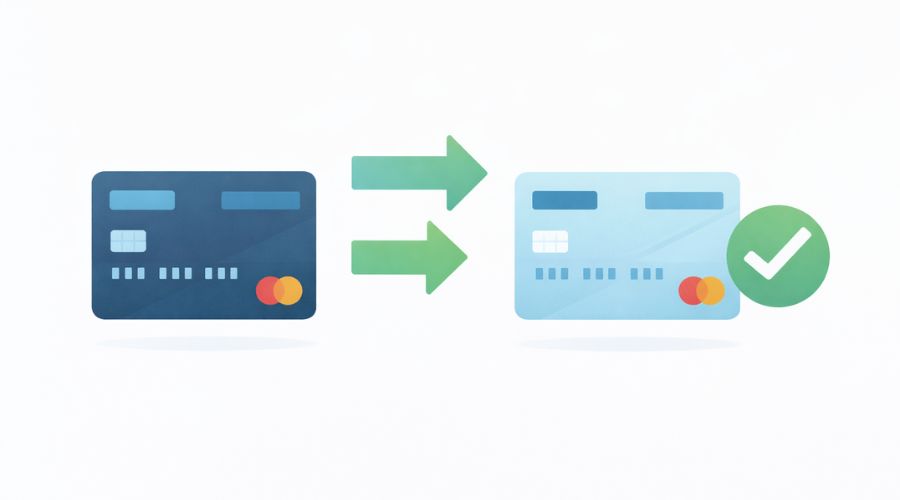
Step 1: You Apply for a New Card
Approval depends mainly on:
- Credit score and credit history
- Income and existing debt
- Recent credit applications
If approved, the issuer sets a credit limit. This limit controls how much debt you can transfer.
Step 2: You Request the Transfer
After approval, you provide:
- Account numbers of the old cards
- Transfer amounts
You can usually transfer:
- One balance
- Multiple balances from different cards
Some issuers also allow transfers from certain personal loans, but not from mortgages, auto loans, or federal student loans.
Step 3: The New Issuer Pays Your Old Lenders
The new card issuer sends payment to your old credit card companies.
Important timing note:
- This process usually takes 7–21 days
- You must continue paying your old cards until the transfer is confirmed
- Missing a payment during this window can trigger late fees and credit damage
Step 4: Your Balance Moves to the New Card
Once complete:
- Old card balances decrease
- New card shows the transferred balance
- The promotional APR clock starts
From this point forward, your payment behavior matters more than the transfer itself.
Balance Transfer Fees: The Hidden Cost Many People Miss
Most balance transfers charge a one-time fee, typically:
| Typical Fee Range | What It Means |
|---|---|
| 3%–5% of transferred amount | $3–$5 for every $100 transferred |
| Minimum fee | Often $5–$10 even for small balances |
Example:
If you transfer $5,000 with a 3% fee:
- Fee = $150
- New balance becomes $5,150
That fee does not earn interest during the promo period, but it increases the amount you must repay.
This is why balance transfers make the most sense when:
- Your current interest rate is high
- You can pay off the balance before the promo ends
Otherwise, the fee plus future interest may cancel out the savings.
How Balance Transfers Affect Your Credit Score
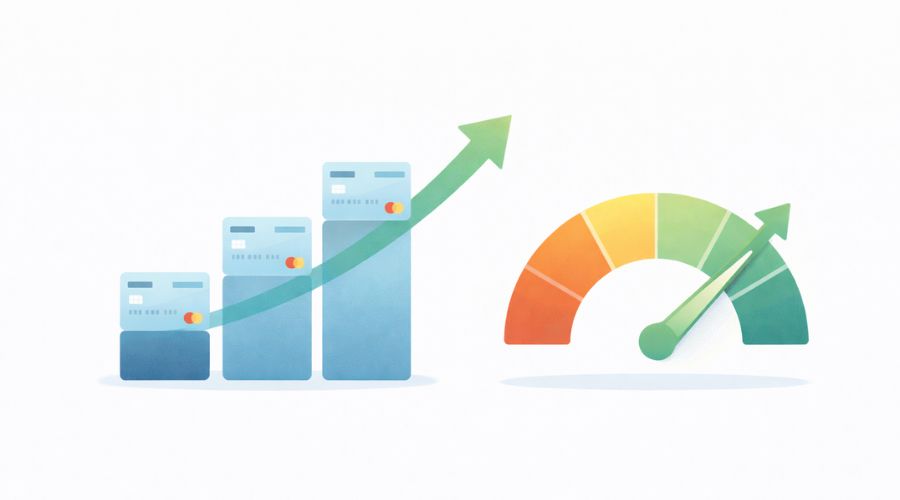
Balance transfers influence your credit in several ways, some positive and some negative.
Possible Short-Term Effects
- Hard inquiry from the application may cause a small, temporary drop
- New account lowers average account age
Possible Positive Effects Over Time
- Lower credit utilization if total available credit increases
- On-time payments help payment history
- Paying down balances improves overall debt profile
Risk Factors That Can Hurt Your Score
- Missing any payments
- Maxing out the new card
- Closing old cards too quickly (reduces available credit)
Credit scoring models care more about ongoing behavior than the transfer itself. The card itself does not fix credit. Consistent on-time payments do.
Who Balance Transfer Cards Are Best For
Balance transfers work best for people who:
- Have good to excellent credit (usually needed to qualify for 0% offers)
- Can afford fixed monthly payments that fully pay off the balance in time
- Want to focus on paying down debt, not spending more
Example Situation Where It Helps
A person has:
- $4,000 on a card at 24% APR
- Can pay $350 per month
- Transfers to a 0% card for 15 months
With no interest, they can eliminate the debt within the promo period and avoid hundreds of dollars in interest.
In this case, the balance transfer functions as a temporary interest freeze that speeds up progress.
Who Should Be Careful or Avoid Balance Transfers
Balance transfers can backfire for people who:
- Struggle with overspending
- Cannot pay more than the minimum each month
- Plan to use the old cards again after transferring
- Are close to maxing out all available credit
Common Risk Pattern
Some people transfer balances, then:
- Start using the old cards again
- End up with two balances instead of one
This often leads to higher total debt and more financial stress.
A balance transfer should reduce total debt, not move it around while adding new spending.
Balance Transfers vs Other Debt Options (Brief Comparison)
| Option | Best Use Case | Key Trade-Off |
|---|---|---|
| Balance transfer card | Short-term interest relief | Requires discipline and good credit |
| Personal loan | Fixed payoff schedule | Interest usually higher than promo cards |
| Debt management plan | Structured repayment help | May close cards and affect flexibility |
| Debt settlement | Severe financial hardship | Credit damage and possible tax issues |
Balance transfers are not debt relief programs. They are repayment tools that only work when paired with steady payments.
Myths vs Facts About Balance Transfers
Myth: Balance transfers eliminate debt.
Fact: They only move debt. You still owe the full amount plus any fees.
Myth: 0% APR means no risk.
Fact: Missed payments can cancel the promo rate and trigger penalty APRs.
Myth: You should close old cards immediately.
Fact: Closing accounts can hurt credit utilization and shorten credit history.
Myth: You can keep transferring forever.
Fact: Approval becomes harder with repeated transfers and growing balances.
Important Rules Most People Overlook
- Minimum payments are still required during 0% periods
- Late payments can void promotional rates
- New purchases may accrue interest immediately if not also at 0%
- Promotional periods do not extend automatically
Many people assume the card will “stay 0% until paid off.” That is not how these offers work.
How to Calculate Whether a Balance Transfer Will Actually Save You Money

A balance transfer only makes sense if the total cost of transferring and repaying the debt is lower than the cost of keeping the balance on your current card.
There are three numbers that matter most:
- Your current interest rate
- The balance transfer fee
- How fast you can realistically pay down the balance
Step 1: Estimate Interest on Your Current Card
Credit card interest compounds daily, but you can still make a rough comparison.
Example:
- Balance: $4,000
- APR: 24%
- Monthly payment: $200
At this pace, a large portion of each payment goes to interest, and total interest over time can easily reach several hundred dollars before the balance is paid off.
This is the cost you are trying to avoid.
Step 2: Add the Balance Transfer Fee
Now look at the transfer cost.
If the card charges 3%:
- $4,000 × 3% = $120 fee
- New balance becomes $4,120
This fee is your upfront cost for getting the lower interest rate.
Step 3: Check Whether You Can Pay It Off Before the Promo Ends
If the promotional period is 12 months:
- $4,120 ÷ 12 ≈ $343 per month
If that payment fits your budget, you avoid almost all interest and save money even after the fee.
If you can only afford about $200 per month:
- You will still have a balance when regular interest returns
- Future interest may erase the initial benefit
The math only works when the payoff plan fits your real cash flow.
How to Build a Payoff Plan That Matches the Promo Period
The safest approach is to treat the promotional deadline as a non-negotiable payoff date.
Step 1: Divide the Balance by the Number of Promo Months
This gives your minimum effective payment, not the card’s minimum due.
Example:
- Balance after fee: $5,150
- Promo length: 15 months
- Target payment: about $345 per month
Step 2: Automate Payments
Automatic payments help prevent:
- Late fees
- Loss of promotional APR
- Credit report damage
Many issuers cancel 0% offers after a single late payment.
Step 3: Avoid New Purchases on the Transfer Card
Many balance transfer cards:
- Apply payments to the lowest-interest balance first
- Let new purchases accrue interest immediately
This can create a situation where:
- You are paying off the transfer
- While interest builds on new spending
Using the card only for the transferred debt helps avoid this trap.
What Happens If You Don’t Finish Paying Before the Promo Ends
When the promotional period expires:
- Any remaining balance begins accruing interest
- The rate usually jumps to the card’s standard variable APR
Important point:
Most U.S. balance transfer offers do not charge retroactive interest on balances that were at 0% (unlike some store financing plans). Interest starts going forward, not backward.
Still, if a large balance remains, interest costs can become high again very quickly.
Common Balance Transfer Mistakes That Cancel Out the Benefits
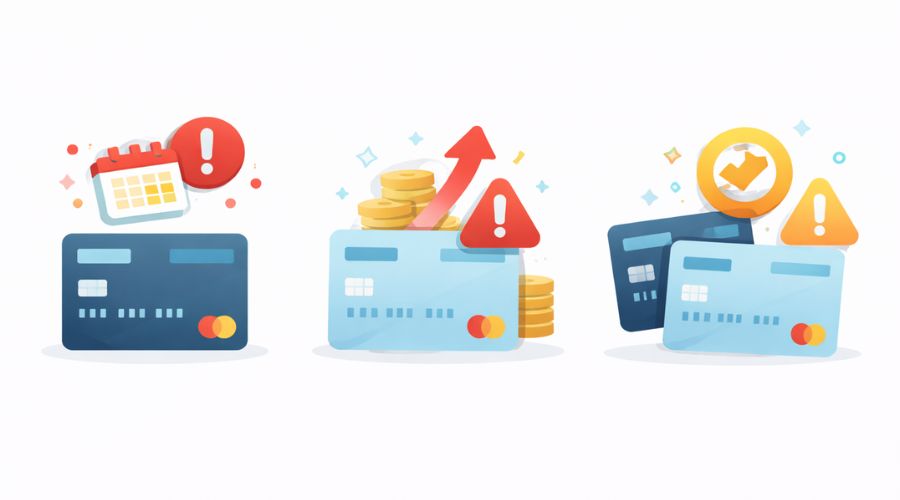
1. Transferring Too Much Debt for Your Income
Large balances require large monthly payments. If payments are not realistic, the transfer only delays the problem.
2. Running Up Old Cards Again
This is one of the most common outcomes:
- Balance moves to new card
- Old card becomes available again
- Spending resumes
This leads to higher total debt and often worsens financial stress.
3. Missing Even One Payment
Late payments can trigger:
- Loss of promotional APR
- Penalty interest rates
- Late fees
- Credit score damage
One missed payment can erase months of careful planning.
4. Assuming You Can Always Transfer Again Later
Approval depends on:
- Credit score
- Debt levels
- Recent applications
Repeated transfers make future approvals less likely and terms less generous.
Balance Transfers and Your Long-Term Financial Health
When used correctly, balance transfers can:
- Reduce total interest paid
- Help people escape revolving debt
- Improve credit utilization over time
But they do not fix ongoing spending habits or income gaps. If those issues remain, balances often return.
For long-term improvement, balance transfers work best when combined with:
- Stable budgeting
- Emergency savings (even small amounts)
- Reduced reliance on credit for routine expenses
The card provides time. What matters is what you do with that time.
Situations Where Other Options May Be More Appropriate
A balance transfer is not always the right tool.
You may want to consider other approaches if:
- Your credit score is too low to qualify for promo cards
- The balance is too large to pay off within promo periods
- Income is unstable or unpredictable
In these cases, options like structured repayment programs or fixed-term personal loans may provide more predictable results, even if interest is not as low.
Legal, Regulatory, and Consumer Protection Rules in the U.S.
Balance transfer credit cards are regulated under U.S. consumer finance laws, primarily enforced by the Consumer Financial Protection Bureau (CFPB) and governed by the Truth in Lending Act (TILA) and the Credit CARD Act of 2009.
These rules matter because they control how card issuers must disclose terms and when they are allowed to change interest rates.
What Card Issuers Are Required to Disclose
By law, card agreements must clearly state:
- Promotional APR length
- Regular APR after the promo ends
- Balance transfer fees
- Conditions that can cancel the promo (such as late payments)
This information appears in the Schumer Box, the standardized pricing table on every U.S. credit card application.
When Promotional Rates Can Be Revoked
Issuers may cancel promotional APRs if:
- A payment is late
- A payment is returned (insufficient funds)
- The account becomes seriously delinquent
Once canceled, the remaining balance may be charged the standard or even a penalty APR.
The Credit CARD Act limits sudden interest-rate increases on existing balances in many cases, but promotional rates are an exception when card terms are violated.
Dispute Rights and Billing Errors
If something goes wrong with a transfer:
- You have the right to dispute billing errors
- Issuers must investigate within required timeframes
However, dispute rights do not remove your obligation to:
- Pay at least the minimum due during investigations
Stopping payments while waiting for corrections can still damage your credit report.
Are There Any Tax Consequences for Balance Transfers?
In normal situations, no taxable event occurs when you move debt from one card to another.
You are not receiving income or forgiven debt — you are simply relocating an existing obligation.
When Taxes Could Become Relevant
Taxes may apply only if:
- A portion of debt is later forgiven or settled
- The lender reports canceled debt over IRS thresholds
That situation relates to debt settlement or forgiveness, not to balance transfers themselves.
For most people using balance transfer cards as intended, taxes are not a factor.
Balance Transfer Cards vs Personal Loans (Detailed Comparison)
Both options aim to reduce interest and simplify repayment, but they work differently.
| Feature | Balance Transfer Card | Personal Loan |
|---|---|---|
| Interest rate | Often 0% temporarily | Fixed rate for full term |
| Fees | Usually 3%–5% upfront | Possible origination fee |
| Payment flexibility | Variable | Fixed monthly payment |
| Credit impact | Utilization sensitive | Installment loan improves mix |
| Best for | Short-term payoff plans | Longer-term structured payoff |
Key Difference in Behavior Control
Personal loans force:
- A fixed payment schedule
- A defined payoff date
Balance transfer cards require strong self-discipline to maintain aggressive payments.
People who prefer structure often do better with loans, even if interest is slightly higher.
Balance Transfers vs Debt Management Programs
Debt management programs (DMPs) are typically run by nonprofit credit counseling agencies.
They involve:
- Negotiating reduced interest rates with creditors
- One monthly payment to the agency
- Possible account closures
When DMPs May Make More Sense
- Credit scores are already under strain
- Multiple accounts are severely past due
- Self-managed repayment has repeatedly failed
DMPs are not the same as debt settlement. They do not reduce principal, but they may offer long-term interest relief with structured oversight.
Balance transfers, by contrast, are self-directed and temporary.
Pros and Cons of Balance Transfer Credit Cards
✅ Pros
| Advantage | Why It Helps |
|---|---|
| Lower or zero interest | More payment goes to principal |
| Faster payoff potential | Less money lost to interest |
| Flexible payment amounts | Can pay more when able |
| Credit utilization benefits | May improve score over time |
❌ Cons
| Risk | Why It Matters |
|---|---|
| Transfer fees | Reduce real savings |
| Promo expiration | High interest returns |
| Requires discipline | Easy to relapse into debt |
| Credit approval limits | Not accessible to everyone |
Balance transfers are most powerful when treated as a temporary repayment strategy, not ongoing credit access.
Important Timing and Strategy Considerations
When to Transfer
A balance transfer works best when:
- Interest has not already consumed most of your payments
- You are ready to commit to aggressive payoff immediately
Waiting while balances grow reduces the potential benefit.
Whether to Close Old Cards After Transferring
In most cases:
- Keeping old accounts open helps credit utilization
- Closing accounts can lower your total available credit
However, if old cards encourage overspending, closing them may support better behavior even if credit scores dip slightly in the short term.
There is no universal answer — behavior matters more than optimization.
Using Multiple Transfers Strategically
Some people use:
- One transfer to pay off debt
- Later another transfer if needed
This can work, but only if:
- Credit remains strong
- Total debt continues shrinking
If balances stay the same or grow, repeated transfers usually signal a deeper budget problem that needs attention beyond interest rates.
How to Decide If a Balance Transfer Is Right for You (Practical Self-Check)

Before applying, it helps to answer a few direct questions. These are not about card features — they are about your cash flow and spending habits, which usually matter more.
1. Can You Pay It Off Before the Promo Ends?
Take the balance after the transfer fee and divide it by the number of promo months.
If that payment:
- Fits your budget comfortably → good sign
- Requires constant financial strain → high risk of failure
If the payment only works “in theory,” the strategy is fragile.
2. Will You Stop Using the Old Cards?
Ask honestly:
- Are the old cards needed for emergencies only?
- Or are they part of everyday spending habits?
If spending continues, debt usually returns.
3. Are You Stable Enough to Avoid Missed Payments?
Promotional offers assume:
- Regular income
- Predictable monthly bills
If income is irregular or emergencies are common, the risk of losing the promo rate increases.
4. Are You Transferring Because of Interest — or Because of Overspending?
Balance transfers solve interest problems, not spending problems.
If balances grow mainly because:
- Income is too low for expenses
- Spending is not tracked
Lower interest alone will not prevent future debt.
Real-Life Situations Where Balance Transfers Help
Situation Where It Often Helps
A household had:
- Medical bills placed on credit cards
- No ongoing overspending
- Stable income after the medical issue resolved
Using a balance transfer allowed them to:
- Avoid long-term interest
- Focus on steady payoff without new charges
This is a case where debt came from a one-time financial shock, not from ongoing overspending.
Situation Where It Often Fails
Someone regularly uses credit cards to cover:
- Monthly living expenses
- Gaps between paychecks
A balance transfer may temporarily reduce interest, but:
- New balances often replace old ones
- Total debt remains unchanged or grows
In this case, budgeting changes or income adjustments matter more than card terms.
Beginner Misunderstandings That Cause Problems
“Minimum Payment Means I’m on Track”
Minimum payments are designed to:
- Extend repayment
- Maximize interest revenue
They are not structured to eliminate debt within promotional periods.
“The 0% Rate Will Be Extended”
Promotional offers rarely extend automatically.
Any extension usually requires:
- New approval
- New balance transfer fee
Planning based on future approvals is risky and unreliable.
“I Can Use the Card Normally After Transferring”
Mixing new purchases with transferred balances often:
- Complicates payment allocation
- Creates unexpected interest charges
Separating spending cards from payoff cards avoids confusion and cost.
How Balance Transfers Fit Into a Larger Debt Strategy
A balance transfer can be:
- A first step toward becoming debt-free
- A way to stop interest while income stabilizes
But long-term progress usually also requires:
- Tracking expenses
- Reducing reliance on credit for basics
- Building even small emergency savings
Without these changes, people often repeat the same cycle with new cards.
Frequently Asked Questions (FAQ)
-
Can I transfer balances from multiple credit cards onto one card?
Yes. Most issuers allow multiple balances to be transferred as long as the total stays within your credit limit. Each transfer is usually included in the same promotional terms, but all transferred amounts count toward the same promo deadline.
-
How long do balance transfers take to process?
Most transfers take one to three weeks. During that time, you should continue making minimum payments on your old cards until the transfer is confirmed to avoid late fees or credit damage.
-
Can I transfer balances between cards from the same bank?
Usually no. Most issuers do not allow balance transfers between cards they already service. For example, transferring from one Chase card to another Chase card is typically not allowed.
-
Does transferring a balance close my old account?
No. Balance transfers only move the debt. Your old accounts remain open unless you close them yourself or the lender closes them for inactivity or other reasons.
-
Will applying for a balance transfer card hurt my credit?
The application creates a hard inquiry, which may cause a small, temporary score drop. Over time, paying down balances and lowering credit utilization can improve scores if payments stay on time.
-
What happens if I miss a payment during the promo period?
You may lose the promotional APR, face late fees, and possibly be charged a higher interest rate going forward. Missing payments also damages your credit report.
-
Are balance transfers better than paying extra on my current card?
If your current interest rate is high and you qualify for a 0% promo, transferring can reduce interest significantly. If your interest rate is already low or your balance is small, staying put and paying aggressively may be simpler and nearly as effective.
-
Can I transfer a balance from a store card or medical card?
Often yes, as long as the account can be paid by standard card transfer systems. Some specialty financing accounts may not be eligible, depending on how the lender processes payments.
-
Is it okay to close my old cards after transferring?
From a credit-score perspective, keeping accounts open usually helps. From a behavioral perspective, closing accounts may help avoid temptation. The best choice depends on which factor is more important for your situation.
Key Long-Term Financial Impact to Keep in Mind
Used responsibly, balance transfers can:
- Reduce total interest paid
- Support faster debt elimination
- Improve credit utilization ratios over time
Used carelessly, they can:
- Increase total debt
- Lead to repeated transfers
- Delay necessary budgeting changes
The card does not create progress. Your payment behavior does.
Final Practical Reminders Before Using a Balance Transfer
Before making a decision, these points are worth keeping front and center. They are not fine print — they are the factors that usually determine whether the strategy succeeds or fails in real life.
- Promotional periods are temporary. The clock starts when the transfer posts, not when you first make a payment.
- Fees increase your real balance. Always calculate payoff using the balance after the fee is added.
- Minimum payments are not payoff plans. Set your own target payment based on the promo length.
- One late payment can undo the entire benefit. Automate payments whenever possible.
- Avoid mixing spending and repayment on the same card. It complicates interest and slows progress.
A balance transfer should feel like a focused repayment phase, not a new line of spending credit.
When Balance Transfers Are a Responsible Financial Tool
Balance transfers tend to work well when:
- Debt came from a specific event (medical bills, temporary income loss, emergency repairs)
- Income has stabilized
- The person actively wants to eliminate debt, not delay it
In these cases, the card simply removes interest while the underlying financial problem is already improving.
When Balance Transfers Are Likely to Backfire
They often fail when:
- Credit cards are used to support ongoing lifestyle gaps
- No budget or spending limits exist
- Payments depend on uncertain future income
In these situations, interest is not the core problem — cash flow and spending control are the real issues.
What Balance Transfers Cannot Do
It is important to be realistic about what this strategy does not provide.
Balance transfers cannot:
- Reduce the amount you owe
- Fix damaged credit by themselves over time
- Replace income or solve long-term budget shortages
- Prevent future debt if spending habits stay the same
They are an interest management tool, not a financial reset.
Final Perspective
Balance transfer credit cards sit in a narrow middle ground:
- More flexible than loans
- Less structured than formal repayment programs
For the right person, at the right time, they can meaningfully reduce the cost of getting out of debt. For the wrong situation, they often delay necessary changes and increase frustration.
Understanding your own payment capacity and spending behavior usually matters more than finding the “best” promotional offer.
Disclaimer
This content is provided for educational and informational purposes only and does not constitute legal, tax, or financial advice. Credit card terms, eligibility, fees, and interest rates vary by issuer and by individual financial circumstances. Financial decisions should be made based on your personal situation, and you may want to consider consulting a qualified financial, tax, or legal professional before taking action that could affect your finances or credit.
