
Credit report errors can quietly damage your financial life without you realizing it. A single incorrect late payment, account balance error, or account that does not belong to you can lower your credit score and affect loan approvals, interest rates, or even apartment applications. The good news is that U.S. law gives consumers strong rights to dispute and correct inaccurate information. Understanding how the dispute process works can help you protect your financial reputation and avoid unnecessary costs. This guide explains exactly how to identify errors, file disputes, and resolve credit report problems step by step.
Errors on credit reports are more common than most people realize, and even small mistakes can affect loan approvals, interest rates, and everyday financial decisions. Fortunately, U.S. law gives consumers strong rights to correct inaccurate or incomplete information. This guide explains exactly how to dispute credit report errors, what documents you need, and what to do if a dispute is rejected.
Key Takeaways
- Credit report errors are common and can lower your credit score or block loan approvals.
- You have the legal right under federal law to dispute inaccurate or incomplete information for free.
- Disputes must be investigated, usually within 30 days, by both the credit bureau and the data furnisher.
- Clear documentation and precise disputes lead to faster, more successful corrections.
- Checking and disputing errors does not hurt your credit score.
Why Credit Report Errors Matter in Real Life
A credit report is not just a record for banks. It affects everyday decisions—whether you qualify for an apartment, what interest rate you get on a car loan, and sometimes even whether a utility company requires a deposit.
Many people discover errors only when they are denied credit or offered higher interest rates than expected. Others notice mistakes when checking their reports for the first time and seeing accounts they do not recognize, wrong balances, or late payments that never happened.
Because lenders rely heavily on the information in your credit report, even small mistakes can have real financial consequences. The good news is that U.S. law gives you strong rights to fix those mistakes.
What a Credit Report Is and Who Controls the Information
A credit report is a detailed record of how you use credit. In the U.S., most lenders report account information to one or more of the three nationwide credit bureaus.
The Three Major Credit Bureaus
Each bureau maintains its own report, which means:
- The same account can appear differently on different reports
- An error may exist on one report but not the others
The information in your report usually comes from:
- Banks and credit card issuers
- Auto lenders and mortgage servicers
- Collection agencies
- Some utilities and telecom providers
These companies are called data furnishers because they furnish (send) data to the credit bureaus.
What Counts as an Error on a Credit Report
Under the Fair Credit Reporting Act (FCRA), your credit report must be accurate, complete, and verifiable. If it is not, you have the right to dispute it.
Common credit report errors include:
Personal Information Errors
These usually do not affect your score directly, but they can cause serious mix-ups.
- Wrong name spelling
- Incorrect Social Security number (partial or full)
- Old or incorrect addresses
- Accounts mixed with someone else who has a similar name
Account Information Errors (Most Serious)
These can directly affect your credit score.
- Accounts that are not yours
- Incorrect balances or credit limits
- Wrong payment status (shown as late when you paid on time)
- Accounts reported as open that are actually closed
- Same debt listed multiple times
- Incorrect dates of first delinquency
Collection and Public Record Errors
- Debts sent to collections that you already paid
- Collections for bills that were not yours
- Bankruptcies that do not belong to you
- Incorrect lawsuit or judgment information (less common today, but still possible)
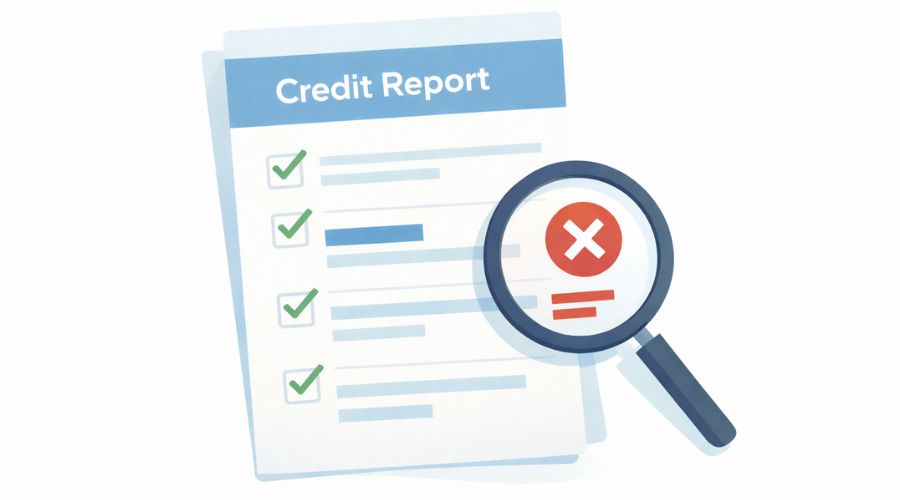
Important: If the information is accurate but negative, disputing it will not remove it. Disputes are for errors, not for correct but unfavorable history.
How Errors Can Affect Your Credit Score and Finances
Credit scoring models look at patterns, not explanations, and they evaluate several factors when calculating your score. They do not know whether a late payment was a mistake or a reporting error.
Depending on the type of error, you may see damage in several areas:
- Payment history: False late payments can significantly lower scores
- Credit utilization: Wrong balances can make it look like you are using too much credit
- Account age: Incorrect opening dates can shorten your credit history
- New credit: Accounts you did not open can appear as risky behavior
Financial consequences may include:
- Higher interest rates
- Loan or credit card denials
- Lower credit limits
- Security deposits for utilities or rentals
That is why disputing errors is not just about “cleaning up” a report—it directly affects how much borrowing costs you in real dollars.
Your Legal Rights Under Federal Law
Federal law gives you protections that credit bureaus and lenders must follow.
Under the Fair Credit Reporting Act (FCRA):
- You can dispute any inaccurate or incomplete information
- Disputes can be filed for free
- Credit bureaus must investigate within 30 days (45 days in some cases)
- If information cannot be verified, it must be corrected or removed
- You can dispute both with the credit bureau and the data furnisher
You do not need to hire a credit repair company to do this. In fact, no company can do anything you cannot legally do yourself for free.
When You Should Dispute (and When You Should Not)
You Should Dispute If:
- The account does not belong to you
- Payment history is incorrect
- Balances or limits are wrong
- Account status is misreported
- Duplicate accounts appear
You Should NOT Dispute If:
- The information is correct but hurts your score
- You simply want negative but accurate items removed
- The debt is yours and properly reported
Disputing accurate information can slow down real disputes and does not improve your credit.
How to Start the Credit Report Dispute Process
Before filing any dispute, you need to:
- Check all three credit reports, not just one
- Identify exactly what is wrong and why
- Gather documents that support your claim
You are entitled to free weekly reports from each bureau through the official source authorized by federal law. Each bureau’s report must be reviewed separately because corrections are not automatically shared between them.
Once you know what is wrong and where, the formal dispute process can begin.
Step-by-Step: How to Dispute Errors on Your Credit Report
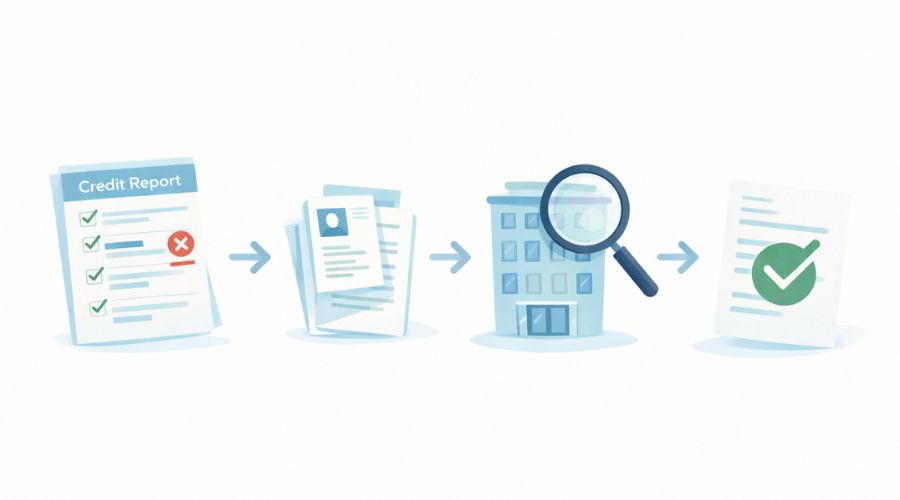
Once you have identified an error and gathered your proof, the dispute itself is a formal legal process. It is not complicated, but accuracy and clarity matter. Vague or emotional explanations are less effective than short, factual statements supported by documents.
You can dispute errors in three ways:
- Online (fastest)
- By mail (best paper trail)
- By phone (not recommended for complex disputes)
Step 1: Identify Exactly What Is Wrong
Be specific. Each dispute should focus on one error at a time.
Good dispute examples:
- “Account shows 60-day late in March 2024, but payment was made on time.”
- “This account does not belong to me.”
- “Balance is incorrect and does not match latest statement.”
Avoid:
- “This account is hurting my credit.”
- “Please remove this account.”
The bureau is legally required to investigate accuracy, not fairness or hardship.
Step 2: Gather Supporting Documents
You do not need a lawyer or notarized paperwork. Simple records usually work.
Useful documents include:
- Bank statements showing payments
- Billing statements
- Canceled checks or payment confirmations
- Identity theft reports (if applicable)
- Letters from the lender confirming corrections
- Settlement or payoff letters
Important:
Never send original documents. Send copies only and keep your originals.
Step 3: Submit Your Dispute to Each Credit Bureau Reporting the Error
You must dispute separately with each bureau that shows the mistake.
Option A: Online Disputes (Fastest)
Each bureau has an online dispute portal:
- Equifax: online dispute center
- Experian: online dispute center
- TransUnion: online dispute center
Advantages:
- Faster submission
- Upload documents instantly
- Track status online
Limitations:
- Less space to explain details
- Less control over how disputes are categorized
For simple errors (wrong balance, wrong payment status), online disputes usually work well.
Option B: Disputes by Mail (Best for Serious or Complex Errors)
Mail disputes are slower but provide stronger documentation if problems continue.
Your letter should include:
- Full name and address
- Partial Social Security number (last 4 digits)
- Report confirmation number (if available)
- Clear description of the error
- Copies of supporting documents
- Request for investigation under the FCRA
Send letters by certified mail with return receipt so you can prove when the bureau received them.
This method is strongly recommended for:
- Identity theft
- Mixed files (someone else’s accounts on your report)
- Repeated reporting errors
Option C: Disputes by Phone (Generally Not Recommended)
Phone disputes are allowed, but:
- You may not be able to upload documents easily
- You receive less written proof of what was claimed
- Errors in communication are more likely
Phone disputes are best limited to:
- Simple personal information corrections
- Follow-ups on existing disputes
For account errors affecting your score, written disputes are safer.
Step 4: What the Credit Bureau Must Do After You File
Once your dispute is received, the bureau must:
- Forward your dispute to the data furnisher (the lender or collector)
- Ask the furnisher to verify the accuracy of the information
- Review any documents you submitted
- Complete the investigation typically within 30 days
If you send additional information during the investigation, the bureau may extend the deadline to 45 days.
The bureau does not decide who is “right” based on fairness. It checks whether the furnisher can verify the information as accurate.
Step 5: How Data Furnishers Are Required to Respond
The lender or collection agency must:
- Review their own records
- Respond to the credit bureau
- Correct or delete information if it is inaccurate or incomplete
If they cannot verify the information, it must be:
- Corrected, or
- Removed from your report
They are also required to update all credit bureaus they report to, not just the one that contacted them.
Step 6: Reviewing the Results of Your Dispute
After the investigation, the credit bureau must send you:
- Written results of the investigation
- A free updated copy of your credit report if changes were made
Possible outcomes:
| Result | What It Means |
|---|---|
| Deleted | The item was removed completely |
| Corrected | The information was updated |
| Verified | The furnisher confirmed the information is accurate |
| Remains | No change was made |
If the error is corrected or deleted, your credit score may improve, depending on the item and how it affected your report.
Disputing Directly With the Lender or Collection Agency
You also have the right to dispute directly with the company that reported the information.
This is called a direct dispute.
When direct disputes help:
- The lender has already admitted a mistake
- Billing errors are involved
- Payment processing problems occurred
Send your dispute to the address the company provides for billing or credit reporting disputes, not their customer service line.
Include:
- Account number (partial)
- Clear explanation of the error
- Copies of proof
The company must investigate and respond, and if they find an error, they must notify the credit bureaus.
Many people choose to dispute with both the bureau and the furnisher at the same time for faster correction.
What If the Dispute Is Rejected or the Error Is “Verified”?
Sometimes, incorrect information remains even after a dispute.
If that happens, you still have options.
Step 1: Request the Method of Verification
You can ask the credit bureau:
- How the information was verified
- What data the furnisher used
This must be provided within 15 days of your request.
Step 2: Submit a Follow-Up Dispute With Stronger Evidence
Many second-round disputes succeed when:
- More documents are included
- The explanation is more precise
- The specific reporting rule being violated is cited
Example:
If a late payment is reported after you had already brought the account current, you can challenge the payment status accuracy, not just the late mark itself.
Step 3: Add a Consumer Statement (If Necessary)
If the dispute remains unresolved, you can add a consumer statement to your report (usually up to 100–200 words).
This does not affect your score, but lenders who manually review your report may see your explanation.
This is most useful when:
- The account is technically accurate but disputed for context
- You are actively correcting identity theft issues
Step 4: Escalate If Rights Are Violated
If a bureau or furnisher fails to follow dispute rules, you can:
- File a complaint with the Consumer Financial Protection Bureau (CFPB)
- Contact your state attorney general’s office
These agencies cannot fix your credit directly, but they can force companies to respond properly.
Special Situations That Require Extra Care When Disputing
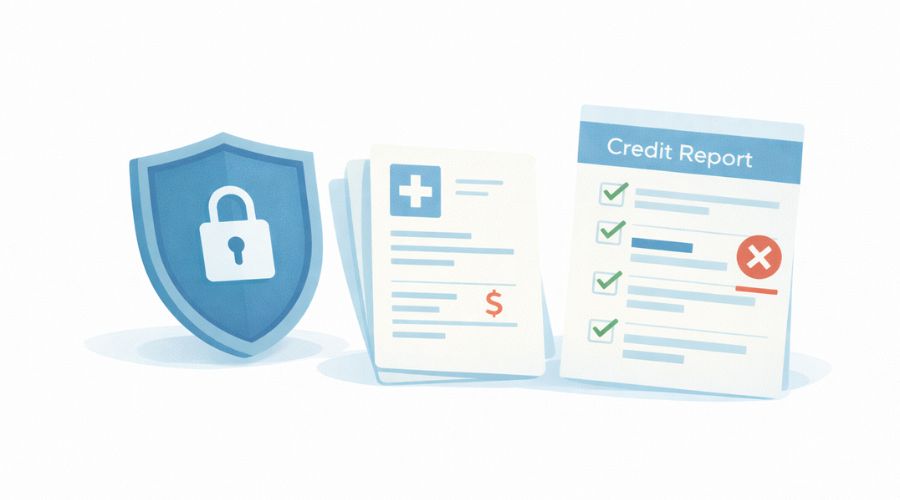
Not all credit report errors are simple balance or payment mistakes. Some situations involve higher risk, legal protections, or longer timelines. Handling these correctly matters because the wrong approach can delay corrections or weaken your rights.
Disputing Errors Related to Identity Theft
If accounts appear that you did not open, identity theft is a strong possibility.
Do not treat these as normal disputes. Use identity theft protections provided by federal law.
Step 1: Create an Identity Theft Report
File a report at the official federal identity theft site. This creates an Identity Theft Report, which gives you stronger legal rights than a regular dispute.
This report helps you:
- Block fraudulent accounts from your credit report
- Prevent reinsertion of the same fraudulent information
- Require companies to stop collection on those debts
Step 2: Request Fraud Alerts or Credit Freezes
You may also place:
- Fraud alerts (free, lasts 1 year, warns lenders to verify identity)
- Extended fraud alerts (7 years with identity theft report)
- Credit freezes (blocks new credit without your approval)
These steps do not fix existing errors, but they prevent new damage while disputes are ongoing.
Step 3: Dispute With Credit Bureaus Using Identity Theft Documentation
When you submit disputes:
- Include a copy of your Identity Theft Report
- Clearly state that the accounts are the result of identity theft
- Request blocking of fraudulent information under federal law
When proper identity theft documentation is provided, credit bureaus must block the information within a short time frame, usually much faster than standard disputes.
Disputing Medical Debt Errors
Medical billing is one of the most common sources of credit report mistakes.
Special rules apply in the U.S.:
- Paid medical collections are not supposed to appear on credit reports
- Newly sent medical collections typically have a waiting period before reporting
- Medical bills often pass through multiple billing systems, increasing error risk
Common problems:
- Insurance paid, but collection still reported
- Same bill listed by multiple collectors
- Balance does not match actual bill
When disputing medical collections:
- Include insurance Explanation of Benefits (EOB) if available
- Include payment receipts if already paid
- Dispute both with the credit bureau and the collection agency
Medical billing disputes often succeed when documentation is strong.
Disputing Closed Accounts That Are Still Reporting Wrongly
Closed accounts can remain on your report, but they must still be accurate.
Errors may include:
- Closed accounts showing as open
- Wrong balances after payoff
- Late payments reported after account closure
If an account is closed and paid off:
- Balance should usually be reported as zero
- Payment status should reflect final standing
If incorrect information continues, dispute using:
- Final statement
- Payoff confirmation letter
Disputing Student Loan Reporting Errors
Student loans are frequently transferred between servicers, which can create reporting problems.
Common issues:
- Duplicate loan entries after servicer change
- Incorrect loan status (in deferment but marked late)
- Wrong balance during repayment plan changes
When disputing student loan errors:
- Include servicer statements
- Include proof of deferment, forbearance, or income-driven plan approval
Because federal student loans involve government systems, corrections may take longer, but errors must still be corrected if verified as inaccurate.
How Long Corrected Information Stays on Your Credit Report
Understanding timelines helps set realistic expectations.
Removed or Corrected Errors
Once corrected:
- The updated information remains as long as the account is reported
- Deleted fraudulent or inaccurate accounts should not return
If removed items reappear, this is called re-insertion, and special rules apply.
Negative but Accurate Information (Not Disputable)
Even when negative items are accurate, federal law limits how long they can stay:
| Type of Information | Typical Reporting Limit |
|---|---|
| Late payments | 7 years |
| Collections | 7 years |
| Charge-offs | 7 years |
| Chapter 7 bankruptcy | Up to 10 years |
| Hard inquiries | 2 years |
These timelines usually start from the original delinquency date, not from when the debt was sold or transferred.
Disputes do not reset these timelines.
Myths vs. Facts About Credit Report Disputes
| Myth | Reality |
|---|---|
| Disputing hurts your credit | False. Disputes do not affect scores. |
| Credit repair companies can remove accurate debt | False. Only inaccurate or unverifiable data can be removed. |
| Bureaus automatically fix all errors | False. Errors remain unless disputed. |
| Paying collections removes them from reports | Not always. Paid collections may still appear, depending on type. |
| Disputes must be accepted if you complain enough | False. Evidence and verification matter. |
Common Mistakes That Delay or Weaken Disputes
Avoiding these mistakes improves success rates:
- Disputing everything at once without clear explanations
- Failing to attach documents
- Using emotional or vague statements
- Disputing accurate information
- Ignoring follow-up steps after verification
Focused, well-documented disputes are far more effective than mass disputes.
How Disputing Errors Fits Into Long-Term Credit Health
Correcting errors helps, but it is not a complete credit strategy.
Long-term credit health also depends on:
- On-time payments
- Reasonable credit usage
- Stable account history
- Limited unnecessary applications
Disputes fix reporting problems, not financial habits. Both matter for lasting credit improvement.
What Happens After an Error Is Fixed (and How to Protect the Correction)
When an item is corrected or removed, the credit bureau updates your credit report. That update usually flows into your credit scores the next time the scoring models refresh, which may happen within days or weeks depending on the lender and scoring system.
However, your job is not fully done once the correction appears.
Check All Three Credit Reports Again
Even though data furnishers are supposed to update all bureaus, mistakes happen.
After a successful dispute:
- Recheck Equifax, Experian, and TransUnion
- Confirm that the correction appears on each report
- Make sure the error did not move to another account or reappear under a new collection agency
If only one bureau corrected the issue, file disputes with the others using the updated report as supporting evidence.
Watch for Re-Insertion of Removed Information
If a deleted item comes back, this is called re-insertion, and federal law gives you extra protections.
If re-insertion happens:
- The credit bureau must notify you in writing
- The furnisher must certify the information as accurate before re-reporting
- You can demand proof of verification
If you see a removed item return without notice, dispute it immediately and reference that it was previously deleted.
Keep Your Dispute Records
Hold onto:
- Copies of dispute letters
- Proof of mailing or online submission confirmations
- Investigation results
- Updated credit reports
Keep these for at least two to three years, especially if the issue involved identity theft or serious reporting errors. These records protect you if problems return or if a lender questions your credit history later.
How Long You Should Wait Before Applying for Credit After a Dispute
If you plan to apply for a loan, credit card, or apartment, timing matters.
After a correction:
- Credit reports usually update quickly
- Credit scores may update within the same or next reporting cycle
Safe waiting period before major applications:
- 2 to 4 weeks after final correction appears on all reports
For mortgage or auto loans, lenders often pull reports from multiple bureaus, so waiting until all reports match avoids last-minute problems.

When a Dispute Alone Is Not Enough
Sometimes the credit report is accurate, but the underlying account problem still exists.
Examples:
- The lender applied payments incorrectly
- Billing disputes are still unresolved
- Insurance did not process medical claims correctly
In these cases:
- You may need to resolve the issue directly with the company first
- Once corrected at the source, then dispute with the bureaus if needed
Credit bureaus only verify what lenders report. They do not fix billing systems or payment processing errors themselves.
Pros and Cons of the Credit Dispute Process
| Pros | Cons |
|---|---|
| Free under federal law | Can take time and patience |
| Can remove serious scoring damage | Not all disputes succeed |
| Protects against identity theft | Requires documentation and follow-up |
| Improves loan and rate eligibility | Does not remove accurate negatives |
Disputing errors is a powerful consumer right, but it works best when combined with good credit habits and ongoing monitoring.
When Professional Help May Be Appropriate
Most people can handle disputes themselves. However, professional advice may be helpful if:
- Identity theft caused extensive financial damage
- Multiple lenders continue reporting incorrect data
- Legal action is involved with debt collectors
- Errors remain after repeated valid disputes
In those cases, a consumer law attorney or qualified financial counselor can help protect your rights under federal and state laws.
Be cautious of companies that promise:
- Guaranteed removals
- Instant credit score boosts
- Deleting accurate negative information
Those claims are not legally realistic.
Frequently Asked Questions (FAQs)
-
How long does a credit bureau investigation usually take?
Most disputes must be investigated within 30 days. If you submit additional information during the process, the bureau may take up to 45 days. Results are usually mailed or posted online shortly after the investigation ends.
-
Will disputing errors lower my credit score?
No. Disputes themselves do not affect your credit score. Your score may change only if the underlying information is corrected or removed.
-
Can I dispute the same error more than once?
Yes, especially if you provide new or stronger documentation. However, repeated disputes with no new evidence may be marked as frivolous and not reinvestigated.
-
Should I dispute online or by mail?
Online disputes are faster and convenient for simple errors. Mail disputes provide stronger documentation and are better for identity theft, mixed files, or repeated reporting problems. Many people use both methods depending on the situation.
-
Can a lender deny me credit while a dispute is pending?
Yes. Lenders can still make decisions using the information currently on your report, even if a dispute is in progress. If timing matters, resolve disputes before applying for important credit.
-
Do I have to contact the lender before disputing with the credit bureau?
No. You can start with the credit bureau. However, contacting the lender directly can sometimes resolve billing-related errors faster, especially when proof is clear.
-
What if a collection agency verifies a debt that is not mine?
If you believe the debt is not yours:
– File an identity theft report
– Dispute again with identity theft documentation
– Consider filing a complaint with the CFPBYou also have the right to request debt validation under federal debt collection laws.
-
Can I dispute old errors even if they happened years ago?
Yes. There is no time limit on disputing inaccurate information. If the information is wrong, it must be corrected or removed regardless of age.
-
Do paid collections automatically disappear from credit reports?
Not always. Some types of paid medical collections are removed, but other paid collections may still appear for the full reporting period. Accuracy rules still apply, even after payment.
-
Is it better to dispute before or after paying a debt?
If the debt is not yours or is inaccurate, dispute before paying. Paying a debt you do not owe can complicate later disputes. If the debt is accurate, payment affects the balance but not always the reporting status.
Disclaimer
This content is provided for educational and informational purposes only. It is not legal, tax, or financial advice. Credit reporting and dispute outcomes depend on individual circumstances, lenders, and documentation. For personal decisions or complex situations, consult a qualified attorney, financial counselor, or tax professional who can review your specific case.
