
Certificates of Deposit (CDs) are often described as one of the safest places to store money in the U.S., but “safe” does not always mean “right.”
Many Americans open CDs without fully understanding the trade-offs — locking up money too long, paying penalties, or earning returns that fail to beat inflation.
This guide explains exactly how CDs work in the U.S., who they are best for, when they can hurt your financial plan, and how to use them strategically instead of blindly.
Key Takeaways
- A Certificate of Deposit (CD) is a savings product where you agree to leave money untouched for a fixed time in exchange for a guaranteed interest rate.
- CDs are insured by the FDIC or NCUA up to $250,000 per depositor, per institution, per ownership category.
- Deposit insurance protects you if the bank fails, but it does not protect you from inflation or early withdrawal penalties.
- You usually pay a penalty if you take money out early, which is the biggest trade-off compared to regular savings accounts.
- CDs can be useful for short- to medium-term goals where you want safety and predictable returns, not growth.
- Rising or falling interest rates matter a lot when choosing CD terms and timing.
Why CDs Still Matter in Everyday American Life
Many Americans want a safe place to park money they won’t need right away — money for a future car, a home down payment, or just extra savings they don’t want to risk in the stock market. At the same time, people worry about earning almost nothing in basic savings accounts, especially after seeing how fast prices can rise.
That’s where Certificates of Deposit (CDs) come in. They sit in between checking accounts and investing: safer and more predictable than the market, but usually paying more than basic savings. The catch is simple but important — you give up flexibility.
CDs can be helpful, but only if you understand how they work, what you’re giving up, and when they actually fit your financial situation.
What Is a Certificate of Deposit (CD)?
In simple terms, a CD is a time-based savings agreement you make with a bank or credit union.
A Certificate of Deposit (CD) is an agreement between you and a bank or credit union:
- You deposit a fixed amount of money
- You agree not to withdraw it for a set period of time (the term)
- The institution pays you a fixed interest rate
- When the term ends (called maturity), you get your original money plus interest
Unlike a regular savings account, you don’t add or remove money freely. The money is meant to stay locked in until maturity.
Think of it like lending your bank money for a specific amount of time — and the bank pays you interest for that commitment.
How CDs Work in the United States

You Choose the Term Length
Common CD terms include:
| Term Length | Typical Use Case |
|---|---|
| 3–6 months | Very short-term savings, temporary parking |
| 12 months (1 year) | Popular for predictable short-term goals |
| 24–36 months | Medium-term goals |
| 5 years | Long-term savings with stable rates |
Longer terms usually offer higher interest rates, but not always. Rate curves change depending on the economy and Federal Reserve policy.
You Lock in the Interest Rate
Most CDs in the U.S. are fixed-rate CDs, meaning:
- Your interest rate does not change during the term
- You know exactly how much interest you’ll earn if you hold to maturity
This is very different from savings accounts, where rates can go up or down at any time.
There are also variable-rate or bump-up CDs (covered later), but fixed-rate CDs are the most common and easiest to understand.
Your Money Is Insured (Within Limits)
CDs offered by:
- Banks → insured by the FDIC (You can learn more about FDIC deposit insurance coverage directly from the federal agency.)
- Credit unions → insured by the NCUA
Coverage limit:
$250,000 per depositor, per institution, per ownership category
This means:
- If the bank or credit union fails, your insured money is protected
- Insurance does not depend on market performance or interest rates
As long as you stay within insurance limits, principal safety is very strong.
If you have more than $250,000, you may need to spread money across different banks or ownership categories to stay fully insured.
You Earn Interest Until Maturity
Interest may:
- Compound daily, monthly, or quarterly (depends on the institution)
- Be paid out monthly or only at maturity
Most CDs compound interest internally and pay the full amount when the CD matures.
You typically cannot withdraw interest separately without breaking the CD.
What Happens at Maturity
When the CD term ends, you usually enter a short grace period (often 7–10 days) where you can:
- Withdraw the money
- Renew into a new CD
- Move it to another account
If you do nothing, many banks automatically roll the CD into a new term, often at a different interest rate. This is easy to miss and can lock your money again unintentionally.
Always watch maturity dates.
Who CDs Are Usually Good For
CDs tend to work best for people who:
- Have money they won’t need for a specific time
- Want zero market risk
- Prefer predictable, guaranteed returns
- Are saving for known expenses, such as:
- Car purchase
- Tuition payment
- Wedding expenses
- Home down payment (short-term portion)
CDs can also be useful for:
- Older adults protecting principal
- People who already have emergency savings and want to earn slightly more on extra cash without taking market risk.
Who Should Usually Avoid CDs
CDs are often a poor fit if you:
- Might need the money unexpectedly
- Don’t yet have a proper emergency fund
- Are trying to grow money for long-term goals like retirement
- Need frequent access to funds
Locking up money before your finances are stable can create stress and lead to early withdrawal penalties.
Real-Life Example (U.S.-Based)
Example: Saving for a car in 12 months
Maria plans to buy a used car next year and already has $6,000 saved. She doesn’t want to invest it because she needs the money soon and can’t risk losses.
She puts the $6,000 into a 12-month CD at a fixed rate.
- Her rate stays the same all year
- She knows exactly how much interest she’ll earn
- She doesn’t touch the money until she buys the car
In this case, the CD works well because:
- The timeline is clear
- Safety matters more than growth
- She doesn’t need flexibility
The Biggest Trade-Off: Early Withdrawal Penalties
The main downside of CDs is lack of access to your money.
If you withdraw early, banks usually charge a penalty equal to:
- A certain number of months of interest (for example, 3–12 months)
Important points:
- The penalty often comes out of earned interest first
- In some cases, it can also reduce your original deposit
- Penalty rules vary by institution and term length
This is why checking penalty terms is just as important as checking the interest rate before opening a CD.
This is why CDs should not replace emergency savings.
Myths vs Facts About CDs
| Myth | Reality |
|---|---|
| CDs are investments | CDs are savings products, not investments |
| You can’t lose money in a CD | You can lose money to penalties if you withdraw early |
| Longer CDs are always better | Longer isn’t always better if rates are rising |
| CDs beat inflation | Often they don’t, especially in high-inflation periods |
| Only older people use CDs | Anyone with short-term savings goals can use them |
Different Types of CDs Available in the U.S.

Not all CDs work the same way. While standard fixed-rate CDs are the most common, many banks and credit unions offer variations designed to address specific needs, especially around interest rate changes and access to funds.
Understanding these differences helps avoid surprises later. Understanding these differences helps avoid surprises later.
Standard (Traditional) Fixed-Rate CD
This is the most common and simplest type.
How it works:
- Fixed interest rate for the entire term
- Fixed maturity date
- Early withdrawal penalty applies
- No deposits or withdrawals during the term
Best for:
People who want predictable returns and are confident they won’t need the money early.
High-Yield CD
“High-yield” is mostly a marketing term, but it usually means:
- Higher rate than traditional big-bank CDs
- Often offered by online banks or competitive credit unions
Important to know:
- They work the same as regular CDs
- Still subject to early withdrawal penalties
- Still FDIC or NCUA insured if from insured institutions
The difference is the rate, not the structure. The main difference is the interest rate, not how the CD functions. Some no-penalty CDs also limit how soon you can withdraw, so always check the minimum holding period.
No-Penalty CD (Liquid CD)
A no-penalty CD allows you to withdraw your money early without paying a penalty, usually after an initial waiting period (often 7 days).
How it works:
- Fixed term and fixed rate
- You can withdraw funds early with no penalty
- Usually offers a lower rate than regular CDs
Trade-off:
You gain flexibility, but you give up some interest.
Best for:
People who want higher interest than savings but may need access to funds.
Bump-Up CD
A bump-up CD lets you increase your interest rate once (or sometimes more) if rates rise during your term.
How it works:
- Start with a fixed rate
- You can request one rate increase during the term
- New rate applies for the rest of the CD
Limitations:
- Usually lower starting rates than standard CDs
- Rate increases are not automatic — you must request them
- Only helpful if rates actually rise
If market rates increase more than your bump-up option allows, you may still earn less than new CDs offered later.
Best for:
People worried about locking in too early when rates might increase.
Step-Up CD
A step-up CD has built-in rate increases at scheduled times.
How it works:
- Rate increases automatically at set intervals
- You know the full rate schedule upfront
- No control over timing of increases
Limitations:
- Starting rates are often lower
- Final yield may still lag behind new-market CDs
Jumbo CD
A jumbo CD requires a large minimum deposit, often $100,000 or more.
How it works:
- Higher deposit requirement
- Sometimes slightly higher rates, sometimes not
Important reality:
In today’s market, jumbo CDs do not always pay better than standard CDs. Online banks frequently offer competitive rates on smaller deposits.
Also, large balances raise FDIC insurance planning issues, since coverage caps still apply.
How CD Interest Rates Are Set
CD rates don’t move randomly. They are influenced by several major factors.
Federal Reserve Policy
When the Federal Reserve raises or lowers short-term interest rates:
- Savings account rates change quickly
- CD rates adjust more slowly and vary by term
Banks price CDs based on what they expect rates to do over time.
Term Length Expectations
Banks look at:
- Where rates are today
- Where they expect rates to be in the future
This creates different yield curve shapes:
| Rate Environment | What Happens to CD Rates |
|---|---|
| Rising rates expected | Short-term CDs may pay more |
| Falling rates expected | Long-term CDs may pay more |
| Uncertain markets | Rates may be similar across terms |
That’s why sometimes a 12-month CD pays more than a 5-year CD.
Bank Funding Needs
Banks also set CD rates based on:
- How much money they need from depositors
- Local competition
- Online bank competition
This is why rates vary widely between institutions even on the same day.
Choosing the Right CD Term (Practical Decision Framework)
Instead of chasing the highest advertised rate, it helps to match the CD term to when you actually need the money.
Step 1: Identify Your Time Horizon
Ask one simple question:
When will I realistically need this money?
Examples:
- 6–12 months → short-term CD or savings
- 1–3 years → medium-term CD
- More than 3 years → consider whether CDs are still appropriate
Never use CDs for money you may need suddenly. If your income or expenses are unstable, savings accounts are usually a safer choice than locking money into CDs.
Step 2: Check Current Rate Patterns
Look at how rates compare across terms:
- Are short-term CDs paying more than long-term CDs?
- Are long-term rates locked higher than savings accounts?
This helps decide whether locking longer makes sense.
Step 3: Consider CD Laddering

A CD ladder spreads money across multiple CDs with different maturity dates.
Example:
Instead of putting $9,000 into one 3-year CD:
- $3,000 in 1-year CD
- $3,000 in 2-year CD
- $3,000 in 3-year CD
Each year:
- One CD matures
- You can reinvest or use the money
Benefits:
- Reduces risk of locking all money at one rate
- Provides regular access to funds
- Still earns CD-level interest
Laddering is one of the most practical ways to use CDs long-term. Laddering works best for people who plan to keep using CDs regularly rather than for one-time short-term savings.
Pros and Cons of Certificates of Deposit
| Pros | Cons |
|---|---|
| Guaranteed interest rate | Early withdrawal penalties |
| Very low risk when insured | Money locked for fixed period |
| Predictable returns | Often lower than long-term investing |
| Simple and easy to understand | May not keep up with inflation |
| Useful for short-term goals | Limited flexibility |
Common Beginner Mistakes With CDs
❌ Using CDs as Emergency Savings
Emergency money must be immediately accessible. Locking it in CDs can lead to penalties when emergencies happen.
❌ Ignoring Automatic Renewals
Many people forget maturity dates and get rolled into:
- Lower-paying CDs
- Longer terms than intended
Always track maturity dates.
❌ Chasing the Longest Term for Slightly Higher Rates
Locking money for 5 years to gain a small extra yield can backfire if:
- Better rates appear later
- You need the money early
Higher rate is not always better if flexibility matters.
❌ Exceeding Insurance Limits
Large deposits at one bank can exceed FDIC or NCUA limits, increasing risk if the institution fails.
Insurance planning matters with large CD balances.
Tax Treatment of CD Interest in the U.S.
This part surprises many people.
CD Interest Is Taxable
- Interest earned on CDs is considered taxable income
- Reported to you and the IRS on Form 1099-INT
You owe tax even if:
- You don’t withdraw the interest
- The CD hasn’t matured yet (for multi-year CDs)
This is called phantom income — you owe tax before receiving the money. This can be frustrating for people who do not expect a tax bill before the CD matures.
State Taxes
- Most states also tax CD interest
- Some states with no income tax do not
State rules depend on where you live.
CDs Inside Retirement Accounts
If CDs are held inside:
- Traditional IRA
- Roth IRA
Then:
- Taxes are deferred or avoided depending on account type
- Normal IRA withdrawal rules apply
The CD itself doesn’t change retirement account tax rules.
CDs vs Other Safe Savings Options in the U.S.
CDs are not the only place Americans can keep low-risk money. Choosing the right option depends on how soon you need the money, how flexible you need to be, and how predictable you want returns to be.
Below is a practical comparison of common alternatives.
CDs vs High-Yield Savings Accounts
| Feature | CD | High-Yield Savings |
|---|---|---|
| Interest rate | Fixed | Variable |
| Access to money | Locked until maturity | Withdraw anytime |
| Rate changes | No | Yes |
| Risk (insured) | Very low | Very low |
| Best for | Money you won’t touch | Emergency & flexible savings |
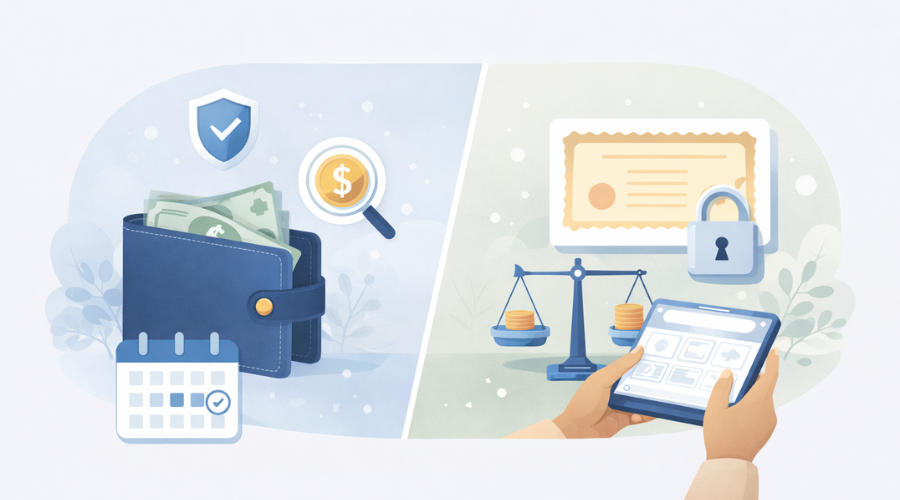
Key difference:
Savings accounts protect flexibility. CDs protect the rate.
If you may need the money, savings accounts are usually safer despite possibly lower returns. For most people, emergency funds should always stay in savings or money market accounts, not CDs.
CDs vs Money Market Deposit Accounts (MMDAs)
Money market deposit accounts are bank products (not investments).
| Feature | CD | Money Market Account |
|---|---|---|
| Interest rate | Fixed | Variable |
| Withdrawals | Restricted | Limited but available |
| Check/debit access | No | Sometimes |
| Insurance | FDIC/NCUA | FDIC/NCUA |
Good fit:
MMDAs work for people who want slightly higher interest than savings with some spending access. CDs are better when money truly won’t be needed.
CDs vs Treasury Bills (T-Bills)
Treasury bills are short-term U.S. government securities.
| Feature | CD | Treasury Bill |
|---|---|---|
| Issuer | Bank or credit union | U.S. Treasury |
| Term | Months to years | 4 weeks to 52 weeks |
| Insurance | FDIC/NCUA | Backed by U.S. government |
| Taxes | Federal + usually state | Federal only (state tax exempt) |
| Liquidity | Locked | Can sell before maturity |
Important tax note:
T-bill interest is not taxed by states, which can matter in high-tax states.
T-bills can be useful for short-term parking, especially when rates are competitive.
CDs vs Bonds and Bond Funds
This is where many people get confused.
| Feature | CD | Bonds / Bond Funds |
|---|---|---|
| Principal stability | Fixed if held to maturity | Can fluctuate |
| Interest predictability | Guaranteed | Varies |
| Market risk | None (insured) | Present |
| Suitable for short-term | Yes | Usually no |
CDs are not investments. Bonds and bond funds involve market price changes and are better suited to longer-term strategies.
How CDs Affect Your Overall Financial Plan
CDs play a supporting role, not a central role, in most long-term financial plans.
Where CDs Fit Well
- Short-term savings goals
- Part of a conservative cash strategy
- Protecting money needed soon
- Reducing volatility in very conservative portfolios
Where CDs Usually Don’t Fit Well
- Retirement growth
- Long-term wealth building
- Beating inflation over decades
For long-term goals, growth assets typically matter more than fixed-interest products.
Inflation Risk: The Quiet Problem With CDs
Even when your money is safe, your purchasing power may not be.
If inflation is higher than your CD rate:
- Your money grows in dollars
- But buys less in real life
This does not mean CDs are a bad financial tool. It means they are best used for short timelines, not long-term storage of wealth.
Regulatory Protections and Consumer Rights
Deposit Insurance Rules
CD insurance protects against:
- Bank or credit union failure
It does not protect against:
- Loss of purchasing power
- Early withdrawal penalties
- Poor interest rate timing decisions
Insurance only protects principal within legal limits. It does not protect against poor financial decisions or choosing the wrong term for your needs.
Truth in Savings Act Disclosures
Banks must clearly disclose:
- Interest rate
- APY
- Term length
- Penalty amounts
- Renewal policies
These disclosures appear in CD agreements and should be reviewed before opening any CD.
Early Withdrawal Penalty Rules
Penalty amounts:
- Must be disclosed
- Cannot be changed after account opening
However:
- Banks can have very different penalty structures
- Some charge flat fees, others charge months of interest
Always read the penalty terms carefully.
When used intentionally, CDs can support financial stability. When used carelessly, they can slow progress.
When CDs Make Strategic Sense
Here are situations where CDs are often reasonable:
- You already have emergency savings
- You know the exact timing of a future expense
- You want to protect principal over returns
- You want predictable, stable outcomes
CDs are not about maximizing returns. They are about removing uncertainty.
When CDs Can Quietly Hurt Your Plan
CDs may slow progress when:
- You rely on them for long-term growth
- You lock in during low-rate environments
- You avoid investing entirely due to fear of market swings
- You forget about reinvestment and maturity planning
Safety without planning can still lead to missed opportunities.
How to Open a CD and What to Check Before You Commit
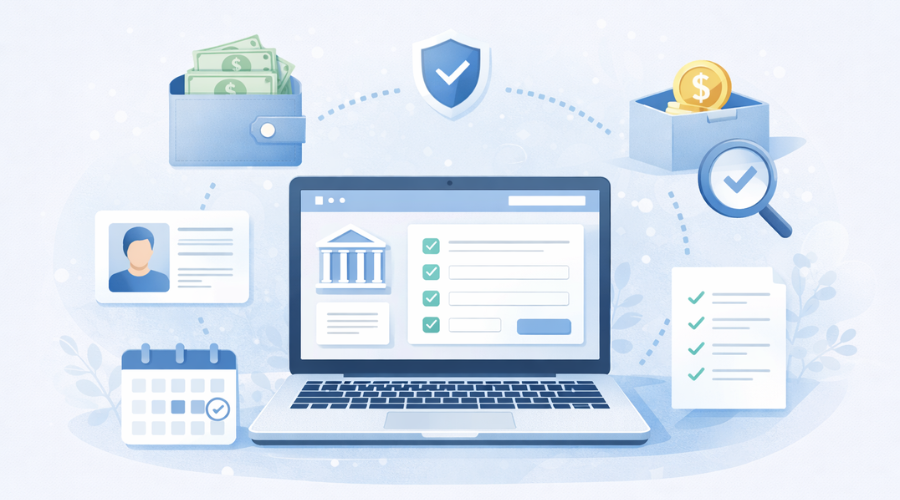
Opening a CD is usually simple, but the details matter. Small differences in terms can change how useful — or frustrating — the CD becomes later.
Step 1: Choose an Insured Institution
Before anything else, confirm the institution is:
- FDIC-insured (banks), or
- NCUA-insured (credit unions)
This protects your deposit within legal limits if the institution fails. You can verify insurance status using the FDIC or NCUA online institution lookup tools.
If you already have large balances at one bank, also consider:
- How much of your total deposits are already insured there
- Whether opening at another institution improves insurance coverage
Step 2: Compare APY, Not Just Interest Rate
Always compare APY (Annual Percentage Yield), not just the stated rate.
APY reflects:
- Interest rate
- Compounding frequency
Two CDs with the same rate can have slightly different APYs based on how often interest compounds. When comparing CDs online, always sort by APY rather than by advertised rate.
Step 3: Review the Early Withdrawal Penalty
This is one of the most important parts of the CD agreement.
Look for:
- How many months of interest are forfeited
- Whether the penalty can reduce your principal
- Whether partial withdrawals are allowed (many CDs do not allow them)
Many CDs require full closure if you take money out early, which can trigger penalties on the entire balance.
Longer CDs usually have larger penalties.
This determines how painful it is if your plans change.
Step 4: Check Renewal and Grace Period Policies
Confirm:
- Length of grace period after maturity
- Whether automatic renewal occurs
- What term and rate are used if it renews automatically
If you miss the grace period, your money may be locked again under new terms. Once the new term starts, early withdrawal penalties usually apply again.
Step 5: Confirm Minimum Deposit Requirements
Some CDs require:
- $500
- $1,000
- $10,000 or more
Make sure the minimum fits your situation and doesn’t tie up too much of your savings.
Step 6: Understand Funding Rules
Funding usually happens by:
- Transfer from checking or savings
- External bank transfer
- Check deposit (for in-branch openings)
Most CDs must be fully funded at opening. You typically cannot add more later.
What Happens If You Need the Money Early
Even with planning, life happens. Here’s what usually applies.
How Penalties Are Calculated
Penalties are commonly stated as:
- “X months of interest”
Example:
- 12-month CD
- Penalty = 3 months of interest
If you withdraw early:
- You lose 3 months’ worth of interest
- Any remaining interest after the penalty is paid to you.
- In some cases, principal may be reduced if interest isn’t enough
Situations Where Penalties May Be Waived
Some institutions may waive penalties if:
- The account holder dies
- The account is part of an estate settlement
Waivers for hardship or medical expenses are not guaranteed and depend on the institution’s policy.
Always assume penalties will apply. Do not rely on penalty waivers when choosing a CD.
CDs and Credit Scores: Is There Any Impact?
For most people, CDs have no effect on credit at all.
This is a common concern.
Regular CDs Do Not Affect Your Credit
Standard CDs:
- Are not loans
- Are not reported to credit bureaus
- Do not affect credit scores
Opening or closing CDs does not impact your credit history.
CD-Secured Loans (Different Product)
Some banks offer loans secured by your CD balance.
In that case:
- The loan may be reported to credit bureaus
- Payments can affect your credit score
But this is a separate product, not part of normal CD ownership.
CDs Inside Retirement and Brokerage Accounts
CDs can also exist outside normal bank accounts.
CDs in IRAs
You can hold CDs inside:
- Traditional IRAs
- Roth IRAs
Rules to remember:
- Contribution limits still apply
- Withdrawal penalties follow IRA rules, not CD rules
- Early CD withdrawal inside an IRA can still trigger CD penalties
The CD does not override retirement account restrictions.
Brokered CDs
Brokerage firms sell brokered CDs, which are different from bank CDs.
How they differ:
- Purchased through brokerage accounts
- Often cannot be withdrawn early
- Must be sold on secondary market if you need cash
- Market price can fluctuate before maturity
Brokered CDs still have deposit insurance, but:
Insurance applies only if the issuing bank fails, not if you sell early at a loss.
- Liquidity risk is higher
- Price risk exists if sold early
They are better suited for people comfortable with brokerage accounts and market pricing.
Common Misunderstandings About CD Safety and Access
“FDIC Insurance Covers Any Amount”
False. Coverage is limited to:
$250,000 per depositor, per institution, per ownership category
Large balances may require spreading money across institutions or ownership types.
“CD Rates Always Beat Savings Accounts”
Not always. During some periods:
- Savings accounts pay equal or higher rates
- CDs only make sense if you want rate stability
Always compare current rates.
“Once You Lock In, You’re Stuck No Matter What”
You can exit early, but:
- You will likely pay penalties
- In brokered CDs, you may need to sell at market prices
“Locked” does not mean impossible — it means costly.
Planning CDs as Part of a Bigger Strategy
Good CD use usually involves:
- Keeping emergency funds liquid
- Using CDs only for known future needs
- Reviewing maturities regularly
- Reinvesting thoughtfully when terms end
CDs work best when they are deliberate tools, not default storage for all savings.
Advanced CD Strategies and Smarter Reinvestment Planning
Once you understand basic CDs, the real value comes from how you use them over time, especially when interest rates change and goals evolve.
Smart CD strategies focus on timing, reinvestment, and balancing access to cash with interest earnings.
CD Laddering: How It Works and When It Makes Sense
A CD ladder spreads money across multiple maturity dates instead of locking everything into one long term.
Why Laddering Works
Laddering helps you:
- Avoid locking all money at one interest rate
- Gain regular access to cash
- Adjust to future rate changes
It balances rate stability and flexibility.
Example: 5-Year Ladder With Annual Access
Suppose you have $10,000.
Instead of one 5-year CD:
- $2,000 → 1-year CD
- $2,000 → 2-year CD
- $2,000 → 3-year CD
- $2,000 → 4-year CD
- $2,000 → 5-year CD
After the first year:
- The 1-year CD matures
- You can spend it or roll it into a new 5-year CD
Eventually, you always have:
- One CD maturing each year
- Most money earning longer-term rates
However, if you need a large amount of money at once, laddering may not provide enough liquidity.
When Laddering Makes Sense
Laddering is useful when:
- You want predictable access to funds
- You don’t know future rate direction
- You plan to keep using CDs long-term
It is less useful for:
- Very short-term savings
- Very small balances
Handling Rising vs Falling Interest Rate Environments
The goal is not to predict rates perfectly, but to avoid locking all your money at the wrong time.
Interest rate conditions matter a lot with CDs.
If Rates Are Rising
Main risk: locking too long too early.
Possible approaches:
- Use shorter-term CDs
- Build ladders rather than long single CDs
- Consider no-penalty CDs for flexibility
This allows you to reinvest sooner at higher rates.
If Rates Are Falling
Main risk: missing today’s higher rates.
Possible approaches:
- Lock some money into longer-term CDs
- Still keep some short-term access for flexibility
This protects part of your savings from future rate cuts.
If Rates Are Uncertain
This is when laddering is most useful.
You avoid making one big timing decision and spread your risk over time.
Reinvesting CDs the Right Way
Many people focus only on opening CDs and forget that what you do at maturity matters just as much.
Always Re-Shop Rates at Maturity
When your CD matures:
- Do not assume your bank offers the best new rate
- Compare current market options
Loyalty does not guarantee competitive rates. Even moving your money to another bank can significantly improve your return over time.
Don’t Auto-Renew Without Checking Terms
Auto-renewals often:
- Use standard rates, not promotional rates
- May roll into longer or shorter terms than expected
If you miss the grace period, you may be locked in again.
Align Reinvestment With Your Updated Goals
Ask again:
- Do I still need this money at the same future time?
- Has my emergency fund changed?
- Have my long-term plans shifted?
Your CD strategy should evolve with your life.
CDs and Long-Term Financial Growth
CDs protect savings, but they are not designed to build long-term wealth on their own.
Opportunity Cost Matters
Money held in CDs:
- Does not participate in long-term market growth
- Often barely keeps up with inflation
That’s acceptable for short-term goals, but not for:
- Retirement planning
- Long-term wealth accumulation
Balanced Financial Planning Uses Multiple Tools
Healthy financial plans usually include:
- Liquid emergency savings
- Short-term tools like CDs or money market
- Long-term investments for growth
Each tool has a role. Problems happen when one tool is used for everything.
Special Situations: When CDs Are Used Differently
CDs for Estate and Trust Accounts
CDs may be used in:
- Trust accounts
- Estate settlements
However:
- Ownership category affects insurance limits
- Maturity timing matters if funds must be distributed
These cases often require professional guidance.
Estate and trust rules can be complex, and mistakes may affect taxes and insurance coverage.
CDs for Minors
Some banks allow CDs in:
- Custodial accounts
- Trust-style youth accounts
Rules vary by institution and state law.
Parents should consider:
- Liquidity needs
- Tax reporting requirements
In some cases, interest may be taxed at the parent’s rate under kiddie tax rules.
CDs During Economic Stress
During periods of financial uncertainty:
- People often move money into insured deposits
- CD demand may increase
But moving all money into CDs during uncertain times can also limit long-term recovery potential.
But safety does not mean immunity from inflation or opportunity cost.
Signs a CD Might Not Be the Right Choice Right Now
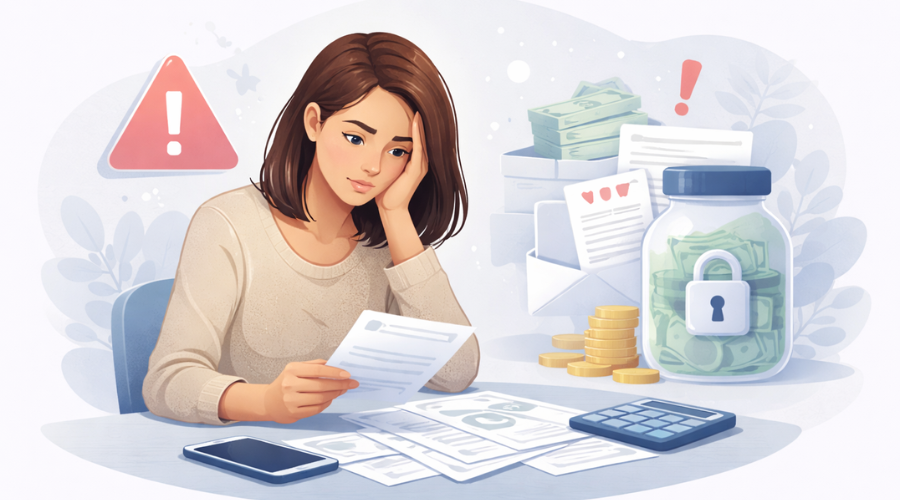
Pause before opening a CD if:
- You carry high-interest debt
- You lack emergency savings
- Your income is unstable
- You are unsure about upcoming expenses or you are carrying credit card balances at high interest rates.
Locking money away while paying high interest elsewhere usually hurts overall finances.

Frequently Asked Questions About CDs in the U.S.
These are real-world questions many Americans run into when using or considering CDs. The answers below address common concerns about safety, access, taxes, and long-term use of CDs.
-
Are CDs safer than savings accounts?
From a deposit safety standpoint, both are equally safe if they are held at FDIC-insured banks or NCUA-insured credit unions and kept within insurance limits.
The difference is not safety — it is access and rate stability:
– Savings accounts → money available anytime, rate can change
– CDs → money locked, rate guaranteedNeither protects against inflation. The choice depends on whether you value flexibility or rate certainty more.
-
Can I add more money to a CD after opening it?
Usually, no.
Most CDs must be fully funded at the time you open them. Once the CD starts:
– You cannot add more money
– You cannot partially withdraw without penalty (and many do not allow partial withdrawals at all)If you expect to add savings over time, savings accounts or money market accounts are usually better. CDs work best when you already have the full amount ready to set aside.
-
What happens if I die before my CD matures?
CDs become part of your estate unless:
– A beneficiary is listed, or
– The account is held jointlyIn many cases:
– Early withdrawal penalties are waived after death
– Funds are released to beneficiaries or the estateRules vary by institution, so beneficiary designations matter. Keeping beneficiary information updated can speed up access to funds and reduce legal delays.
-
Can I close just part of a CD?
Often, no.
Many CDs require:
– Full withdrawal if you break the CD
Some institutions allow partial withdrawals, but:
– Penalties still apply
– Terms must be confirmed before openingAlways check this detail if flexibility matters. This is especially important for larger deposits where breaking the full CD could be costly.
-
Is CD interest taxed every year or only when I withdraw it?
Interest is usually taxed in the year it is earned, even if:
– You do not withdraw it
– The CD has not maturedFor multi-year CDs, this can mean:
– You pay tax before you receive the cash
Banks report interest annually on Form 1099-INT. State tax treatment depends on where you live and whether your state taxes interest income.
-
Do CDs affect eligibility for government benefits?
They can.
CD balances count as assets for programs that have resource limits, such as:
– Supplemental Security Income (SSI)
– Certain state assistance programsRules are program-specific and sometimes state-specific, so people relying on means-tested benefits should be careful before locking funds into CDs. Even temporary increases in account balances can affect eligibility in some programs.
-
Can I transfer my CD to another bank?
Direct transfers are generally not possible.
To move money:
– You usually must close the CD
– Pay any early withdrawal penalty
– Then move the funds elsewhereBrokered CDs may be sold on secondary markets, but prices can fluctuate. Selling early may result in receiving less than your original deposit.
-
Are online bank CDs as safe as big national banks?
Yes, if the online bank is:
– Properly FDIC-insured
Insurance protection does not depend on:
– Whether the bank is online or physical
– Whether it is large or smallAlways verify insurance status before depositing. You can confirm this through the FDIC or NCUA institution lookup tools online.
-
Can I use CDs as part of retirement income planning?
CDs may be used for:
– Short-term income needs
– Temporary safe parkingBut they are usually not sufficient alone for retirement planning because:
– Returns may not keep up with inflation
– They do not provide long-term growthThey can complement other income sources but rarely replace them. Many retirees use CDs to cover near-term expenses while keeping long-term funds invested.
-
Is it better to open one large CD or several smaller ones?
Several smaller CDs often provide:
– Better flexibility
– Easier laddering
– Lower risk of needing to break the entire balanceMultiple CDs also make:
– Reinvestment decisions more manageable over time
This is especially helpful when you are unsure about future needs. Smaller CDs also make it easier to match maturity dates with specific expenses.
-
Can CD rates ever go negative?
In normal U.S. banking conditions, retail CD rates:
– Do not go negative
However:
– Very low rates can still produce returns below inflation
While negative CD rates are extremely unlikely in the U.S. consumer market, purchasing power loss remains a real risk.
-
Are promotional CDs worth using?
Promotional CDs may offer:
– Higher initial rates
– Limited availabilityBut they may also:
– Auto-renew at much lower rates
– Have stricter termsThey are fine to use if you:
– Track maturity dates
– Re-shop rates instead of auto-renewingAlways review the new rate before allowing any promotional CD to renew.
Final Practical Perspective on Using CDs Wisely
CDs are not designed to maximize returns. They are designed to provide certainty and predictable timing.
They work best when:
- You know when you’ll need the money
- You already have liquid emergency savings
- You want to avoid market risk for that portion of your money
They work poorly when:
- You rely on them for long-term growth
- You lock funds away before stabilizing your finances
- You open them without understanding penalties and renewal terms
Used intentionally, CDs can play a useful supporting role in personal finance. Used automatically or without planning, they often underperform what people actually need.
Disclaimer
The information in this article is for educational and informational purposes only and should not be considered financial, tax, or legal advice.
Personal financial decisions — including whether to use Certificates of Deposit (CDs), how much to deposit, how long to lock funds, and how CDs fit into your overall financial plan — depend on individual circumstances such as income, expenses, debts, tax situation, benefit eligibility, and long-term goals.
Before making significant financial decisions, readers should consider consulting a qualified financial professional, tax advisor, or legal advisor who can evaluate their specific situation and provide personalized guidance based on current laws and regulations.
Laws, tax rules, and financial products can change over time, and readers should verify current terms and regulations before making decisions.
