
Every checking account lets you pay bills, use a debit card, and receive money. But not every checking account is built for the same kind of life. Some are designed for students, some for people who keep higher balances, and some for those who want to avoid fees at all costs.
A lot of Americans end up paying monthly fees they don’t need to pay or missing out on features that would actually help them—simply because they picked the wrong type of checking account at the start and never switched.
Understanding the different types of checking accounts in the U.S. helps you match your account to how you actually earn, spend, and manage your money—and avoid fees that don’t serve you.
For official consumer guidance on checking accounts and common fees, you can also review the CFPB guide on bank accounts and fees.
Key Takeaways
- There is no single “best” checking account for everyone. The right type depends on income, balance, and daily banking needs.
- Many accounts charge monthly fees unless you meet specific conditions.
- Some accounts limit features like check-writing or branch access to reduce costs.
- Switching to a better-fit account can immediately reduce fees and improve convenience.
- Banks and credit unions follow the same federal rules, but account features and fees can vary widely by institution.
What “Type of Checking Account” Really Means
When banks talk about different checking accounts, they are usually changing things like:
- Monthly fees and how to avoid them
- Minimum balance requirements
- Who the account is designed for (students, seniors, frequent travelers, etc.)
- Extra features or limits (interest, overdraft options, ATM access)
The core function of checking accounts is the same across types. What changes is how much the account costs you and how flexible it is.
That’s why choosing the right type is mostly about cost control and convenience, not about access to basic banking.
Main Types of Checking Accounts in the U.S.
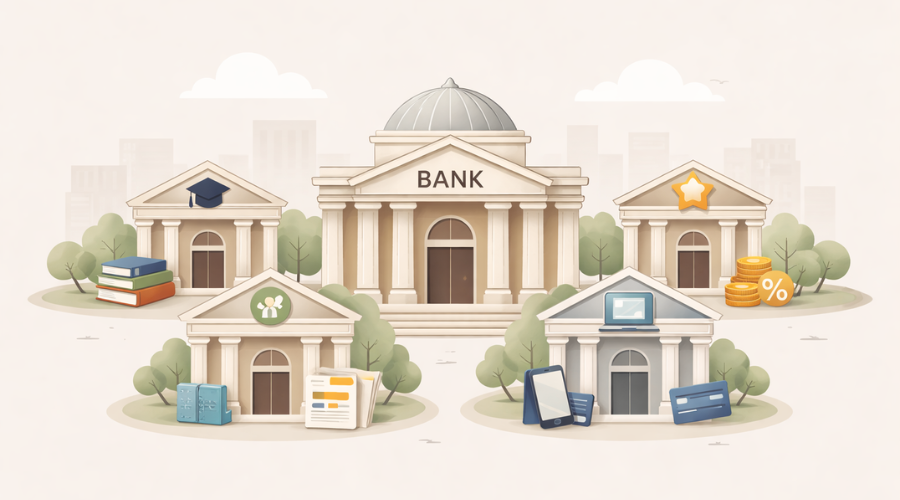
Most U.S. banks and credit unions offer variations of these core categories:
- Standard (Basic) Checking Accounts
- Student Checking Accounts
- Interest-Bearing Checking Accounts
- No-Fee / Low-Fee Checking Accounts
- Premium or Relationship Checking Accounts
- Second-Chance Checking Accounts
- Joint Checking Accounts
- Online-Only Checking Accounts
Not every bank offers all of them, and names may differ, but the structures are very similar nationwide.
Below, we explain each type, who it works best for, and what to watch out for before choosing
Standard (Basic) Checking Accounts
This is the most common checking account in the U.S. and usually the default option when someone opens an account.
What it typically includes
- Debit card
- Online and mobile banking
- Bill pay
- Direct deposit
- Check-writing (sometimes optional)
Common fee structure
Most standard accounts charge a monthly maintenance fee, usually between $5 and $15, unless you meet certain conditions such as:
- Maintaining a minimum daily balance
- Receiving a required amount in direct deposits
- Keeping another linked account at the same bank
If you don’t meet those conditions, the fee is charged automatically.
Who this type works best for
- People with steady income and regular direct deposits
- Those who can comfortably keep a minimum balance
- Anyone who wants full-service banking without premium features
Common mistakes with this account
- Not noticing the monthly fee
- Falling below the balance requirement during slow months
- Assuming “standard” means “cheapest”
For many people, this account is fine—but it’s also where unnecessary fees quietly add up.
Student Checking Accounts
Student checking accounts are designed to help younger adults build banking history without heavy fees.
Typical eligibility
- Usually for ages 17 to 24 or 25
- Must be enrolled in a college, university, or sometimes high school
(Some banks verify enrollment; others rely on self-certification.)
Key features
- No monthly maintenance fee or very easy fee waivers
- Lower or no minimum balance requirements
- Same digital features as regular accounts
Important limitations
- Often automatically convert to standard accounts after the age limit
- Some banks reduce benefits after graduation
If someone doesn’t switch or qualify for fee waivers after conversion, fees may start without much warning. This is why students should review their account type after graduation instead of assuming the account will stay free.
Who this type works best for
- Full-time students with limited income
- Young adults opening their first independent bank account
Interest-Bearing Checking Accounts
These accounts pay a small amount of interest on your checking balance.
How they usually work
- You earn interest similar to savings accounts
- Interest rates are typically much lower than high-yield savings
- Banks often require:
- Higher minimum balances, or
- A certain number of monthly transactions
Common trade-offs
To earn interest, you may face:
- Higher monthly fees
- Stricter balance requirements
- Limits on fee waivers
Reality check on interest
For most people, the interest earned on checking is very small, especially compared to:
- Savings accounts
- Money market accounts
So the benefit is usually convenience, not meaningful long-term growth.
Who this type works best for
- People who keep higher balances in checking
- Those who prefer keeping more money immediately accessible
No-Fee and Low-Fee Checking Accounts
These accounts focus on keeping costs as close to zero as possible.
Common structures
- No monthly maintenance fee at all
- Or very easy fee waivers (small direct deposit or balance)
They may be offered by:
- Online banks
- Credit unions
- Some traditional banks as basic options
Possible trade-offs
To keep costs low, some accounts may have:
- Fewer physical branches
- Limited check-writing
- Smaller ATM networks
But for people who mostly use mobile banking, these limits often don’t matter.
Who this type works best for
- People on tight budgets
- Anyone tired of paying monthly fees
- Those comfortable with digital banking
For many households, this type provides the best balance of access and cost control.
Premium or Relationship Checking Accounts
Premium checking accounts are designed for customers who keep higher balances or use multiple services at the same bank.
Banks may call these accounts “Preferred,” “Advantage,” or “Relationship” checking, but the structure is similar.
Typical features
- Higher daily withdrawal and transfer limits
- Priority customer service or dedicated support lines
- Fee-free services that normally cost extra (like cashier’s checks)
- Sometimes better interest rates on deposits
Fee and balance requirements
These accounts often have high monthly fees, sometimes $20 to $35 per month, unless you meet requirements such as:
- Maintaining large combined balances across accounts
- Having investments or loans with the same institution
- High monthly direct deposits
If balances drop, the fee applies automatically.
Who this type works best for
- People with substantial and stable balances
- Those who already use multiple services at one bank
- Customers who benefit from higher service limits
Who should avoid it
- Anyone living paycheck to paycheck
- People who may not always meet balance thresholds
- Those who don’t need premium service features
For most everyday households, premium accounts don’t provide enough value to justify the risk of fees.
Second-Chance Checking Accounts
Second-chance checking is meant for people who had trouble with past bank accounts.
Why banks offer these accounts
Banks use systems like ChexSystems to review past account history. If someone previously had:
- Unpaid negative balances
- Account closures for misuse
- Repeated overdrafts
they may be denied standard checking. Second-chance accounts allow them to re-enter the banking system.
Typical limitations
- Higher monthly fees
- No overdraft programs
- Lower transaction limits
- Fewer features
Some accounts also require completing a financial education program.
Important long-term goal
These accounts are usually temporary solutions. After showing responsible use for several months, many banks allow customers to upgrade to regular checking.
Who this type works best for
- People rebuilding their banking access
- Anyone denied standard accounts due to past issues
Key warning
Second-chance accounts are not designed to be permanent.
Staying in them long-term usually means paying more while getting fewer services than standard checking accounts.
Joint Checking Accounts
Joint checking accounts are shared by two or more people, usually:
- Married couples
- Domestic partners
- Parents and adult children
How joint accounts work legally
All account holders:
- Have equal access to the money
- Can withdraw funds independently
- Are equally responsible for fees and overdrafts
If one person overdrafts the account, both are legally responsible.
Common uses
- Household bills
- Shared savings for goals
- Managing caregiving finances
Risks to consider
- Loss of individual control
- Potential disputes if relationships change
- Complications during separation or death
Joint accounts can work very well with clear communication, but they also require a high level of trust.
Online-Only Checking Accounts
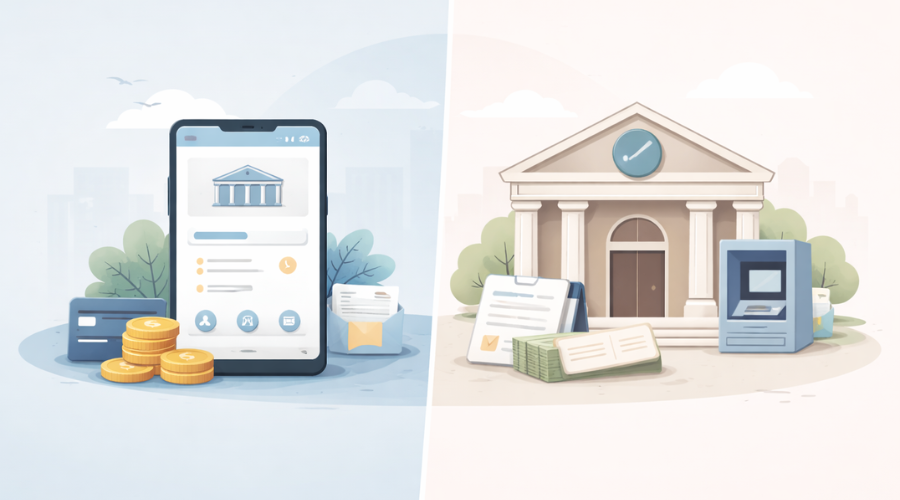
Online banks do not operate physical branches and provide services digitally.
Typical features
- No monthly maintenance fees
- Large ATM networks or fee reimbursements
- Strong mobile apps
- Fast digital transfers
What you usually give up
- In-person customer service
- Easy cash deposits (often limited to partner locations)
- Branch-based problem resolution
Safety and regulation
Online banks must follow the same federal banking laws and deposit insurance rules as traditional banks when they are FDIC-insured institutions.
Who this type works best for
- People who rarely visit branches
- Comfortable with mobile and online banking
- Those who want to minimize fees
Pros and Cons Comparison by Account Type
| Account Type | Main Benefits | Main Downsides |
|---|---|---|
| Standard Checking | Full features, widely available | Monthly fees unless conditions met |
| Student Checking | Low or no fees, easy access | Converts to regular account after age limit |
| Interest Checking | Earns small interest | Higher balances and fees often required |
| No-Fee / Low-Fee | Minimal cost, simple structure | May lack branches or extras |
| Premium Checking | Higher limits, priority service | High fees if balance drops |
| Second-Chance Checking | Access when others deny accounts | Fewer features, higher costs |
| Joint Checking | Easy shared money management | Shared legal responsibility |
| Online-Only Checking | Low fees, strong digital tools | Limited cash handling, no branches |
How to Choose the Right Type for Your Situation
Instead of focusing on account names, it helps to think about how your money actually moves each month.
If you have steady income and stable balances
- Standard or no-fee checking may work well
- Focus on meeting fee-waiver rules consistently
If your income varies month to month
- No-fee or low-fee checking reduces risk of surprise charges
- Avoid accounts with strict balance requirements
If you keep large balances
- Interest or premium checking may offer convenience
- Compare fees carefully against actual benefits
If you had banking problems before
- Second-chance checking may be necessary at first
- Plan to upgrade once eligible
If you share finances
- Joint accounts can simplify bill management
- Keep clear agreements on spending and responsibilities
Choosing the right type is mostly about avoiding unnecessary costs and stress, not about chasing extra features.
Risks, Downsides, and What Many People Don’t Expect
Even when you choose the right type of checking account, problems can still happen if certain details are overlooked. Most account issues in the U.S. are not caused by fraud or system errors—they happen because of fees, timing, and misunderstandings about how transactions post.
Overdraft-related fees and closures
Many checking accounts allow transactions to go through even when there isn’t enough money, which creates a negative balance.
You can read more about how these fees work in the FDIC explanation of overdraft and account fees.
What often surprises people:
- Multiple small transactions can trigger multiple overdraft fees
- Fees can post before deposits fully clear
- Unpaid negative balances can lead to account closure
In many cases, the bank will also stop all transactions while the account is negative, which can interrupt bill payments and direct deposits
If an account is closed with a balance owed, it may be reported to account-screening systems used by banks, which can affect the ability to open future accounts.
Important: Not all checking account types offer the same overdraft options. Some no-fee and second-chance accounts block transactions instead of allowing overdrafts, which can actually prevent debt but may cause declined payments.
Monthly fees starting after account changes
Some accounts change status automatically:
- Student accounts converting to standard accounts
- Promotional no-fee periods ending
- Balance-based fee waivers no longer being met
If someone doesn’t notice these changes, fees can start quietly and continue for months.
How this usually happens
- Direct deposits stop temporarily
- Balances dip below minimums
- Age or enrollment eligibility expires
This is one of the most common ways people end up paying fees without realizing what changed.
Transaction limits and holds
While checking accounts do not have the same legal withdrawal limits as savings accounts, banks can still apply:
- Fraud prevention holds
- Large deposit verification delays
- New account transaction restrictions
This can matter if someone relies on immediate access to funds for rent, payroll, or bill payments. It can also affect people who deposit checks or cash and expect same-day availability.
Some account types—especially second-chance or new online accounts—may have stricter early limits until account history is established.
Account closures and banking access problems
Banks can close accounts for:
- Repeated overdrafts
- Suspected misuse
- Extended negative balances
Closure does not mean the debt disappears. If money is still owed, the bank may:
- Attempt collections
- Report the account to screening systems used by other banks
That can make opening future checking accounts more difficult, sometimes for years.
Common Mistakes When Choosing a Checking Account Type
Most checking account problems are preventable. These are the patterns that cause the most trouble.
Choosing based on promotions instead of long-term costs
Short-term offers may hide:
- High future monthly fees
- Temporary fee waivers
- Conditions that are hard to maintain
The ongoing fee structure matters far more than sign-up benefits.
Assuming all “no-fee” accounts are identical
“No-fee” can still come with:
- ATM fees
- Out-of-network cash withdrawal costs
- Limits on deposits or transfers
The monthly fee may be zero, but transaction fees can still add up depending on usage.
Keeping the same account type after life changes
People often forget to re-evaluate their account when they:
- Graduate
- Change jobs
- Retire
- Combine finances with a partner
An account that worked well in one stage of life may become expensive or inconvenient later.
Not reading fee schedules
Banks are required to disclose fees clearly, but most people never review:
- Monthly maintenance conditions
- Overdraft fee structures
- ATM policies
Understanding just these three areas can prevent most checking account frustrations.
Myths vs Facts About Checking Account Types
Myth: All checking accounts are basically the same
Fact: Fee structures, overdraft handling, and access options vary widely by account type and institution. Over time, these differences can cost or save hundreds of dollars.
Myth: Premium accounts are always better
Fact: Premium accounts only make sense if you consistently meet balance requirements. Otherwise, they often cost more than they provide in value.
Myth: Online checking is less safe
Fact: When an online bank is federally insured, deposits are protected under the same laws as traditional banks. The difference is service format, not safety.
Myth: Second-chance accounts are permanent
Fact: They are designed as temporary rebuilding tools. Many banks allow upgrades after a period of responsible use.
Myth: Joint accounts mean shared ownership of all money
Fact: Legally, every account holder already has full access to all funds in the account. Joint status affects control, not just convenience.
How Checking Account Choice Affects Long-Term Finances
Checking accounts are not investment tools, but they still shape financial stability.
Fee drain over time
A $12 monthly fee equals:
- $144 per year
- $720 over five years
That’s money that could have gone toward emergency savings or debt reduction.
Payment reliability and credit impact
While checking accounts themselves are not reported to credit bureaus:
- Missed payments due to overdrafts or holds can affect bills
- Returned payments may lead to late fees on loans or utilities
Indirectly, account problems can create credit issues even though the checking account itself does not build or hurt credit.
Access to future financial services
Account closures and unpaid balances can limit access to:
- New checking accounts
- Certain financial institutions
- Some loan and payment services
That’s why maintaining account health matters beyond just day-to-day spending.
When It Makes Sense to Change Your Account Type
Switching accounts is normal and often beneficial.
It usually makes sense to review your account if:
- You’re paying monthly fees
- Your income pattern changed
- You rarely use branch services
- Your balance habits are different than before
Banks allow internal account conversions in many cases, which may avoid changing routing numbers or automatic payments.
To make the best choice, it also helps to know exactly how to compare checking account types before opening or switching accounts.
How to Evaluate and Compare Checking Account Types (Step-by-Step)
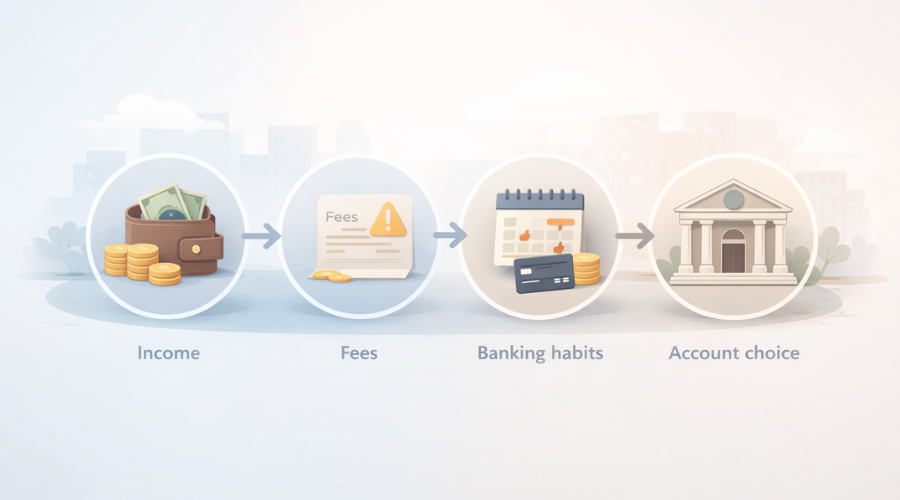
Choosing the right checking account type does not require financial expertise. It mostly requires asking the right practical questions about your own money habits and then matching them to the account rules.
Here’s a simple, realistic way Americans can compare checking account options.
Step 1: Know Your Monthly Cash Flow Pattern
Start with how money actually moves in and out of your account.
Ask yourself:
- Do I receive regular direct deposits every month?
- Does my balance usually stay above a certain amount, or does it fluctuate?
- Are there months where my account runs close to zero?
This matters because many accounts only stay free if you meet deposit or balance thresholds.
If your income varies or is seasonal, accounts with strict requirements can easily start charging fees.
Step 2: Identify How You Use Banking Services
Different account types reduce costs by limiting services.
Consider:
- Do I need to deposit cash regularly?
- Do I visit branches, or do I do everything by phone?
- How often do I withdraw cash from ATMs?
For example:
- Online-only accounts work well for digital users but may complicate cash deposits.
- Branch-based accounts are convenient for in-person help but often come with higher fees.
Matching access needs prevents frustration later.
Step 3: Review the Fee Disclosure Carefully
Every U.S. bank must provide a fee schedule, sometimes called a “Schedule of Fees” or “Account Disclosure.”
Focus on three areas:
| Fee Type | Why It Matters |
|---|---|
| Monthly maintenance fee | Ongoing cost if waiver conditions are missed |
| Overdraft and NSF fees | Can multiply quickly after small mistakes |
| ATM and transaction fees | Adds up with frequent cash use |
Also check:
- How to avoid the monthly fee
- Whether fee waivers are automatic or conditional
Never assume an account is low-cost without confirming these details.
Step 4: Check Upgrade and Downgrade Options
Many people don’t realize that banks often allow:
- Moving from student → standard → premium
- Switching from premium → basic when balances drop
Ask or look for:
- Are internal account changes allowed?
- Will my debit card and account number stay the same?
This flexibility matters when life circumstances change.
Step 5: Think About Risk, Not Just Features
Some accounts protect you from yourself better than others.
For example:
- Accounts that block overdrafts prevent negative balances
- Accounts with strict limits reduce impulse spending but may decline payments
There is no “right” level of control—only what fits your habits.
If overdrafts have been a problem in the past, accounts that decline transactions instead of allowing overdrafts may reduce future fees and stress.
Situational Examples: Matching Account Types to Real Life
These are not rules, just realistic matches based on common U.S. situations.
Example 1: Hourly worker with variable income
- Income fluctuates weekly
- Balance may dip below minimums
Best fit often includes:
- No-fee or low-fee checking
- Accounts without balance requirements
Why: Reduces risk of monthly fees during slower weeks.
Example 2: College student with part-time job
- Lower balances
- Primarily mobile banking
Best fit often includes:
- Student checking while eligible
- No-fee digital accounts after graduation
Why: Keeps banking costs near zero during early earning years.
Example 3: Household paying bills from one shared account
- Two incomes
- Regular outgoing payments
Best fit often includes:
- Joint checking with full bill-pay features
- Clear overdraft alerts and controls
Why: Simplifies shared expenses but requires strong monitoring.
Example 4: Person rebuilding banking access
- Past account closures
- Needs reliable payment access
Best fit often includes:
- Second-chance checking temporarily
- Planned upgrade after positive history
Why: Restores access while working toward lower-cost accounts.
Example 5: High-balance customer using many services
- Keeps large balances
- Uses loans or investments at same bank
Best fit often includes:
- Premium or relationship checking
Why: Benefits can offset fees when requirements are consistently met.
Why Account Names Can Be Misleading
Two accounts with the same name at different banks can be completely different in cost.
For example:
- “Free Checking” may still require direct deposit
- “Advantage Checking” could be premium at one bank and basic at another
Always compare:
- Fee structure
- Waiver rules
- Access limits
Not marketing labels.
Even after choosing the right account type, many people still have questions about how checking accounts really work in everyday situations
Frequently Asked Questions (FAQ)
-
Does the type of checking account affect my credit score?
No. Checking accounts are not reported to the major credit bureaus (Equifax, Experian, TransUnion), so opening, closing, or switching checking account types does not directly affect your credit score.
However, problems connected to checking accounts can affect credit indirectly:
– Missed loan or utility payments due to insufficient funds
– Accounts sent to collections for unpaid negative balancesSo while the account itself isn’t on your credit report, the consequences of account problems can be.
-
Can I change my checking account type without opening a new account?
Often, yes.
Many banks allow internal account conversions, meaning:
– You keep the same account number
– Your debit card and direct deposits may continue working
– Automatic payments usually stay activeNot all banks offer this for every account type, but it’s common for moves like:
– Student → standard
– Standard → premium
– Premium → standardIt’s usually worth asking before opening a brand-new account.
-
Is it okay to have more than one checking account?
Yes. There is no legal limit on how many checking accounts you can have.
Some people use multiple accounts to:
– Separate bills from spending money
– Manage shared expenses while keeping personal funds private
– Reduce overdraft risk by isolating certain transactionsThe main downside is keeping track of balances and avoiding fees on multiple accounts.
-
Are online-only checking accounts really safe?
They can be, as long as the institution is federally insured.
If the bank is FDIC-insured (or NCUA-insured for credit unions):
– Deposits are protected up to federal limits
– Consumer protection laws still applyThe difference is in service access, not safety:
– Fewer physical locations
– More reliance on digital supportAlways confirm insurance status before opening any account.
-
Why do some checking accounts still charge fees even with direct deposit?
Because fee waivers usually have specific conditions, such as:
– Minimum monthly deposit amount
– Deposit must be payroll or government benefits
– Deposits must occur every statement cycleIf deposits are late, reduced, or temporarily paused, the fee may apply that month.
Always check exactly what qualifies as a fee waiver.
-
What happens if my checking account is closed by the bank?
If a bank closes your account:
– Any remaining balance is usually sent by check
– Any negative balance remains owed to the bankIf the balance is not paid:
– The debt may go to collections
– The closure may be reported to account-screening systems used by other banksThat can make opening future accounts harder, sometimes for several years.
-
Do second-chance checking accounts eventually turn into regular accounts?
Often, yes—but it depends on the bank.
Many banks allow upgrades after:
– Several months of positive activity
– No overdrafts or negative balances
– Consistent depositsSome require completing a financial education program.
Second-chance accounts are designed as re-entry tools, not permanent solutions.
-
Should I choose an account based on overdraft protection?
Overdraft options should be a secondary factor, not the main reason for choosing an account.
Important points:
– Overdraft protection is not free
– Transfers from savings may still carry fees
– Some accounts simply decline transactions insteadFor many people, declined transactions are safer than fee-based overdrafts, especially if budgets are tight.
-
Can switching checking account types affect my automatic payments?
If you convert the account internally at the same bank, usually no.
If you open a brand-new account:
– You must update employers, billers, and subscriptions
– Old payments may fail if not transferred properlyThat’s why internal conversions are often easier when available.
-
Are joint checking accounts risky?
They can be, depending on the relationship and communication.
Legally:
– Either person can withdraw all funds
– Both are responsible for fees and overdraftsJoint accounts work best when:
– Spending rules are clearly discussed
– Both parties monitor balancesThey are financial partnerships, not just shared tools.
-
Do premium checking accounts help with loans or credit approval?
Not directly.
Having a premium account does not improve your credit score or guarantee loan approval.
However, long-term relationships with banks may offer:
– Faster customer service
– Access to certain bundled servicesLoan decisions are still based primarily on credit history, income, and debt levels, not checking account type.
Final Thoughts on Choosing a Checking Account Type

The best checking account is not the one with the most features—it’s the one that:
- Matches your income pattern
- Keeps fees predictable or eliminated
- Fits how you actually handle money
Life changes. Jobs change. Income changes. That means your ideal account type can also change, and reviewing it once in a while is part of healthy financial maintenance.
Disclaimer
This content is provided for educational and informational purposes only and is not intended as legal, tax, or financial advice. Banking rules, fees, and account features vary by institution and personal circumstances. Readers should consult a qualified financial professional or their bank directly before making financial decisions based on their individual situation.
