Opening a savings account in the U.S. is usually simple, but many people still feel unsure about where to start, what documents they need, and which type of account is actually right for them.
This guide is written for beginners and everyday Americans who want a clear, realistic understanding of how savings accounts work, how to open one step by step, and what rules, fees, and limitations apply after the account is active.
Instead of focusing on bank promotions or quick comparisons, this article explains the real-life process — from choosing the right setup to avoiding common mistakes that quietly cost people money over time.
Key Takeaways
- A savings account is meant for storing money safely while earning modest interest.
- Most Americans can open one online or in person in under 30 minutes.
- You’ll usually need basic identity and address verification, even for online accounts.
- Some accounts have minimum balance rules, withdrawal limits, and fees—these vary by bank.
- Opening the account is easy; choosing the right type of savings account matters just as much.
Why Opening a Savings Account Still Matters in Everyday American Life
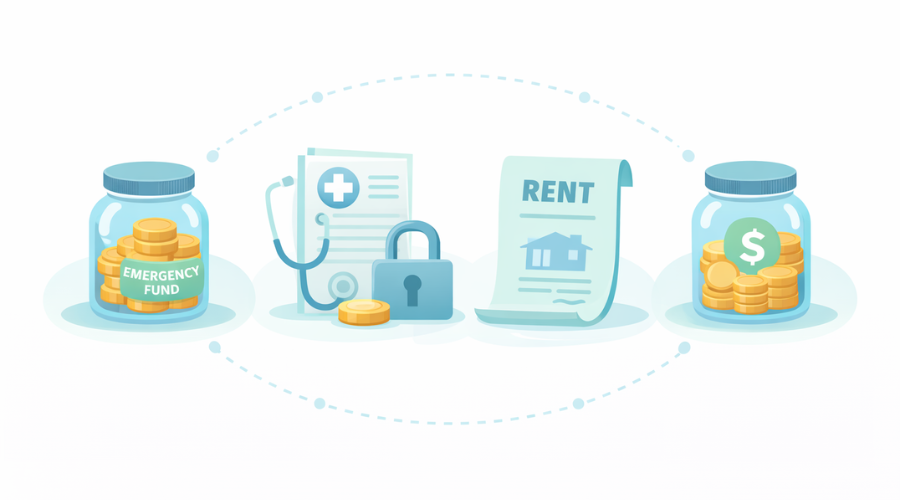
Even with digital wallets, payment apps, and investment platforms everywhere, most Americans still rely on a basic savings account to handle real-world money needs:
- emergency funds
- short-term goals like rent buffers or medical costs
- separating spending money from “do not touch” money
- receiving transfers and interest safely
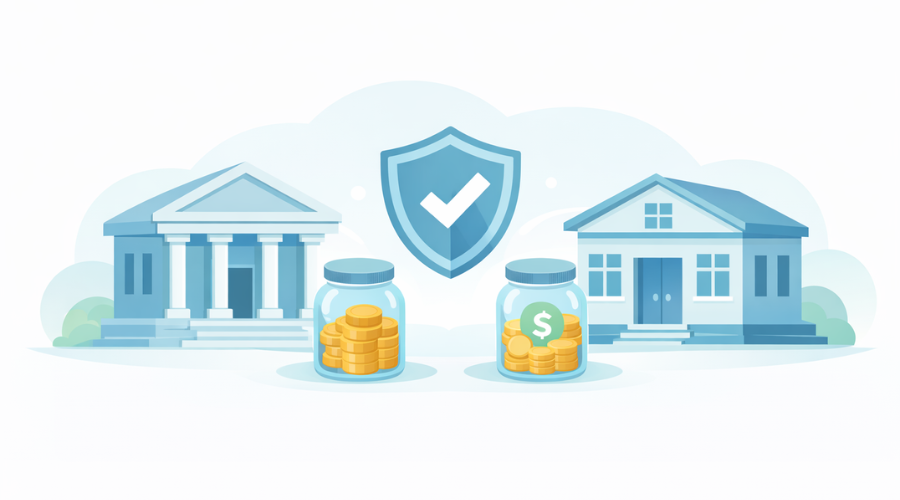
In the U.S., savings accounts are also one of the safest places to keep cash because federally insured banks and credit unions protect deposits if an institution fails.
A common problem is that people open a savings account quickly without understanding the rules attached to it—then later get surprised by fees, transfer limits, or low interest.
Another issue is confusion about whether they should open a savings account at the same bank as their checking account or choose a separate online bank with higher interest.
Opening a savings account is simple, but opening the right type of account—with the right bank, fee structure, and access rules—takes a little more thought. That’s what this guide focuses on.
Who Should Open a Savings Account—and Who Might Not Need One Yet
People who usually benefit from a savings account
A savings account makes sense for most adults in the U.S., especially if you:
- want to build an emergency fund
- are saving for near-term goals (3–24 months)
- need a safe place to hold cash separate from daily spending
- receive income that you don’t want sitting in checking
It is also commonly used by:
- students
- first-time workers
- families managing household reserves
- retirees holding short-term cash
Situations where a savings account may not be the main tool
A basic savings account may not be ideal if:
- your goal is long-term investing (retirement, wealth growth)
- you already keep most cash in money market or investment accounts
- you frequently need to move large amounts in and out each month
In those cases, a savings account still plays a role, but usually as a temporary holding place, not the main financial strategy.
How Savings Accounts Work in the U.S. (Operational Basics)
Understanding how savings accounts function helps avoid many beginner mistakes later.
Where the money is held
Savings accounts are offered by:
- banks
- credit unions
- online-only financial institutions
When the institution is federally insured:
- banks are insured by FDIC
- credit unions are insured by the National Credit Union Administration (NCUA)
That insurance protects deposits up to $250,000 per depositor, per institution, per ownership category (current federal limit).
This insurance applies whether you open the account online or in person.
Insurance coverage protects your deposit amount, not the interest rate or the future value of your money.
Interest earnings are modest and variable
Savings accounts earn interest, but:
- rates can change at any time
- they usually follow broader Federal Reserve rate trends
- traditional banks often offer lower rates than online banks
Interest is typically:
- calculated daily
- paid monthly
The earned interest is taxable income at the federal level and may be taxable by your state, depending on state tax laws.
Access to money is intentionally limited
Savings accounts are designed to reduce frequent spending.
Most institutions:
- limit certain types of withdrawals or transfers
- may charge fees for excessive transactions
- do not provide unlimited debit card access
While federal rules limiting withdrawals were relaxed in 2020, many banks still enforce their own limits for account management and cost control.
This is why savings accounts are best used for storing money, not daily payments.
Before You Open an Account: Important Choices That Affect You Later
Opening the account itself is easy.
Choosing the wrong setup can create problems that last for years. Most problems people face with savings accounts are not caused by the bank—they are caused by choosing the wrong account for their own habits.
Same bank as checking vs separate bank
Many people open savings at the same bank as their checking account because:
- transfers are instant
- apps and statements are centralized
- account management is simpler
Others prefer a separate bank because:
- online banks often pay higher interest
- it creates a psychological barrier to spending savings
There is no universal “correct” option.
The better choice depends on how disciplined you are with transfers and spending.
Minimum balance and fee structures
Some savings accounts require:
- a minimum opening deposit
- a minimum daily or monthly balance
- activity requirements to avoid monthly fees
Others offer:
- no minimums
- no monthly maintenance fees
Failing to meet balance requirements is one of the most common reasons people lose money through avoidable bank fees.
Joint vs individual ownership
You can open a savings account as:
- an individual owner
- a joint owner (commonly spouses or family members)
Joint accounts allow both people to:
- deposit
- withdraw
- manage funds
But they also mean both parties have full legal access to the money, which matters in disputes, debts, or relationship changes.
Step-By-Step: How Opening a Savings Account Usually Works
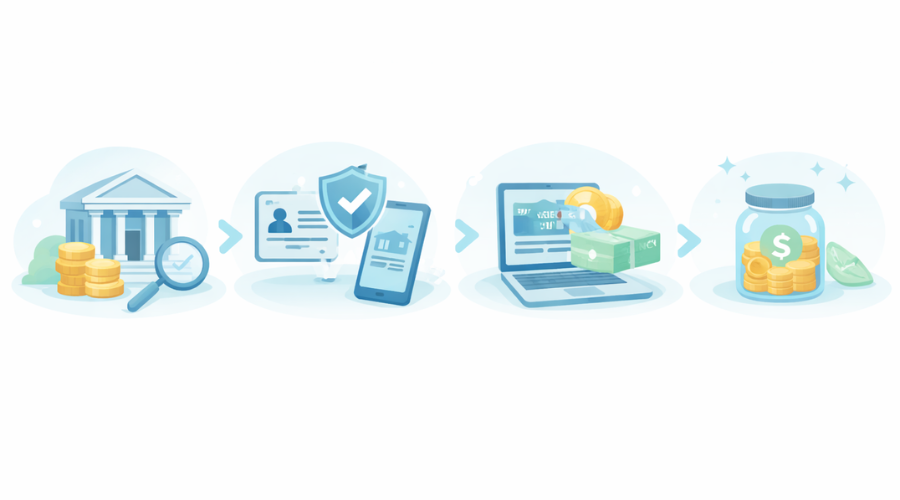
Most people can complete the full process in under 30 minutes if they already have their documents and funding source ready.
While details vary by institution, the overall process follows a similar pattern across the U.S.
Step 1: Choose the type of institution
You start by selecting:
- a traditional bank branch
- a credit union
- an online-only bank
Each option affects:
- interest rates
- customer support access
- physical branch availability
Step 2: Complete identity verification
U.S. financial institutions are legally required to verify identity under federal banking regulations.
This usually involves:
- government-issued photo ID
- personal identifying information
- address verification
Even fully online banks must perform this step.
If verification fails or information does not match public records, the application may be delayed or denied until corrected.
Step 3: Fund the account
Most banks require an initial deposit to activate the account.
Funding methods may include:
- transfer from another bank account
- debit card
- check deposit
- cash deposit (branch only)
Some online banks require external bank linking, which can take 1–3 business days to verify.
Step 4: Account approval and access setup
Once approved, you receive:
- account number
- online banking credentials
- access to statements and transfers
At this point, the savings account is fully active and usable.
Documents and Information You’ll Usually Need to Open a Savings Account
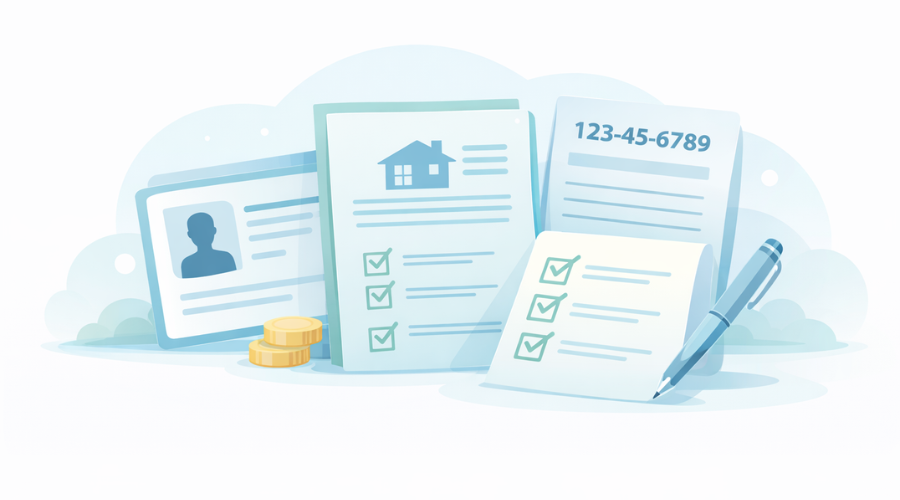
U.S. banks and credit unions must follow federal identity verification laws. Because of this, every applicant must provide certain information, whether the account is opened online or in person.
Exact requirements can vary by institution, but the categories below are standard across most of the U.S. banking system.
Government-issued photo identification
Most banks accept:
- state driver’s license
- state ID card
- U.S. passport
- permanent resident card (for non-citizens)
The ID must be:
- current (not expired)
- readable and verifiable
If the name on your ID does not match your application exactly, the bank may pause the process until the mismatch is resolved.
Social Security Number (SSN) or Individual Taxpayer Identification Number (ITIN)
Banks use this to:
- report interest to the IRS
- comply with federal customer identification laws
Most U.S. citizens use an SSN.
Many non-citizens legally use an ITIN instead.
Without one of these, most banks cannot open a standard savings account, even if you have valid photo ID.
Some community banks or credit unions may offer limited exceptions, but this is not common and usually requires visiting a branch in person.
Proof of U.S. address
Banks need to verify where you live for regulatory and fraud-prevention purposes.
Accepted documents may include:
- utility bills
- lease agreements
- official government mail
- bank or credit card statements
Some online banks rely on electronic databases instead of documents, but they still require a valid U.S. residential address. If database verification fails, the bank may still ask you to upload address documents manually.
P.O. boxes usually cannot be used as your primary address.
Contact information
You will be asked for:
- phone number
- email address
These are used for:
- security alerts
- account verification
- customer service contact
Incorrect or unreachable contact details can block account approval or future access recovery.
Special Situations: When the Process Is Slightly Different
Not everyone fits into the standard adult-with-SSN category. Here’s how banks usually handle common exceptions.
Students and young adults
Students generally need the same documents as other adults.
Some banks offer:
- lower minimum balances
- fee waivers
But identity and tax reporting rules do not change just because someone is a student.
Minors (children and teenagers)
Minors usually cannot open savings accounts alone.
Common structures include:
- joint accounts with a parent or guardian
- custodial accounts controlled by an adult
The adult typically provides:
- their own ID
- the child’s birth certificate or SSN
Ownership and access rules differ depending on the account type and state law.
Non-U.S. citizens and recent immigrants
Many banks allow non-citizens to open savings accounts if they provide:
- valid passport or immigration documents
- ITIN or SSN
- proof of U.S. address
However:
- acceptance policies vary by institution
- some banks have stricter internal rules
If online verification fails, visiting a branch in person often improves approval chances.
Joint account holders
Each person listed on a joint savings account must:
- submit their own ID
- provide their own SSN or ITIN
- complete identity verification
One person cannot legally open a joint account on behalf of someone else without their participation.
Common Problems That Delay or Block Account Approval
Most applications are approved quickly, but issues do happen. Knowing them in advance helps avoid frustration.
Mismatched personal information
Examples include:
- name spelling differences
- outdated addresses
- incorrect birth dates
Banks match your data against national databases.
Even small errors can trigger manual review. Manual reviews can delay approval by several days, especially with online-only banks.
Credit history is usually NOT the problem
This surprises many first-time applicants, but savings accounts are not credit products and usually do not involve credit scoring.
For standard savings accounts:
- banks typically do not check credit scores
- poor credit alone rarely blocks approval
However, some institutions check banking history systems that track:
- unpaid bank fees
- past account closures due to misuse
If you were previously flagged for severe banking problems, approval may be harder at some banks.
Funding failures
Applications may be delayed if:
- linked bank verification fails
- initial deposit does not clear
- debit card authorization fails
Until the first deposit is successfully processed, many banks will not activate the account.
What Happens Right After Your Savings Account Is Opened
Once the account becomes active, a few things start immediately that many people don’t think about.
Interest tracking begins
Interest starts accruing as soon as money is deposited, even if:
- you don’t see it credited yet
- the monthly statement hasn’t posted
You’ll typically see interest added once per month.
Transaction limits and fees apply immediately
If your account has:
- withdrawal limits
- balance requirements
- monthly maintenance fees
those rules apply from day one.
Missing a minimum balance in the first month can still trigger fees.
IRS reporting begins automatically
Banks are required to:
- track interest earned
- issue Form 1099-INT when required
Even small amounts of interest are still technically taxable income under federal law.
Smart Setup Steps Many People Skip (But Shouldn’t)
After opening the account, taking a few extra minutes can prevent future problems.
Enable alerts
Set up notifications for:
- low balances
- large withdrawals
- login attempts
This helps catch fraud or mistakes early. Many banks also allow you to temporarily lock transfers if you notice suspicious activity.
Link your checking account properly
Make sure transfers:
- move in the correct direction
- do not trigger fees
- post within expected timelines
Testing a small transfer first avoids accidental overdrafts elsewhere.
Name your savings goals (if your bank allows it)
Some banks allow you to label funds like:
- emergency fund
- travel savings
- rent buffer
While this doesn’t change the account legally, it improves budgeting behavior and reduces accidental spending.
Fees, Limits, and Rules That Can Quietly Cost You Money
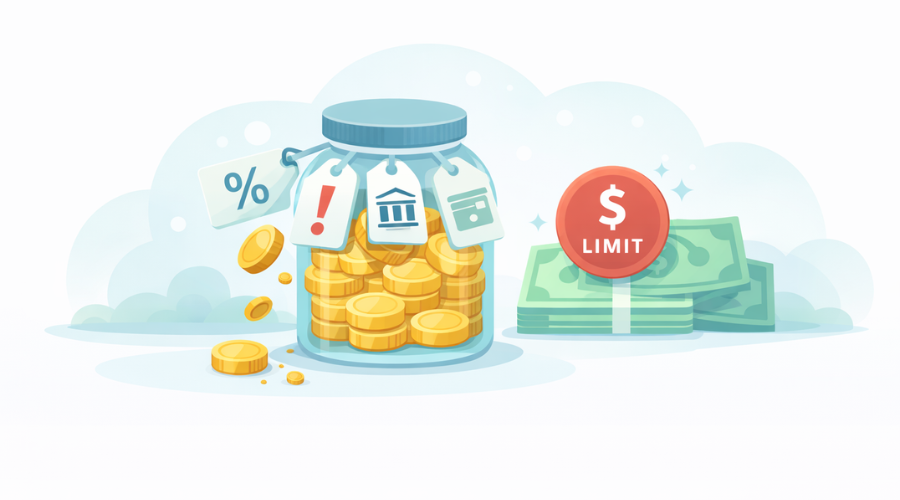
Many people assume savings accounts are “free by default.”
In reality, costs usually come from how the account is used, not from opening it.
Understanding these rules protects your balance over time.
Common fees attached to savings accounts
Not every account has these, but many do.
| Fee Type | What Triggers It | Why It Exists |
|---|---|---|
| Monthly maintenance fee | Balance below required minimum or missing activity requirements | Covers account servicing costs |
| Excess withdrawal fee | Too many transfers or withdrawals in one month | Discourages frequent transactions |
| Paper statement fee | Receiving mailed statements | Reduces mailing costs |
| Inactivity fee | No account activity for long periods | Administrative maintenance |
| Account closure fee | Closing soon after opening | Recovers onboarding costs |
Some banks waive fees if you meet conditions like:
- minimum daily balance
- direct deposit into checking (linked accounts)
- student or youth status
Fee structures vary widely by institution and can change with notice. Always check the bank’s fee schedule before opening an account, especially if you plan to keep a low balance.
Withdrawal and transfer limits: what really applies today
Federal Regulation D once limited savings accounts to six certain withdrawals per month.
That federal limit was removed in 2020.
However:
- many banks still enforce their own limits
- limits may apply to online transfers, phone transfers, or checks
- ATM withdrawals may or may not count, depending on the bank
If you exceed your bank’s limits, they may:
- charge per-transaction fees
- convert your savings account into a checking account
- close the account in repeated cases
This is one reason savings accounts should not be used like spending accounts.
How fast can you actually access your money?
Access depends on where your savings account is held.
At the same bank as your checking account:
- transfers are often instant or same-day
At a different bank:
- ACH transfers usually take 1–3 business days
Cash access:
- only available at physical branches
- online-only banks require transfers first
For emergency funds, transfer speed matters just as much as interest rate. This is why many people keep emergency savings at the same bank as their checking account, even if the interest rate is slightly lower.
How a Savings Account Affects Your Bigger Financial Picture
Savings accounts play a specific role in personal finance.
They are not designed for growth — they are designed for stability and liquidity.
Impact on your credit score
Savings accounts:
- do not appear on credit reports
- do not build or hurt credit scores
They are invisible to credit bureaus unless tied to fraud investigations or legal actions.
To build credit, separate tools like credit cards or loans are required.
Tax considerations most people overlook
Interest earned in savings accounts is:
- taxable at the federal level
- usually taxable by states (state rules vary)
Even if:
- the amount is small
- you do not receive a tax form due to low earnings
Legally, all interest income should be reported. This applies even if your bank does not issue a tax form due to low interest amounts.
Banks issue Form 1099-INT when interest crosses reporting thresholds, but tax responsibility exists regardless of form delivery.
Inflation and real purchasing power
Savings accounts protect your money from loss, not from inflation.
When inflation exceeds savings interest rates:
- your money remains safe
- but its buying power slowly declines
This is why savings accounts are best for:
- emergency reserves
- short-term goals
They are not designed to build long-term wealth.
Common Mistakes First-Time Savers Make
These errors happen often and usually come from misunderstanding how savings accounts are meant to work.
Treating savings like a backup checking account
Frequent transfers for daily spending can lead to:
- withdrawal fees
- account reclassification
- confusion about real savings levels
Savings should be treated as deliberately less accessible money. Using savings for everyday spending often defeats the purpose of having an emergency fund.
Ignoring fee rules after opening
Many people:
- meet minimum balances only during opening month
- forget fee conditions afterward
Over time, small monthly fees quietly reduce balances, especially for low-balance savers.
Chasing interest while ignoring access
High-interest accounts are helpful, but:
- slow transfer times can delay emergency access
- complicated verification can block fast withdrawals
Liquidity matters just as much as yield for emergency funds.
Not reviewing account terms annually
Banks may change:
- fees
- minimum balances
- withdrawal rules
Reviewing terms once a year prevents surprises.
Savings Account vs Other Short-Term Storage Options (Quick Comparison)
Savings accounts are not the only place people hold cash.
Here’s how they generally compare to similar low-risk options.
| Feature | Savings Account | Money Market Account | Checking Account |
|---|---|---|---|
| Primary purpose | Store money safely | Store + slightly higher yield | Daily spending |
| Interest | Low to moderate | Usually moderate | Very low or none |
| Withdrawal limits | Often yes | Often yes | No |
| Debit card access | Rare or limited | Sometimes | Yes |
| Best for | Emergency funds, short-term goals | Larger cash balances | Bills and purchases |
Each serves a different role in money management.
Many households use more than one at the same time.
When a Savings Account Is Not Enough on Its Own

Savings accounts are reliable and simple, but they are not designed to solve every financial goal.
Knowing their limits helps you use them correctly — and avoid unrealistic expectations.
Long-term goals usually need different tools
If your goal is more than a few years away, such as:
- retirement
- long-term education planning
- building wealth over decades
a basic savings account is usually not the right place for that money.
Why?
- interest is typically low
- inflation can reduce real value over time
- there is no compounding growth like investments provide
Savings accounts are best used as stability tools, not growth engines. For long-term goals, tools like retirement accounts or diversified investments are usually more suitable.
Very large cash balances may need different structure
If someone holds large amounts of cash for short-term reasons (for example, preparing for a home purchase), they may consider:
- multiple insured accounts to stay under insurance limits
- accounts with better short-term yields
- structured cash management systems
However, for most everyday Americans, standard savings accounts are sufficient for emergency and short-term planning needs. Keeping very large balances at one bank can also cross insurance limits, so account structure matters when balances grow.
Business funds should not go into personal savings accounts
Mixing personal and business money can create:
- tax reporting problems
- accounting confusion
- legal issues for business owners
Businesses typically need separate business banking accounts, even for simple savings purposes.
How Much Money Should Stay in a Savings Account?
There is no single dollar amount that fits everyone, but there is a widely accepted planning framework.
Emergency fund baseline
Many financial planners suggest keeping enough cash to cover:
- 3 to 6 months of essential expenses
This usually includes:
- housing
- utilities
- food
- insurance
- minimum debt payments
The exact amount depends on:
- job stability
- household size
- health considerations
- income predictability
People with unstable income or higher medical risk often keep larger emergency reserves.
Savings accounts are commonly used to hold this emergency reserve because the money must be:
- safe
- quickly accessible
- not tied to market risk
Short-term goals and sinking funds
Savings accounts also work well for goals like:
- vacation planning
- annual insurance premiums
- property tax payments
- car repairs
Some people use multiple labeled savings “buckets” if their bank allows sub-accounts or goal tracking.
This helps separate:
- emergency money
- planned spending money
without needing multiple banks.
What usually should NOT sit in savings
Money that is intended for:
- long-term investing
- retirement
- college decades away
is typically better placed in accounts designed for growth, not basic savings.
Savings accounts protect capital, not purchasing power. Over long periods, this can reduce what your money can actually buy.
Myths vs Facts About Savings Accounts
Misinformation leads many people to either misuse savings accounts or avoid them unnecessarily.
Myth: Savings accounts build your credit
Fact: Savings accounts are not reported to credit bureaus and do not affect credit scores.
Only credit-based products influence credit history.
Myth: All savings accounts have the same rules
Fact: Fee structures, withdrawal limits, and interest rates vary significantly by institution.
Two savings accounts can function very differently even if they look similar on the surface.
Myth: You can withdraw money anytime with no limits
Fact: While federal limits were removed, many banks still impose their own restrictions and fees.
Account agreements, not federal law, usually control real-world access today.
Myth: Small balances don’t matter
Fact: Low balances are often the most vulnerable to:
- monthly fees
- inactivity penalties
Fee impact is usually worse for people with less money, not more.
Beginner Misunderstandings That Cause Problems Later
These are not technical mistakes — they are planning mistakes.
Assuming savings means “unused money”
Savings is not leftover money.
It is deliberately assigned money for future needs.
Without purpose, savings is often spent impulsively.
Confusing availability with affordability
Just because money is accessible does not mean it should be used.
Savings accounts create safety nets, not spending permission.
Ignoring paperwork and records
Savings accounts generate:
- statements
- interest records
- tax documents
Keeping access to these records matters for:
- tax filing
- financial aid applications
- loan approvals
How This Guide Fits With Other Banking Topics on This Site
On most financial education sites, these topics are explained in separate detailed guides, such as:
- what savings accounts are
- checking vs savings
- documents for opening accounts
- how checking accounts work
this article focuses on:
- the opening process itself
- practical setup decisions
- real-life usage rules and risks
This makes it ideal for internal linking from:
- savings account definition articles
- beginner banking guides
- financial planning starters
without duplicating explanations.
Frequently Asked Questions About Opening a Savings Account in the U.S.
These are real, practical questions many Americans search for when opening or managing their first savings account.
-
Can I open a savings account completely online?
Yes, many U.S. banks and credit unions allow full online applications.
You can usually:
– submit personal information
– upload or verify ID electronically
– link another bank account for fundingHowever, online approval can fail if:
– identity databases cannot verify you
– address records don’t match
– documents are unclearIf that happens, visiting a branch (if available) often resolves the issue faster.
-
How long does it take for a savings account to become active?
It depends on verification and funding.
Typical timelines:
– Same day: if identity and funding are instantly verified
– 1–3 business days: if bank-to-bank verification is required
– Longer: if manual document review is neededSome banks allow you to log in immediately but restrict withdrawals until verification fully clears.
-
Can I open a savings account with very little money?
Many banks allow accounts with:
– no minimum opening deposit
– very small initial depositsHowever, you must still watch for:
– minimum balance rules
– monthly fees that apply after openingLow opening deposits do not always mean low ongoing requirements.
-
Can I have multiple savings accounts?
Yes. Most people are allowed to hold:
– multiple savings accounts at the same bank
– savings accounts at different institutionsPeople often use multiple accounts to separate goals, such as:
– emergency funds
– vacation savings
– bill reservesEach account still has its own rules and insurance limits.
-
Is my money really safe in a savings account?
If the institution is federally insured and your balance stays within coverage limits, deposits are protected against bank failure.
Coverage is provided by:
– FDIC for banks
– NCUA for credit unionsThis protection does not apply to:
– investment accounts
– uninsured financial platformsInsurance protects your deposit, not your interest rate or purchasing power. It also does not protect against scams if you personally authorize fraudulent transfers.
-
Can banks freeze or close my savings account?
Yes, but usually only for specific reasons, such as:
– suspected fraud
– identity verification problems
– legal orders (such as court judgments)Banks can also close accounts for repeated rule violations, like excessive transactions or unpaid fees.
Most closures come with notice, but emergency freezes can happen during investigations.
-
Can I open a savings account if I’m unemployed?
Employment is usually not required to open a savings account.
Banks focus on:
– identity verification
– legal complianceHowever, funding the account still requires some source of money, and fee rules still apply regardless of employment status.
-
Do savings accounts work for children?
Children usually need:
– a parent or legal guardian as joint owner or custodian
The adult controls the account until the child reaches the bank’s age threshold, which varies by state and institution.
These accounts are commonly used to:
– teach saving habits
– store gift money
– build early financial structureOwnership rules matter legally, especially for tax and withdrawal control.
-
What happens if I want to switch banks later?
You can close or move savings accounts at any time, but you should:
– Transfer funds first
– Confirm all transactions have cleared
– Download past statements
– Close the old account formallyMake sure no automatic transfers or deposits are still linked to the old account.
Some banks charge early closure fees if the account is closed soon after opening, so timing matters.
-
Will opening a savings account affect government benefits or financial aid?
Savings balances may affect:
– needs-based financial aid
– some government assistance programs
– Rules vary by program and state.The account itself is not the issue — the amount of money held may matter for eligibility.
Anyone receiving benefits should check program asset limits before building large balances.
-
Is it better to open savings and checking together?
Some banks encourage opening both at the same time, but it is not required.
Opening together can provide:
– easier transfers
– bundled fee waiversOpening separately may offer:
– more flexibility in choosing institutions
– better interest options for savingsThe best option depends on how you manage money, not on convenience alone.
Final Notes Before the Disclaimer
Opening a savings account is one of the simplest financial actions most Americans take — but how that account is used over time matters more than how quickly it is opened.
When used properly, a savings account supports:
- financial stability
- emergency preparedness
- short-term planning
When misunderstood, it can quietly lose money through:
- fees
- poor access timing
- unrealistic expectations about growth
Understanding both sides is what makes this tool work for you instead of against you.
Disclaimer
This content is provided for educational and informational purposes only and is not intended as legal, tax, or financial advice.
Banking rules, fees, tax treatment, and eligibility requirements can vary by:
- financial institution
- state law
- individual financial circumstances
Readers should consult a qualified financial advisor, tax professional, or banking representative before making personal financial decisions.
