Key Takeaways
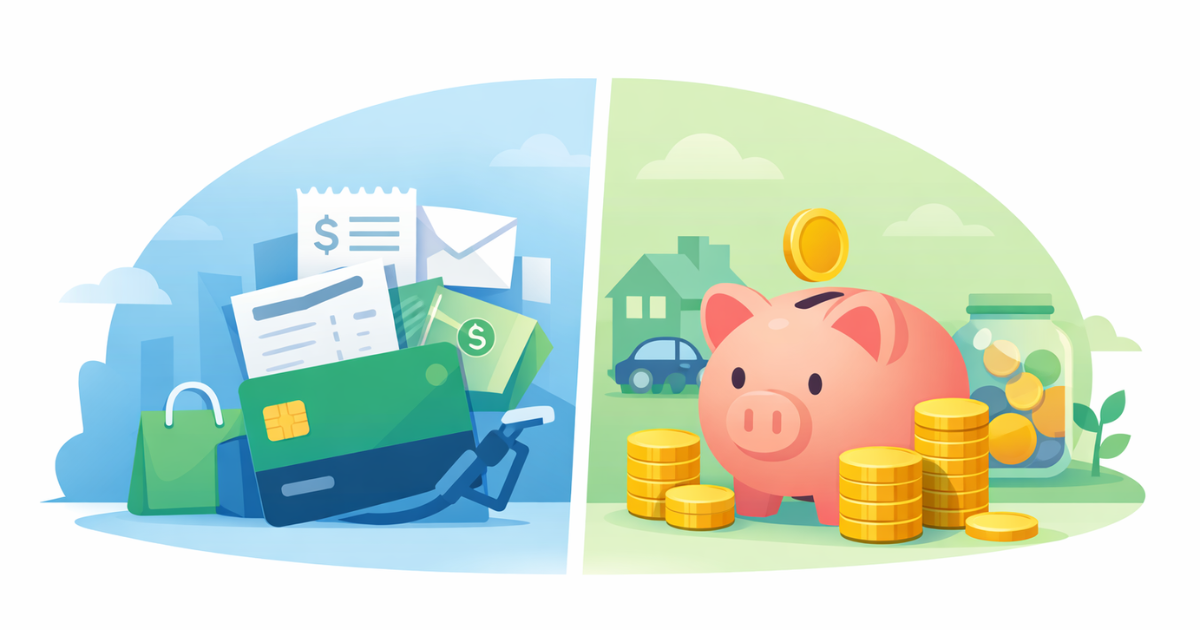
- Checking accounts are built for everyday spending and bill payments.
- Savings accounts are designed for holding money you don’t plan to spend right away.
- Most Americans benefit from having both, each used for a different purpose.
- Using the wrong account can lead to unnecessary fees, missed interest, or spending money meant for savings.
- Account rules, fees, and features vary by bank and credit union, so details always matter.
Why This Choice Matters in Real Life
For most people, money comes in, money goes out, and whatever is left is supposed to grow or at least stay safe. That sounds simple, but many financial problems start with using the wrong type of account for the wrong job.
Some people keep all their money in checking and wonder why nothing grows. Others put too much in savings and get frustrated when they can’t easily pay bills. Many aren’t sure why banks even separate these accounts in the first place. This is why many people search online for “checking vs savings account difference,” even though the two accounts serve very different financial purposes.
Understanding the difference is not just about banking terms. It directly affects:
- How easily you can pay for daily expenses
- Whether your savings actually stay untouched
- How much interest you earn (or don’t)
- Whether you get hit with avoidable fees
In the U.S. banking system, checking and savings accounts are built for two very different behaviors, and using each correctly makes everyday money management much easier.
What Is a Checking Account?
A checking account is designed for frequent transactions and easy daily access to your money.
This is typically the account used for:
- Paycheck direct deposits
- Debit card purchases
- Paying rent, utilities, and subscriptions
- Writing checks (if the bank provides them)
- ATM withdrawals
How Checking Accounts Work in the U.S.
When money is in a checking account, the bank expects that you may:
- Spend from it daily
- Transfer money often
- Make multiple withdrawals and payments
Because of that, checking accounts are built with:
- Unlimited or very high transaction limits
- Easy access through debit cards and online payments
- Lower (or zero) interest earnings in most cases
Many checking accounts earn little to no interest, especially at large traditional banks. Some online banks do offer interest-bearing checking accounts, but the rates are usually still lower than savings accounts and often require conditions like minimum balances or debit card usage.
Typical Features of Checking Accounts
| Feature | Common Situation |
|---|---|
| Debit card | Almost always included |
| ATM access | Yes, often nationwide networks |
| Checks | Often available |
| Interest | Usually none or very low |
| Monthly fees | Possible, often waived with conditions |
| Transaction limits | Usually none |
What Checking Accounts Are Best For
Checking accounts work best for money you plan to:
- Spend soon
- Use for bills and everyday purchases
- Access frequently
In simple terms: this is your “spending hub.”
What Is a Savings Account?
A savings account is meant for storing money you want to keep, not constantly use. Its main purpose is to help you separate money meant for future needs from money meant for everyday spending.
This is typically where people keep:
- Emergency funds
- Short-term goals (like vacations or car repairs)
- Extra cash they don’t need this month
How Savings Accounts Work in the U.S.
Savings accounts are structured to:
- Encourage holding money rather than spending it
- Pay interest on balances
- Limit how often you move money out (depending on bank rules)
Historically, U.S. federal rules limited certain types of withdrawals from savings accounts to six per month. While federal enforcement of that limit was relaxed in 2020, many banks still impose their own transfer limits and fees, so practical restrictions still exist at many institutions.
Typical Features of Savings Accounts
| Feature | Common Situation |
|---|---|
| Debit card | Rare or limited |
| ATM access | Sometimes, often limited |
| Checks | Usually not |
| Interest | Yes, higher than checking |
| Monthly fees | Possible, often waived with minimum balance |
| Transaction limits | Often limited by bank policy |
What Savings Accounts Are Best For
Savings accounts work best for money you:
- Want to protect from daily spending
- Are setting aside for future needs
- Want to earn interest on
In simple terms: this is your “hold and grow” account.
Why Banks Separate Checking and Savings Accounts
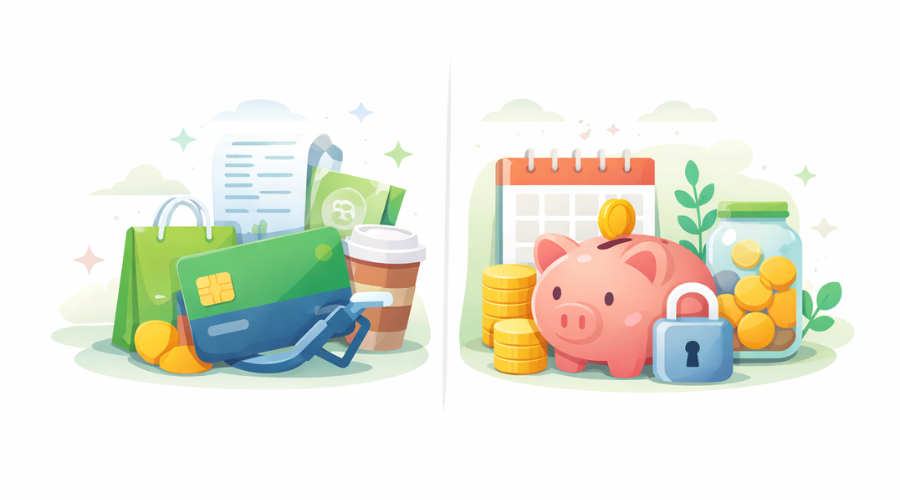
Banks separate these accounts because they are designed around different customer behaviors.
| Purpose | Checking | Savings |
|---|---|---|
| Daily spending | ✔ Yes | ❌ Not ideal |
| Long-term holding | ❌ Not ideal | ✔ Yes |
| Frequent transactions | ✔ Designed for it | ⚠ Often limited |
| Interest earning | ❌ Low or none | ✔ Primary feature |
From a banking system perspective:
- Checking accounts are part of the payment system
- Savings accounts are part of deposit and reserve management
That separation affects how banks manage risk, liquidity, and interest payments, which is why the rules and features are different.
For consumers, the separation is helpful when used correctly—but confusing when everything is mixed into one account.
Common Mistake: Using Only One Account for Everything
Many people start out with just one account, usually checking, and keep all their money there. This often leads to:
- Spending money that was meant for savings
- No interest earned on idle cash
- Difficulty tracking what is truly “available to spend”
On the other hand, trying to use only a savings account for daily life can lead to:
- Transfer limits or fees
- Delays in accessing money
- Problems with merchants that require debit card access
This is why most financial systems, payroll setups, and budgeting methods in the U.S. assume that people use both types of accounts together.
Real-Life Example: How the Two Accounts Work Together
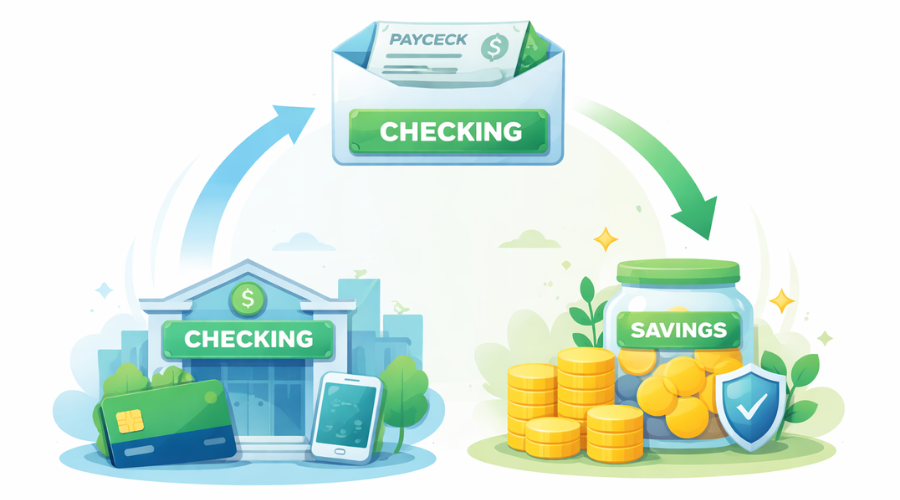
Imagine someone gets paid $3,000 per month.
A common setup looks like this:
- Paycheck deposits into checking
- Bills and daily spending come from checking
- A set amount (for example, $500) is transferred to savings
- Savings stays untouched except for emergencies or planned expenses
This setup:
- Keeps spending money separate from savings
- Makes budgeting easier
- Reduces the chance of accidentally spending emergency funds
The accounts work as a system, not as competitors.
Who Should Use a Checking Account — and How Much Should You Keep in It?
Almost everyone who earns, spends, or pays bills in the U.S. needs a checking account. It is the backbone of modern personal finance because most payment systems — including employers, landlords, and bill-pay services — are designed to work directly with checking accounts, not savings.
People Who Strongly Benefit From a Checking Account
A checking account is essential if you:
- Receive pay by direct deposit
- Pay rent or mortgage electronically
- Use debit cards for groceries, gas, or online purchases
- Pay utilities, phone bills, insurance, or subscriptions
- Send or receive peer-to-peer payments linked to bank accounts
- Receive tax refunds or government benefits by direct deposit
Many employers, landlords, and service providers require a checking account or at least make it far easier to manage payments if you have one.
Situations Where a Checking Balance Should Stay Low
Even though checking is necessary, keeping too much money in it is usually not ideal. Checking accounts are built for movement, not long-term storage of cash.
Reasons to limit large balances in checking include:
- Low or no interest earnings
- Higher risk of spending money meant for goals
- Greater exposure if a debit card is compromised
For most households, checking works best when it holds:
- About one month of normal spending
- A small buffer for timing differences between bills and paychecks
👉 And keep this line after list:
Money that is not needed soon generally fits better in savings.
Who Should Use a Savings Account — and When It Matters Most
A savings account is essential for financial stability, not just for future plans or big purchases.
People Who Benefit Most From Having Savings
A savings account is critical if you:
- Do not have stable income every month
- Have no emergency fund yet
- Expect irregular expenses (medical, car repairs, home repairs)
- Are saving for specific short-term goals
Without savings, even small financial shocks can force people to rely on:
- Credit cards
- Payday loans
- Borrowing from family
Those options usually cost far more in the long run than slowly building savings.
How Much Should Typically Be in Savings?
There is no universal number, but many U.S. financial educators and government agencies commonly suggest building toward three to six months of essential expenses for emergencies.
This is a guideline, not a rule. The right amount depends on:
- Job stability
- Household size
- Health risks
- Access to other support
Even small amounts matter. Having $500 set aside can already prevent many short-term crises.
When You Might Need More Than One Savings Account
Some people find it easier to manage money when they separate savings by purpose.
Examples include:
- Emergency fund savings
- Vacation savings
- Home repair savings
- Car replacement savings
Many banks and credit unions allow multiple savings accounts or offer internal “buckets” or “sub-accounts” that separate goals without opening new accounts.
This method can:
- Reduce accidental spending of emergency funds
- Make progress toward goals more visible
- Simplify budgeting decisions
However, it only helps if the system stays simple and easy to manage. Too many separate accounts can become confusing and may lead to missed transfers or forgotten balances.
Special Cases: Students, Seniors, and Joint Accounts
Students
Students often use checking accounts for:
- Part-time job income
- Financial aid refunds
- Daily expenses
Savings can still be useful, even with small balances, especially for:
- Book expenses
- Emergency travel
- Medical co-pays
Many banks offer student checking accounts with lower fees, but the basic purpose of checking and savings remains the same.
Seniors and Retirees
Retirees may rely on checking for:
- Social Security deposits
- Pension income
- Monthly expenses
Savings accounts are often used for:
- Medical costs
- Large irregular expenses
- Preserving cash that should not be spent casually
Some retirees also use savings to hold money that will later be invested or moved into other income-producing accounts.
Joint Accounts
Couples and families often use:
- A joint checking account for shared bills
- Individual or joint savings for household goals
Clear separation helps avoid confusion about what money is available to spend versus what is meant for future needs.
Pros and Cons: Checking vs. Savings Accounts
Here is a side-by-side view of the practical trade-offs.
| Feature | Checking Account | Savings Account |
|---|---|---|
| Best use | Daily spending | Storing money |
| Access speed | Immediate | Usually quick, sometimes limited |
| Debit card | Yes | Rare or restricted |
| Interest | Very low or none | Higher |
| Transaction limits | Usually none | Often limited by bank |
| Helps control spending | ❌ | ✔ |
| Suitable for bills | ✔ | ❌ |
Important Trade-Off to Understand
Using only checking is convenient but often leads to higher spending and lower savings. Using only savings protects money but makes everyday payments harder and less reliable. The system works best when each account is used for its intended role.
How These Accounts Affect Long-Term Financial Health
While neither checking nor savings alone builds wealth, how you use them affects every later financial step.
Relationship to Credit and Debt
Savings reduces the need to use:
- Credit cards for emergencies
- High-interest short-term loans
That indirectly protects your credit score by reducing:
- High balances
- Missed payments caused by cash shortages
Checking accounts, when overdrawn frequently, can lead to:
- Overdraft fees
- Account closures
- Difficulty opening new bank accounts
So even though checking and savings do not appear on credit reports, they strongly influence financial behavior that does affect credit.
Relationship to Investing
Savings accounts are not meant to replace investing, but they serve as:
- A safety net that allows long-term investments to stay untouched
- A place to hold money before planned investments
Without savings, people are more likely to pull money out of investments during emergencies, which can damage long-term growth.
Common Myths and Misunderstandings
Myth: “Savings accounts are only for rich people.”
Fact: Savings accounts are most important for people with tight budgets, because emergencies hit harder when there is no buffer.
Myth: “Checking is safer because I can see and use the money.”
Fact: Both accounts are usually protected by FDIC or NCUA insurance up to legal limits when held at insured institutions. Safety depends on the bank, not the account type.
Myth: “I don’t earn enough to save, so savings doesn’t matter.”
Fact: Even small, regular amounts can reduce reliance on debt and improve financial stability over time.
Myth: “If my bank allows unlimited transfers, savings works like checking.”
Fact: Even if transfers are allowed, savings accounts are still designed to discourage constant spending and usually lack full payment features.
Fees, Interest, and Safety: What Really Affects How Much Your Money Grows (or Shrinks)
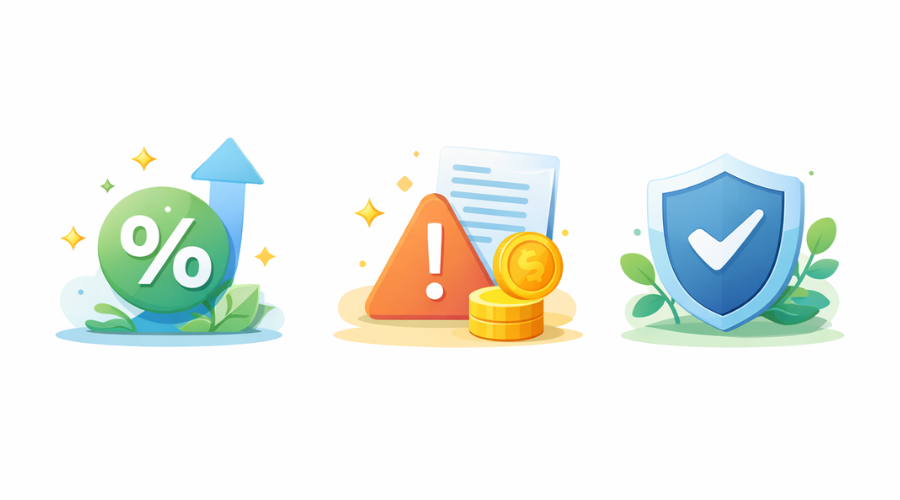
The basic purpose of checking and savings accounts is easy to understand, but the details — fees, interest, and insurance — are where real money is either protected or slowly lost. These differences matter over months and years, not just in one billing cycle.
Interest: Why Savings Usually Pays More Than Checking
How Interest Works in Bank Accounts
When you keep money in a bank, the bank can use part of that money to make loans. In return, the bank pays you interest. The more stable the money stays in an account, the easier it is for banks to plan how to use it safely and profitably.
Savings accounts are structured to:
- Encourage longer holding periods
- Provide more stable balances for banks
Because of that, banks typically offer higher interest rates on savings than on checking.
Checking accounts, by design, have:
- Frequent withdrawals
- Unpredictable balances
So banks usually pay little or no interest on checking.
Typical Interest Differences
While rates change frequently, the pattern usually looks like this:
| Account Type | Interest Pattern |
|---|---|
| Checking | Often 0% or very low |
| Savings (traditional bank) | Low to moderate |
| Savings (online banks) | Often higher |
Actual numbers change based on:
- Federal Reserve interest rates
- Bank competition
- Account conditions and minimums
If a bank advertises high checking interest, it often requires:
- Minimum balances
- Monthly debit card usage
- Direct deposit thresholds
If conditions are not met, the rate may drop to near zero.
This is why it is important to read the account’s interest conditions, not just the advertised headline rate.
Fees: Where Many People Lose Money Without Realizing It
Fees can quietly drain accounts, especially checking accounts. Many people lose more money to fees over time than they ever earn in interest.
Common Checking Account Fees
| Fee Type | What Triggers It |
|---|---|
| Monthly maintenance fee | Not meeting balance or deposit requirements |
| Overdraft fee | Spending more than your balance |
| ATM fees | Using out-of-network machines |
| Returned payment fees | Payments rejected due to low balance |
Overdraft fees can be especially costly. Even small mistakes can trigger large penalties, and multiple overdrafts in a month can add up quickly.
Common Savings Account Fees
Savings accounts usually have fewer fee types, but still may include:
| Fee Type | What Triggers It |
|---|---|
| Monthly maintenance fee | Low balance |
| Excess transaction fees | Too many withdrawals or transfers |
| Paper statement fees | Optional in some banks |
Savings fees are often easier to avoid by:
- Keeping minimum balances
- Limiting withdrawals
But each bank sets its own rules, so it’s important to check the account agreement.
Insurance: How Your Money Is Protected
Many people worry about bank safety, especially during economic uncertainty. The good news is that both checking and savings accounts are usually protected the same way.
FDIC and NCUA Protection
Money in U.S. banks and credit unions is typically insured by:
- FDIC (Federal Deposit Insurance Corporation) for banks — learn more about FDIC deposit insurance coverage
- NCUA (National Credit Union Administration) for credit unions and their NCUA insurance protection
Coverage is generally:
- Up to $250,000 per depositor, per institution, per ownership category
This protection applies to:
- Checking accounts
- Savings accounts
- Money market deposit accounts
- Certificates of deposit (CDs)
It does not cover:
- Stocks
- Bonds
- Mutual funds
- Crypto assets
Insurance protects against bank failure, not against losses from spending, fraud, or bad financial decisions. Separate consumer protection rules may cover certain types of unauthorized transactions, but those are different from deposit insurance. (though banks may separately reimburse certain types of fraud).
Important Safety Reminder
Insurance only applies if the institution is properly insured. Verifying FDIC or NCUA status is always wise when opening an account, especially with online-only banks or financial apps.
Regulation Differences That Affect How You Can Use the Accounts
Although federal withdrawal limits on savings were relaxed in 2020, Refer to the Federal Reserve Regulation D savings withdrawal rules for the original limits and how banks still apply them. many banks still enforce limits because:
- Their systems were built around older rules
- Excessive transactions increase costs and risk
So in practice, many savings accounts still:
- Restrict the number of monthly withdrawals
- Charge fees if limits are exceeded
Checking accounts usually have:
- No legal or policy-based transaction caps
- Fewer restrictions on payment methods
That difference is another reason savings accounts are not ideal for daily expenses, even if transfers are technically allowed.
How Banks Decide Which Account Features to Offer
Banks design checking and savings accounts based on:
- Expected customer behavior
- Regulatory requirements
- Profit models
Checking accounts often make money for banks through:
- Interchange fees from debit card purchases
- Overdraft fees
- Account service fees
Savings accounts cost banks money because:
- They pay interest
- They require reserve management
So banks naturally encourage:
- Spending from checking
- Holding money in savings
This design is not personal — it is simply how consumer banking systems are structured in the U.S.
How to Use Both Accounts to Reduce Fees and Maximize Benefit
Using both accounts together can reduce financial friction.
A common low-fee setup looks like this:
- Paycheck deposits into checking
- Monthly bills auto-pay from checking
- Automatic transfer to savings after each paycheck
- Even small automatic transfers are more effective than trying to save “whatever is left” at the end of the month.
- Savings left untouched except for planned use
This approach:
- Avoids overdrafts
- Keeps savings separate from spending
- Reduces temptation to dip into reserves
Some people also keep:
- A small buffer in checking
- The bulk of extra cash in savings
This reduces exposure to debit card fraud while still keeping funds accessible.
When Checking and Savings Might Not Be Enough
For some goals, savings accounts are not the best long-term option because:
- Interest may not keep up with inflation
- Returns are lower than investment accounts over time. However, investing always involves risk and short-term losses are possible.
That is where people often move into:
- Certificates of deposit (for fixed timeframes)
- Retirement accounts
- Brokerage accounts
However, checking and savings remain essential as:
- Cash management tools
- Emergency buffers
- Short-term planning accounts
They are not competitors to investing—they are the foundation that makes investing safer and more stable.
Choosing the Right Account for Common Financial Situations
Knowing the technical differences is helpful, but what really matters is which account fits each real-life money decision. Many problems come from using the wrong account for the wrong purpose.
Below are common situations and how checking and savings usually fit best.
Paying Monthly Bills and Daily Expenses
Best Choice: Checking Account
Bills and everyday spending should almost always come from checking because:
- Debit cards are directly linked to checking
- Bill-pay systems are designed for checking
- There are no practical limits on transactions. This makes checking more reliable for automatic payments and recurring bills.
Using savings for bills can cause:
- Transfer limits or fees
- Delays in payments
- Missed payments if limits are exceeded
Tip That Helps Avoid Overdrafts
Keep a small buffer in checking—enough to cover:
- One or two unexpected bills
- Timing gaps between deposits and withdrawals
This reduces the risk of overdraft fees without tying up too much money in a low-interest account.
Emergency Fund Storage
Best Choice: Savings Account
Emergency money should usually be kept in savings because:
- It earns more interest
- It is less tempting to spend
- It is still fairly easy to access when needed. Most transfers from savings to checking can be completed within the same day or the next business day at many banks.
Savings strikes a balance between:
- Accessibility
- Protection from casual spending
What Not to Use for Emergencies
Avoid keeping emergency funds in:
- Checking (too easy to spend)
- Long-term investments (market losses at the wrong time)
The goal of emergency savings is stability, not growth.
Saving for Short-Term Goals
Examples of short-term goals:
- Vacation
- Holiday spending
- Car repairs
- Moving costs
Best Choice: Savings Account (or Separate Savings Sub-Accounts)
Savings works well because:
- You can track progress toward the goal
- The money stays separated from daily spending
- Interest, even if small, still adds something instead of earning nothing
Some banks allow labeled savings buckets, which can make planning easier without opening multiple accounts.
Holding Money You’ll Spend Very Soon
Examples:
- Rent due in a few days
- Upcoming credit card payment
- Scheduled medical bill
Best Choice: Checking Account
If the money will be spent shortly, there is little benefit in moving it to savings and back. Frequent transfers can also increase the chance of:
- Timing errors
- Transfer limits
- Missed payments
In these cases, convenience and reliability matter more than interest.
Managing Irregular Income
People with freelance, gig, or seasonal income often struggle with uneven cash flow.
Useful Account Setup
Many people in this situation use:
- Checking for monthly expenses
- Savings as a “buffer” during high-income months
When income is high:
- Extra money goes to savings
When income is low:
- Savings transfers help cover fixed bills
This helps smooth income swings and reduces reliance on credit cards during slow periods.
Building Discipline When Budgeting Is Hard
Some people know they should save but struggle to leave money untouched.
Savings Helps Create Friction
Moving money into savings:
- Adds one extra step before spending
- Breaks impulse purchases
- Makes goals feel more protected
Even small barriers can improve saving behavior over time.
Checking, by contrast, is built for speed and convenience, which is helpful for bills but not for long-term goals.
Step-by-Step: A Simple Two-Account Setup That Works for Most People
This is not the only way to manage money, but it fits many U.S. households.
Step 1: Use Checking for All Income and Bills
- Direct deposit into checking
- Bills and subscriptions paid from checking
- Debit card linked to checking
This keeps cash flow simple and predictable.
Step 2: Automatically Move Savings After Each Paycheck
Set up automatic transfers such as:
- $100 per paycheck
- Or a fixed percentage
Automation removes the need to “decide” every month whether to save.
Step 3: Treat Savings as Untouchable Except for Its Purpose
Only move money out of savings for:
- True emergencies
- Planned goals you were saving for
This personal rule is just as important as the bank’s official rules.
Step 4: Adjust Over Time
As income or expenses change:
- Increase or decrease savings transfers
- Rebuild savings after withdrawals
The system stays flexible while still protecting future money.
When a Single Account Might Be Temporarily Enough
In very simple financial situations, such as:
- Short-term student life
- Temporary jobs with minimal expenses
Some people may function with only checking for a short period. This is usually temporary and works only when financial activity is very simple. But as soon as:
- Expenses grow
- Income becomes more stable
- Financial goals appear
Separating savings becomes far more useful and protective.
Why This Choice Matters More Than It Seems
Using checking and savings correctly does not just affect today’s budget. It influences:
- How often you rely on debt
- Whether emergencies turn into financial crises
- How consistently you can plan for future expenses
The accounts themselves are simple tools, but the habits they support shape long-term financial outcomes.
Checking and Savings vs. Money Market Accounts: Where People Get Confused
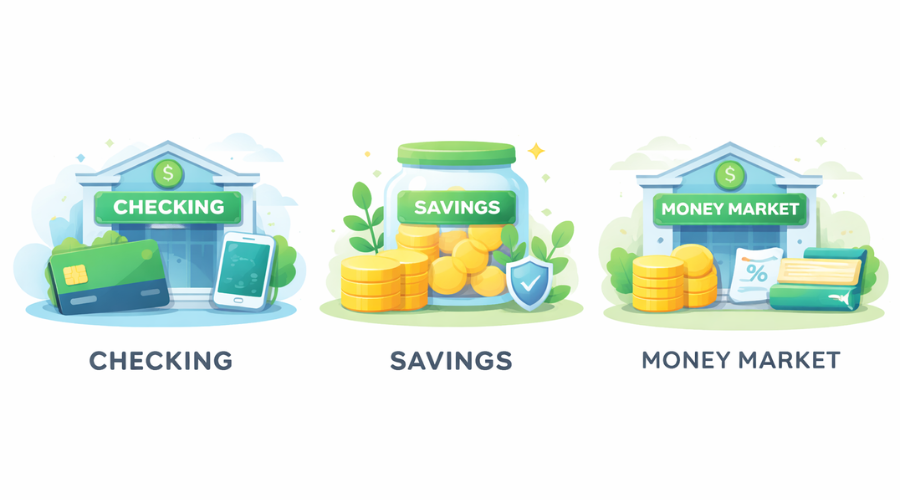
Many Americans hear about money market accounts and assume they are either the same as savings accounts or the same as money market investments. Others think they can replace both checking and savings. In reality, money market deposit accounts sit somewhere in between, which is why they often create confusion.
Let’s clear that up in simple terms.
What Is a Money Market Deposit Account (MMDA)?
A money market deposit account is a type of bank account offered by banks and credit unions. It is not the same as a money market mutual fund. Despite the similar names, these two products work very differently and have different risk levels.
Money market deposit accounts are:
- Bank deposit accounts
- Usually insured by FDIC or NCUA (when held at insured institutions)
- Designed to offer higher interest than checking, sometimes similar to savings
Typical Features of Money Market Deposit Accounts
| Feature | Common Situation |
|---|---|
| Interest | Higher than checking, sometimes similar to savings |
| Debit card | Sometimes included, often limited |
| Checks | Sometimes allowed |
| Minimum balance | Often higher than savings |
| Transaction limits | May apply |
Because of these features, some people try to use money market accounts as “hybrid” accounts this can work for some people, but only if they carefully follow the account’s balance and transaction rules. for both spending and saving.
How Money Market Accounts Compare to Checking and Savings
Money Market vs. Checking
Money market accounts:
- Usually pay more interest
- Often have higher minimum balance requirements
- May restrict transactions or charge fees if used like checking
Checking accounts:
- Are built for frequent spending
- Rarely offer meaningful interest
- Are easier for daily financial activity
Trying to use a money market account as your main checking account can:
- Trigger fees
- Violate transaction limits
- Reduce interest if conditions are not met. For this reason, money market accounts are usually not ideal as primary spending accounts.
Money Market vs. Savings
Money market accounts:
- Often require higher balances
- May offer slightly better interest
- Sometimes include check-writing or debit features
Savings accounts:
- Usually have lower balance requirements
- Are simpler and easier to maintain
- Still offer interest, especially at online banks
For many people, standard savings accounts already meet their needs without the added complexity of money market rules. Especially when high-yield savings accounts are available.
Important Distinction: Money Market Accounts vs. Money Market Funds
This is one of the most misunderstood areas of U.S. personal finance.
Money Market Deposit Accounts
- Offered by banks and credit unions
- Insured by FDIC or NCUA (within limits)
- Considered bank deposits
Money Market Mutual Funds
- Offered by investment companies
- Not insured by FDIC or NCUA
- Subject to investment risks, even if very low
- Often used inside brokerage accounts
While money market funds aim to be stable, small losses are still possible in rare situations.
For emergency savings, many people prefer insured bank savings over investment-based money market funds because certainty matters more than slightly higher yields.
Why Many People Still Prefer Simple Checking + Savings
Even though money market accounts exist, most people still benefit from:
- One checking account for spending
- One or more savings accounts for holding money
This setup is:
- Easier to understand
- Easier to manage
- Less likely to trigger surprise fees
Money market accounts may make sense for people who:
- Maintain higher balances
- Want limited spending features on stored cash
- Are comfortable managing account rules carefully
But they are not required for good money management.
Online Banks vs. Traditional Banks: Does the Account Type Change?
The purpose of checking and savings does not change based on whether the bank is online or physical, but the features and pricing often do.
Online Banks
Often offer:
- Higher savings interest rates
- Fewer monthly fees
- Strong mobile tools
But may have:
- No physical branches
- Cash deposit limitations
Traditional Banks
Often offer:
- In-person service
- Easier cash handling
But may have:
- Lower interest on savings
- More fees on checking
The account type (checking vs savings) still works the same way. What changes is:
- Cost
- Convenience
- Access methods
Some people use a mix: online savings for higher interest and local checking for daily transactions.
How Account Choice Can Affect Financial Behavior
The design of accounts influences how people behave with money.
Checking Encourages Spending
Because checking is:
- Fast
- Easy
- Always accessible
People are more likely to spend money that sits there, even if they originally meant to save it.
Savings Encourages Caution
Savings creates:
- Psychological separation
- Small access barriers
Those small barriers help people pause before using money meant for emergencies or goals.
This behavioral difference is one of the most important—but least talked about—reasons savings accounts exist at all.
When People Outgrow Basic Checking and Savings
As finances become more complex, people often add:
- Retirement accounts
- Brokerage accounts
- Certificates of deposit
But checking and savings remain necessary for:
- Cash flow
- Short-term planning
- Emergency protection
Even very wealthy households still use checking and savings as operational tools.
Common Mistakes People Make With Checking and Savings Accounts
Mistake 1: Keeping All Cash in Checking
This leads to:
- Lost interest
- Higher spending
- Less protection against impulse use
Mistake 2: Using Savings for Everyday Purchases
This can cause:
- Transfer limits
- Delayed payments
- Fees
Mistake 3: Choosing Accounts Only Based on Advertised Rates
Interest rates matter, but so do:
- Fees
- Minimum balance rules
- Access methods
An account with slightly lower interest but no fees may be better than one with high rates and strict conditions.
Big Picture: Accounts Are Tools, Not Financial Strategies
Checking and savings accounts do not create wealth by themselves. What they do is:
- Protect your cash
- Support healthy spending habits
- Prevent financial emergencies from becoming debt problems
They are the foundation of financial stability, not the finish line.
Frequently Asked Questions About Checking and Savings Accounts
Is it better to keep money in checking or savings?
It depends on when you need the money.
– Money for daily spending and bills works best in checking.
– Money for emergencies or future goals belongs in savings.
Keeping all money in checking usually leads to more spending and less interest earned. Keeping all money in savings makes daily payments harder and may cause transaction issues.
Can I use my savings account like a checking account?
Some banks allow frequent transfers, but savings accounts are not designed for daily spending.
Possible problems include:
– Withdrawal or transfer limits
– Fees for excess transactions
– Lack of debit card or bill-pay features
Even if it works technically, it usually creates more friction and risk of fees. It can also make it harder to track which money is truly available to spend.
Should my paycheck go into checking or savings?
Most people deposit paychecks into checking, then move savings separately.
This setup:
– Keeps bill payments reliable
– Makes budgeting simpler
– Allows automatic savings transfers
Some employers allow splitting deposits between checking and savings, which can help automate saving, but checking usually remains the main account for bill payments and spending.
How much money should I keep in checking?
There is no fixed rule, but many people aim to keep:
– Enough for monthly expenses
– Plus a small buffer to avoid overdrafts
Extra money that is not needed soon generally works better in savings, where it can earn more interest and stay protected from casual spending.
Are savings accounts really safe?
Savings accounts at insured banks and credit unions are generally protected by:
– FDIC (banks) or
– NCUA (credit unions)
Coverage is typically up to $250,000 per depositor, per institution, per ownership category.
This protects against bank failure, not against fraud, scams, or poor financial decisions. Separate consumer protection laws may cover certain unauthorized transactions, but those are different from deposit insurance.
Do checking accounts affect my credit score?
Checking accounts do not appear on credit reports, and balances do not affect credit scores directly.
However, poor account management can lead to:
– Account closures
– Collections for unpaid fees
Those situations can affect credit if they reach collection agencies. So while checking does not build credit, problems with it can still create financial trouble.
Is it okay to have multiple savings accounts?
Yes. Many people find it helpful to separate money by purpose, such as:
– Emergency fund
– Travel savings
– Home repair savings
Some banks allow multiple savings accounts, while others offer internal “buckets” within one account.
The key is keeping the system simple enough that you actually use it consistently. Too many separate accounts can become difficult to manage and may reduce the benefit.
Should I close my savings account if I’m investing instead?
Even people who invest still need savings for:
– Emergencies
– Short-term expenses
– Income gaps
Investments can lose value in the short term, and selling during emergencies can lock in losses. Savings accounts provide stability and liquidity that investments are not designed to provide.
What if my bank charges fees on both checking and savings?
In that case, it is especially important to:
– Understand fee waiver rules
– Compare alternatives if fees are unavoidable
Fees can quietly reduce savings and increase financial stress. Many institutions offer ways to avoid them through minimum balances or direct deposit, but rules vary widely.
Can I rely only on cash apps instead of bank accounts?
Most cash apps are not full bank accounts and may:
– Lack full FDIC coverage unless funds are stored in partnered banks
– Offer limited customer protection
– Create problems with direct deposit, bill payments, or disputes
– Funds held in apps may also be harder to recover if accounts are frozen or closed
For long-term financial stability, most people still benefit from having proper checking and savings accounts at insured institutions.
Final Thoughts: How to Think About Checking vs. Savings
Checking and savings accounts are not about which is “better.” They serve different financial jobs:
- Checking supports daily life
- Savings protects future stability
Using both properly:
- Reduces stress
- Lowers reliance on debt
- Makes planning easier
They may seem basic, but they quietly shape nearly every financial decision that follows.
Disclaimer
This content is provided for educational and informational purposes only and does not constitute legal, tax, or financial advice. Financial situations vary based on individual circumstances, state laws, and institutional policies. Readers should consult a qualified financial, tax, or legal professional before making decisions related to banking, credit, or long-term financial planning.
