
Financial setbacks happen to real people for real reasons—medical bills, job loss, divorce, business failure, or economic shocks. In the U.S., bankruptcy and loan defaults are legal tools meant to give people a reset, not a permanent financial label. Still, the aftermath can feel overwhelming. Credit scores drop, approvals disappear, and everyday costs—from insurance to housing—can rise.
The good news is that the U.S. credit system is designed to reward recent, positive behavior more than past mistakes. While bankruptcy or default stays on your credit report for years, its influence weakens steadily if you rebuild the right way. The process is not quick, but it is predictable.
This guide explains how credit rebuilding actually works after bankruptcy or default in the United States, what to prioritize, what to avoid, and how to make progress without taking unnecessary risks.
Key Takeaways
- Rebuilding credit after bankruptcy or default is possible, but it takes time, consistency, and informed choices.
- Payment history and credit utilization matter most, even after severe credit damage.
- You do not need to borrow aggressively to rebuild credit—strategic, limited use works better.
- Negative marks fade in impact over time, even before they fall off your credit report.
- Common shortcuts often backfire and can slow recovery or cause new financial harm.
What “Rebuilding Credit” Really Means
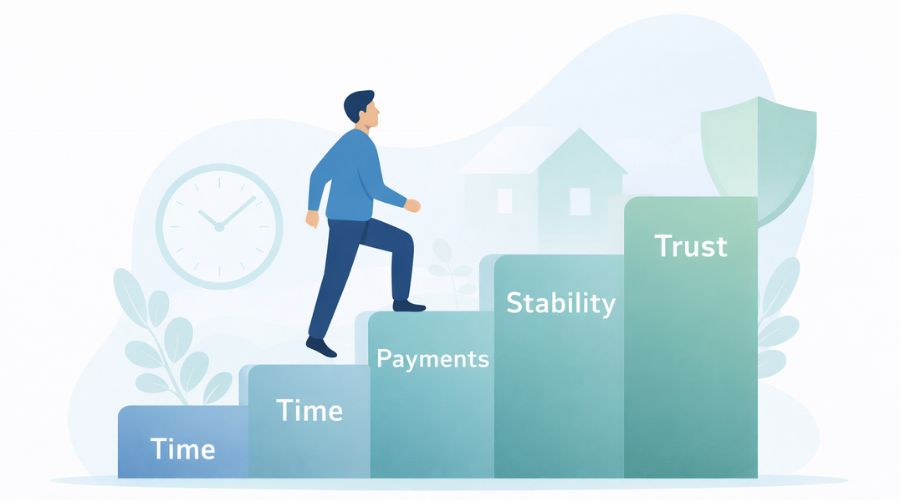
Rebuilding credit does not mean erasing the past. It means proving—month by month—that you now manage credit responsibly.
From a lender’s perspective, rebuilding credit answers three questions:
- Do you pay bills on time now?
- Do you use credit conservatively?
- Is your recent behavior consistent and stable?
Credit scores are backward-looking, but recent activity carries the most weight. A bankruptcy from three years ago matters far less than six months of on-time payments today.
Bankruptcy vs. Default: Why the Path Is Similar but Not Identical

Although bankruptcy and default are different events, the rebuilding process overlaps significantly.
Bankruptcy (Chapter 7 or Chapter 13)
- Chapter 7 discharges eligible debts and remains on credit reports for up to 10 years from filing.
- Chapter 13 involves a court-approved repayment plan and remains for up to 7 years from filing.
Both can reset or resolve debts, but they initially damage credit because they signal past financial stress
Default (Charged-Off Accounts, Collections, or Late Loans)
- Defaults occur when debts go unpaid without court protection.
- Accounts may be charged off, sent to collections, or result in judgments.
- Negative marks typically stay on credit reports for 7 years from the first missed payment that led to default.
Key difference:
Bankruptcy can clear balances and stop collections, while defaults often leave unresolved balances unless settled or paid.
How Credit Scores Are Rebuilt in the U.S.
U.S. credit scores (such as FICO and VantageScore models) are based on five core factors. After bankruptcy or default, their importance shifts.
| Credit Factor | Approx. Impact | Why It Matters After a Reset |
|---|---|---|
| Payment history | ~35% | New on-time payments rebuild trust |
| Credit utilization | ~30% | Low balances signal control |
| Length of credit history | ~15% | Time helps, but can’t be rushed |
| Credit mix | ~10% | Shows ability to manage different types |
| New credit inquiries | ~10% | Too many raises red flags |

Critical reality: You cannot change history—but you can outweigh it with better recent behavior.
Step-by-Step Guide to Rebuild Credit
Step One: Stabilize Your Financial Foundation First
Before applying for any credit, rebuilding must start off the credit report.
Priorities Before Using Credit Again
- Reliable income (even modest but stable)
- A basic emergency fund, even if small
- A written budget that accounts for irregular expenses
Using credit without stability often leads to repeated defaults, which are more damaging than waiting.
Important warning: Taking on credit before your cash flow is stable is one of the most common reasons people file bankruptcy more than once.
Step Two: Make Sure Your Credit Reports Are Accurate
After bankruptcy or default, reporting errors are common—and harmful.
What to Check on All Three Credit Reports
- Discharged debts still showing balances
- Accounts marked “late” after bankruptcy filing
- Duplicate collection accounts
- Incorrect dates of first delinquency
Federal law allows you to dispute inaccurate information for free through the credit bureaus. (Consumers can find official guidance on credit report disputes through the Consumer Financial Protection Bureau.) Correcting errors does not “fix” credit overnight, but it prevents unnecessary damage.
Step Three: Start With One Small, Controlled Credit Line
You do not need multiple accounts to rebuild credit.
Why Starting Small Works Better
- Limits financial risk
- Improves payment history steadily
- Keeps utilization low
- Avoids inquiry overload
Examples of controlled rebuilding tools may include secured credit or installment-style credit products, but approval alone does not equal progress. How you use the account matters more than the account itself.
Rule to follow: One account, paid on time, kept under 10–30% usage, beats five poorly managed accounts every time.
Step Four: Master the Two Metrics That Matter Most
1. Payment History
- Pay every bill on time, no exceptions
- Even one 30-day late payment can stall progress for months
- Automatic payments help, but must be monitored
2. Credit Utilization
- Keep balances low relative to limits
- Lower is better—even below 10% helps
- Paying early (before the statement closes) can reduce reported balances
These two factors alone drive the majority of score recovery in the first 12–24 months.
How Long Credit Recovery Really Takes (Realistic Timelines)
One of the most misunderstood parts of rebuilding credit is time. Many people expect dramatic improvements in a few months. While early gains are possible, full recovery follows a predictable but gradual curve.
Typical U.S. Credit Recovery Timeline

| Time Since Bankruptcy or Default | What Usually Happens |
|---|---|
| 0–3 months | Credit score stabilizes after initial drop |
| 3–6 months | First small score increases from on-time payments |
| 6–12 months | Noticeable improvement if utilization stays low |
| 12–24 months | Scores often move into fair or good range |
| 24+ months | Past damage carries less weight; lenders focus on recent behavior |
Important context: These ranges assume no new late payments, controlled balances, and minimal new credit applications. One mistake can reset progress.
What Credit Score Improvement Actually Looks Like
Rebuilding credit is not a straight line upward.
- Scores may stall for months, then jump
- Minor drops can happen after new accounts open
- Progress slows as scores improve
This is normal. Credit scoring models reward consistency, not speed.
Critical takeaway: Slow, steady improvement is safer and more sustainable than chasing fast score jumps.
When (and When Not) to Add More Credit
After several months of perfect payment history, people often ask whether adding more accounts helps.
When Adding Credit Can Help
- Existing account has at least 6–12 months of perfect history
- Utilization remains consistently low
- Income is stable and expenses are predictable
- New credit serves a clear purpose (not just “score boosting”)
When It Hurts More Than It Helps
- Multiple applications close together
- Adding accounts while carrying balances
- Opening credit without budgeting room
Common mistake: Assuming more credit automatically equals a higher score. Poorly managed credit does the opposite.
Rebuilding Credit After Chapter 13 Bankruptcy
Chapter 13 adds an extra layer of complexity because it involves an active repayment plan.
Key Points for Chapter 13 Filers
- Court approval is often required before opening new credit
- On-time plan payments contribute indirectly to rebuilding
- Many lenders wait until discharge to consider applications
Positive note: Completing a Chapter 13 plan successfully is viewed favorably by many lenders because it demonstrates long-term discipline.
Dealing With Old Collections and Charged-Off Accounts
Not all negative accounts disappear after bankruptcy or default.
If the Debt Was Discharged in Bankruptcy
- The balance should show $0 with a bankruptcy notation
- You are not legally required to pay it
- Paying discharged debt usually does not improve scores
If the Debt Was Not Discharged
- Paying or settling may reduce risk and stress
- Score impact depends on reporting status and age
- Newer collections matter more than older ones
Important warning: Paying old debts without understanding reporting rules can sometimes reset negative timelines. Always confirm details before acting.
Common Myths That Slow Credit Recovery
Myth 1: “I Should Avoid Credit Completely”
Avoiding credit prevents rebuilding. Responsible use is necessary.
Myth 2: “Carrying a Balance Improves My Score”
False. Interest costs money and does not help scores.
Myth 3: “Credit Repair Companies Can Fix This Faster”
No one can legally remove accurate negative information early.
Myth 4: “My Credit Is Ruined Forever”
Credit damage fades. Recent behavior matters far more than old mistakes.
How Rebuilding Credit Affects Real-Life Costs
Improving credit is not just about loan approvals.
Better credit can affect:
- Security deposits for utilities and housing
- Auto and renters insurance premiums (varies by state)
- Employment background checks (where legally permitted)
- Interest rates on future borrowing
Even modest score improvements can reduce long-term costs significantly.
Smart Habits That Protect Progress
- Review credit reports at least once a year
- Keep utilization low even when limits increase
- Space out credit applications
- Maintain emergency savings to avoid future delinquencies
Key principle: The best credit strategy is one that still works during financial stress.
Pros and Cons of Rebuilding Credit After Bankruptcy or Default
Rebuilding credit brings real benefits, but it also comes with trade-offs that are important to understand clearly.
Pros and Cons Overview
| Pros | Cons |
|---|---|
| Restores access to mainstream credit over time | Requires patience and discipline |
| Lowers long-term borrowing and insurance costs | Early credit options may have higher fees or limits |
| Improves housing and utility approval odds | Mistakes are more damaging during recovery |
| Builds financial resilience for emergencies | Progress can feel slow and uneven |
| Demonstrates financial responsibility to lenders | Old negative marks remain visible for years |
Key perspective: Rebuilding credit is less about “fixing a score” and more about restoring financial flexibility.
Common Beginner Mistakes That Delay Recovery
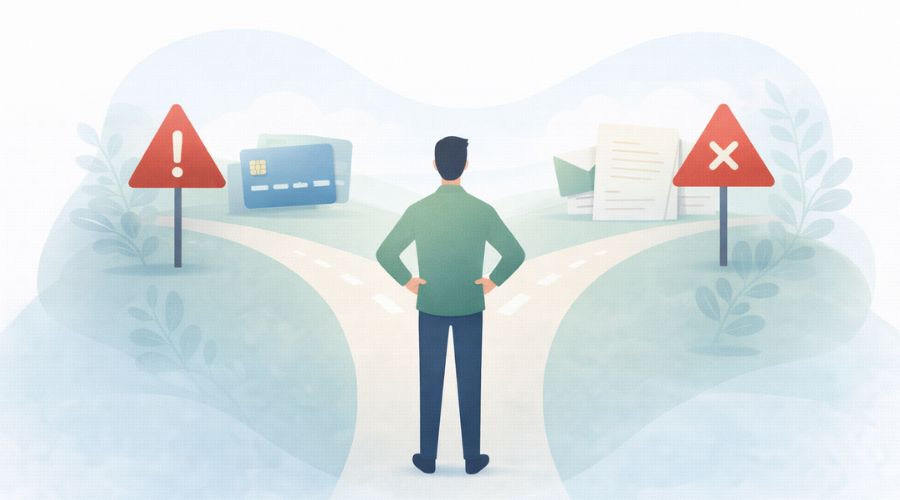
Many setbacks happen not because people lack effort, but because they follow bad advice or misunderstand how the system works.
1. Applying for Too Much Credit Too Quickly
Each application creates a hard inquiry. Several inquiries in a short time signal risk and can lower scores temporarily.
2. Using Too Much of the Available Credit
High balances—even when paid on time—can suppress scores due to high utilization.
3. Missing Small Payments
One late payment can outweigh months of good behavior, especially early in recovery.
4. Closing Old Accounts Too Soon
Closing accounts can reduce available credit and shorten credit history, both of which may hurt scores.
5. Ignoring Cash Flow Reality
Credit rebuilding should fit comfortably within your budget. If payments feel tight, risk is already too high.
Critical warning: A second major credit failure is usually more damaging than the first.
Rebuilding Credit vs. Waiting It Out: A Comparison
Some people choose to avoid credit entirely and wait for negative marks to age off. Others rebuild actively.
| Strategy | Short-Term Impact | Long-Term Impact |
|---|---|---|
| Avoid credit completely | No new risk | Limited score recovery |
| Controlled rebuilding | Small early gains | Stronger long-term credit |
| Aggressive borrowing | Possible quick boost | High risk of setbacks |
Balanced truth: Careful rebuilding generally produces better long-term results than doing nothing, but aggressive strategies often backfire.
How Lenders View You After Bankruptcy or Default
Lenders do not all evaluate risk the same way, but patterns are consistent.
They typically look for:
- Time since the negative event
- Consistent on-time payments
- Low balances relative to limits
- Stable income and housing
Important context: Many lenders care more about what you’ve done since the bankruptcy or default than about the event itself.
Myths vs. Facts About Credit Recovery
| Myth | Fact |
|---|---|
| Bankruptcy makes credit unusable forever | Scores can improve within months |
| Paying interest improves scores | Interest has no scoring benefit |
| All lenders treat bankruptcy the same | Policies vary widely |
| Closing accounts helps clean reports | It often reduces scores |
| Credit scores recover only after marks fall off | Recovery begins long before removal |
Protecting Your Credit Long-Term After Recovery
Rebuilding is not the final step—maintenance matters.
Long-Term Protection Habits
- Keep at least one active account in good standing
- Avoid using credit to cover recurring shortfalls
- Reassess spending after income changes
- Build savings alongside credit use
Key takeaway: Strong credit is a side effect of stable finances—not the other way around.
Below are answers to common questions Americans have when rebuilding credit after bankruptcy or default.
Frequently Asked Questions (FAQ)
Below are clear, realistic answers to common questions Americans ask after bankruptcy or default.
-
How soon can I rebuild credit after bankruptcy?
You can begin rebuilding as soon as the bankruptcy is filed or discharged, depending on the type. Credit improvement often starts within 3–6 months if new accounts are managed responsibly and all payments are made on time.
-
What credit score can I realistically expect after bankruptcy?
There is no single outcome. Many people move from poor credit into the fair range within 12–18 months with consistent on-time payments and low balances. Reaching good or excellent credit usually takes longer and depends on overall financial stability.
-
Does bankruptcy hurt my credit more than defaulting on debts?
Not always. In some cases, prolonged defaults, collections, and judgments cause more long-term damage than a bankruptcy that clears balances and stops late reporting. What matters most is what happens after the event.
-
Should I pay old collections after bankruptcy?
If the debt was discharged, paying it typically does not improve your credit and is not legally required. If the debt was not discharged, paying or settling may reduce risk, but credit impact depends on how the account is reported and its age.
-
Is it better to rebuild credit with one account or several?
For most people, one well-managed account is enough to start. Adding more accounts too quickly increases risk and does not guarantee faster improvement.
-
Will closing accounts help clean up my credit report?
No. Closing accounts does not remove negative history and can reduce available credit, which may hurt your score. Keeping accounts open and unused is often safer.
-
Does carrying a balance improve my credit score?
No. Credit scoring models do not reward interest payments. Paying balances in full or keeping them very low is better for both your score and your finances.
-
How long does bankruptcy stay on my credit report?
– Chapter 7: Up to 10 years from filing
– Chapter 13: Up to 7 years from filingEven while it remains on your report, its impact decreases over time with positive behavior.
-
Can rebuilding credit affect insurance or employment?
Yes, in some states and situations. Improved credit may lower certain insurance premiums. Some employers review credit reports for specific roles, where legally permitted.
-
Is credit repair worth paying for?
Accurate negative information cannot be removed early by anyone. Many rebuilding steps—such as disputes and monitoring—can be done for free.
-
What is the single most important habit for rebuilding credit?
Never miss a payment. Payment history has the largest impact on credit scores, especially after serious credit damage.
Final Thoughts

Rebuilding credit after bankruptcy or default is not about shortcuts or perfection. It is about proving stability over time. The U.S. credit system rewards consistent, low-risk behavior—even after serious setbacks. With patience and discipline, financial trust can be restored.
Disclaimer
This content is provided for educational and informational purposes only. It is not legal, tax, or financial advice. Credit, bankruptcy, and financial decisions depend on individual circumstances and may vary by state and institution. Readers should consult a qualified attorney, tax professional, or financial advisor before making personal financial decisions.
