
Most Americans don’t think about their credit score — or what a credit score means — until they suddenly need it for an apartment, a car, a credit card, or a loan. When applications are pending and bills are due, the question becomes urgent: how can I raise my credit score quickly?
The good news is that some credit score improvements can happen faster than many people expect — sometimes within weeks — if you focus on the right actions. The bad news is that many “quick fix” tips online are either ineffective, risky, or simply wrong.
Improving credit fast in the U.S. is not about tricks or shortcuts. It’s about understanding how credit scoring models actually react to changes and fixing the issues that matter most.
Key Takeaways
If you’re short on time, these are the most important points to understand before taking action:
- Some credit score improvements can appear within 30–45 days if you target the biggest scoring factors.
- Paying balances down, fixing errors, and correcting missed payments matter far more than opening new accounts.
- There is no legal way to instantly erase bad credit history — anyone promising that is misleading you.
- Fast improvement does not mean reckless behavior that hurts long-term credit.
What “Fast” Credit Score Improvement Really Means
Before getting into steps, it’s important to set realistic expectations. Many people expect instant results, but credit scores do not change in real time.
In the U.S., most lenders use FICO® Scores and sometimes VantageScore®. Both models update your score only when new data is reported to the credit bureaus (Experian, Equifax, TransUnion).
That means:
- Your actions today usually show up on your credit report after your next billing cycle
- Most updates happen every 30 days, not daily
- Some negative items stay for years, even if paid
So when people say “fast,” they usually mean:
| Timeframe | What’s Possible |
|---|---|
| 7–14 days | Correction of reporting errors, removal of incorrect late payments |
| 30–45 days | Score increase from paying down balances or updating account status |
| 2–3 months | Larger jumps after multiple improvements stack together |
In most cases, meaningful changes require at least one full reporting cycle. That’s why focusing on actions that update monthly data — like balances and account status — is far more effective than chasing short-term tricks.
Important: If your score is already high (above ~720), changes may be smaller.
If your score is low due to high balances or missed payments, improvements can be faster and larger.
What Actually Moves Your Credit Score the Fastest
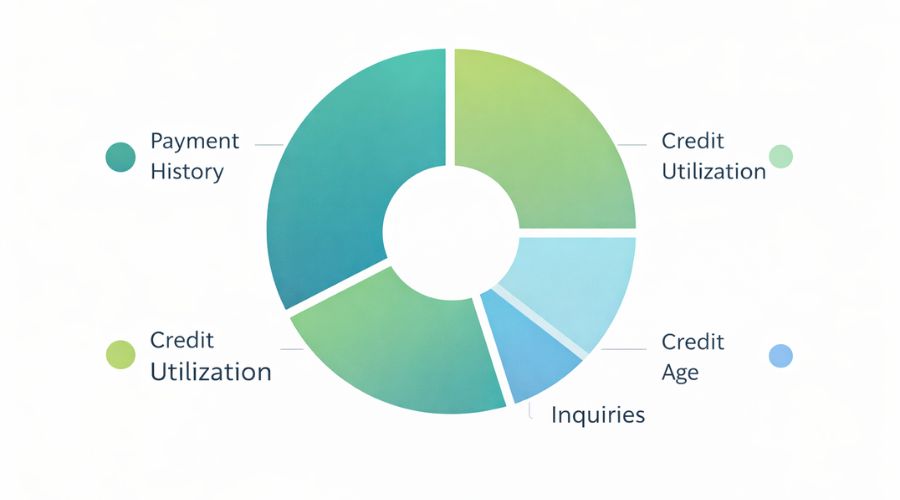
Not all credit factors react at the same speed.
Based on how FICO and VantageScore models work, these are the fastest-moving scoring factors:
- Credit utilization (how much of your limit you’re using)
- Payment status (current vs late)
- Reporting errors and inaccuracies
These factors update quickly because they depend on monthly account data, not long-term history.
Factors that do not improve fast:
- Length of credit history
- Age of accounts
- Past collections or charge-offs
- Bankruptcies
Those improve slowly with time and consistent behavior.
Step 1: Lower Your Credit Utilization — The Fastest Legal Boost
Credit utilization means how much of your available credit you’re using, especially on credit cards — and how credit card balances affect your score. It is one of the most powerful short-term scoring factors in both FICO and VantageScore models.
Example:
- Credit limit: $5,000
- Balance: $3,500
- Utilization: 70% (very high)
Most scoring models strongly favor:
- Below 30% utilization = good
- Below 10% utilization = excellent
Why This Works Fast
When your card issuer reports a lower balance to the credit bureaus, your score can rise as soon as that report updates — often within one billing cycle.
What to Do (Fastest Method)
- Pay down balances on revolving accounts (credit cards, lines of credit)
- Focus first on cards with the highest percentage used, not necessarily highest dollar amount
- Even partial paydowns can help
Example strategy:
- Card A: Limit $1,000, Balance $900 → pay down to $300
- Card B: Limit $4,000, Balance $2,000 → still 50%, but improvement starts with Card A
Warning: Paying off installment loans (auto, student loans) does not improve utilization the same way. Credit cards matter most for fast gains.
Step 2: Bring Past-Due Accounts Back to “Current” Status
If any account shows 30+ days late, your score is actively being damaged every month it remains unpaid.
What Helps Quickly
- Paying the past-due amount to bring the account current
- Setting up payment plans for accounts that can’t be paid in full
Once the account reports as current, future months stop adding new negative marks — and your score can stabilize and start recovering.
What This Does NOT Do
- It does not erase the past late payment
- It does prevent additional damage
This step is critical before doing anything else. Fixing utilization won’t help much if accounts are still delinquent.
Step 3: Dispute Real Errors on Your Credit Reports
You have the legal right to dispute inaccurate information under federal law.
Errors are more common than most people expect.
According to the Consumer Financial Protection Bureau (CFPB), common errors include:
- Accounts that don’t belong to you
- Incorrect late payments
- Wrong balances or limits
- Accounts marked open when they’re closed
Why This Can Be Fast
Under federal law (Fair Credit Reporting Act):
- Bureaus must investigate disputes, usually within 30 days
- If the creditor cannot verify the information, it must be removed or corrected
If a negative error is removed, your score can jump as soon as the correction posts.
How to Dispute Safely
You can dispute directly with each bureau:
- Experian
- Equifax
- TransUnion
Disputes can be filed online or by mail.
No company is required to dispute on your behalf — and paid “credit repair” services cannot remove accurate information.
Critical warning: Do not dispute accurate negative items just to “see if they fall off.” Repeated false disputes can delay real corrections and may not help your score.
Step 4: Use Credit Card Payment Timing to Your Advantage
Most people think credit cards report after you pay — but in reality:
Most issuers report your statement balance, not your payment date balance.
That means:
- If you pay after the statement closes, the high balance may still be reported
- Your score reflects what’s on the statement, not what you owe after payment
Fast Optimization Method
- Pay balances before the statement closing date, not just before the due date
- This lowers the balance that gets reported to bureaus
This strategy alone can change utilization without changing spending, just by adjusting timing.
Step 5: Become an Authorized User (When Done Carefully)
Being added as an authorized user on someone else’s well-managed credit card can sometimes improve your score quickly.
When It Helps
If the primary cardholder:
- Has a long account history
- Keeps low balances
- Always pays on time
That positive history may appear on your report once the issuer adds you.
Risks and Limits
- Not all scoring models treat authorized user accounts equally
- If the primary user starts missing payments, your score can drop
- Some lenders ignore authorized user accounts when making decisions
This is not a guaranteed fix, but it can help if done with a trusted person who manages credit responsibly.
Step 6: Avoid These “Fast Fix” Myths That Can Backfire
Many people hurt their score while trying to improve it.
❌ Closing Credit Cards to Reduce Debt
Closing cards:
- Lowers your total available credit
- Can increase utilization
- May shorten your credit history
Better option: keep accounts open with low balances if possible.
❌ Opening Multiple New Accounts
New applications cause:
- Hard inquiries
- Lower average account age
- Temporary score drops
Opening new credit rarely improves a score fast.
❌ Paying Collection Accounts Without Strategy
Paying collections does not automatically remove them from your report.
Depending on the scoring model:
- Paid collections may still hurt
- Removal requires specific agreements with collectors
This area needs careful handling, especially if legal risks are involved.
Who Can Improve Their Score Fast — and Who Usually Can’t
People Who Often See Faster Results
- High credit card balances but otherwise good payment history
- Errors on credit reports
- Recent missed payments that can be brought current
People Who May See Slower Improvement
- Recent bankruptcies
- Multiple collections or charge-offs
- Very thin or no credit history
In these cases, improvement is possible, but not usually “fast.”
How Fast Improvements Affect Real-Life Applications
A small score increase can still matter.
Examples:
- Going from 630 → 660 may qualify you for better credit card approval odds
- Moving from 680 → 700 can reduce auto loan interest rates (If you are comparing loan offers, you can also estimate your monthly loan payments using our loan calculator to see how different interest rates affect your budget.)
- Rental screening often looks for fewer recent late payments, not just score
However, lenders also review:
- Income
- Debt-to-income ratio
- Employment stability
- Overall credit report patterns
Score alone does not guarantee approval.
How Much Can Your Credit Score Improve in 30, 60, and 90 Days? (Realistic Expectations)
There’s no exact number that applies to everyone, but based on how scoring models react to changes, here’s what many people realistically experience when they focus on the right actions.
These ranges are not guarantees, but they reflect what typically happens when major problems like high balances or reporting errors are corrected.
| Timeframe | What Typically Drives Changes | Possible Score Impact* |
|---|---|---|
| 30 days | Balance reductions, error removals, bringing accounts current | +10 to +60 points |
| 60 days | Continued low utilization, consistent on-time payments | +20 to +100 points |
| 90 days | Multiple positive cycles stacking together | +30 to +150+ points |
Most short-term increases come from reducing credit card balances and correcting account status. Long-term negative items usually take much longer to lose their impact.
*Ranges vary widely based on starting score, number of accounts, and severity of past issues.
Why Lower Scores Can Improve Faster
If your score is low because of:
- Maxed-out credit cards
- One or two missed payments
- Incorrect reporting
Fixing those can produce noticeable jumps quickly.
If your score is low due to:
- Long-term collections
- Charge-offs
- Bankruptcy
Improvements are slower because those items remain visible even after being paid.
What If You Have Collections or Charge-Offs?
This is where many people get confused — and sometimes make costly mistakes. Many people assume that paying a collection automatically fixes their credit, but that is not how most scoring systems work.
Paying a Collection Does NOT Automatically Boost Your Score
Under most FICO scoring versions still used by lenders:
- Paid collections may still count as negative
- The damage fades slowly over time, not instantly
Newer models (like FICO 9 and VantageScore 4.0) may ignore paid collections, but many banks and lenders still use older versions.
So paying a collection helps your financial situation and future approvals, but it may not raise your score quickly.
When Paying Collections Still Makes Sense
Even if your score doesn’t jump right away, paying collections can:
- Reduce risk of lawsuits
- Improve approval odds with some lenders
- Help with rental and employment screenings
It’s often about long-term stability, not fast scoring gains.
Pay-for-Delete: What It Is and What to Know
Sometimes, a collection agency may agree to:
Remove the account from your credit report in exchange for payment.
This is known as a pay-for-delete agreement. Not all collectors offer this, and many will refuse, even if you pay in full.
Important points:
- It is not guaranteed
- It must be agreed to in writing
- Original creditors usually will not do this — mainly collection agencies
If removal happens, the score impact can be significant and fairly quick after the update posts.
Warning: Never pay based only on a verbal promise. Always get written confirmation before sending money.
Should You Pay Off Loans Early to Improve Your Score Fast?
This is a common misunderstanding.
Paying Off Installment Loans Usually Does NOT Raise Scores Quickly
Installment loans include:
- Auto loans
- Student loans
- Personal loans
- Mortgages
Paying them down or off early:
- Helps your finances
- Reduces interest costs
- Improves debt-to-income ratio
But it usually does not produce fast credit score gains.
In some cases, closing an installment account can slightly lower your score short-term because:
- You lose active account history
- Your credit mix changes
That doesn’t mean you shouldn’t pay off debt — it just means don’t expect fast score improvements from it.
Using Credit Responsibly During “Fast Improvement” Periods
Trying to improve your score quickly does not mean changing all your financial behavior at once. The goal is to avoid creating new problems while fixing existing ones.
While trying to raise your score quickly, it’s important not to create new problems.
What to Do
- Keep balances low
- Pay at least the minimum on time, every time
- Avoid new hard inquiries if possible
What to Avoid
- Applying for multiple cards or loans
- Balance transfers unless they truly reduce utilization
- Ignoring existing late accounts while chasing new credit
Fast improvement comes from fixing weaknesses, not adding complexity.
Pros and Cons of Fast Credit Score Improvement Strategies
Here’s a realistic look at what helps — and what can hurt.
| Strategy | Pros | Cons / Risks |
|---|---|---|
| Paying down credit card balances | Fast impact, improves finances, lowers interest | Requires cash, temporary if balances rise again |
| Fixing reporting errors | Can remove serious damage quickly | Only works if errors exist |
| Bringing accounts current | Stops ongoing damage | Past late payments remain |
| Authorized user accounts | Can add positive history | Risk if primary user mismanages account |
| Pay-for-delete collections | Potential large score jump | Not guaranteed, requires negotiation |
| Opening new accounts | May help long-term | Usually hurts short-term |
In most cases, the fastest and safest gains come from lowering balances and fixing errors, not from opening new accounts or moving debt around.
Myths vs Facts About Improving Credit Fast
❌ Myth: “Credit repair companies can remove bad credit.”
Fact: Accurate negative information cannot legally be removed just because you paid someone.
❌ Myth: “Checking your credit hurts your score.”
Fact: Checking your own credit is a soft inquiry and does not affect your score.
❌ Myth: “You need debt to have good credit.”
Fact: You need active, well-managed credit, not ongoing debt balances.
❌ Myth: “Paying everything off always raises your score.”
Fact: Zero balances are good, but closing accounts and losing credit history can limit gains.
How Fast Improvements Affect Long-Term Credit Health
Fast improvements are helpful, but long-term stability matters more.
If you only focus on short-term fixes:
- Scores may bounce back down
- Old habits can return
Strong long-term credit comes from:
- Consistent payment behavior
- Low ongoing utilization
- Stable account history
Fast strategies should be the start of good habits, not a one-time emergency fix.
A Practical 30-Day Plan to Improve Your Credit Score Quickly and Safely
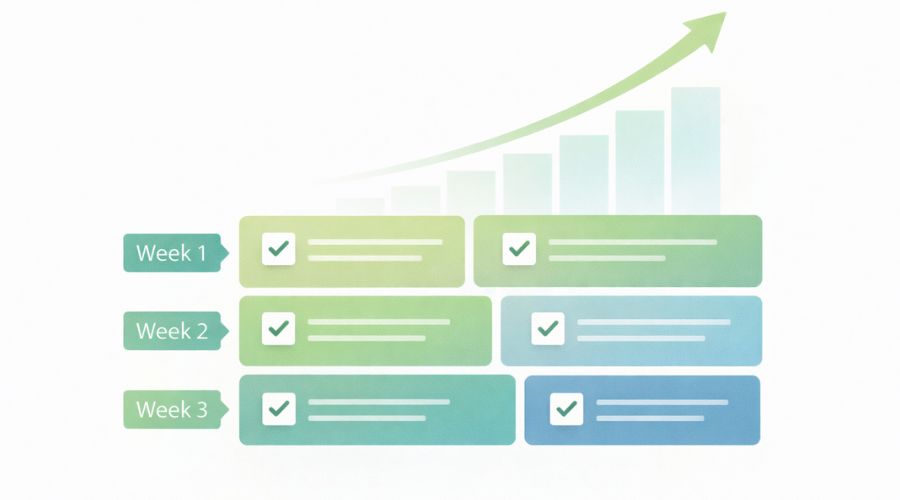
If you need to improve your credit score quickly, random actions won’t help much. What works is following a short, focused plan that targets the biggest scoring factors first.
This is a realistic, legal, and safe 30-day approach designed for most U.S. consumers who want measurable improvement without risking long-term credit health.
Week 1: Check Reports and Stop Ongoing Damage
Your first goal is to stop any ongoing damage before trying to increase your score.
1. Review All Three Credit Reports
You are entitled to free reports from: (You can get them free once per year from each bureau through the official credit reporting system.)
- Experian
- Equifax
- TransUnion
Look for:
- Late payments that should not be there
- Accounts you don’t recognize
- Incorrect balances or limits
- Duplicate listings
Flag anything that is clearly wrong.
2. Bring Any Past-Due Accounts Current
If any account is:
- 30, 60, or 90+ days late
Your priority is to:
- Pay at least the past-due amount
- Set up automatic payments going forward
This does two things:
- Prevents new negative marks
- Signals active account recovery to lenders
Even if the late mark remains, stopping further damage is critical.
Week 2: Attack Credit Card Utilization
This step often produces the largest short-term score increases. This is where most fast gains come from.
3. Target High-Utilization Cards First
Focus on cards where:
- Balance is above 50% of limit
- Or close to maxed out
Goal: bring each card below 30% utilization, ideally below 10%.
Example:
| Card | Limit | Balance | Target |
|---|---|---|---|
| Card A | $1,000 | $900 | Pay to ≤ $300 |
| Card B | $3,000 | $1,200 | Already at 40% |
Reducing one heavily used card often helps more than spreading small payments across many cards.
4. Pay Before Statement Closing Dates
To make sure lower balances actually get reported:
- Pay before your statement closes
- Not just before the due date
If you miss the statement window, the higher balance may still be reported for that month.
Week 3: Dispute Verified Errors
If you found real mistakes in Week 1:
5. File Disputes With Credit Bureaus
Dispute only items that are:
- Factually incorrect
- Not yours
- Reported inaccurately
Include:
- Clear explanation
- Supporting documents if available
The bureaus must:
- Investigate, usually within 30 days
- Update or remove unverified information
If a major error is removed, your score can rise quickly.
Week 4: Protect Your Gains and Avoid New Damage
6. Avoid New Credit Applications
During improvement periods:
- Avoid new cards
- Avoid new loans
- Avoid store financing offers
Each hard inquiry can temporarily lower your score.
7. Set Up Automatic Payments
Late payments are the single most damaging long-term factor.
Set auto-pay for at least:
- Minimum payment on every account
This protects your score even if you forget.
Once your main problem areas are under control, your next steps should depend on whether you are preparing for a specific application.
If You’re Improving Credit for an Upcoming Application
Many people try to raise their score because they’re preparing for:
- Apartment rental
- Auto loan
- Mortgage pre-approval
- Credit card approval
What you do depends on the timeline.
If You Have 30–45 Days
Focus on:
- Paying down card balances
- Bringing accounts current
- Fixing errors
Avoid:
- Opening new credit
- Paying off old collections unless removal is confirmed
If You Have 60–90 Days
You can also:
- Negotiate collections where possible
- Allow multiple billing cycles of low utilization to post
This is often enough time for meaningful score movement.
If You Have Less Than 30 Days
Your options are limited, but still helpful:
- Pay down balances immediately
- Fix any obvious reporting errors
- Avoid new negative activity
Some lenders will pull updated reports if balances update before approval, but many rely on the last reported cycle.
How Lenders View “Fast” Credit Improvements
A rising score helps — but lenders don’t look at the score alone.
They also examine:
This is why two people with the same score may still receive very different lending decisions.
- Payment history patterns
- Number of recent delinquencies
- Overall debt levels
- Account stability
Example:
Someone who:
- Missed payments last month
- Paid down balances this month
May see a score increase, but lenders may still consider them high risk.
That’s why fast fixes should be paired with ongoing stability, not just one-time actions.
Common Beginner Mistakes That Can Slow Down Credit Improvement
❌ Closing Old Accounts
Even if you don’t use them, old accounts:
- Help your credit age
- Support utilization ratios
Closing them often hurts more than it helps.
❌ Moving Debt Around Without Reducing It
Balance transfers or refinancing:
- Do not reduce utilization unless limits increase
- May add inquiries and fees
They are financial tools, not score boosters.
❌ Ignoring Small Late Payments
Even one 30-day late payment can drop a good score significantly.
Always protect payment history first.
❌ Believing Credit Repair Ads
No service can:
- Legally remove accurate negative history
- Create instant credit improvement
Only your financial behavior and verified corrections change your score.
When “Fast” Credit Improvement Is Not the Right Goal
Sometimes, chasing speed causes harm.
Fast strategies may not be best if:
- You are already overextended financially
- Paying balances causes you to miss bills
- You are using emergency savings meant for real emergencies
In those cases, financial stability should come before score improvement.
A higher score won’t help if you can’t cover basic expenses. In those situations, improving cash flow and building emergency savings should come before aggressive credit score strategies.
How to Turn Fast Credit Score Improvements Into Long-Term Credit Health

Quick credit score improvements are helpful, especially when you need approval soon. But strong credit is built over months and years, not days. Without consistent habits, fast gains can disappear just as quickly.
Here’s how to protect your progress and continue building healthy credit after the initial boost.
Keep Credit Utilization Consistently Low
Keeping balances low over time is just as important as paying them down once.
After paying balances down, the goal is to keep them low, not just once.
Best practices:
- Try to keep each card below 30% of its limit
- Below 10% is ideal for strong scores
- Pay balances more than once per month if needed
If spending causes balances to rise again before statement dates, your score can drop even if you always pay on time.
Maintain Perfect Payment History Going Forward
Payment history is the largest factor in both FICO and VantageScore models.
Even after fixing old issues:
- New late payments restart damage
- Recent delinquencies hurt more than older ones
Auto-pay for minimum payments is one of the simplest ways to protect your score long-term.
Let Accounts Age — Don’t Constantly Open and Close Credit
Credit scoring favors stability. Frequent account changes can make your credit profile look risky even if your score is high.
Good long-term patterns include:
- Keeping old accounts open
- Using them occasionally
- Avoiding frequent new applications
Every new account resets average account age and adds inquiry risk.
What If You Have Thin Credit or No Credit History?
Fast improvement strategies mainly help people who already have accounts. If your problem is lack of credit, the approach is different.
Why Thin Credit Limits Fast Improvement
If you only have:
- One account
- Or no recent activity
Your score may not respond much to balance changes.
Scoring models need active data to evaluate risk.
Safer Ways to Build Credit When History Is Thin
These methods focus on building reporting activity, not fast score jumps:
- Secured credit cards (with refundable deposits)
- Credit-builder loans from community banks or credit unions
- Authorized user accounts with long, clean history
Results take longer, but they build real, sustainable credit.
How Often Should You Monitor Your Credit?
Monitoring does not improve your score, but it helps prevent surprises.
Recommended approach:
- Check full credit reports at least once per year
- Check credit scores monthly or quarterly if actively improving
Many banks and card issuers provide free score tracking.
What to Watch For
- Unexpected new accounts
- Sudden balance increases
- Missed payments reported in error
Catching issues early makes correction much easier.
How Fast Credit Improvement Impacts Your Financial Decisions
It’s important to understand what improving your score actually changes.
What a Higher Score Helps With
- Better approval chances
- Lower interest rates
- Higher credit limits
- Easier rental applications
What It Does NOT Fix
A higher score does not change:
- Your income
- Your job stability
- Your existing debt payments
- Your monthly budget
Lenders still review the full financial picture.
That’s why improving credit should go hand-in-hand with improving cash flow and savings when possible.
When to Slow Down and Focus on Financial Stability First
Sometimes, aggressive credit improvement is not the best move.
Consider slowing down if:
- You are using rent or bill money to pay cards
- You have no emergency savings
- You are relying on credit to cover basic expenses
In those cases:
- Stabilizing income and expenses comes first
- Credit repair becomes more effective afterward
Strong finances naturally support strong credit over time.
Preparing for the Next Stage of Credit Growth
Once your score improves, your focus should shift from recovery to maintenance and smart credit use.
Once your score improves:
- Keep balances low
- Keep accounts active
- Apply for new credit only when it serves a real purpose
This helps move from recovery into healthy long-term credit management.
Frequently Asked Questions About Improving Credit Scores Fast
-
How fast can my credit score go up after paying off credit cards?
Most card issuers report balances once per billing cycle. If you pay balances down before the statement closes, you may see score changes within 30 days. Larger reductions in utilization often produce larger increases.
-
Does paying off collections improve credit immediately?
Not usually. Under many FICO scoring models, paid collections still count as negative. However, paying collections may help with approvals and can reduce legal risks. If a collection is removed through a written pay-for-delete agreement, the score improvement can happen once the update posts.
-
Will checking my credit score hurt my credit?
No. Checking your own credit is a soft inquiry and does not affect your score. Only lender applications that trigger hard inquiries can temporarily lower your score.
-
Can I improve my credit in two weeks?
Only limited improvements are possible that fast, usually from:
– Error corrections
– Rapid balance reductions before reporting datesMost changes take at least one reporting cycle to appear.
-
Is it bad to pay off all my credit cards and leave zero balance?
Zero balances are fine and do not harm your credit. However, you should still use cards occasionally so accounts remain active and continue reporting positive behavior.
-
Should I close credit cards I don’t use?
Usually no. Closing cards can increase utilization and reduce account age, both of which may hurt your score. Keeping them open with occasional small use is often better for credit health.
-
How many points can my score increase in three months?
Some people see increases of 30 to 150+ points, depending on starting score and issues corrected. Large increases usually come from fixing major problems like high utilization or serious reporting errors.
-
Do employers and landlords use the same credit score as banks?
Not always. They may use different versions of credit scores or review credit reports directly. Many screening decisions focus more on payment history and outstanding debts than the exact score number.
-
Are credit repair companies worth using?
They cannot remove accurate negative information. You can dispute errors yourself for free. Some people use services for convenience, but they do not have special legal powers to change your credit.
Disclaimer
This content is provided for educational and informational purposes only and does not constitute legal, tax, or financial advice. Credit laws, scoring models, and lender policies can change and may vary by individual circumstances. Before making financial decisions, readers should consult with a qualified financial professional, credit counselor, or legal advisor who can review their specific situation.
