Opening a checking account is one of the first and most important financial steps in the U.S. Whether you’re starting a new job, paying bills, or using a debit card, a checking account is essential for everyday money management.
This guide explains how to open a checking account in the U.S., what documents you need, who is eligible, how fees work, and what to expect before and after opening an account.
Key Takeaways
- A checking account is the main tool Americans use for paychecks, bills, debit cards, and everyday spending.
- Most adults can open one with valid ID, proof of address, and a Social Security Number (SSN) or ITIN.
- You can open an account online or in person, but the required documents are mostly the same.
- Fees, minimum balance rules, and ATM access vary by bank and credit union, so small details matter.
- Opening the account is usually fast, but full access can take a few days depending on how you fund it.
Why Opening the Right Checking Account Matters in Real Life
For most people in the U.S., a checking account is where money actually moves. Paychecks get deposited there. Rent, utilities, and subscriptions get paid from there. Debit cards and mobile payment apps pull from there.
When someone opens the wrong type of account, they often end up with:
- Monthly fees they did not expect
- Limited ATM access and surprise withdrawal charges
- Overdraft fees that stack up quickly
- Account closures if they cannot meet balance requirements
Many people assume all checking accounts work the same. In reality, small differences in fees, balance rules, and access can directly affect cash flow, overdraft risk, and long-term banking access.
That is why the process of opening the account — and choosing the right type — matters as much as the account itself.
Who Can Open a Checking Account in the U.S.
Most checking accounts are designed for individual adults, but several other situations are common and fully allowed under U.S. banking rules.
Adults (18 and Over)
Most banks and credit unions allow any adult to open a checking account if they can provide:
- Valid government-issued photo ID
- Social Security Number (SSN) or Individual Taxpayer Identification Number (ITIN)
- Proof of U.S. address
Citizenship is not required to open a checking account.
Students and Young Adults
Many banks offer student checking accounts, usually for:
- High school students (with a parent or guardian)
- College students (often no co-signer required if over 18)
These accounts often have lower fees or no minimum balance, but age or enrollment verification may be required.
Minors (Under 18)
Children and teens usually need:
- A joint account with a parent or legal guardian
- The adult to be legally responsible for the account
Rules vary by institution, and the adult typically controls withdrawals and account changes.
Non-Citizens, Immigrants, and New Arrivals
Many U.S. banks and credit unions allow non-citizens to open checking accounts using:
- Passport or foreign government ID (varies by bank)
- ITIN instead of SSN (if issued)
- U.S. address and contact information
However, not all banks accept the same documents, so eligibility depends heavily on the institution’s internal policies and federal identity-verification requirements. Calling the branch in advance or checking the bank’s website can prevent wasted visits and delays.
What You Need Before You Apply
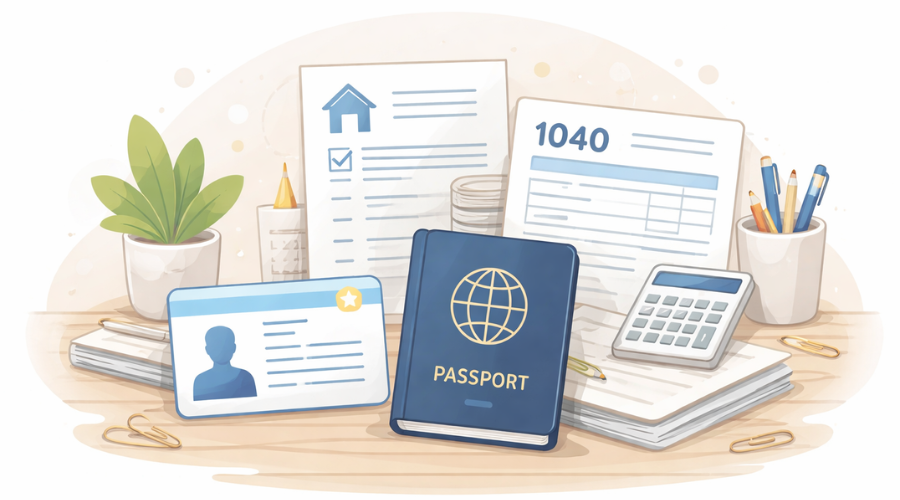
Banks must follow federal “Know Your Customer” (KYC) and anti-money-laundering laws. That means they are legally required to verify your identity before opening any deposit account.
Required Documents (Most Common)
| Requirement | Why Banks Need It |
|---|---|
| Photo ID (driver’s license, state ID, or passport) | Confirms your legal identity |
| SSN or ITIN | Tax reporting and identity verification |
| Proof of address (utility bill, lease, bank statement, or ID with address) | Confirms residency |
| Contact info (phone and email) | Account alerts and security verification |
Some online banks may verify address electronically, but in-person branches usually want physical or digital proof.
Funding the Account
Many banks require an opening deposit, which can range from:
- $0 at some institutions
- $25–$100 at others
Funding methods may include:
- Cash (in branch)
- Debit card
- Transfer from another bank
- Check deposit
Important: If you open online and fund by transfer, full access to funds may be delayed until the transfer clears.
Choosing Where to Open the Account
Before starting the application, it helps to understand the three main types of institutions offering checking accounts in the U.S.
Banks
Includes large national banks and smaller regional banks.
Typical features:
- Many branches and ATMs (for large banks)
- Wide digital tools
- More fee-based account structures
Fee waivers often depend on:
- Minimum balance
- Direct deposit amounts
- Linked accounts
Credit Unions
Not-for-profit financial cooperatives owned by members.
Typical features:
- Lower fees
- More flexible policies
- Fewer branches and ATMs (varies by region)
You must qualify for membership, which may be based on:
- Location
- Employer
- School
- Family membership
Online-Only Banks
Operate without physical branches.
Typical features:
- No monthly maintenance fees on many accounts
- Strong mobile apps
- ATM fee reimbursements at some institutions
Limitations include:
- No cash deposits at branches
- All customer service handled remotely
Each option works well for different lifestyles, income patterns, and access needs. There is no universal “best” choice. The best option depends on how often you use cash, whether you qualify for fee waivers, and how much in-person service you prefer.
Step 1: Decide the Type of Checking Account You Need
Before filling out any application, it is important to match the account type to how you actually use money.
Common checking account categories include:
- Standard checking
- Free or no-fee checking
- Student checking
- Second-chance checking (for people with past banking issues)
- Interest-bearing checking (rare and usually with higher balance requirements)
Each type comes with different:
- Fee structures
- Balance rules
- Eligibility requirements
Choosing the wrong category is one of the most common reasons people end up paying avoidable fees.
Key warning: An account advertised as “free” usually means no monthly fee, not no fees at all. Overdraft, ATM, and paper statement fees may still apply.
At this point, you should understand who can open a checking account, what documents are required, and where you can apply. The next step is the actual application process — both online and in person — and what to expect after you submit your information.
Step 2: Apply for the Checking Account (Online or In Person)
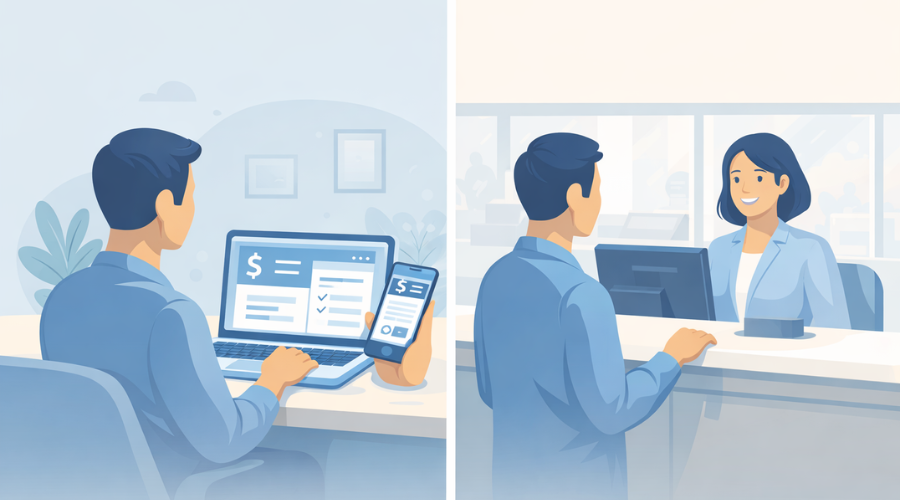
Once you have chosen the institution and the type of checking account, opening a checking account in the U.S. is usually a straightforward process. The steps are similar whether you apply online or at a branch, but the experience and timing can differ.
Option A: Opening a Checking Account Online
Many banks and credit unions allow you to complete the full application on their website or mobile app.
Typical online steps include:
- Entering personal details
- Full legal name
- Date of birth
- Social Security Number (SSN) or ITIN
- Current U.S. address
- Uploading or verifying identity
- Some institutions verify identity automatically using databases
- Others may ask for a photo of your ID
- Choosing account features
- Debit card delivery address
- Paperless or paper statements
- Optional overdraft settings
- Funding the account
- Bank transfer
- Debit card
- Check deposit (mobile)
If everything verifies correctly, the account may be opened within minutes, but full access to funds can take 1–5 business days depending on how you funded it.
If you freeze your credit or have limited digital records, online verification may fail even if your documents are valid.
Important: If identity verification fails online, the bank may require you to visit a branch or mail documents before activating the account.
Option B: Opening a Checking Account at a Branch
Opening in person can be helpful if:
- You prefer face-to-face assistance
- Your documents are unusual or foreign-issued
- You want to deposit cash immediately
At the branch, a bank representative will:
- Review your ID and documents
- Enter your information into their system
- Explain basic account rules and fees
- Collect the opening deposit, if required
In many cases, you can:
- Receive a temporary debit card the same day
- Set up online banking before leaving
However, some banks still mail the permanent debit card separately, which may take 5–10 business days. Visiting a branch may also take more time, but it can reduce delays if your documents need manual review.
What Happens After You Submit the Application
Opening the account does not always mean everything is immediately available.
Identity and Risk Checks
Banks may review:
- Identity verification databases
- ChexSystems or similar consumer reporting agencies
- Past account closures or unpaid balances
If issues appear, the bank may:
- Delay approval
- Request more documents
- Deny the application
This does not affect your credit score, but it can affect whether the bank allows you to open the account. If your application is denied based on a consumer banking report, the bank must tell you which agency was used and how to request a free copy of your report.
When Your Money Becomes Available
Availability depends on how funds were added:
| Funding Method | Typical Availability |
|---|---|
| Cash deposit (in branch) | Same day |
| Debit card funding | Same or next business day |
| Bank transfer (ACH) | 1–5 business days |
| Check deposit | Partial availability in 1–2 days, full after clearing |
Banks follow federal funds availability rules, but they can place longer holds in certain situations, such as new accounts or large deposits. These hold limits are based on federal funds availability rules set by U.S. regulators.
Step 3: Set Up Your Account for Everyday Use
Once the account is officially active, setting it up correctly helps avoid fees and payment problems later.
Activate Your Debit Card
Debit cards usually arrive by mail if not issued at the branch.
Activation typically requires:
- Calling an automated phone number
- Using the bank’s mobile app
- Making a PIN-based transaction
Until activation, the card cannot be used for purchases or ATM withdrawals.
Enroll in Online and Mobile Banking
Most routine account management now happens digitally.
This allows you to:
- Check balances in real time
- Set up bill payments
- Transfer money
- Receive low-balance alerts
Account alerts are especially important for avoiding overdrafts and accidental negative balances. Alerts can also help you spot unauthorized transactions quickly, which is important for fraud protection.
Set Up Direct Deposit (If Applicable)
If you receive wages, benefits, or regular payments, direct deposit:
- Reduces the risk of lost checks
- Often qualifies you for fee waivers on monthly maintenance fees
- Speeds up access to your money. Some banks also release direct deposits early, giving access to funds before the official payday.
Your employer or benefits provider will need:
- Bank routing number
- Your checking account number
These numbers are available inside online banking or on official account documents.
Step 4: Understand Fees Before They Happen
Many people open accounts without fully understanding the fee rules, then discover problems later. Banks are required to disclose fees in advance, but the responsibility to review the details still falls on the account holder.
Common checking account fees include:
- Monthly maintenance fees
- Overdraft fees
- Out-of-network ATM fees
- Paper statement fees
- Returned deposit fees
Monthly Maintenance Fees
Some accounts charge a monthly fee unless you meet conditions such as:
- Minimum daily balance
- Certain monthly deposit amounts
- Linked savings accounts
If you cannot reliably meet the waiver conditions, a lower-fee account may be safer.
Overdraft Fees (A Major Cost Risk)
Overdraft occurs when you spend more than your available balance.
Possible outcomes:
- Transaction declined
- Transaction approved with overdraft fee
- Negative balance until repaid
Overdraft fees can range widely and may apply per transaction, not per day.
Critical warning: Multiple small purchases can trigger multiple overdraft fees, even on the same day.
Many banks allow you to:
- Opt out of overdraft coverage for debit card purchases
- Set balance alerts
- Link savings accounts for automatic transfers
These tools reduce risk but do not eliminate it entirely.
ATM Fees
You may be charged:
- By your bank
- By the ATM owner
- Or both
Some institutions reimburse ATM fees, while others charge for every out-of-network withdrawal.
If you rely heavily on cash, ATM access should be part of your account decision.
Situations Where Applications May Be Denied
Banks are allowed to refuse account openings in certain cases.
Common reasons include:
- Unpaid negative balances at previous banks
- Suspected identity verification issues
- Incomplete or inconsistent information
This does not mean you can never open a checking account, but you may need to look for: In many cases, banks will still allow basic accounts with extra monitoring and higher fees.
- Second-chance checking programs
- Credit unions with alternative review policies
These options usually come with higher fees and restrictions, so they are best seen as temporary solutions.
Now that you understand how to apply, what happens after approval, and how fees work, the next step is choosing the right type of checking account based on your financial situation and risk tolerance.
Types of Checking Accounts in the U.S.
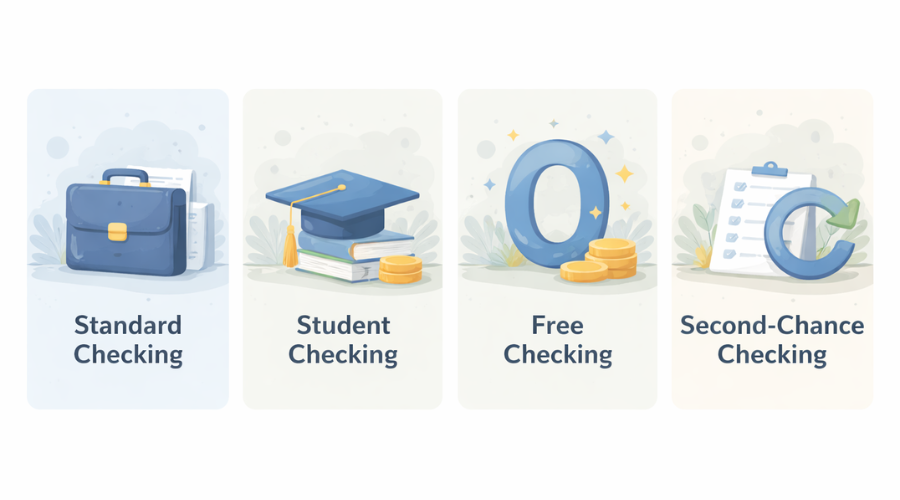
Not all checking accounts are built the same. Banks and credit unions design different account structures based on how people use money, how much they keep in the account, and what services they need.
Choosing the right type helps reduce fees, improves access to your money, and lowers the risk of account problems.
Standard (Basic) Checking Accounts
This is the most common type of checking account for adults.
Typical features
- Debit card
- Online and mobile banking
- Bill pay
- Check-writing (sometimes optional)
- Branch and ATM access (varies by institution)
Common conditions
- Monthly maintenance fee unless you meet waiver rules
- Possible minimum balance requirements
- Overdraft fees apply
Some banks also require a minimum number of monthly transactions or direct deposits to avoid fees.
Best for
- People with steady income
- Those who can maintain required balances or direct deposits
Avoid if
- Your balance often drops very low
- Your income is irregular and may not meet fee waiver thresholds
Free or No-Maintenance Checking Accounts
These accounts advertise no monthly fee.
What “free” usually means
- No monthly maintenance fee
- No minimum balance requirement
Still check for
- Overdraft fees
- ATM fees
- Paper statement fees
- Check-order charges
Best for
- People who want simple, low-cost banking
- Those who keep small balances
Avoid if
- You need frequent out-of-network ATM access without reimbursements. Some free accounts also limit the number of free withdrawals per month.
Important: “Free” does not mean fee-free in all situations. It usually applies only to the monthly account fee.
Student Checking Accounts
Designed for high school and college students.
Typical features
- No or very low monthly fees
- No minimum balance
- Mobile banking and debit card access
Eligibility rules
- Age limits (often under 24 or 25)
- Proof of enrollment may be required
- Minors usually need a joint adult owner
Best for
- Students managing part-time income or allowances
What happens later
- Accounts often convert to standard checking after graduation or age limits, which may introduce fees
Interest-Bearing Checking Accounts
Some checking accounts pay small amounts of interest.
Typical conditions
- Higher minimum balance requirements
- Transaction limits
- Direct deposit requirements
Reality check
- Interest rates are usually much lower than savings accounts
- Fees can easily outweigh earned interest
Any interest earned is taxable income and may be reported to the IRS.
Best for
- People who keep higher balances and meet all conditions
Avoid if
- You maintain low balances or prefer predictable costs
Second-Chance Checking Accounts
Designed for people who were previously denied regular accounts due to past banking issues.
Typical features
- Limited overdraft options
- Higher monthly fees
- Fewer account perks
Best for
- Rebuilding access to basic banking services
Long-term plan
- Many banks review accounts after several months and may upgrade customers to standard accounts with better terms
These accounts are not ideal long-term, but they provide legal access to banking when other options are unavailable. Users should plan to move to standard accounts once their banking history improves.
Pros and Cons of Having a Checking Account
While most Americans rely on checking accounts, it is still helpful to understand both sides clearly.
✔ Pros
| Benefit | Why It Matters |
|---|---|
| Safe place for money | Protected by federal deposit insurance (FDIC or NCUA) |
| Easy bill payments | Supports rent, utilities, subscriptions, and transfers |
| Debit card access | Useful for everyday purchases |
| Direct deposit | Faster and more reliable than paper checks |
| Financial records | Statements help track spending and income |
✖ Cons
| Risk or Limitation | Why It Matters |
|---|---|
| Fees | Monthly, overdraft, and ATM fees can add up |
| Low interest | Money usually does not grow in checking |
| Overdraft risk | Can create negative balances and penalties |
| Not designed for saving | Long-term funds are better kept elsewhere |
Common Mistakes People Make When Opening Checking Accounts
Many problems are not caused by bad banks, but by misunderstandings at the time of account opening.
Ignoring the Fee Waiver Rules
People often hear “no monthly fee” but miss that it only applies if they:
- Keep a certain balance
- Receive qualifying direct deposits
When income changes, fees may start appearing without warning.
Overlooking ATM Networks
Using out-of-network ATMs can lead to:
- Fees from your bank
- Fees from the ATM owner
Over time, these small charges can cost more than monthly account fees.
Turning on Overdraft Coverage Without Understanding It
Some people allow overdraft approval to avoid declined purchases, not realizing that:
- Each approved transaction may carry a fee
- Multiple fees can apply in a single day
For many people, opting out of debit-card overdrafts is safer.
Opening Multiple Accounts Without Tracking Them
Unused accounts may still:
- Accumulate fees
- Be closed by the bank
- Appear in consumer banking reports
Closing accounts properly matters just as much as opening them.
How Checking Accounts Affect Credit and Financial Records
A common misunderstanding is that checking accounts build or damage credit scores.
Checking Accounts and Credit Scores
- Checking accounts do not appear on credit reports
- Opening or closing one does not change your credit score
However, related problems can still affect future financial access.
Banking History Databases (Like ChexSystems)
Banks often report to consumer banking databases when accounts are:
- Closed with unpaid negative balances
- Involved in suspected fraud
This can make opening new accounts difficult for several years, even if your credit score is good. Consumers have the right to request and dispute incorrect information in these reports.
Key takeaway: Poor checking account management does not hurt your credit score directly, but it can limit access to future bank accounts.
When a Savings Account Might Be a Better Fit for Certain Money
While this guide focuses on checking accounts, not all money should stay in checking.
Money that is meant for:
- Emergency funds
- Short-term goals
- Money you should not spend casually
often belongs in savings, not checking. This reduces accidental spending and overdraft risk.
Next, we will look at special situations where opening a checking account can involve additional rules or risks, such as joint accounts, accounts for children, immigration-related issues, and what to do if your application is denied.
Special Situations When Opening a Checking Account
Not everyone opens a checking account under the same circumstances. Family structure, immigration status, and past banking history can all affect which options are available and what extra steps may be required.
Opening a Joint Checking Account
A joint checking account is owned by two or more people, usually spouses, partners, or family members.
How it works
- All owners can deposit and withdraw money
- Each owner usually receives a debit card
- All owners are legally responsible for the account balance. This means unpaid fees or negative balances can affect all account holders, not just the person who made the transaction.
Common uses
- Household bill payments
- Shared expenses
- Caregiving situations
Important risks
- Any owner can legally withdraw all funds
- Overdrafts affect all owners equally
- Relationship disputes can create financial problems
Key warning: Joint accounts should only be used when both people fully trust each other’s spending behavior and financial habits.
Opening an Account for a Child or Teen
Minors generally cannot open individual checking accounts alone.
Typical structure
- Account is jointly owned by parent or legal guardian
- Adult controls major account changes
- Child may have debit card with spending limits
Benefits
- Teaches basic money management
- Allows allowances or part-time income deposits
Transition to adult account
- At a certain age (often 18 or early 20s), the account may convert to a regular adult checking account with new fee rules
Parents should always review how the account will change over time so fees do not start unexpectedly.
Opening a Checking Account as an Immigrant or New Resident
U.S. law allows non-citizens to open bank accounts, but banks must still meet federal identity verification requirements.
Possible documents (varies by institution)
- Passport (U.S. or foreign)
- ITIN instead of SSN (if issued)
- Proof of U.S. address
What varies by bank
- Whether foreign IDs are accepted
- Whether ITIN is accepted for tax reporting
- Additional verification steps
Because rules differ, people in this situation often need to:
- Visit branches directly
- Call ahead to confirm document acceptance
There is no single nationwide rule that guarantees approval across all banks. Credit unions and community banks may be more flexible than large national banks in some regions.
What If You Are Denied a Checking Account?
Denials usually relate to prior banking problems, not credit scores.
Common causes
- Unpaid negative balances
- Accounts closed for repeated overdrafts
- Suspected fraudulent activity
If denied, you can:
- Ask which consumer reporting agency was used
- Request your free report from that agency. Review the report carefully for errors, and dispute any incorrect information.
- Look for second-chance checking programs
Over time, maintaining clean banking behavior can restore access to standard accounts.
Legal and Regulatory Protections for Checking Accounts
Checking accounts in the U.S. operate under federal and state banking regulations designed to protect consumers.
Deposit Insurance
Most checking accounts at banks are protected by FDIC deposit insurance, while credit unions are covered by NCUA insurance.
Coverage is generally up to $250,000 per depositor per institution per ownership category (based on current federal limits).
This protects you if the bank or credit union fails, not against fraud or spending losses.
Fee Disclosure Rules
Banks must provide:
- Fee schedules
- Account terms
- Overdraft policies
These disclosures are legally required, but many people skip reading them during account opening, which leads to confusion later.
Funds Availability Rules
Federal law limits how long banks can hold deposited funds, but allows longer holds for:
- New accounts
- Large deposits
- Repeated overdraft history
Banks must notify you when holds are placed.
How a Checking Account Fits Into Long-Term Financial Health
A checking account itself does not build wealth, but it plays a major role in how smoothly money moves through your life.
Cash Flow Control
Good checking account habits help with:
- On-time bill payments
- Avoiding late fees
- Keeping spending visible and trackable
This indirectly supports:
- Better budgeting
- Stronger credit management
- More stable savings habits
Relationship With Other Financial Products
Many financial systems connect to checking accounts, including:
- Direct deposit payroll
- Loan auto-pay systems
- Investment account funding
Account disruptions can create cascading problems if payments fail or balances drop unexpectedly.
That is why choosing a stable, low-fee account structure is often more important than short-term perks.
Next, we will go through a practical step-by-step checklist for choosing an account, setting it up correctly in the first 30 days, and spotting early signs that an account may be costing too much.
Step-by-Step Checklist: From Choosing an Account to First 30 Days of Use
This checklist brings together the practical steps that help prevent common problems after opening a checking account. Following these steps can also reduce the risk of fees, frozen payments, and unexpected account closures.
Before You Apply
Confirm eligibility and documents
Make sure you have:
- Valid photo ID
- SSN or ITIN
- Proof of U.S. address (if required)
If your documents are unusual (foreign passport, temporary address), confirm acceptance with the bank first.
Review the full fee schedule
Do not rely only on marketing summaries. Check:
- Monthly maintenance fees
- Balance or deposit requirements to waive fees
- Overdraft fees and opt-in policies
- ATM usage fees
If any fee depends on conditions, ask whether your current income and balances realistically meet those rules.
Check ATM and branch access
Especially important if you:
- Use cash frequently
- Travel often
- Live far from physical branches
Some online banks reimburse ATM fees, others do not.
During the Application
Enter your information carefully
Errors in:
- Name spelling
- Address
- Social Security or ITIN numbers
can delay approval or create identity verification problems. Inconsistent information can also trigger fraud reviews, which may temporarily block account access.
Choose overdraft settings intentionally
If offered, decide whether you want:
- Transactions declined when funds are insufficient
- Transactions approved with fees
There is no universal “best” choice. The safer option for many people is to avoid fee-based approvals.
Fund the account in a way that fits your needs
If you need immediate access to money:
- Cash deposit in branch is fastest
- Debit card funding is usually quicker than transfers
If you can wait, bank transfers are fine but may take several business days.
First Week After Opening
Activate your debit card and test access
Make a small transaction to confirm:
- Card works
- PIN is correct
- Account balance updates properly
Fixing issues early is easier than discovering them during urgent purchases.
Set up alerts
Enable alerts for:
- Low balances
- Large transactions
- Deposits and withdrawals
These alerts reduce the chance of accidental overdrafts and fraud going unnoticed.
Set up direct deposit and bill payments
Once direct deposit starts:
- Monitor the first deposit carefully
- Confirm correct amounts and timing
For bills:
- Start with small, non-critical payments
- Confirm that payments clear correctly before moving all bills. Keep backup payment methods active until you confirm everything is processing normally.
First 30 Days: What to Watch For
Review your first statement
Check for:
- Unexpected monthly fees
- ATM charges
- Paper statement fees
If fees appear, review whether you met waiver conditions or whether the account structure is right for you.
Track how often you dip close to zero
Frequent low balances increase:
- Overdraft risk
- Declined transactions
If this happens often, consider:
- Linking a savings account for transfers
- Switching to a no-minimum-balance account
Keep records of account terms
Save:
- Account agreement
- Fee disclosures
- Screenshots of advertised terms (if opened online) Digital copies are usually enough, but make sure they are backed up securely.
This helps if disputes arise later.
Myths vs Facts About Opening Checking Accounts
Misinformation leads many people to delay opening accounts or choose poorly matched options.
Myth: You need perfect credit to open a checking account
Fact: Credit scores are usually not reviewed. Banks focus on banking history, not credit history.
Myth: All checking accounts charge monthly fees
Fact: Many accounts have no monthly fees, especially online and student accounts. However, other fees may still apply.
Myth: Once your account is open, fees cannot change
Fact: Banks can change fee structures with notice. It is important to read account notices and emails.
Myth: Overdraft protection always protects you
Fact: Overdraft protection often means fee-based transaction approval, not free protection. Some linked-transfer programs exist, but not all overdrafts are covered.
Myth: Closing a checking account hurts your credit score
Fact: Closing checking accounts does not affect credit scores. However, closing with unpaid balances can affect future banking access.
When It Makes Sense to Change or Close a Checking Account
Opening a checking account is not a lifetime commitment.
Consider switching if:
- Monthly fees no longer fit your income
- ATM access becomes inconvenient
- Customer service issues persist
- Account terms change significantly
How to Close an Account Safely
Before closing:
- Move all direct deposits
- Cancel bill payments
- Transfer remaining balance
- Confirm account shows $0 balance
After closing:
- Request written confirmation if possible
- Monitor for any delayed fees or deposits
Leaving unpaid balances can affect future account eligibility.
Below are answers to common questions Americans search when opening or managing a checking account, including approval time, multiple accounts, lost debit cards, and account freezes.
Frequently Asked Questions (FAQs) about how to open a checking account
These are real-world questions many Americans search when opening or managing a checking account in the U.S.
-
How long does it take to open a checking account?
If you apply online and identity verification is successful, the account may open the same day. In-branch applications are often approved immediately.
However, full access to deposited money can take 1 to 5 business days depending on:
– How the account was funded
– Whether the account is brand new
– Whether deposits are subject to holdsDebit cards mailed to your home usually arrive within 5 to 10 business days. Some banks offer virtual debit cards in their mobile apps that can be used before the physical card arrives.
-
Can I open more than one checking account?
Yes. There is no legal limit on the number of checking accounts you can have.
People sometimes use multiple accounts to:
– Separate bills from spending
– Share expenses with another person
– Manage business income (if allowed by the bank)However, each account has its own:
– Fee rules
– Minimum balance requirementsOpening multiple accounts increases the risk of missing fee conditions if balances become too low.
-
Do I need a job to open a checking account?
No. Employment is not required.
You still need:
– Valid identification
– SSN or ITIN
-Address verificationHowever, some fee waivers require direct deposit, which usually comes from employment or benefits. Without deposits, monthly fees may apply depending on the account type. Government benefits and other regular payments can also qualify as direct deposits for some fee waivers.
-
What happens if my debit card is lost right after opening the account?
You should report the loss immediately through:
– Mobile banking app
– Bank customer serviceBanks typically:
– Cancel the old card
– Issue a replacement
– Block unauthorized transactionsReplacement cards usually arrive within a few business days, though some banks offer expedited shipping for a fee.
Federal consumer protection rules generally limit your liability if you report the loss quickly, but delays in reporting increase financial risk.
-
Can a bank freeze or close my checking account?
Yes, in certain situations, banks can:
– Freeze accounts during fraud investigations
– Close accounts for repeated overdrafts
– Close accounts for suspected illegal activity
– Close accounts for violation of account termsBanks must follow legal procedures, but they are allowed to protect their systems and comply with federal regulations. Freezes are often temporary while the bank reviews activity, but access to funds may be limited during that time.
-
Can I open a checking account without an SSN?
Sometimes, yes.
Some banks accept an ITIN instead of an SSN, especially for:
– Non-citizens
– New residentsHowever, acceptance varies by institution, and some banks require SSN only. This is not governed by a single nationwide rule.
-
What is the minimum balance required to keep a checking account open?
There is no universal minimum.
Some accounts require:
– No minimum balance
– A minimum daily balance to avoid fees
– A minimum balance to keep the account from closingIf balances remain too low for extended periods, some banks may close inactive or negative-balance accounts. Banks may also close accounts that remain inactive for long periods with no deposits or transactions.
-
Will opening a checking account affect my taxes?
Opening the account itself does not create tax obligations.
However:
– Interest earned (if any) is taxable income
– Banks report interest to the IRS if it exceeds reporting thresholds. This is typically reported on Form 1099-INT.Most standard checking accounts earn little or no interest, but any interest earned is still taxable.
-
Is my money safe in a checking account?
Money is generally protected against bank failure by:
– FDIC (banks) or
– NCUA (credit unions)Up to $250,000 per depositor per institution per ownership category, based on current federal limits.
This does not protect against:
– Scams you authorize
– Spending mistakes
– Fraud that is not reported promptlyAccount monitoring is still important.
-
Can I open a checking account for someone else?
You cannot open an individual account in someone else’s name without their participation.
You can:
– Open a joint account with them
– Open a custodial account for a minor (if legally allowed)Each owner must meet identification and verification requirements. In limited cases, power of attorney may allow account access, but it does not replace ownership or identification rules.
-
Do checking accounts ever affect government benefits?
The account itself does not change eligibility for benefits.
However:
– Account balances may count toward asset limits in certain assistance programs
– Deposits are visible in account recordsPeople receiving needs-based benefits should confirm how bank balances affect program rules. Local benefits offices or program websites usually explain asset limits and reporting requirements.
Disclaimer
This content is provided for educational and informational purposes only. It does not constitute legal, tax, or financial advice.
Banking rules, fees, and eligibility requirements vary by institution, state, and individual circumstances, and they may change over time.
Readers should consult a qualified financial professional, tax advisor, or legal professional before making decisions based on personal financial situations.
