
Key Takeaways
- Many U.S. checking and savings accounts charge monthly maintenance fees, but most of these fees can be avoided if you meet specific bank requirements.
- The most common fee waivers are based on minimum balance rules or regular direct deposits.
- Fee policies vary by bank, credit union, account type, and sometimes by age, student status, or special programs.
- Knowing how fee rules work helps you protect your everyday cash and avoid slow, unnoticed losses over time.
Why Account Fees Matter in Everyday American Life
In the U.S., most people open checking and savings accounts to keep their money safe and easy to use, but many are surprised by checking and savings account fees that apply simply for having an account. What surprises many Americans is that simply having an account can cost money, even if you rarely use it.
A $10 or $15 monthly fee may not feel like much at first. But over a year, that can quietly add up to $120–$180, taken directly from your balance. For people living paycheck to paycheck, or trying to build emergency savings, these fees can slow progress and cause frustration.
Confusion often happens because:
- Fee rules are written in small print
- Banks advertise accounts as “free,” but only if conditions are met
- People don’t realize when they stop qualifying for fee waivers
Understanding how monthly fees and minimum balance rules work helps you keep more of your own money — without changing banks unnecessarily.
What Are Monthly Maintenance Fees?
A monthly maintenance fee (sometimes called a service fee) is a charge the bank applies simply for keeping the account open.
Typical Monthly Fees (General U.S. Ranges)
| Account Type | Common Monthly Fee Range |
|---|---|
| Basic checking | $8 – $15 |
| Interest checking | $10 – $25 |
| Basic savings | $5 – $10 |
| Money market savings | $10 – $20 |
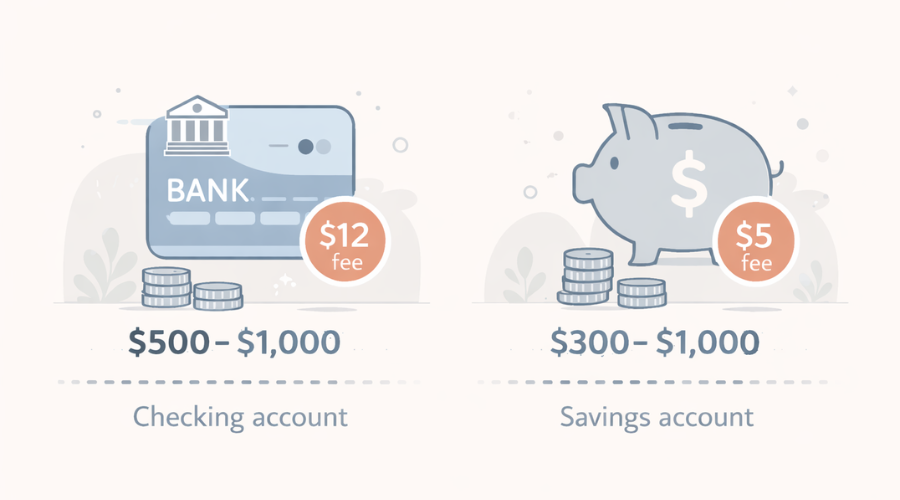
Important: Many accounts waive these fees if you meet specific requirements. The fee is charged only when you fail to meet those conditions.
Banks justify these fees as covering:
- Account administration
- Branch access
- Customer service
- Technology and security systems
Credit unions may also charge fees, but they are often lower and more flexible, depending on membership policies.
What Does “Minimum Balance” Mean?
A minimum balance requirement means you must keep at least a certain amount of money in your account to avoid paying the monthly fee.
Banks use different methods to measure whether you meet the balance requirement.
There are two common types of minimum balance rules:
Daily Minimum Balance
You must keep your balance above the minimum every day of the month.
If your balance drops below the requirement even once, the monthly fee may apply.
Average Daily Balance
The bank adds up your balance each day and divides by the number of days in the month.
If the average stays above the required amount, the fee is waived — even if you drop below on some days.
Typical Minimum Balance Thresholds
| Account Type | Common Balance Requirement |
|---|---|
| Basic checking | $500 – $1,500 |
| Interest checking | $1,500 – $5,000 |
| Basic savings | $300 – $1,000 |
| Money market savings | $2,500 – $10,000 |
These are not legal limits — they are bank policy decisions and vary widely by institution.
Other Common Ways Banks Waive Monthly Fees
Minimum balance is not the only way to avoid fees. Many accounts offer alternative waiver options.
Common Fee Waiver Conditions
You may avoid monthly fees if you:
- Receive direct deposits totaling a certain amount per month (often $500–$1,500)
- Maintain a combined balance across multiple accounts at the same bank
- Are a student, senior, or part of special programs
- Use online-only accounts with no branch services
Some banks allow multiple ways to qualify, while others require very specific actions.
Missing even one required condition can cause the full monthly fee to be charged for that month.
Warning: If your direct deposit stops (job change, freelance income, benefit delays), your fee waiver can disappear without warning.
How Checking and Savings Fees Affect Your Money Over Time
Fees do more than reduce your balance today — they also reduce your future savings growth.
Example: Small Fees, Long-Term Impact
If someone pays $12 per month in fees:
- $144 per year lost to fees
- $720 over five years
- Plus lost interest on that money
For people trying to build:
- Emergency funds
- Moving savings
- Medical reserves
- Down payment funds
these small losses slow progress and increase financial stress.
Fees also increase the risk of:
- Overdrafts, if the fee pushes the balance too low
- Account closures due to repeated negative balances
- Additional penalty fees after the first charge
Why Banks Structure Fees This Way
Banks design fee rules to encourage certain customer behaviors, such as:
- Keeping higher balances
- Using the account actively for payroll
- Keeping multiple products with the same bank
From a business perspective, accounts with steady deposits and balances are more profitable and predictable. Customers who don’t meet those patterns often pay fees to offset service costs.
This does not mean fees are unavoidable — it means the system rewards people who match the bank’s preferred usage style.
Who Is Most at Risk of Paying These Fees?
Certain groups are more likely to face monthly fees and minimum balance penalties.
Higher Risk Groups
- People with irregular income
- Hourly workers with changing pay schedules
- Gig workers and freelancers
- People rebuilding after financial setbacks
- Young adults new to banking
These customers may:
- Miss direct deposit thresholds
- Dip below balance minimums between paychecks
- Forget about fee rules after opening the account
Understanding fee mechanics early can prevent long-term losses.
Pros and Cons of Checking and Savings Accounts With Monthly Fees and Balance Requirements
Not all fee-based accounts are automatically bad. Some people benefit from the features they provide. What matters is whether the benefits match how you actually use the account.
Pros and Cons Table
| Aspect | Pros | Cons |
|---|---|---|
| Monthly maintenance fees | May support better branch access and customer service | Reduces your balance even when you barely use the account |
| Minimum balance requirements | Encourages saving and higher balances | Hard to maintain with variable income |
| Fee waiver options | Can avoid fees with direct deposit or linked accounts | Easy to lose waiver if conditions change |
| Interest-bearing accounts | May earn some interest on balances | Interest often does not fully offset fees |
| Premium account tiers | May include perks like free checks or ATM reimbursements | Often require higher balances and stricter rules |
Key takeaway: An account only makes sense if you consistently qualify for fee waivers or clearly benefit from the added services. Otherwise, fees quietly drain your everyday money.
Real-Life Examples of How Fees Show Up
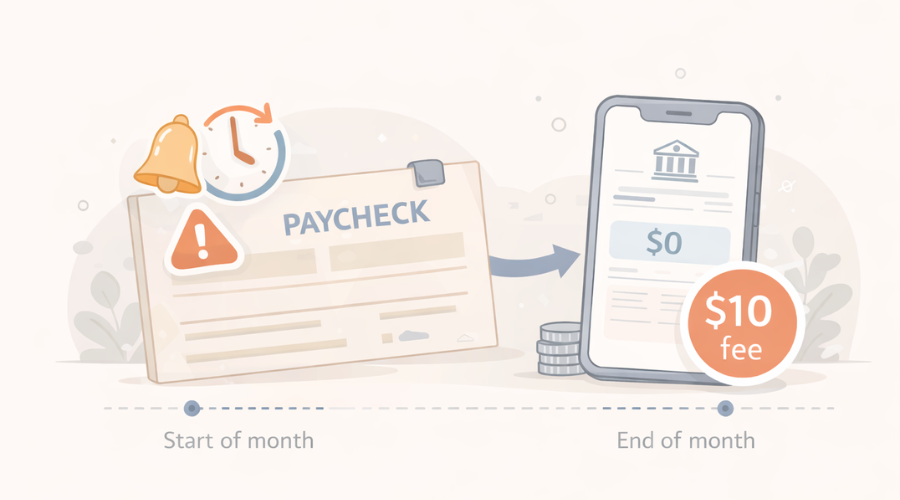
Understanding the rules is easier when you see how they affect real situations.
Example 1: Missed Direct Deposit
Maria has a checking account that waives its $12 monthly fee if she receives at least $1,000 in direct deposits each month.
- She changes jobs.
- Her first paycheck arrives by paper check instead of direct deposit.
- That month, the bank charges the full fee.
She may not notice until reviewing her statement weeks later.
Example 2: Savings Balance Dips Below Minimum
James keeps $800 in savings to avoid a $5 monthly fee that requires a $500 minimum daily balance.
- He withdraws $400 for car repairs.
- His balance stays under $500 for several days.
- Even though he later replaces the money, the fee still applies for that month.
Example 3: Combined Balance Rule Confusion
Some banks allow you to avoid fees by keeping a total balance across all accounts.
If your checking, savings, and money market accounts together stay above a threshold, the fee is waived.
But if one account closes or funds move between banks,
you may fall below the combined requirement without realizing it.
you may fall below the combined requirement without realizing it.
Common Mistakes People Make With Fee Rules
Many people pay fees not because the rules are impossible, but because they misunderstand them.
Frequent Errors
- Assuming “free checking” means free no matter what
- Forgetting that fee waivers must be met every month
- Confusing minimum daily balance with average daily balance
- Not noticing fee changes after account upgrades
- Ignoring account notices and statement messages
Banks are required to disclose fee terms, but they are not required to remind customers each time they stop qualifying for fee waivers.
Important: Always check whether your fee waiver is based on activity, balances, or both.
How to Tell If Your Account Fees Are Reasonable for You
Instead of comparing yourself to other people, compare your account rules to your own financial patterns.
Ask yourself:
- Do I regularly meet the balance requirement without stress?
- Is my income consistent enough for direct deposit rules?
- Am I using features that justify paying fees?
- Have I paid fees more than once in the past year?
If you answer “no” to most of these, the account may not match your current situation — even if it sounded good when you opened it.
Legal and Regulatory Protections Around Account Fees
Banks in the U.S. cannot charge hidden fees without disclosure.
Deposits at FDIC-insured banks are also protected by federal deposit insurance protections, which help keep customer money safe if a bank fails.
Federal rules require that:
- Fees are listed in account agreements
- Changes are communicated before they take effect
- Statements clearly show when fees are charged
However, statements may arrive after fees are already deducted, so regular account monitoring is important
However:
- Banks are allowed to set their own pricing structures
- There is no federal cap on monthly maintenance fees
- Fee waiver programs are voluntary, not legally required
This is why consumer awareness matters more than legal limits when it comes to everyday banking costs.
Do Fees Affect Your Credit Score?
Monthly account fees do not directly affect your credit score because checking and savings accounts are not credit products.
But fees can create indirect problems:
- Fees can trigger overdrafts
- Overdrafts can lead to negative balances
- Unpaid negative balances can be sent to collections
- Collections accounts can appear on credit reports
So while the fee itself is not reported, the consequences of repeated fees can become a credit issue if not managed.
Myths vs Facts About Account Fees
| Myth | Fact |
|---|---|
| All banks charge the same fees | Fee structures vary widely by institution and account type |
| Savings accounts are always free | Many still charge monthly fees if balances are low |
| Once waived, fees stay waived | Waivers must usually be earned every month |
| Higher balance always means better account | Higher balance requirements can increase stress and risk |
| Fees only matter if money is low | Even higher earners lose money unnecessarily through avoidable fees |
How to Avoid or Reduce Monthly Account Fees (Without Changing Banks)
Many people can avoid fees by adjusting how they use their current accounts. Small changes often make a big difference.
Step 1: Identify Your Exact Fee Waiver Rules
Start with your most recent bank statement or online account summary and look for:
This information is usually found in the account details or fee schedule section.
- Monthly maintenance fee amount
- Reason the fee was charged (if it was)
- Fee waiver conditions
Banks usually list waiver rules such as:
- Minimum daily balance
- Average daily balance
- Required direct deposit amount
- Combined balance across accounts
Important: Do not rely on what you remember from when you opened the account. Fee structures change over time.
Step 2: Match Waiver Rules to Your Income Pattern
Different waiver methods work better for different situations.
| If Your Situation Is… | Best Waiver Method |
|---|---|
| Steady paycheck | Direct deposit requirement |
| Variable income | Average daily balance |
| Savings-focused | Combined balance across accounts |
| Multiple accounts | Linked balance waiver |
For example, freelancers often struggle with direct deposit rules but can manage average balance thresholds if they keep a buffer in savings.
Step 3: Use Account Alerts and Balance Notifications
Most banks allow you to set alerts for:
- Balance dropping below certain levels
- Fees being charged
- Direct deposit failures
These alerts help you:
- Transfer money before fees trigger
- Catch problems early
- Avoid repeated monthly charges
While alerts do not change fee rules, they reduce surprises.
Step 4: Ask About Downgrading Account Types
Some people pay fees simply because they were placed into higher-tier accounts years ago.
You can ask whether:
- A basic checking option is available
- A lower-balance savings account exists
- Your account can be converted without closing it
This allows you to keep your existing setup while lowering your monthly costs:
This can help preserve:
- Automatic payments
- Linked accounts
- Direct deposits
while reducing fee exposure.
When Switching Accounts May Make Sense
Sometimes the fee structure simply does not fit your financial reality. This is especially common after job changes, income drops, or lifestyle changes.
Switching may be reasonable if:
- You have paid fees repeatedly despite trying to qualify for waivers
- Your income pattern no longer fits waiver rules
- Your balance is often near zero after bills
- You rely mostly on mobile banking rather than branches
However, switching banks is not risk-free.
Risks When Changing Accounts
- Automatic bill payments may fail
- Direct deposits may take time to update
- Old accounts may charge final fees if not closed properly
If someone switches, careful timing and coordination are essential to avoid payment disruptions.
Savings Account Fees: Special Issues Many People Miss
Savings accounts have some unique fee patterns compared to checking accounts.
Low-Balance Fees
Some savings accounts charge:
- A monthly fee if balance falls below a small threshold
- Even if no withdrawals are made
This can feel frustrating for people just starting to save.
Excess Transaction Fees (Historical Rule Changes)
For many years, federal rules limited certain savings withdrawals to six per month. While the federal limit was relaxed in 2020, some banks still enforce their own limits and may charge:
- Per-transaction fees
- Conversion of savings to checking if limits are exceeded
Rules are set by each institution now, not federal law.
Important warning: Always check your bank’s current transaction policies, even if federal limits no longer apply.
How Fee Structures Affect Long-Term Financial Habits
Account fees shape behavior, sometimes in unhealthy ways.
People may:
- Keep money in checking instead of savings to avoid fees
- Avoid moving money into emergency funds
- Delay building savings because balances feel too low
This can interfere with:
- Emergency planning
- Short-term goal savings
- Financial stability during income gaps
Well-structured accounts should support saving, not punish it.
How to Read a Bank Fee Schedule Without Getting Overwhelmed
Fee schedules look complicated, but most people only need to focus on a few key sections.
What Actually Matters for Most Customers
These items have the biggest impact on your monthly costs.
- Monthly maintenance fee
- Minimum balance requirements
- Direct deposit thresholds
- Overdraft and insufficient funds fees
Other charges (wire fees, paper statement fees, cashier’s check fees) matter less unless you use those services.
When reviewing a fee schedule:
- Find your exact account name
- Highlight monthly fee rules
- Check waiver conditions
- Ignore rare services you never use
This keeps the review practical instead of overwhelming.
How These Fees Interact With Overdraft and Minimum Balance Problems
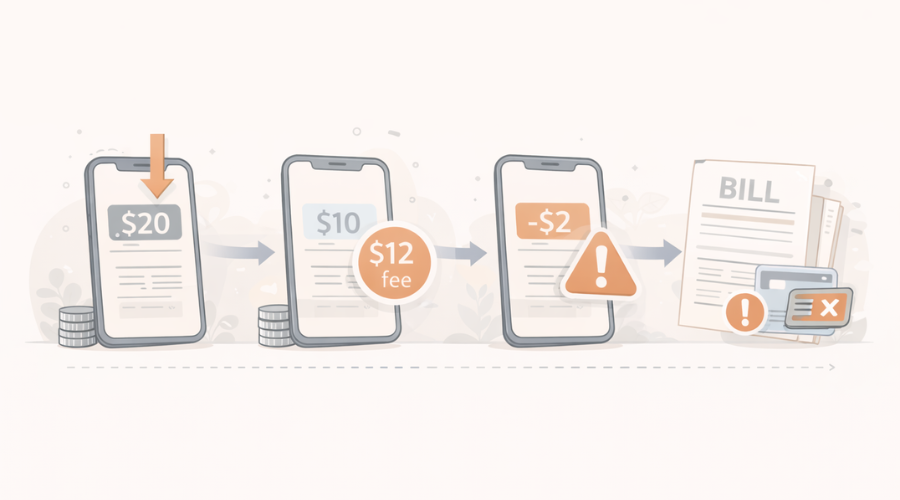
Monthly fees can increase overdraft risk.
Here’s how it happens:
- Balance is low but still positive
- Monthly fee posts overnight
- Balance becomes negative
- Overdraft fees may trigger
This is why people sometimes get hit with multiple fees from one small charge.
Managing minimum balance is not only about avoiding monthly fees — it also protects against overdraft chains.
When Fees Might Be Worth Paying
There are situations where people knowingly accept monthly fees. In these cases, fees are part of paying for convenience or specialized services.
Examples include:
- Needing physical branches for cash services
- Managing large balances that need in-person support
- Using bundled services linked to other financial products
Even in these cases, the person should:
- Understand the exact cost
- Know what services they are paying for
- Reassess regularly as needs change
Fees should be a deliberate choice, not an accidental penalty.
Minimum Balance Rules: How They Really Work From Month to Month
Minimum balance rules often cause confusion because people assume one bad day will not matter. In some accounts, that single day can still trigger the fee.
Daily Minimum vs Average Daily Balance — Practical Difference
| Rule Type | What the Bank Checks | Who It Works Best For |
|---|---|---|
| Daily minimum balance | Your balance must stay above the threshold every single day | People with steady balances and few withdrawals |
| Average daily balance | Your total monthly balance divided by days must meet the threshold | People with income and expenses spread across the month |
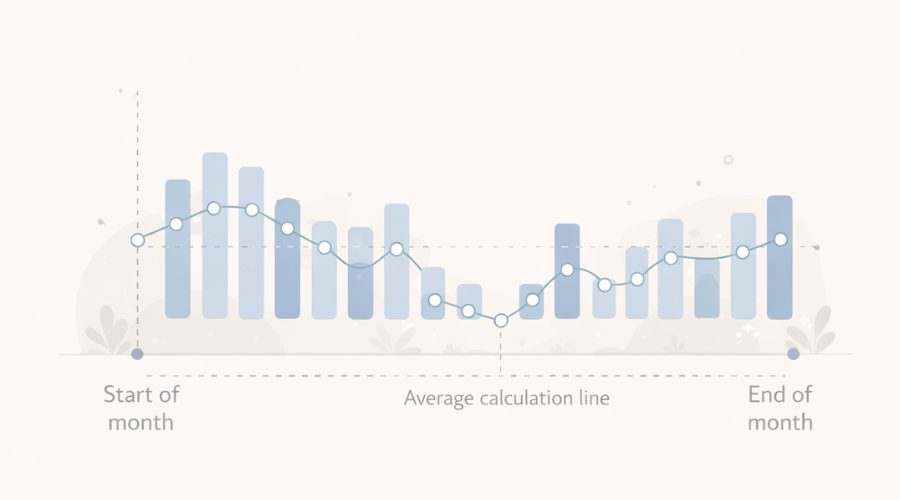
Example: Why Average Balance Can Be Easier
This example shows how short-term dips may still qualify under average balance rules.
If a bank requires a $1,000 average daily balance:
- You may drop to $500 for a few days
- As long as higher balances on other days offset it, the fee can still be waived
But if the rule is a daily minimum, that same dip could trigger the full monthly fee.
Always confirm which rule applies to your specific account.
How Timing of Transactions Affects Fee Qualification
Banks calculate balances using posting times, not when you swipe your card. Posting times depend on the bank’s processing schedule, not on when you make the transaction.
This means:
- A debit card purchase may post later than you expect
- Deposits may post after nightly cutoff times
- Fees may be assessed before pending deposits clear
So even if you think your balance is safe, timing can matter.
Common Timing Problems
- Paycheck posts one day later than expected
- Transfers between accounts take longer than planned
- Automatic payments post early in the morning
These delays can cause temporary dips below balance requirements.
Combined Balance Rules: Helpful but Easy to Miscalculate
Some banks allow customers to avoid fees by keeping a certain total amount across multiple accounts.
This may include:
- Checking
- Savings
- Money market accounts
However, not all accounts automatically count toward the total.
What People Often Miss
- Investment accounts may not count
- Retirement accounts usually do not count
- Joint accounts may or may not be included
Also, if you move money between banks, your combined balance may drop suddenly without warning.
Important: Always confirm exactly which accounts are included in your bank’s combined balance calculations.
How Account Upgrades Can Increase Fee Risk
Banks sometimes automatically upgrade accounts when balances grow or usage changes.
This can result in:
- Higher minimum balance requirements
- Fewer waiver options
- Higher monthly fees
People often assume upgrades are benefits, but they can increase financial pressure later if income or balances drop.
Regularly reviewing your account type prevents unwanted surprises.
How Student, Senior, and Special Accounts Handle Fees
Some accounts offer reduced or eliminated fees based on personal status. These accounts are usually designed as temporary or conditional programs.
Common Categories
- Student accounts (usually age-based or enrollment-based)
- Senior accounts (often 62 or 65+)
- Military-related programs
- Youth or custodial accounts
What Can Trigger Fees Later
- Aging out of student status
- Graduation
- Changing residency or membership status
When eligibility ends, the account may convert automatically into a standard fee-based account.
Banks typically send notices, but many people miss them.
Myths About Minimum Balances and Account Safety
Some people keep money in accounts they do not need simply to avoid fees, believing it is safer or better.
Clarifying Facts
- Higher balances do not improve account security
- Deposit insurance protects small and large balances equally up to legal limits
- Keeping extra money in low-interest accounts may reduce long-term growth
Minimum balances are fee tools, not safety measures.
How Fees and Minimum Balances Affect Emergency Savings
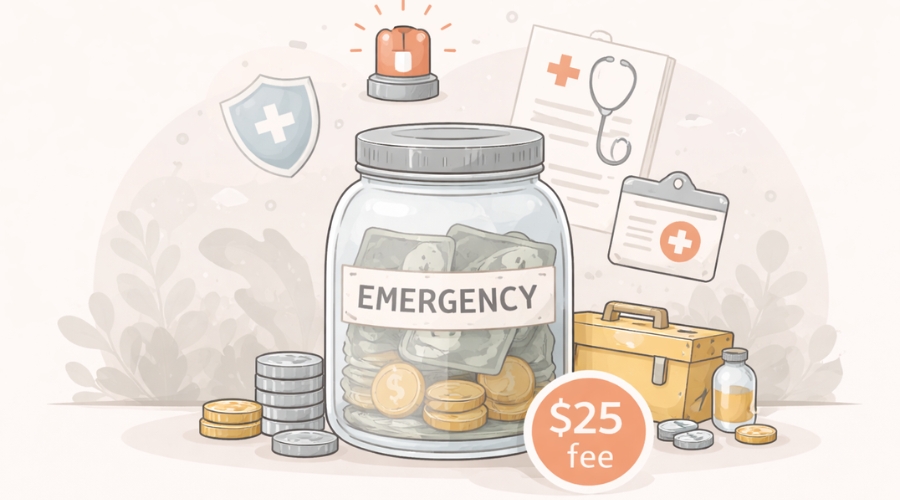
Emergency funds are meant to be accessible, but fee rules can make people afraid to touch them. This defeats the purpose of having emergency savings in the first place.
People may hesitate to withdraw emergency money because:
- They fear triggering monthly fees
- They worry about falling below minimum balances
This creates a conflict between:
- Financial safety (having emergency funds)
- Fee avoidance behavior
Emergency savings should not be structured in a way that discourages use when truly needed.
What Happens If You Cannot Pay the Monthly Fee
If your account balance is too low to cover the monthly fee:
- The fee may still post
- Your balance may go negative
- Additional overdraft or insufficient funds fees may follow
If the negative balance remains unpaid:
- The account may be closed
- The balance may be sent to collections
- ChexSystems or similar banking databases may be updated
This can make opening new accounts harder for several years.
Important warning: Even small unpaid bank balances can create long-term banking access problems.
How Fee Policies Differ Between Banks and Credit Unions
While both can charge fees, credit unions often:
- Have lower monthly fees
- Offer more flexible waiver options
- Use membership-based policies
But this is not guaranteed. Some credit unions still require:
- Minimum balances
- Monthly service fees
Consumers should compare policies, not assume one type is always cheaper.
How Checking and Savings Account Fees Compare to Other Banking Costs
Monthly maintenance fees are only one part of total banking costs. Understanding how they interact with other fees helps you see the full picture.
Common Related Banking Fees
| Fee Type | What Triggers It | Why It Matters |
|---|---|---|
| Overdraft fee | Spending more than your available balance | Often much higher than monthly fees |
| Insufficient funds (NSF) fee | Payment rejected due to low balance | Can be charged even if transaction is declined |
| ATM fees | Using out-of-network machines | Adds up with frequent withdrawals |
| Paper statement fees | Choosing mailed statements | Easy to avoid with online delivery |
| Wire or cashier’s check fees | Using special services | Rare but expensive when needed |
In many cases, monthly fees increase the risk of overdraft and NSF fees, especially when balances are already tight.
How Fee Structures Differ by Account Purpose
Not all accounts are designed for the same role in your financial life. Fee tolerance should match account function. This is why checking and savings accounts face different types of fee risks.
Checking Accounts
Typically used for:
- Paychecks
- Bills
- Daily spending
Fee risk is higher because:
- Balances change frequently
- Transactions post daily
- Timing issues are common
Low or no monthly fee checking is especially important for active money flow.
Savings Accounts
Typically used for:
- Emergency funds
- Short-term goals
- Irregular expenses
Fee risk appears when:
- Balances are still small
- Withdrawals are needed during emergencies
Savings fees can discourage people from using their own emergency funds when they should. Savings fees can discourage people from using their own emergency funds when they should.
How Banks Decide When to Charge the Fee
Most banks assess monthly fees on a specific cycle date, not always the same calendar day.
This means:
- Qualification periods may not match calendar months
- Balances are tracked over statement cycles
- Fee posting may happen before statements are available
This can confuse customers who think they met requirements during the calendar month but missed them during the bank’s cycle period.
Always check your statement cycle dates, not just calendar dates.
When Multiple Fees Can Stack in the Same Month
It is possible to be charged more than one type of fee in a short time.
Example Scenario
- Balance drops below minimum
- Monthly maintenance fee posts
- Balance goes negative
- Automatic bill payment fails
- NSF or overdraft fee posts
One small balance problem can trigger several charges, making recovery harder.
This is why fee management is not only about monthly costs — it is about avoiding chains of penalties.
Impact of Fees on People Building Financial Stability
People who are trying to rebuild financially often:
- Keep low balances
- Rely on every paycheck
- Have little margin for timing errors
For these households, fees:
- Slow progress
- Increase stress
- Create more banking problems
This is why many financial educators recommend focusing first on fee stability before focusing on higher interest or extra features. Stable, low-cost accounts create a safer foundation for rebuilding finances.
How Fee Rules Change Over Time
Banks update pricing structures regularly.
Changes may include:
- Higher minimum balance thresholds
- Increased monthly fees
- New waiver requirements
Banks are required to provide advance notice, but notices may appear as:
- Mail inserts
- Email notifications
- Statement messages
Many people do not read them carefully, leading to surprise fees months later.
Reviewing account terms at least once per year helps prevent this.
How to Track Fees and Spot Patterns
You can learn a lot by reviewing just a few statements.
Look for:
- How often monthly fees appear
- Whether they follow low-balance months
- Whether direct deposits were missed
If fees appear:
- Occasionally → timing or balance management may fix it
- Frequently → account structure likely does not fit your situation
Tracking patterns gives you objective data instead of relying on memory.
Why Some “Free” Accounts Still Cost Money
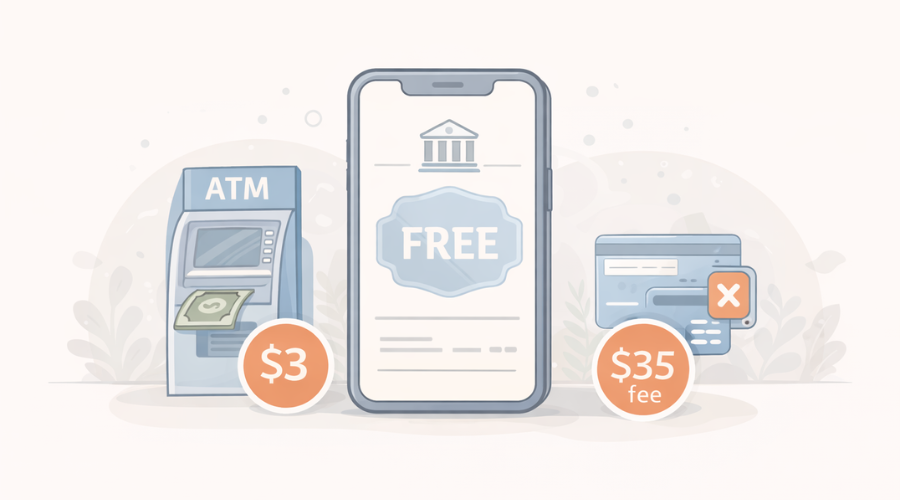
Some accounts advertise no monthly fees but still generate costs through:
- ATM charges
- Overdraft fees
- Transaction limits
So while the monthly fee is zero, total annual banking cost may still be high depending on behavior.
Fee-free does not always mean cost-free. Total banking cost depends on how you actually use the account.
Financial Trade-Offs People Often Overlook
When trying to avoid fees, people may:
- Keep too much money in low-interest accounts
- Avoid using savings when emergencies happen
- Delay paying important bills to keep balances high
These trade-offs can cause more harm than paying a small, predictable fee.
Good banking should support real life, not restrict it.
Frequently Asked Questions About Checking and Savings Account Fees in the U.S.
-
Do all checking and savings accounts in the U.S. charge monthly fees?
No. Many accounts have no monthly maintenance fee, especially online-focused accounts and some credit union accounts. However, many traditional bank accounts still charge monthly fees unless you meet specific waiver conditions such as minimum balances or direct deposits.
Fee policies depend entirely on the individual institution and account type, not on federal law.
-
Why do banks charge monthly fees instead of just making money from interest?
Banks earn money in several ways, including lending deposits to borrowers, charging service fees, and offering paid services. Monthly fees help cover operational costs and allow banks to price accounts differently based on how customers use them. This lets banks offer different account types for different customer needs.
Some banks choose to compete on low or no fees, while others charge fees in exchange for branch networks or bundled services.
-
Can banks change my fee or minimum balance requirement without my permission?
Banks can change account terms, but they must notify you in advance. You are not required to accept new terms, but continuing to use the account after the notice period is generally treated as acceptance of the new terms.
This is why reviewing bank communications and statements is important, even if you rarely see problems.
-
Are monthly fees tax-deductible?
For most people, personal banking fees are not tax-deductible on federal income tax returns. They are considered personal expenses.
Business account fees may be deductible as business expenses, but personal checking and savings account fees generally are not.
-
Does keeping more money in my account protect me from fees permanently?
Not necessarily. If fee waiver rules are based on minimum balances, keeping more money helps only as long as the bank does not change its requirements.
If rules change or your balance later drops, fees can resume. No balance level permanently guarantees zero fees unless the account itself has no monthly fee. Even then, other types of fees may still apply depending on how you use the account.
-
Can closing an account trigger extra fees?
It can, depending on timing and account terms.
Possible issues include:
– Monthly fee posting before closure processes fully
– Overdraft balances being applied after final transactions settle
– Early account closure fees on some specialized accountsBefore closing, it helps to confirm:
– That all pending transactions have cleared
– That the balance will remain positive until closure completes -
Are minimum balance rules the same for checking and savings accounts?
No. Savings accounts often have lower minimum balance requirements, but fewer waiver options. Checking accounts usually have more waiver paths (direct deposit, combined balances, special programs) but may have higher balance thresholds.
Always check each account separately, even within the same bank.
-
If I only use online banking, should I still pay branch-related fees?
Some accounts charge fees partly to support physical branches and in-person services. If you never use branches, paying higher fees may not match your needs. Online-focused accounts often offer lower fees because they operate with fewer physical locations.
That said, whether branch access is worth paying for depends on your personal banking habits and comfort level with digital tools.
-
What happens if my account keeps getting charged fees and goes negative?
If negative balances remain unpaid:
– The bank may close the account
– The unpaid amount may be sent to collections
– Banking history databases such as ChexSystems may record the closureThis can make opening new accounts harder and may also affect credit if collections are reported.
Even small unpaid balances can cause long-term problems.
-
Are credit unions always cheaper than banks?
Not always. Many credit unions offer lower fees and more flexible rules, but policies vary by institution. Some credit unions still require minimum balances or charge monthly fees.
Consumers should compare specific account terms, not assume based on institution type alone.
-
How often should I review my account fee rules?
At least once per year, or whenever:
– Your income changes
– Your job changes
– You start or stop using direct deposit
– You move or change account usage patterns
– You open or close other accounts at the same bankLife changes often affect whether you still qualify for fee waivers.
Final Disclaimer
This content is provided for educational and informational purposes only.
It is not legal, tax, or financial advice, and it does not consider your personal financial situation.
Banking rules, fees, and eligibility requirements vary by institution and may change over time.
For decisions about your own finances, consider consulting a qualified financial professional or contacting your financial institution directly.
